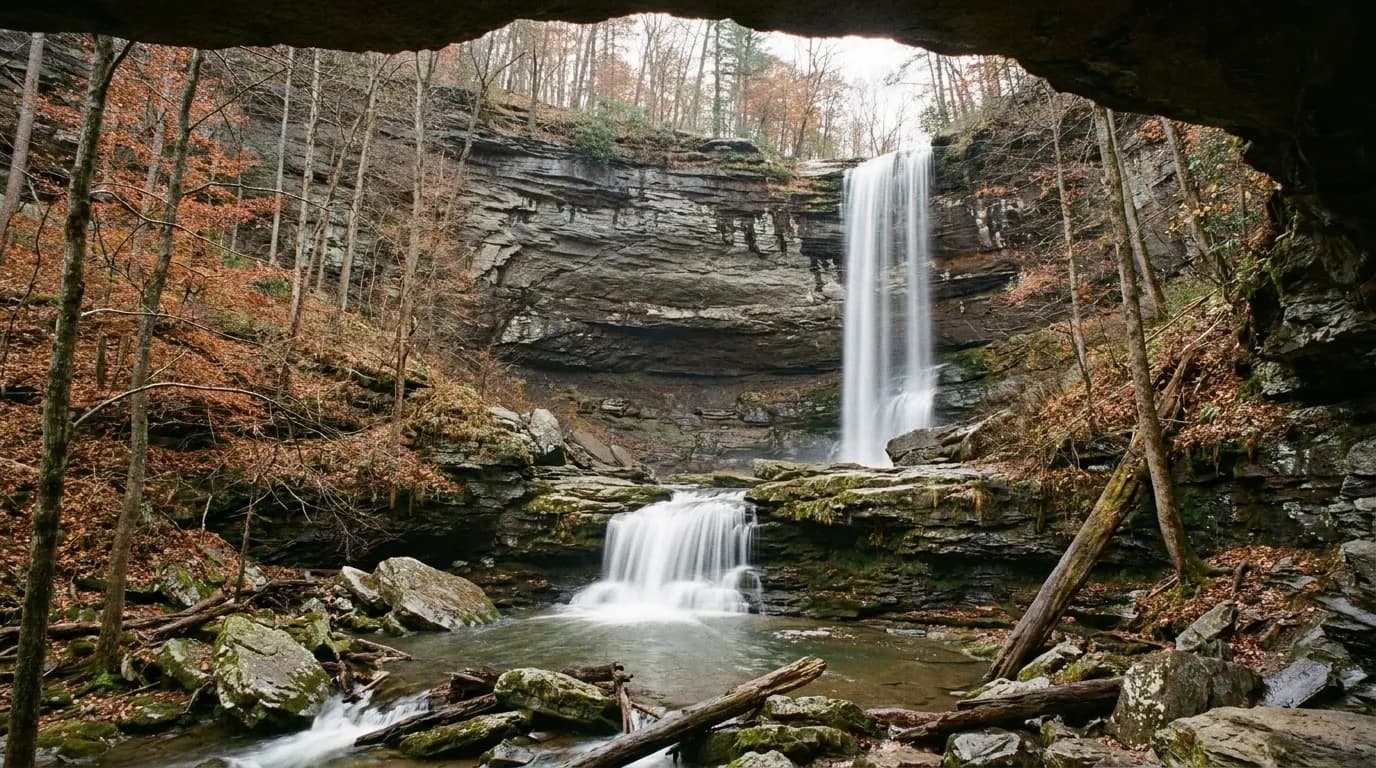
Waterfall trips out of New York fail for two reasons, and neither is distance. The first is parking — the best-known falls in the Catskills have limited lots that fill by nine on a good Saturday, and roadside parking is ticketed and towed. The second is a mismatch between what people booked and what they walked: some of these are a ten-minute stroll from the car and some are a genuine two-hour climb with a steep return. This list is sorted by drive time and then by how hard the walk actually is, so you can pick honestly.
Flow depends entirely on recent rain and lots fill early on clear weekends. Tell Karpo in iMessage when you want to leave and how far you are willing to walk, and it will tell you which of these is actually worth the drive that day.
Thirty Minutes: No Hike At All
The Great Falls of the Passaic River in Paterson, New Jersey, is a 77-foot waterfall inside a city, protected as a national historical park, roughly half an hour from the George Washington Bridge without traffic. There is no hike — you park, you walk to an overlook and a footbridge, and you are looking at one of the largest waterfalls in the eastern United States by volume with a nineteenth-century mill district behind you. It is loudest and most impressive in early spring or a day or two after heavy rain. In a dry August it is considerably less dramatic, which is the trade-off for it being this close.
One Hour: Short Walks, Real Woods
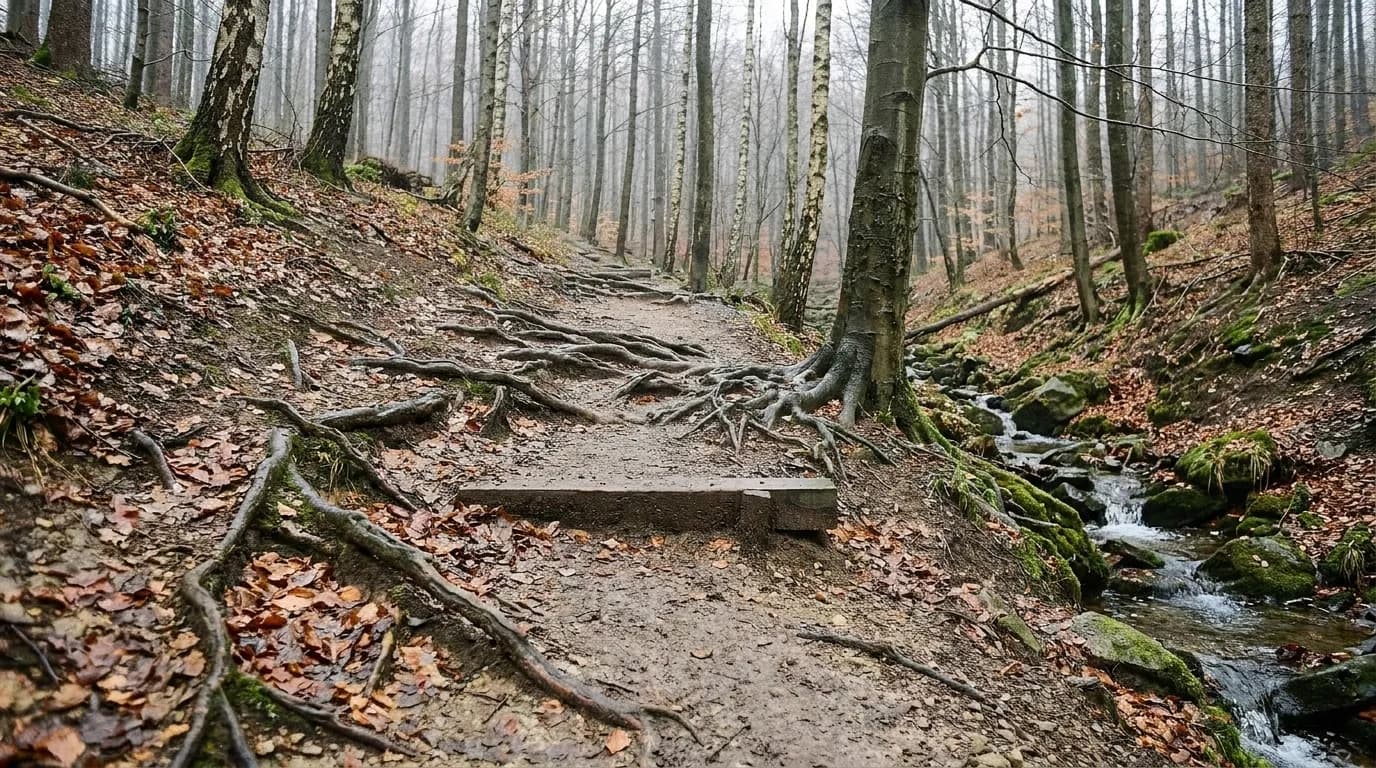
Buttermilk Falls in Layton, New Jersey, inside the Delaware Water Gap recreation area, is the tallest waterfall in that state at around 200 feet, and the base is a two-minute walk from the parking area. The staircase beside it climbs steeply to the top and connects to the Appalachian Trail if you want to make an afternoon of it; the drive in on the last few miles of gravel road is slower than the map suggests. Closer still, Hemlock Falls in South Mountain Reservation in Essex County is a modest cascade reached by an easy loop of a couple of miles — not a spectacle, but genuine woods forty minutes from Manhattan, and the reservation is large enough to lose the crowd in.
Ninety Minutes to Two Hours: The Serious Ones
Kaaterskill Falls in the Catskills is the one everybody wants: two tiers, around 260 feet in total, the highest cascading waterfall in New York State and the subject that helped launch American landscape painting. It is also the one with the parking problem. The lot at Laurel House Road on the upper approach is small and fills early; the roadside pull-offs on Route 23A below are narrow, dangerous and enforced. Go early, use the marked lots only, and take the constructed stairway rather than scrambling — people are seriously injured here most years attempting the rocks beside the falls. Minnewaska State Park Preserve, further south in the Shawangunks, is the better-organised alternative: Awosting Falls is a short walk from the main lot on a carriage road that a stroller can handle, Rainbow Falls sits on a longer loop, and the park charges a per-vehicle fee and closes the gate when it reaches capacity, which it does on summer weekends.
Without a Car
Two options are genuinely car-free. Indian Brook Falls near Cold Spring is reachable from the Metro-North Hudson Line: it is a walk of a couple of miles from the station along a road with limited shoulder, ending at a modest but pretty fall in a wooded gorge, and you can pair it with the Breakneck or Bull Hill trails and be back in Grand Central by evening. Beacon, a stop further north, gives you Fishkill Creek's falls beside the Dia museum within a fifteen-minute walk of the station — the shortest effort-to-water ratio on this entire list, and the only one you can combine with a major art museum.
The Practical Rules
Waterfalls are rain-dependent, and the difference between a thundering drop and a damp stain on rock is often a single storm three days earlier — check recent precipitation before you commit two hours of driving. Leave by seven for anything in the Catskills or the Shawangunks on a weekend; by ten the lots are full and the experience is a queue. Wear shoes with grip, because the rock beside every waterfall on this list is wet, algae-covered and far more slippery than it appears, and stay behind railings and off the ledges. Bring cash for the parking fees at state parks. And in winter, several of these become genuinely spectacular ice formations and genuinely dangerous approaches — beautiful from the designated viewing point, not somewhere to improvise a route.
Which One to Pick, in One Paragraph
If you have four hours and no hiking shoes, go to Paterson — it is close, it is genuinely large, and it requires nothing of you. If you have a full day, want a real walk and can leave by seven, Kaaterskill is the one everybody remembers, provided you have accepted the parking discipline and will stay on the constructed stairway. If you have a full day and are bringing people of mixed fitness or a small child, Minnewaska is the better answer: Awosting Falls is a flat carriage-road walk from the lot, the park is properly managed, and there are longer loops available for whoever wants one. If you do not have a car, take the Hudson Line — Beacon for minimum effort, Cold Spring for a proper day. And if it has not rained in three weeks, do not go at all: pick a swimming hole or a ridge walk instead, because a dry waterfall is a two-hour drive to look at a wet cliff, and nobody enjoys that conversation on the way home.
Tags: #NYC #Waterfalls #Hiking #Catskills #HudsonValley #DayTrip #WeekendPlans #KaaterskillFalls #Minnewaska #NewJersey #Outdoors #MetroNorth #NatureNearNYC #WeekendHike
Sources consulted: dec.ny.gov · parks.ny.gov · nps.gov · mass.gov
All trademarks are the property of their respective owners.
Ask Karpo first
Flow, parking capacity and seasonal closures change week to week, and a park that turned cars away last Saturday may be empty on a Thursday. Ask Karpo in iMessage which of these is running well right now, how bad the lot situation is today, and what the drive actually looks like when you plan to leave.