New York's relationship with nature runs almost entirely along one axis: north, up the Hudson, on a train that is beautiful and crowded and expensive at weekends. It is a good axis. It is also the only one most people use, which is why the trailheads on it are full by ten on a Saturday. West is the direction nobody takes, and it contains the single most dramatic piece of natural water within an hour of Manhattan.
Going west instead of north halves the crowd and usually the journey, but the connections are the part that goes wrong — a train every hour, a bus that only helps on weekdays. Text Karpo where you are and get the nature trips that actually work today, the real door-to-door time, and what it costs to get there.
The seventy-seven foot answer
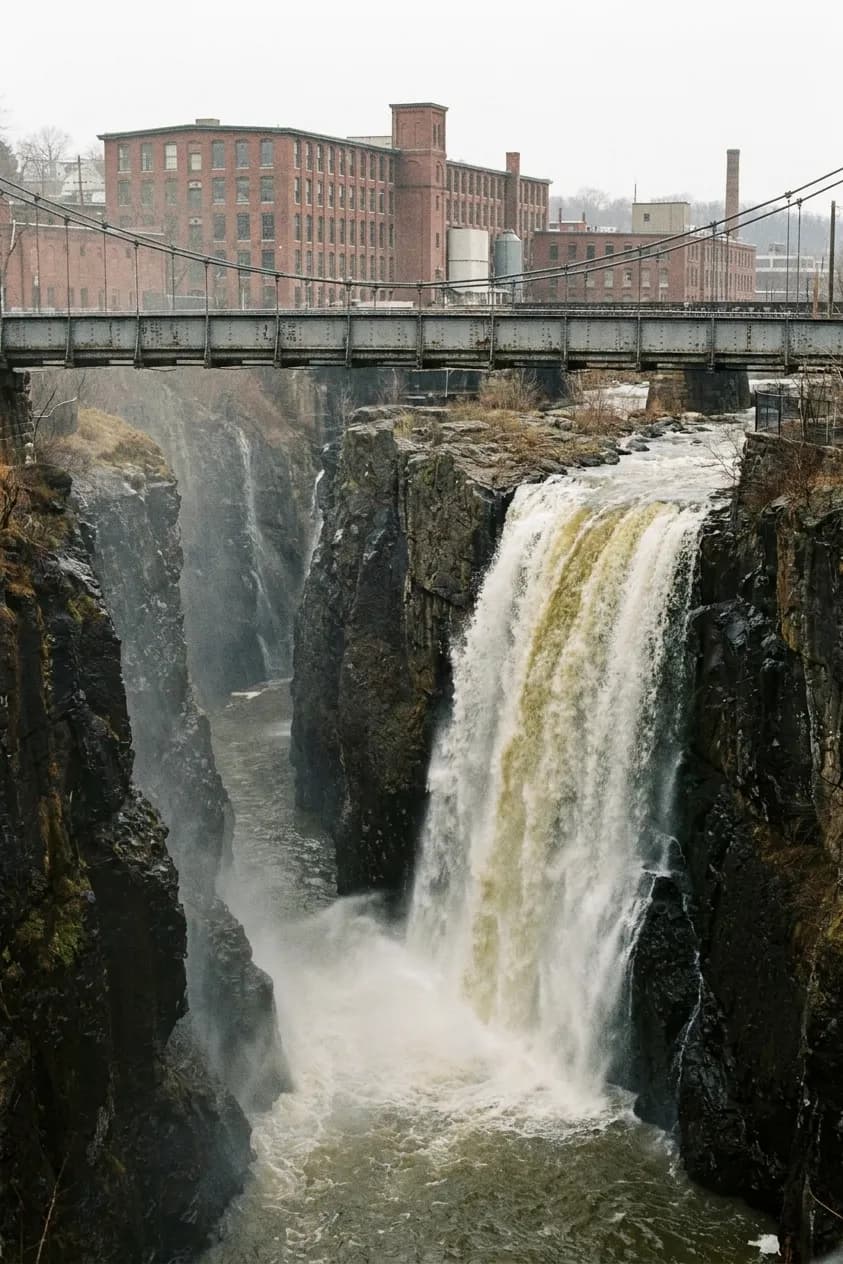
The Great Falls of the Passaic River in Paterson, New Jersey is a seventy-seven-foot waterfall — the one Alexander Hamilton built America's first planned industrial city around in 1792 — and it is now a national historical park. There is no entrance fee. Admission is free for all visitors, which for a piece of geography this large is close to absurd.
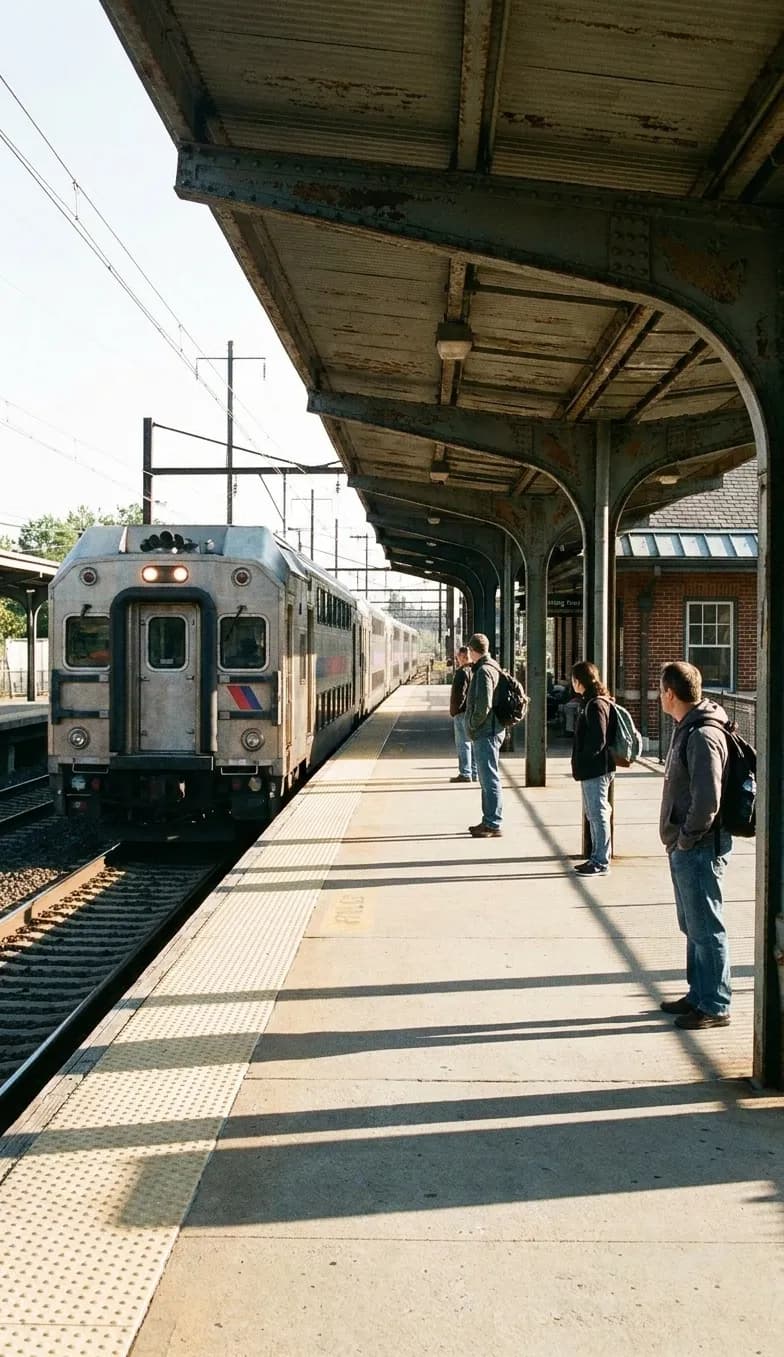
Getting there is the part that surprises people. NJ Transit runs a train from Hoboken to Paterson roughly hourly, the journey takes about thirty-four minutes, and tickets run in the two-to-twelve-dollar range. Paterson station is a three-minute walk from the park. That is a shorter door-to-door trip than a great many places people go inside the five boroughs.
What it is actually like
It is loud and industrial and genuinely impressive, which is a rarer combination than a pretty cascade in a wood. The falls sit inside a nineteenth-century mill landscape rather than a forest, and the interest is the intersection: this is where American manufacturing started, and the reason it started here is standing in front of you making a noise.
The park received nearly a hundred and ninety thousand visitors in 2025, which sounds like a lot until you compare it against a single Hudson Valley trailhead on a September weekend. A new footbridge was installed in November 2025 and the bridge at the falls reopened in February 2026, so the access is better now than it has been in years.
Why west is systematically emptier
The crowding on the northern routes is a self-reinforcing effect rather than a fact about the landscape. The Hudson Line is scenic, so people take it; because people take it, the guides describe it; because the guides describe it, more people take it. Nothing about that loop is a judgment on what is west of the city, which is served by different train lines out of a different terminal and consequently invisible to most New Yorkers.
The practical consequence is that a Saturday morning trip west runs against the flow. Trains out of Hoboken are not carrying a hiking crowd, the car parks at the other end are not full, and you are not queueing for a rock scramble behind forty people.
Planning the western trip properly
The one thing that is worse going west is frequency. An hourly train is a completely different planning problem from a line that runs every twenty minutes: missing one costs you an hour, and the last useful return is earlier than you would assume. Look up the return before you leave, not while you are standing on the platform at six.
Check weekend service specifically. Bus connections that make a place easy on a Tuesday frequently thin out or disappear at weekends, which is when you actually want to go. If the last leg depends on a bus, verify it or plan to walk it.
What to do with the rest of the day
The mistake with a trip like this is treating the waterfall as the entire outing and being back on a platform ninety minutes later. Paterson has a museum in a former locomotive works and a food culture that reflects one of the most diverse populations in the state, and both are within walking distance of the park.
That is the general shape of a good western day trip: one piece of landscape, one meal in a town you had no reason to visit, and a train home. It is not a wilderness experience and it does not pretend to be. It is the version of a day out that costs about fifteen dollars and does not require you to be at a trailhead by eight to get a parking space.
The general rule
When a city has one famous direction for nature, the interesting things are in the other three. New York's are west into the New Jersey highlands, south into the shore and the federal parkland at the harbour mouth, and east into the parts of Long Island the summer traffic does not reach.
None of those have the marketing that the Hudson Valley has. All of them are less crowded on the day you actually want to go, which is the only variable in a day trip that reliably determines whether it was worth doing.
Tags: #waterfallsnearnyc #naturenearnyc #patersongreatfalls #passaicriver #newjersey #njtransit #daytrip #hikingnearnyc #freethingstodo #nycoutdoors #hoboken #weekendescape #nationalpark #hiddengems
All trademarks are the property of their respective owners.
Ask Karpo first
The good nature near New York is not all north of the city, and the western options are usually emptier and cheaper to reach. Ask Karpo what is realistically reachable from where you are today without a car, how long the journey actually takes with the transfer, and whether anything at the other end costs money.