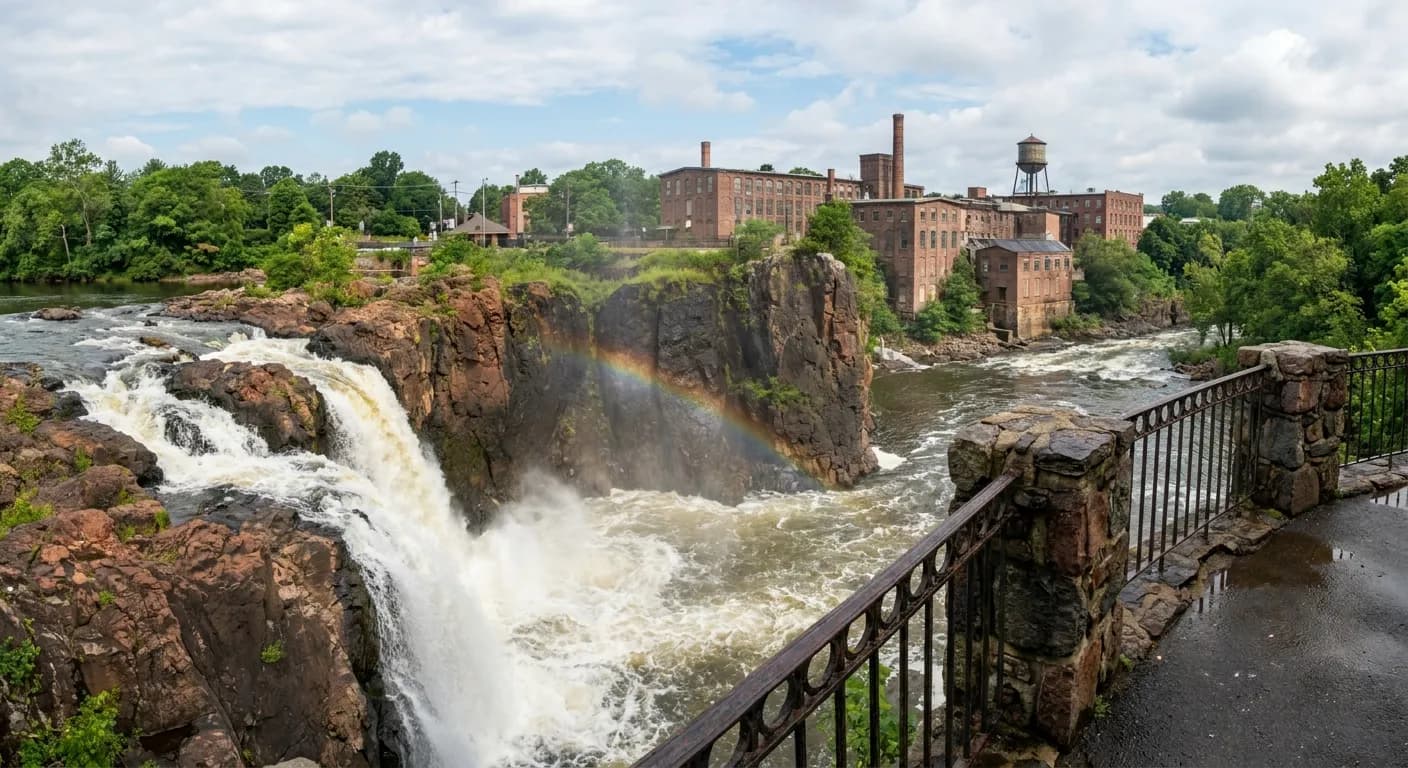
The waterfall is rarely the hard part. The hard part is the final mile between a train or bus stop and a trail, overlook, or park entrance. A good no-rental-car plan treats that gap as a real leg of the trip, with a backup, a daylight cutoff, and enough battery to change course. From New York City, three routes offer different levels of commitment: Paterson Great Falls for the simplest transit footprint, Cold Spring for a walkable creek-and-industrial-history loop, and Croton Gorge for the biggest dam view with a short taxi or rideshare connection.
Want a waterfall day without gambling on the final mile? Text Karpo for live train options, current park conditions, and a weather-aware return plan.
A car-free waterfall day is a connection problem
None of these should be planned from an old screenshot. Transit schedules, park hours, trail closures, water flow, and rideshare availability change. Check the operating agency and park source on the morning of departure, then choose the route whose weakest connection you are willing to manage.
Paterson Great Falls: the lowest-friction big-water option
Paterson Great Falls National Historical Park delivers the strongest visual payoff without requiring a Hudson Valley trailhead. The National Park Service describes a powerful waterfall integrated with Paterson's industrial history, and the landscape makes that relationship visible: water, rock, brick mills, bridges, and overlooks occupy the same frame.
Use NJ Transit tools to plan the full journey and confirm the last walking segment rather than relying on a generic Manhattan-to-Paterson estimate. Begin at the official visitor information for current access and safety notices. Water and mist can make railings, stone, and paved surfaces slick even when the route is not a hike.
This is the best choice for mixed-energy groups. One person can care about photography, another about history, and another simply about seeing a waterfall without buying hiking gear. Keep expectations urban: this is a national historical park inside a working city, not a secluded forest basin.
Cold Spring: a walkable creek and foundry loop
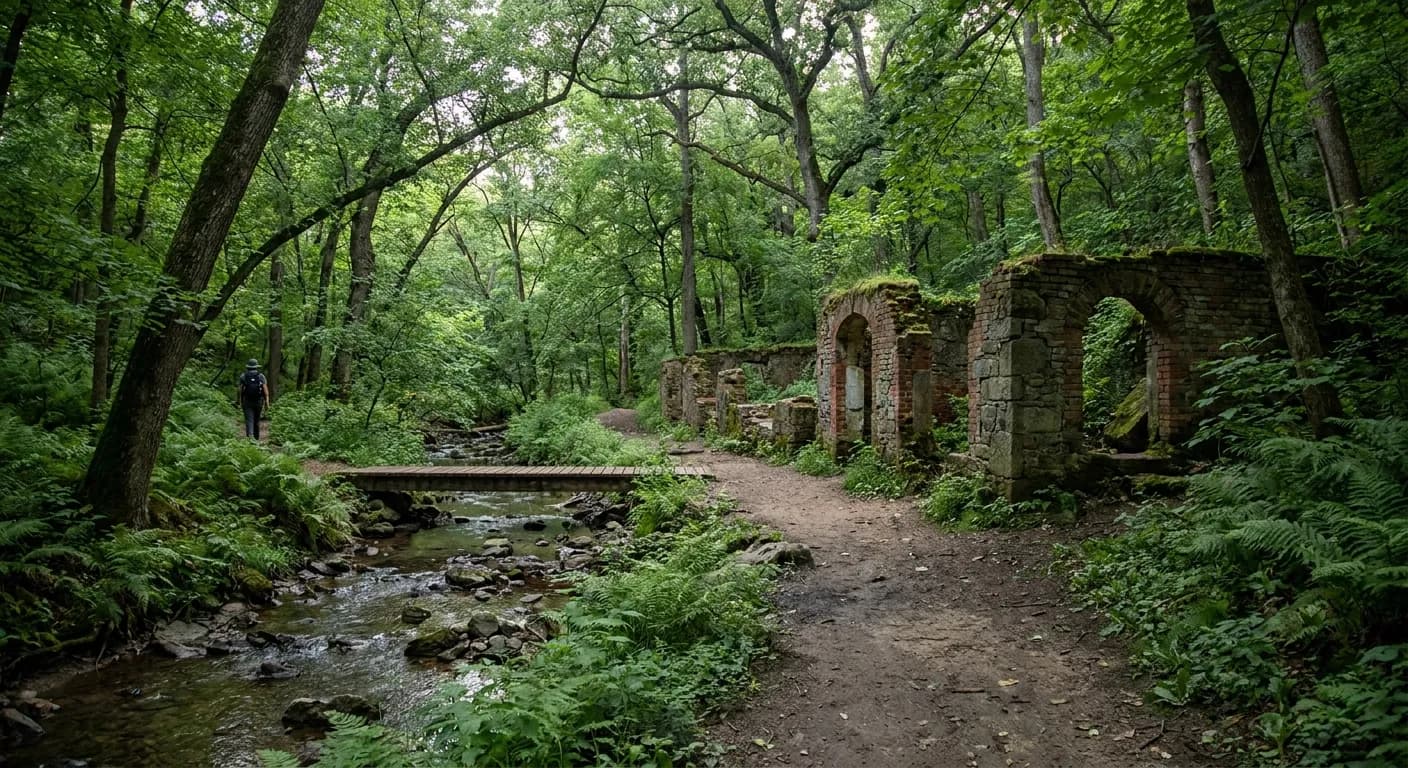
Cold Spring works when the train ride is part of the pleasure. Scenic Hudson's West Point Foundry Preserve connects directly to the village and interprets the remains of an important industrial site along the water. The experience is subtler than Paterson: creek sounds, smaller cascades, brick and stone remnants, footbridges, and shaded paths rather than one enormous curtain of water.
The preserve's official page highlights walking access and proximity to rail, which is the crucial car-free advantage. Start early enough to move slowly through the site, return to Main Street for food, and still have multiple train options home. Do not turn the day into a race toward a famous photo; the route works because station, village, preserve, and river sit within one manageable plan.
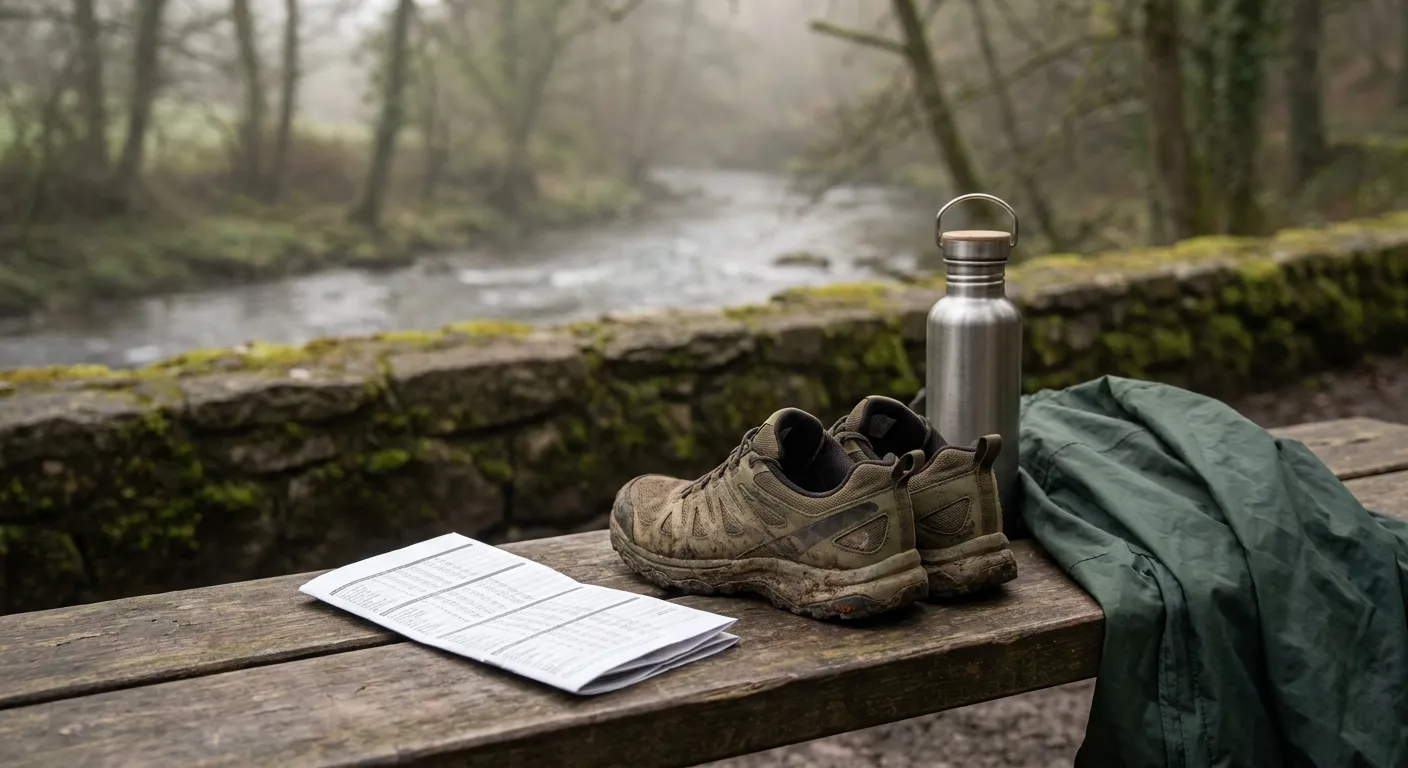
Wear shoes that tolerate mud and wet boards. After rain, small water features become more dramatic, but surfaces also become less forgiving. If thunderstorms are forecast, choose an urban museum day instead of treating a waterfall as a reason to ignore lightning risk.
Croton Gorge Park: train plus a deliberate final mile
Croton Gorge Park offers the monumental version: the New Croton Dam, a broad spillway, lawns, and gorge views. Westchester County's park information should be the source for current hours, fees, restrictions, and seasonal conditions. The car-free catch is that the Metro-North station does not place you at the overlook.
Plan a taxi or rideshare from Croton-Harmon in both directions and decide what you will do if the return pickup is slow. Save the station address, keep a power bank, and set a turnaround time based on daylight and your train options. A picnic is useful because it prevents the return leg from being dictated by sudden hunger.
This route is best for two or three adults who can coordinate timing and share the final-mile cost. It is weaker for a large group, a stroller-heavy plan, or anyone who needs guaranteed step-free movement without first confirming access details with the park.
Practical notes
Check the National Park Service, Scenic Hudson, Westchester County Parks, Metro-North, and NJ Transit on the morning of travel. Download tickets and maps before entering low-signal areas. Carry water, sun protection, a light rain layer, basic first aid, and a power bank. Stay behind barriers, never climb wet rock for a photo, and avoid creek crossings during high water. Tell someone your route and expected return if you are traveling alone.
Build the return trip before the outbound trip. Save at least two departures that you could realistically make, plus the phone number or app you will use for any final-mile ride. Screenshot park addresses because similarly named entrances can send a driver to the wrong side of a gorge. If a pickup fails, move toward a staffed, lit, public location rather than waiting alone at an informal trail access point.
Waterfall conditions follow weather, not social media calendars. A dramatic flow after rain can coincide with mud, debris, closures, and dangerous current. A dry-period visit may be less cinematic but easier to navigate. Let the least mobile person in the group set the route, and treat any closed gate or barrier as the end of the plan, not an invitation to improvise.
Tags: #WaterfallsNearMe #NYCDayTrips #CarFreeTravel #PatersonGreatFalls #ColdSpringNY #CrotonGorge #MetroNorth #NJTransit #HudsonValley #FreeThingsToDo #WeekendPlans #Karpo
Sources consulted: Paterson Great Falls National Historical Park · West Point Foundry Preserve · Croton Gorge Park · Metro-North Railroad · NJ Transit
All trademarks are the property of their respective owners.
Ask Karpo first
Want to know which route is running cleanly, where the final-mile handoff happens, and what is actually open? Ask Karpo for the latest waterfall access updates, a weather-aware day plan, and a live route back to NYC before you head out.


