# Article
The staircase leading to the second-floor studio on Broadway announces itself with scuffed linoleum and a faint echo of brass. By eight-thirty on a Thursday night, the beginner class is wrapping up—couples practicing básica steps in careful rows while a ceiling fan redistributes the warmth. The instructor, a Dominican woman in her fifties who has been teaching in Washington Heights for two decades, counts down the final eight-count. Then the floor clears, the lights dim slightly, and the social dance begins.
The Room After the Lesson Ends
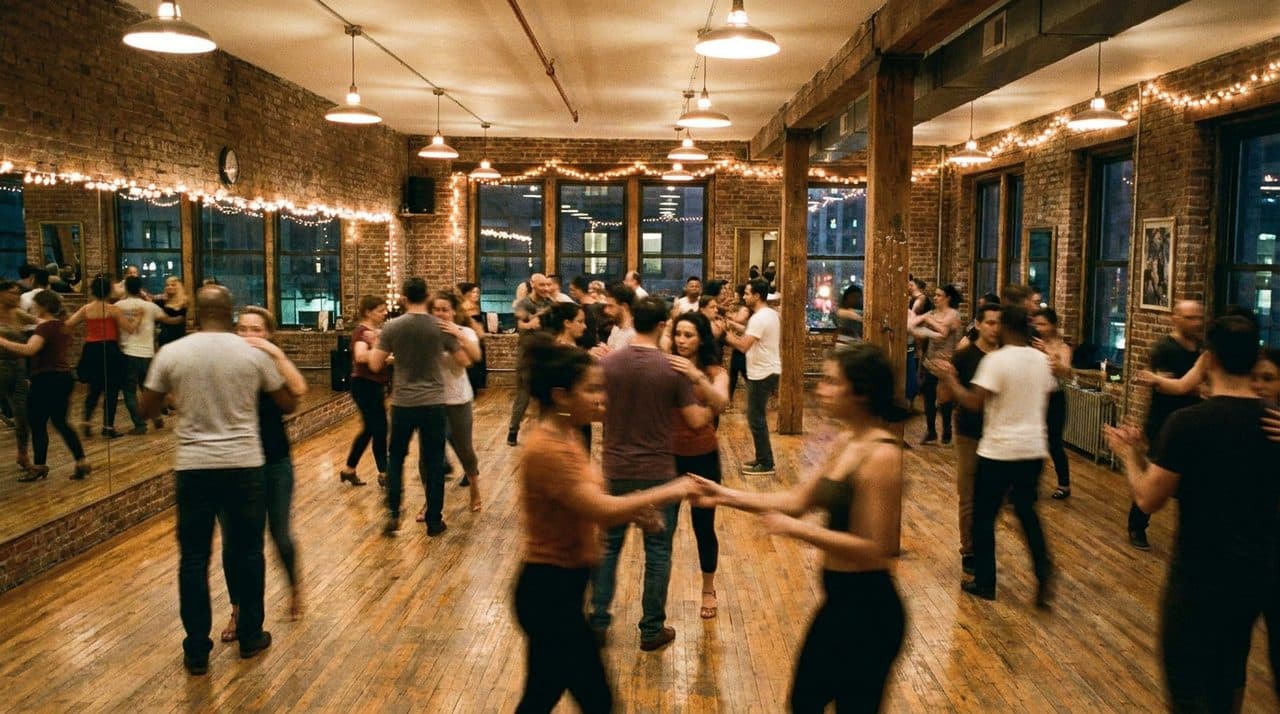
The studio occupies a narrow rectangle above a check-cashing storefront, accessible via a stairwell that smells faintly of takeout and floor wax. Inside, mirrors line one wall, folding chairs stack against another, and a Bluetooth speaker sits atop a wooden stool near the entrance. The instructor switches playlists without ceremony—no announcement, just a shift from instructional tracks to full-band salsa dura. Regulars who have been leaning against the barre straighten up. First-timers linger near the chairs, watching the room rearrange itself into an unspoken geography: the far corner for the faster dancers, the middle for those still working through their turns, the area near the door for people catching their breath between songs.
The transformation takes about ninety seconds. What was a classroom becomes a social floor, and the dynamic changes with it. The instructor no longer counts aloud, though she still dances, claiming a spot near the speaker where she can adjust volume or skip a track if the energy flags. The regulars know her rhythm—she tends to front-load the night with uptempo numbers, then ease into slower son montuno around ten.
Who Shows Up and When
The Thursday crowd skews older than weekend salsa nights in Midtown, with a core group of dancers in their forties and fifties who have been coming for years. They arrive in waves: some straight from the beginner class, others appearing around nine after dinner shifts or commutes from the Bronx. A handful of younger dancers filter in later, drawn by word-of-mouth or Instagram posts that tag the studio without naming it outright. The mix works because the skill range is wide enough to accommodate both the cautious and the confident, and because the space itself enforces a kind of informal etiquette—no one monopolizes the best corner, no one sits out more than two songs in a row without offering a reason.
First-timers are easy to spot. They tend to cluster near the chairs, watching the footwork and trying to decode the unspoken invitations—a nod, a raised eyebrow, a hand extended without words. The regulars are patient but not coddling; they will dance with newcomers, but they expect basic competence and a willingness to follow the lead without overthinking. The instructor occasionally steps in to partner someone who looks stranded, a quiet intervention that keeps the floor moving.
The Music and the Playlist Logic
The playlist runs heavy on classic salsa—Héctor Lavoe, Willie Colón, Rubén Blades—with occasional detours into timba or bachata when the crowd needs a gear shift. The instructor curates by feel, not algorithm, and she has a knack for reading the room's energy: when to push the tempo, when to drop in a slower bolero, when to play a merengue that will pull everyone back onto the floor. She avoids reggaeton and anything too contemporary, a choice that keeps the night rooted in a particular tradition and discourages the kind of grinding that would change the room's vibe.
The sound system is decent but not pristine—there is a slight buzz in the bass, and the highs sometimes clip during horn breaks. No one seems to mind. The imperfection suits the space, which has the worn-in quality of a place that has hosted thousands of dances without ever feeling precious about it. Between songs, the room fills with low conversation in Spanish and English, the scrape of chairs being moved, the occasional burst of laughter from someone recounting a misstep.
The Corner Where the Fast Dancers Gather
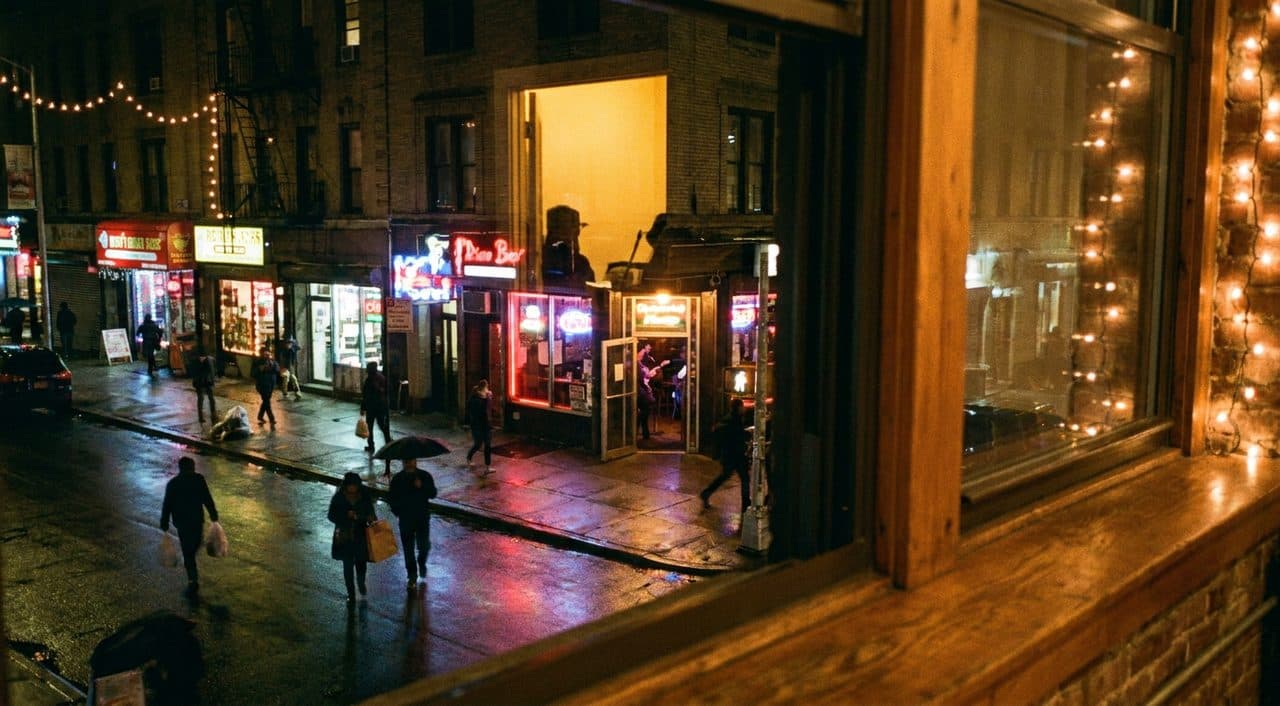
The far end of the studio, away from the door and the speaker, becomes the domain of the most experienced dancers by nine-thirty. They do not claim it explicitly, but the spatial logic is clear: more room to execute complex turns, less risk of colliding with beginners. The footwork here is faster, the leads more intricate, and the partnerships often wordless—dancers who have logged enough hours together that they communicate through pressure and timing alone. Watching this corner is an education in how salsa functions as a conversation, each song a negotiation between two bodies finding their shared rhythm.
The rest of the floor accommodates everyone else, and the instructor keeps an eye on traffic flow, occasionally waving someone toward an open spot or gently redirecting a couple that has drifted too close to the mirrors. The layout is forgiving enough that collisions are rare, though the occasional elbow or misstep draws a quick apology and a laugh.
What Happens Around Ten-Thirty
The night peaks between ten and ten-thirty, when the floor is fullest and the playlist settles into a groove that feels less like a performance and more like a shared ritual. The energy is not frantic—this is not a nightclub—but it has a steady, unhurried intensity. The instructor sometimes takes a break around this point, stepping outside for air or chatting with someone near the chairs, but the music keeps going. The regulars know how to keep the night alive without her direct involvement, and the social dance sustains itself through momentum and mutual investment.
By eleven, the crowd begins to thin. The younger dancers leave first, heading to late-night spots in the neighborhood or catching trains before the service slows. The core group lingers, dancing until the instructor finally switches off the speaker and starts stacking chairs. The room empties gradually, people pulling on jackets and exchanging plans for next week. The stairwell echoes with goodbyes in two languages.
Practical Notes
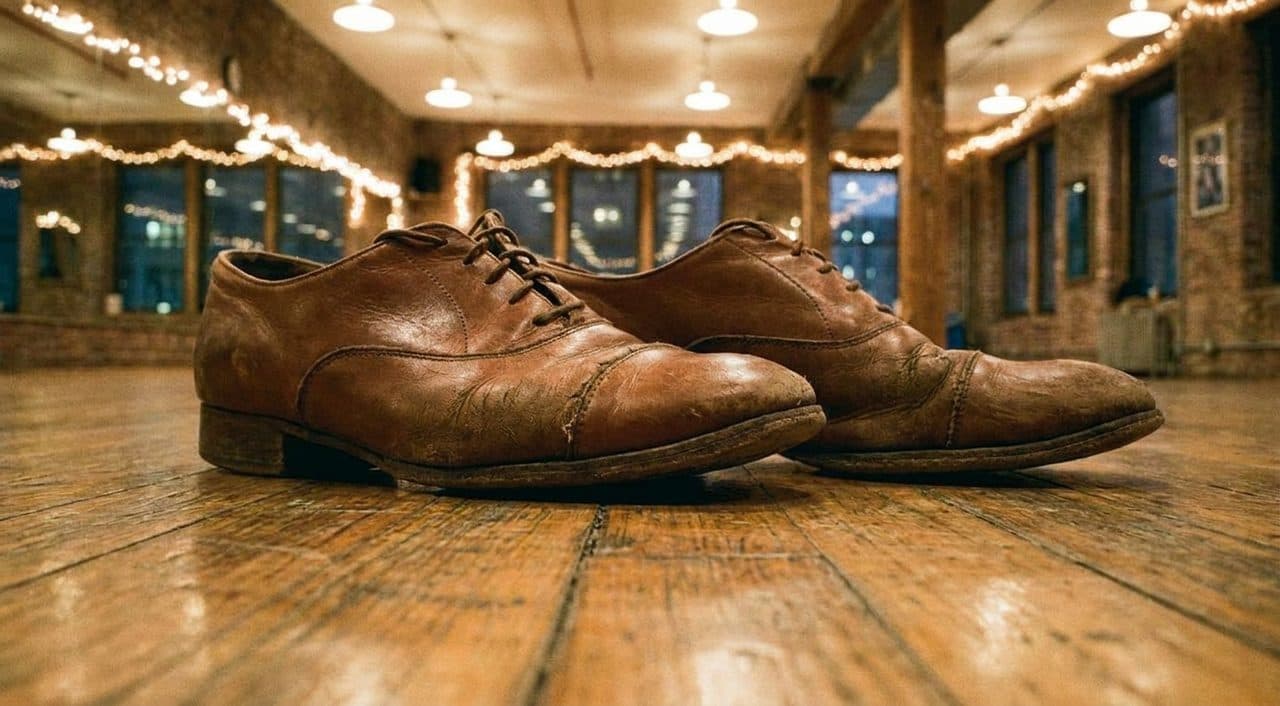
The studio sits on Broadway in the low 160s, a ten-minute walk from the 168th Street A train stop. The beginner class runs from seven-thirty to eight-thirty on Thursday nights, with the social dance starting immediately after and continuing until eleven or slightly later depending on turnout. Walk-ins are standard—no reservation system, no cover charge, though a small suggested donation helps keep the lights on. The space is cash-friendly, and there is a bodega two doors down for water or snacks. Street parking is difficult; the train is the reliable option. Comfortable shoes with a smooth sole are essential—the floor is clean but unforgiving on sneakers with too much grip.
Tags: #SalsaNights #WashingtonHeights #SocialDance #NewYorkDance #UptownNYC #LatinDance #SalsaDura #ThursdayNights #DanceStudio #CommunitySpaces #NYCNightlife #DanceFloor #LiveMusic #NeighborhoodFinds #RightOnTime
Sources consulted: timeout.com · secretnyc.co · thrillist.com
All trademarks are the property of their respective owners.
Ask Karpo first
Want to know which Washington Heights dance studios welcome beginners and when the social dances happen?
Ask Karpo for salsa studio recommendations and class schedules before you head out.