The High Line is New York's most-photographed mile and a half of elevated park, and the version most visitors get is wrong. They start at the Gansevoort Street end on a Saturday afternoon, walk north into a crowd, and never quite see the planting. The version that works is the inverse: start at the 34th Street end at 7am, walk south, and let the dawn light come up through the prairie grasses as you go.
The Park Most Visitors Get Wrong
The High Line is a 1.45-mile linear park built on a disused 1934 elevated freight rail line. It opened in three sections — June 2009 to September 2014 — and was designed by James Corner Field Operations, Diller Scofidio + Renfro, and the Dutch landscape architect Piet Oudolf, whose planting plan is the part of the park most visitors stop noticing by the third bench.
The default tourist itinerary is to enter at Gansevoort Street in the Meatpacking District, walk north under the shade of the Standard Hotel, photograph the Vessel at Hudson Yards, and leave. That works as a checklist. It does not work as the park. By the time most tourists reach the planted beds, they're walking through them looking up at the buildings, not down at the grasses. The visit becomes about the architecture surrounding the High Line rather than the High Line itself.
The Dawn Inversion
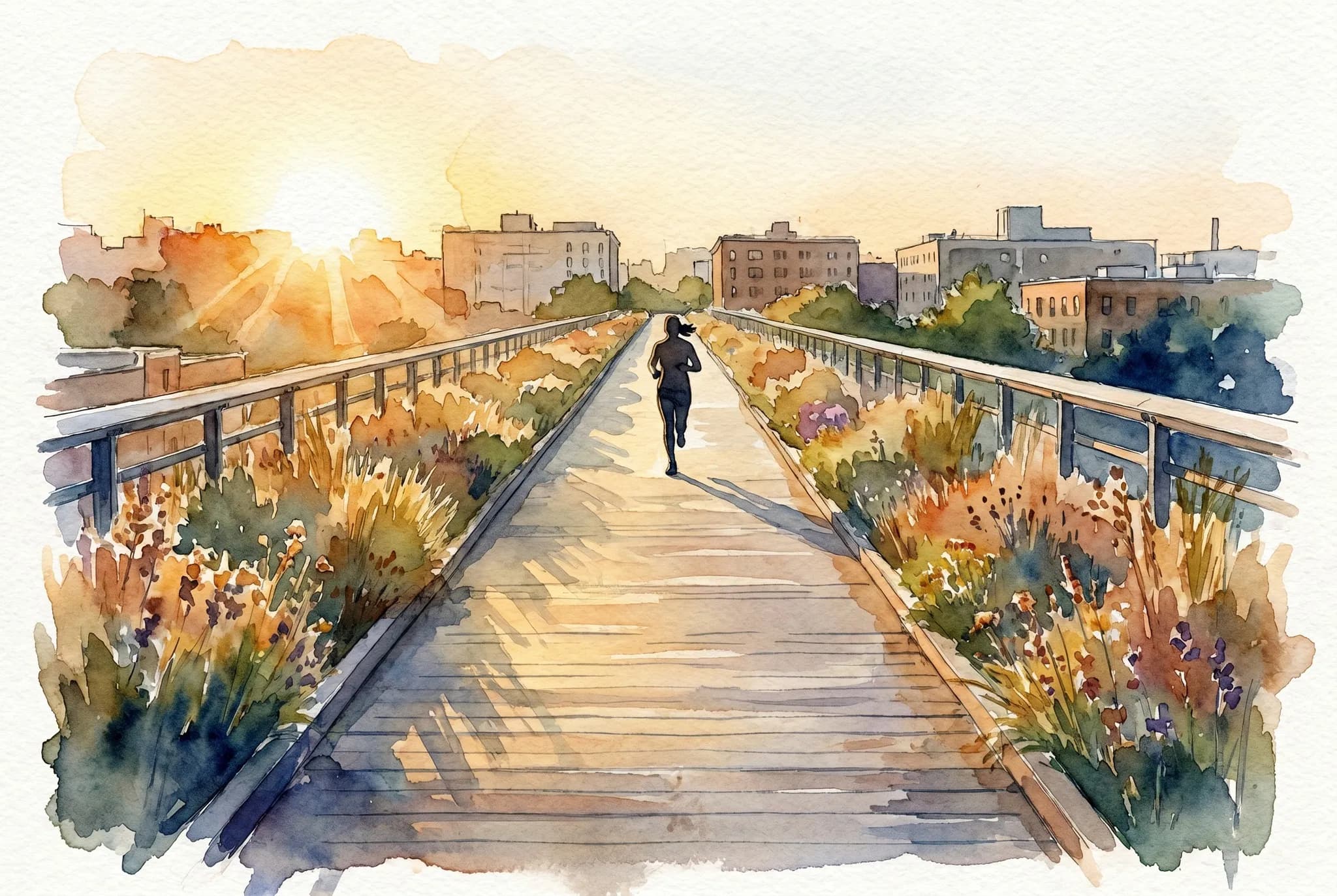
There is a specific 90-minute window — 6:30 to 8:00am — when the park opens (7am from April through November, 7am also in winter) and almost no one is on it. The runners arrive first, then a few dog-walkers from the West Chelsea apartments, then the first wave of office-bound commuters cutting through. The tourists don't show up until 10. Between 7 and 9 on a weekday, the park is essentially yours.
Starting at the northern (34th Street / 11th Avenue) end and walking south reverses every default about the experience. You begin in the Hudson Yards section, which is the newest and most architecturally crowded — glass towers, the Vessel, the Edge observation deck. You walk south into progressively older and quieter sections. The Chelsea galleries pass underneath. The planting becomes denser and more deliberate as you go. By the time you reach the Gansevoort end, you've moved backwards through twelve years of the park's construction, and the sun has come up enough to side-light the seed heads.
Piet Oudolf's Planting Is the Point
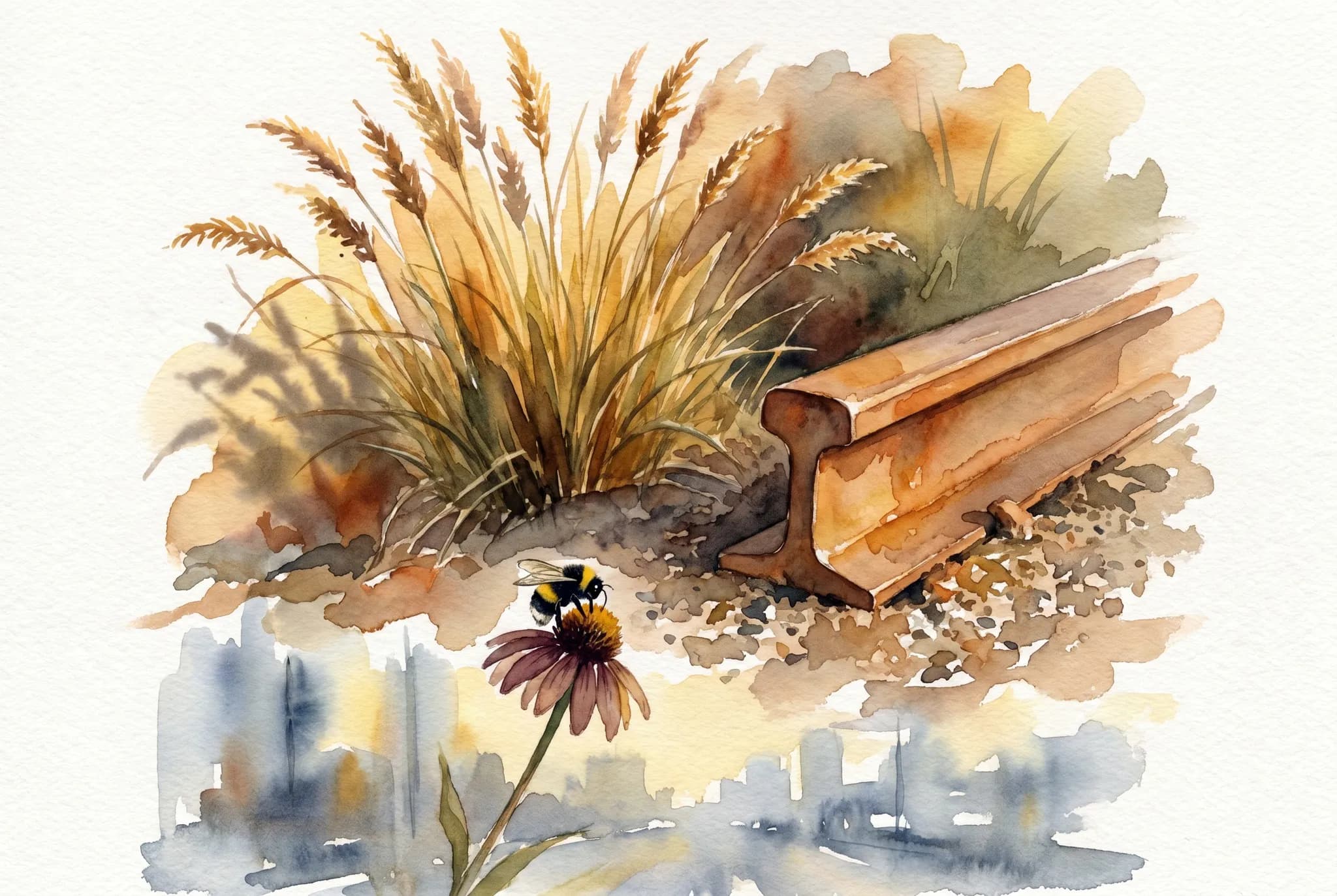
The High Line's planting plan is the most influential public-garden design of the past 25 years. Oudolf — best known for his work at New York Botanical Garden and Lurie Garden in Chicago — picked over 500 species, most of them native North American prairie and meadow plants, and arranged them so the park reads as one continuous wild planting from end to end rather than a series of curated beds. Echinacea, sumac, prairie smoke, switchgrass, little bluestem, asters, sedums, milkweed. Nothing is staked. The seed heads stay through winter on purpose; the dried structure is part of the design.
You can't see this in the afternoon, because the light is overhead and flat and the planting reads as background. At dawn, the low side-light catches the seed heads from the east and lights up the entire planted spine of the park. The prairie grasses suddenly read as a sculpture of light. This is the version Oudolf designed for, and it's the version no one but the runners ever sees.
The Three Stops Worth Making
If you walk briskly, the full 1.45-mile route takes 35 minutes. The version that rewards the dawn is closer to 75 minutes with three deliberate pauses.
The first is the **30th Street Cut-Out** — the small section where the park bends west around the Hudson Yards rail spur. From the bench here you can see east down 30th Street into the morning light hitting midtown, and west across the rail yards to the river.
The second is the **23rd Street Lawn** — the only proper lawn on the park, a small grassy area with a single tree. It opens at 8am most days (it's the one section that opens later than the rest of the park, to protect the grass). Sit on the lawn edge for ten minutes and let the city come up around you.
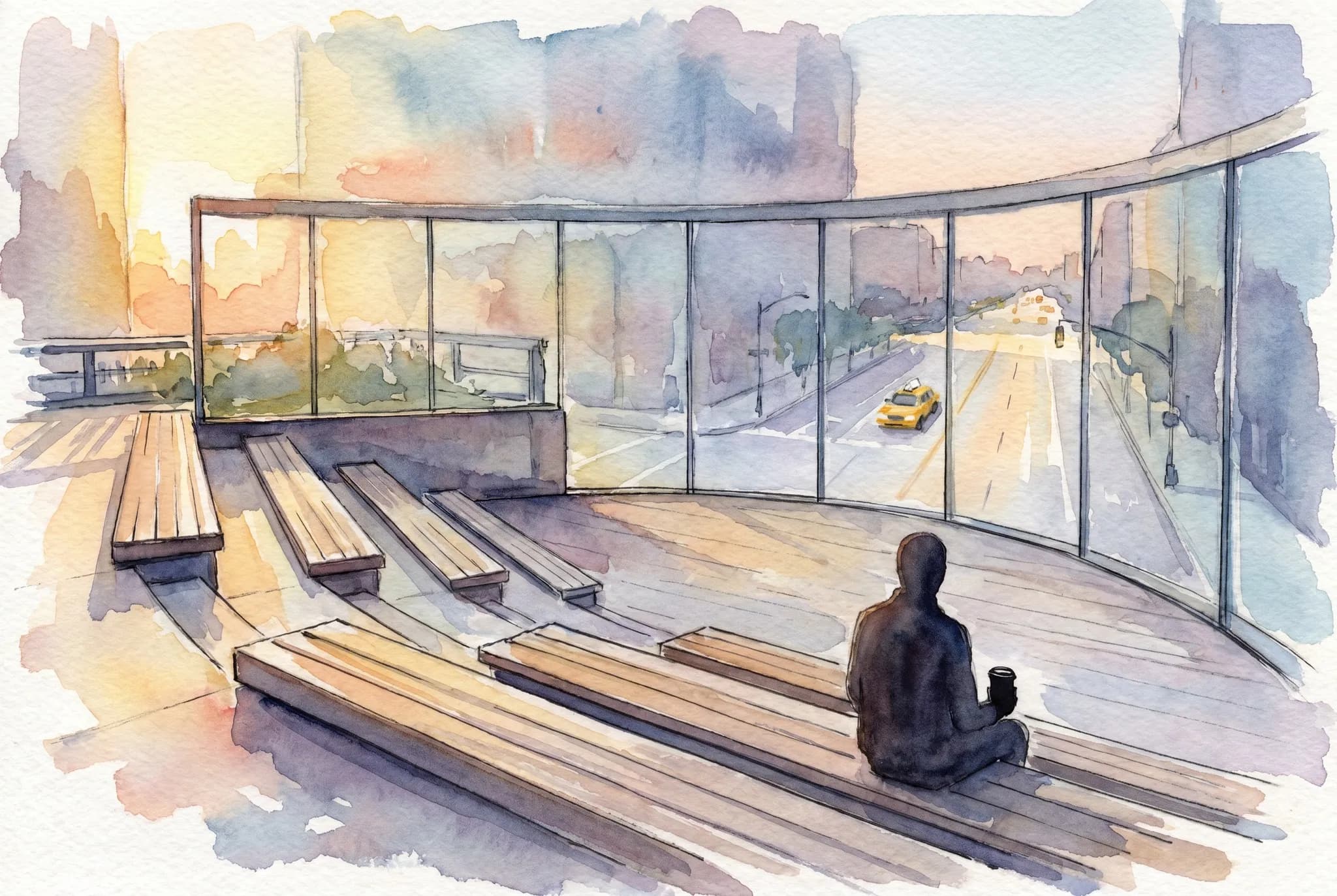
The third is the **10th Avenue Overlook** at 17th Street — the small wooden amphitheater stepped down into a glass-walled cutout looking south down 10th Avenue. The view down the avenue at dawn, with the yellow cabs starting to flow, is the High Line's signature urban-cinematic moment. There's a small wooden bench at the bottom. Sit on it. Take a picture if you want; the view is genuinely better in person.
Why Walking Southbound Matters
The architectural logic of the park — Hudson Yards modernist glass at the north end, Edwardian brick warehouses in the middle, Gansevoort meatpacking-warehouse stone at the south — happens to map onto the city's growth backwards in time. You start in 2019 (Hudson Yards) and end in 1880s (Meatpacking). Walking south is walking back through 140 years of West Side history.
It also delivers you to the right place. The south end of the High Line drops you at Gansevoort Street, two blocks from the Whitney Museum and one block from the small district of independent coffee places — Five Leaves, Bluestone Lane, Toby's Estate — that opens at 7:30. The north end drops you into Hudson Yards, which at 8am is a corporate plaza with no good coffee. The end-of-walk experience matters; arrange the walk so the better ending wins.
Why It Works as "The Long Way Home"
Manhattan's logic is that you take the 1, 2, or 3 down the west side and you're at 14th Street in eight minutes. This walk takes 75 instead. What you trade the 67 extra minutes for is the only piece of public infrastructure in New York where you can walk through a mile and a half of native prairie planting at the right hour, watch the sun come up across the west side of the island, and arrive at the destination in better shape than you left.
It's also the only walk in the city where the entire route is elevated, weatherproof in light rain, and free of cars. The park has been the city's free elevated promenade for nearly seventeen years now, and the dawn window is the one slice of that time when the park reads the way its designers intended.
Practical notes
- Start: 34th Street / 11th Avenue entrance, west of the Javits Center (7 train to 34th St–Hudson Yards is one block east)
- End: Gansevoort Street entrance, two blocks west of the Whitney Museum (A/C/E/L to 14th St–Eighth Av is a five-minute walk)
- Distance: 1.45 miles · 75 minutes with three deliberate pauses
- Park hours: Daily 7am–10pm April through November · 7am–8pm December through March (the 23rd Street Lawn opens at 8am year-round)
- Best window: 6:50am at the gate, walk south. Weekday is quieter than weekend. May–October is the prime planting season.
- Walking solo: The High Line is well-lit, monitored by High Line Friends staff, and within sight of the surrounding apartment buildings throughout. There are emergency phones at most access points. The 7, A/C/E, L, and 1/2/3 are all within a few blocks of various exit points if you want to shorten the route.
- What to bring: A thin layer — the elevated park runs five degrees cooler than street level at dawn. Coffee is best bought at the destination end (Bluestone Lane at 75 Christopher St) rather than the start.
- What to do after: Walk three blocks east to Joe Coffee on Waverly for the better-coffee version; or down to Cubbyhole for the bar-around-the-corner cliché; or directly into the Whitney when it opens at 10:30am.
The point
The High Line gets called overrated by people who've only walked it on a Saturday afternoon in October. They're not wrong about that version of it. The 7am-Tuesday version is a different park — emptier, lower-lit, with the planting doing the work it was designed to do and the city coming up around it slowly. Take the long way. Start at the wrong end. Walk in the wrong direction. Be on it before anyone else is.
#thehighline #highlinenyc #pietoudolf #chelseanyc #meatpackingdistrict #thelongwayhome #nycwalks #dawnwalk #urbanparks #nycparks #freenyc #manhattanwalks #nativeplants #prairiegarden #wheretowalknyc
Sources consulted: thehighline.org · en.wikipedia.org · gardenista.com · thehighline.org/gardens · nycgovparks.org
All trademarks are the property of their respective owners.