Most Saturday mornings in Midwood unfold quietly—bagels, errands, the pleasant drift toward weekend plans. But in one residential garage, a different rhythm takes hold: the warm hum of filament circuits, the soft glow of orange and blue cathodes, the measured click of selector switches on tube testers older than most of the borough's newest residents. This is where vacuum tubes—those glass relics of mid-century electronics—still matter, where transconductance curves and plate voltages determine whether a guitarist's Marshall stack will sing or a hi-fi purist's SET amplifier will deliver the crystalline midrange they're chasing. The proprietor is a retired engineer who learned tube electronics in the Navy during the 1960s, and his operation serves a devoted clientele of restorers, audiophiles, and amp builders across the Northeast.
The Testing Floor
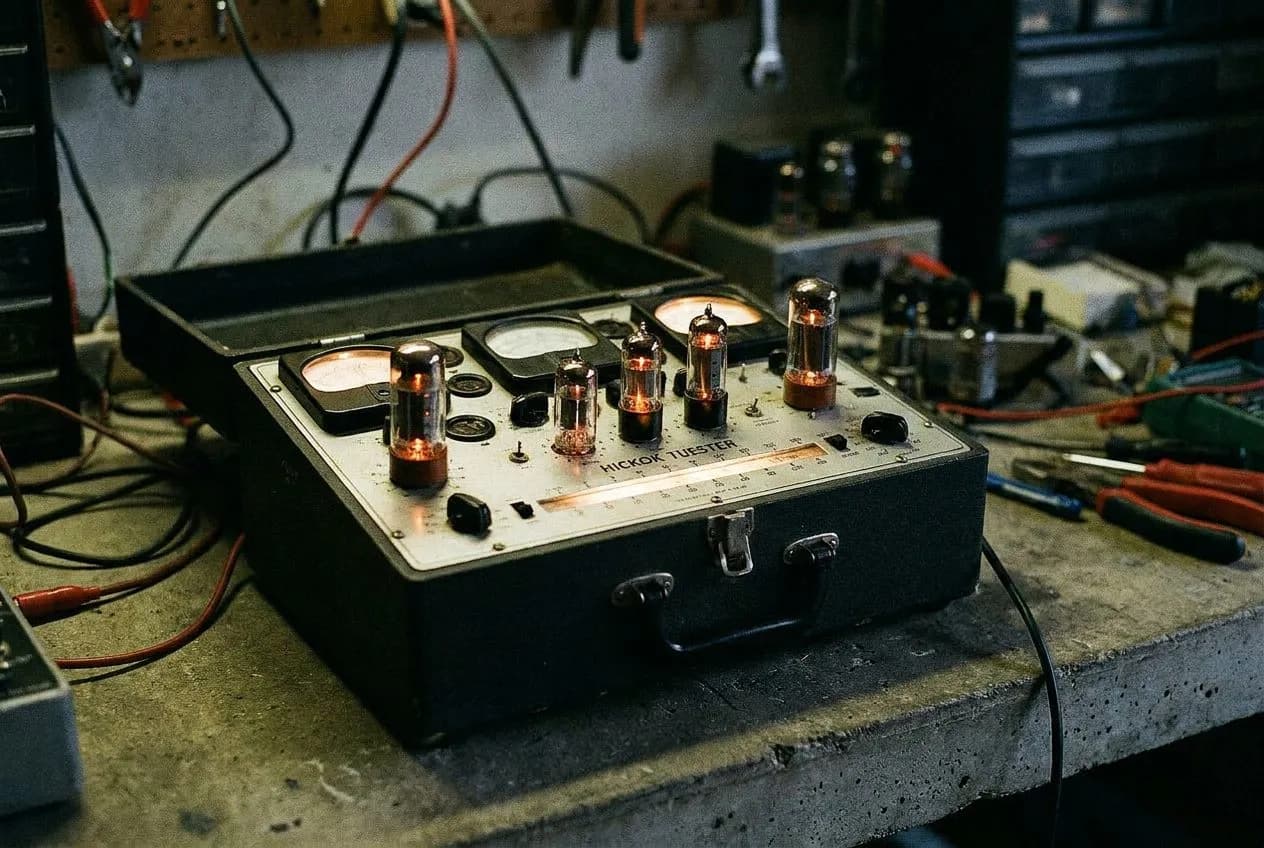
Six tube testers line the workbench, each a monument to analog precision. The crown jewel is a Hickok 539C, its bakelite panel worn smooth by decades of rotary-switch manipulation, its meter face calibrated in micromhos. Beside it sits a Jackson 648, a Sencore Mighty Mite, and three others whose model numbers are visible only if you tilt your head just right. Each tester has its specialty: some excel at output tubes, others at small-signal triodes or rectifiers. The operator knows which tester to reach for without looking, the way a chef knows which knife belongs in which hand.
Testing isn't just pass-fail. Tube matching for push-pull amplifiers—where two output tubes work in tandem—requires testing transconductance within five percent tolerance using the Hickok tester's calibrated grid settings, a process that takes patience and a steady hand on the bias controls. The operator adjusts plate voltage, measures grid current, records the readings in a small notebook whose pages are stiff with years of penciled numbers. For guitar amp builders chasing that elusive balanced overdrive, matched pairs are worth the wait.
The Inventory
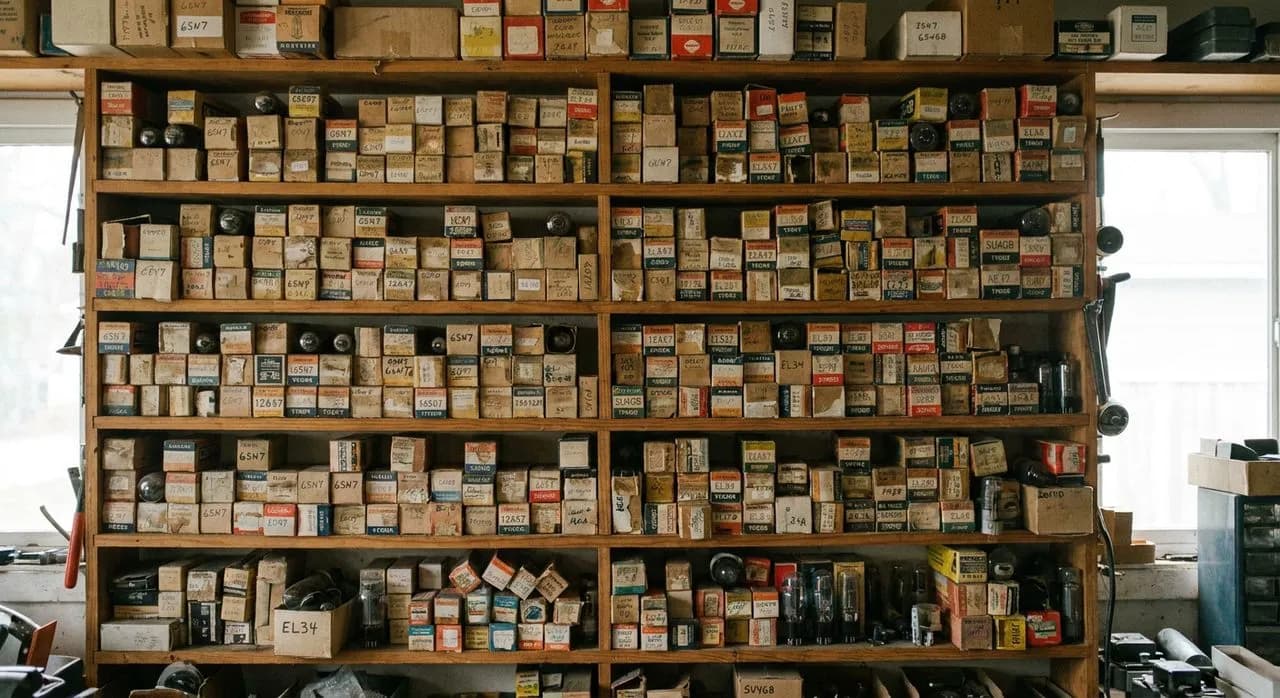
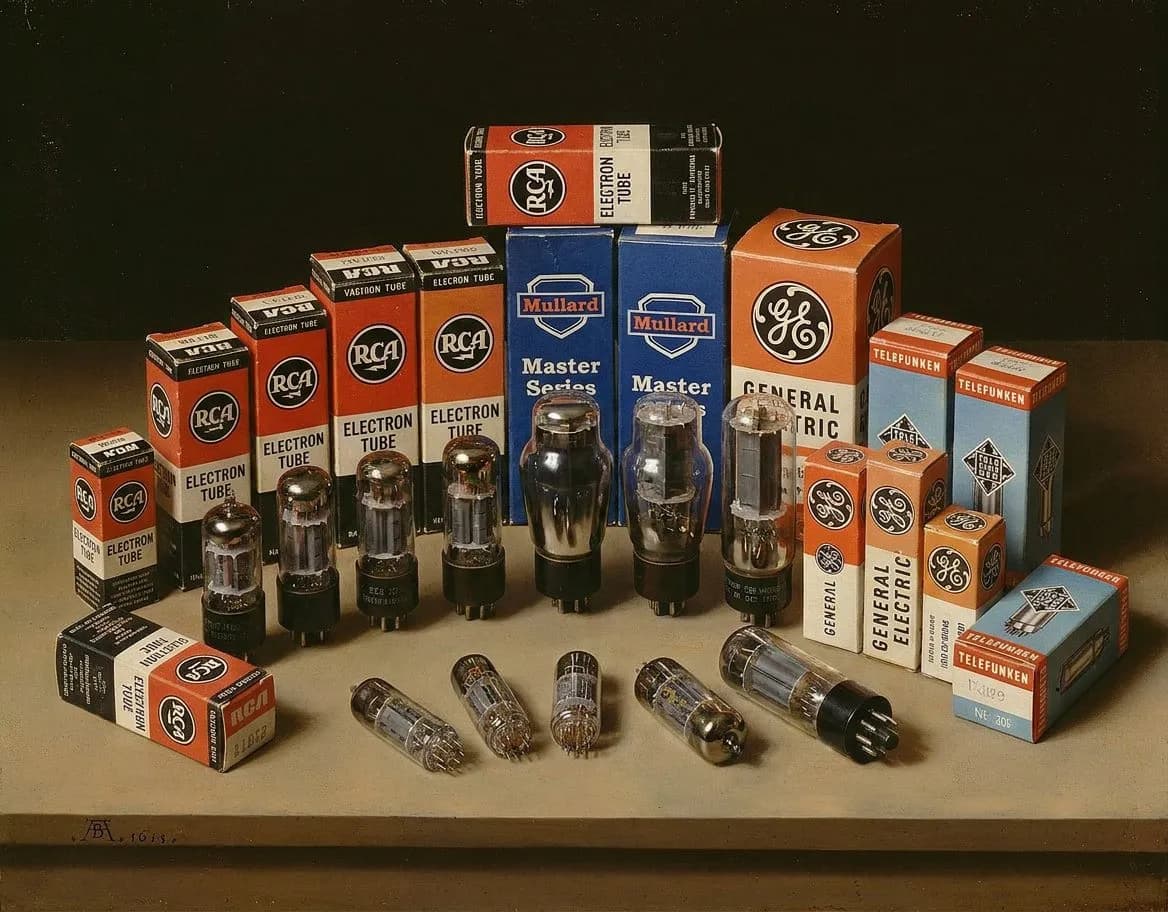
Floor-to-ceiling shelving holds new-old-stock tubes in their original boxes: RCA, Sylvania, Tung-Sol, Telefunken. The cardboard smells faintly sweet, the way old paper does when it's been stored carefully away from humidity. Some boxes are pristine, others softened at the corners, printed with price tags from radio-supply houses that closed during the Reagan administration. The operator's NOS inventory includes rare 6L6GC tubes from RCA's Harrison, New Jersey plant, identifiable by their gray plate construction and date codes stamped on the glass—tubes that command serious prices among Fender Bassman purists and high-end audio builders.
A rolling tube caddy organizes the working stock by type number: 12AX7s in one drawer, 6V6s in another, EL34s and KT88s in the larger compartments below. European tubes present their own taxonomic challenges—different numbering systems, equivalent but not identical specs. The operator can identify unmarked tubes by envelope shape, pin configuration, and internal construction, a skill honed over decades and supplemented by dog-eared reference manuals stacked beside the oscilloscope.
The Saturday Rush
Walk-ins are welcome, but timing matters. Saturday morning sessions peak between nine and eleven a.m., when guitar amp builders arrive before weekend gigs needing emergency tube replacements—a blown power tube on a vintage Ampeg, a microphonic preamp tube in a Vox that's howling feedback, a rectifier that gave up the ghost during Thursday's rehearsal. The garage fills with shop talk: bias settings, transformer impedance, whether NOS Mullards really sound warmer than new production Slovakians. There's camaraderie here, the easy banter of people who speak a shared technical dialect.
The operator fields questions with the calm authority of someone who's seen every failure mode a vacuum tube can exhibit. He'll test a suspect tube, explain why it's reading low on transconductance, suggest a replacement, and sometimes pull a matched pair from inventory that he set aside weeks ago knowing someone would need exactly this spec. Phone-ahead is recommended for large tube lots or matching services—projects that require extended bench time and can't be squeezed between walk-ins.
The Consultation Work
Beyond retail sales, the operator consults for amp builders and hi-fi restorers throughout the Northeast. A boutique guitar-amp maker in Connecticut ships chassis for bias optimization. A SET amplifier builder in Massachusetts calls for advice on sourcing matched 300B triodes. A recording studio in Brooklyn brings vintage Altec compressors whose metering tubes need replacement. Each project carries its own technical puzzle, and the operator relishes the problem-solving: measuring, testing, sometimes fabricating adapters to test tubes in oddball sockets.
The work demands both theoretical knowledge and practical intuition. Datasheets provide baseline specs, but real-world performance often deviates—manufacturing variance, aging characteristics, how a tube behaves under different operating conditions. The operator's Navy training laid the foundation, but fifty-plus years of hands-on work built the expertise. He can listen to a guitar amp's overdrive character and diagnose whether the issue is a weak preamp tube, insufficient plate voltage, or a cathode bypass capacitor losing value.
The Analog Revival
Late 2026 finds vacuum tube technology in an unlikely renaissance. Solid-state amplification conquered the market decades ago, yet musicians and audiophiles keep circling back to tubes for reasons both sonic and aesthetic. There's the warmth of even-order harmonic distortion, the forgiving compression as output stages saturate, the simple beauty of glowing glass bottles doing electrical work. Guitar players swear by tube amps for responsiveness and touch sensitivity. Hi-fi enthusiasts build systems around single-ended triode designs, chasing a purity of tone that measurements alone can't capture.
The Midwood garage serves this niche with zero pretension and total competence. No marketing, no social media presence, just word-of-mouth referrals and a reputation built tube by tube. The operator isn't trying to convert solid-state devotees or romanticize obsolete technology. He's simply providing a service for people who need tubes tested properly, matched accurately, and sourced from reliable stock. In an era of planned obsolescence and throwaway electronics, there's something quietly radical about maintaining expertise in repairable, rebuildable technology.
Practical notes
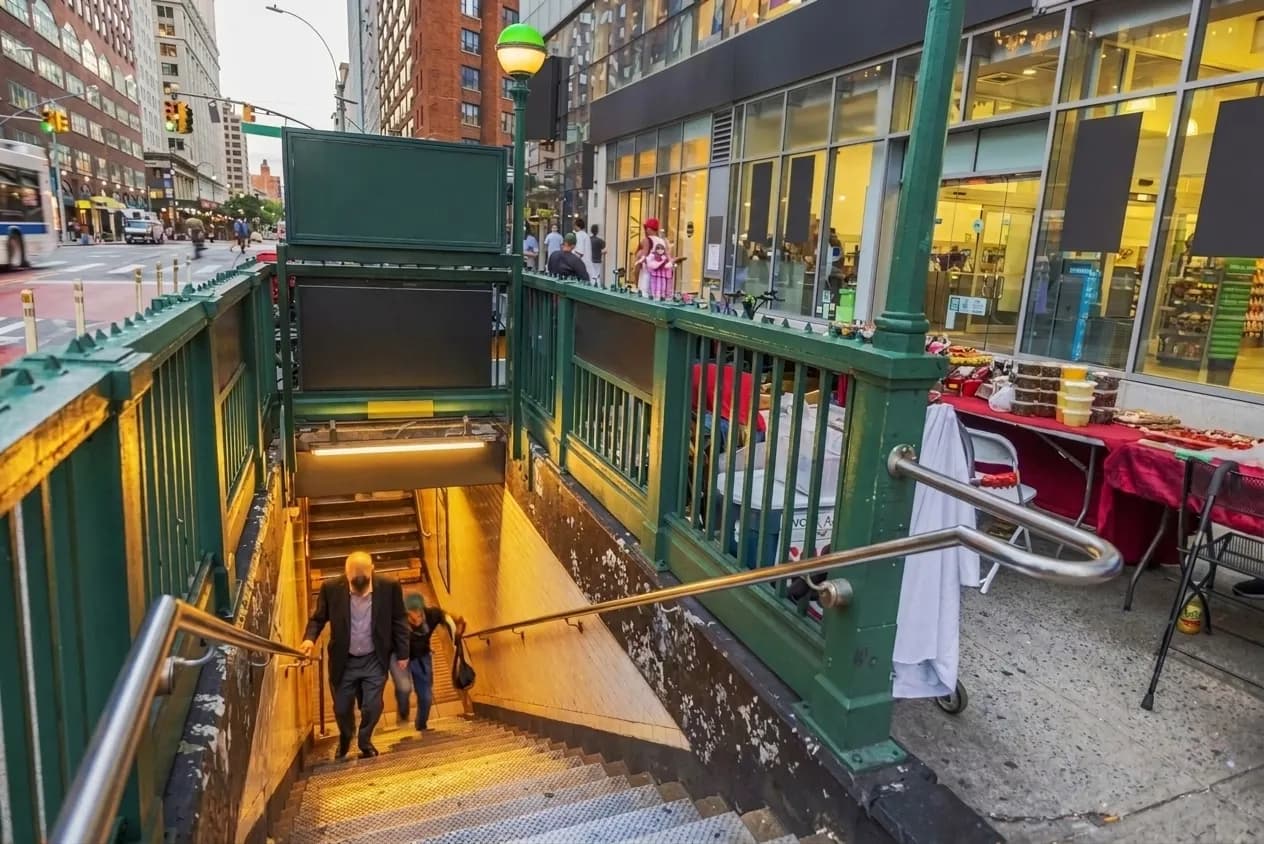
The workshop operates in a residential Midwood garage; exact location should be confirmed directly before visiting By subway, take the Q to Avenue M and confirm the exact walk-in directions and parking availability before visiting. Hours are by appointment or vary; call ahead for current Saturday availability, matching services, or consultation work—the operator sometimes travels for on-site projects. Walk-ins welcome during open hours. The space is ground-level accessible via the driveway; bring any tubes you need tested and relevant equipment specs if seeking replacements. Cash preferred. Verify current hours directly before visiting, as holiday weekends occasionally shift the schedule.
Tags: #VintageTubes #MidwoodNYC #VacuumTubes #TheOddEdit #AudiophileLife #GuitarAmpRepair #NOSTubes #VintageElectronics #HamRadio #AnalogAudio #BrooklynWorkshops #TubeAmps #HiFiRestoration #WeekendNYC #HiddenBrooklyn
Sources consulted: Vacuum Tube - Wikipedia · Midwood, Brooklyn - Wikipedia · New York Times - NY Region · Brooklyn Borough Hall · Guitar Amplifier - Wikipedia
All trademarks are the property of their respective owners.