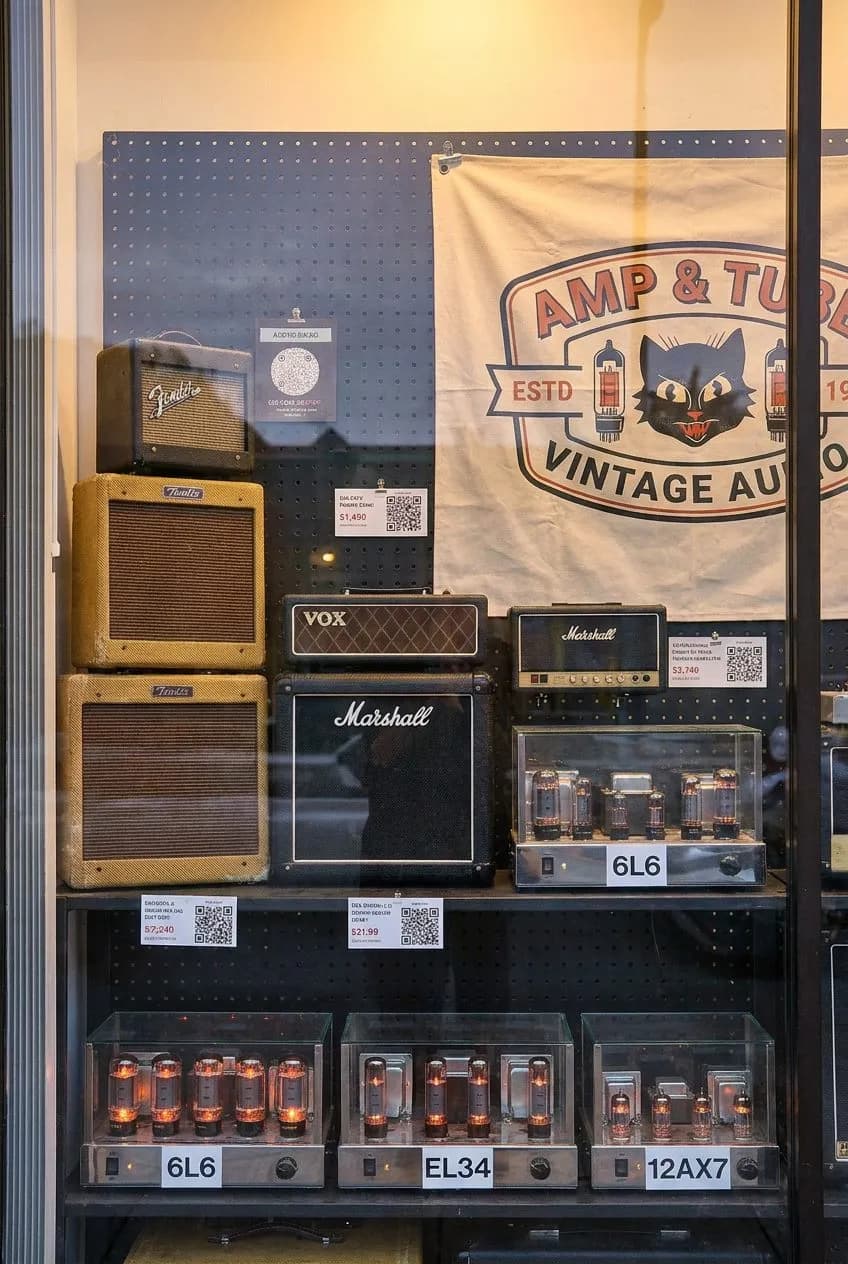
The front window is stacked with cartons and oscilloscopes, the kind of visual chaos that suggests serious work happens inside. Stereo Exchange occupies a narrow storefront where the Upper West Side still remembers its pre-chain character, and the air inside smells faintly of solder flux and warm transformer oil. This is not a showroom. It's a working repair shop where tube amplifiers glow on test benches and reel-to-reel decks sit half-disassembled, their capstan motors exposed like open-heart surgery. By late 2026, as vinyl and analog audio continue their unlikely ascent among younger collectors and lifelong audiophiles alike, places like this have become both archive and operating theater.
The workshop floor
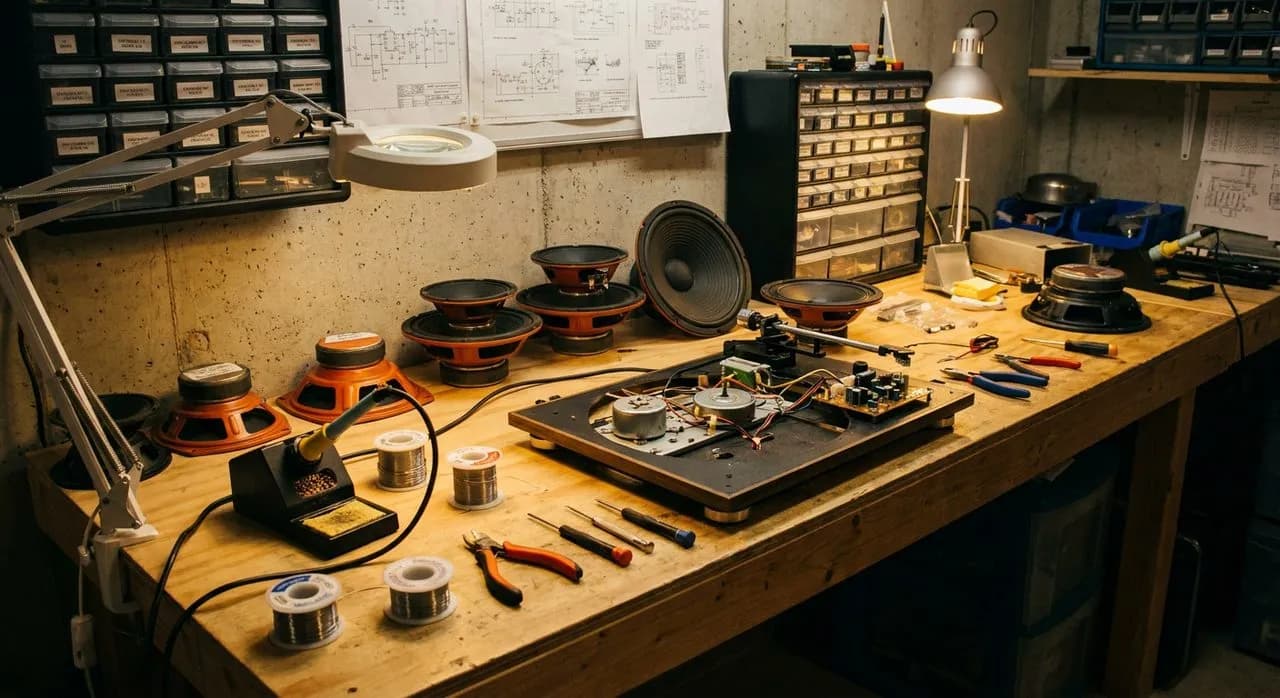
Two long benches run the length of the shop, cluttered with multimeters, spool after spool of solder, and circuit boards awaiting diagnosis. The technicians work without much ceremony—one replaces capacitors in a silver-faced Marantz receiver while another recalibrates the bias on a Revox A77. These are not hobbyists. They know how to source obsolete transistors, how to rebuild a phono stage without introducing hum, how to true a platter bearing to within a thousandth of an inch.
A 1970 Thorens TD-124 turntable sits on the counter near the register, its machined alloy platter catching the overhead light. Serial number TD-7734. It's the shop reference deck, the standard against which everything else is measured, and it is never for sale. The technicians use it to audition cartridges, to prove that a freshly rebuilt tonearm tracks cleanly, to remind themselves what properly executed analog playback sounds like. It hums quietly, a mechanical metronome older than most of the customers who wander in.
Saturday morning demonstrations
The shop occasionally hosts listening/demo sessions; verify current schedule directly and demonstrates it in the small listening room at the back. The sessions are free to attend, no reservation required, though space is limited to six or eight chairs. One week it might be a pair of Klipsch Heresys driven by a rebuilt Dynaco ST-70. Another week, a complete Sansui stack from the mid-seventies, its tuner dial glowing amber, its VU meters bouncing in near-perfect sync.
The demonstrations are informal but never careless. The technician will explain what was wrong with the unit when it arrived, what parts were replaced, why a particular capacitor type was chosen. Then he'll cue up a record—jazz, classical, occasionally a well-mastered rock pressing—and let the system speak for itself. It's as much continuing education as it is sales pitch, and the regulars treat it as a weekly ritual. By summer's end, you start to recognize the same faces, the same questions about speaker impedance and output transformers.
The vault downstairs
Most of what's visible on the main floor is either in active repair or recently completed. The real inventory lives downstairs in what the staff calls the vault, a basement room accessible only by request. Ask to see it—politely, and ideally when the shop isn't crowded—and one of the technicians will lead you down a narrow staircase into a climate-controlled space lined with metal shelving. Here sit the rare Marantz and Sansui units awaiting restoration, some tagged with acquisition dates years in the past, others still wrapped in the moving blankets in which they arrived.
The shop may have back-room inventory or storage; verify whether a public 'vault' exists and whether access is by request or by the shop itself, which acquires pieces strategically and restores them as time and parts allow. But it's worth seeing if only to understand the scale of the operation. A Model 10B tuner in original oak case. A quartet of Marantz 9 monoblocks, their chrome handles tarnished but their transformers intact. A Sansui QRX-9001 quadraphonic receiver, a format footnote that nonetheless commands four figures when properly refurbished. You won't leave with anything, but you'll leave understanding why people wait.
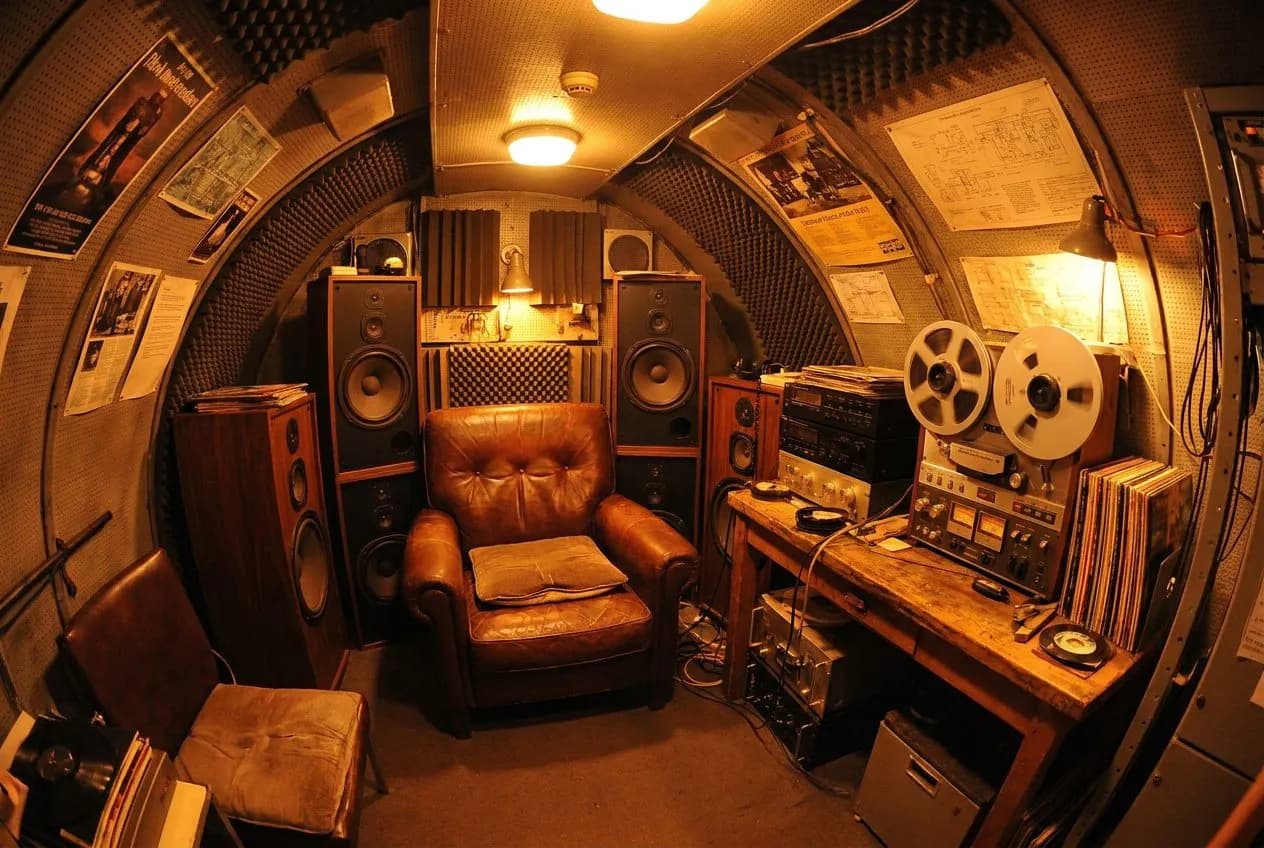
The listening room
At the rear of the shop, past the benches and the storage racks, a doorway opens into a narrow room with acoustic panels on the walls and a thick rug underfoot. This is where customers audition systems by appointment, and where the Saturday demonstrations take place. The equipment rotates—whatever has just been finished, whatever needs to find a home—but the purpose is constant. Stereo Exchange wants you to hear what vintage audio nyc enthusiasts have known for decades: that well-maintained analog gear from the golden age of hi-fi can still outperform much of what's sold today.
The appointments are unhurried. Bring your own records if you like, or choose from the shop's reference library. The technician will swap in different speakers, different amplifiers, different cartridges if you're curious. There is no hard sell, no finance menu, no upsell to a streaming module. Either the sound moves you or it doesn't. Either you understand why someone would pay two thousand dollars for a forty-year-old amplifier or you walk away mystified. Both responses are fine. The shop has enough work.
What draws people back
Plenty of repair shops can replace a belt or clean a stylus. What keeps customers returning to this Upper West Side corner is the depth of knowledge and the absence of condescension. The technicians will troubleshoot a budget turntable with the same care they give a Thorens, and they'll talk a novice through cartridge alignment without impatience. They also know when to say no—when a repair isn't economical, when a unit is too far gone, when a customer's expectations exceed what any amount of restoration can deliver.
It helps that the neighborhood still has enough old-guard residents who remember when this equipment was new, who bought their first Marantz receiver at Harvey Electronics in 1974 and have been nursing it along ever since. But younger collectors are arriving too, drawn by online forums and the same contrarian streak that sends people back to mechanical watches and manual-transmission cars. They want something that can be understood, repaired, handed down. By late 2026, that desire feels less like nostalgia and more like pragmatism.
Practical notes
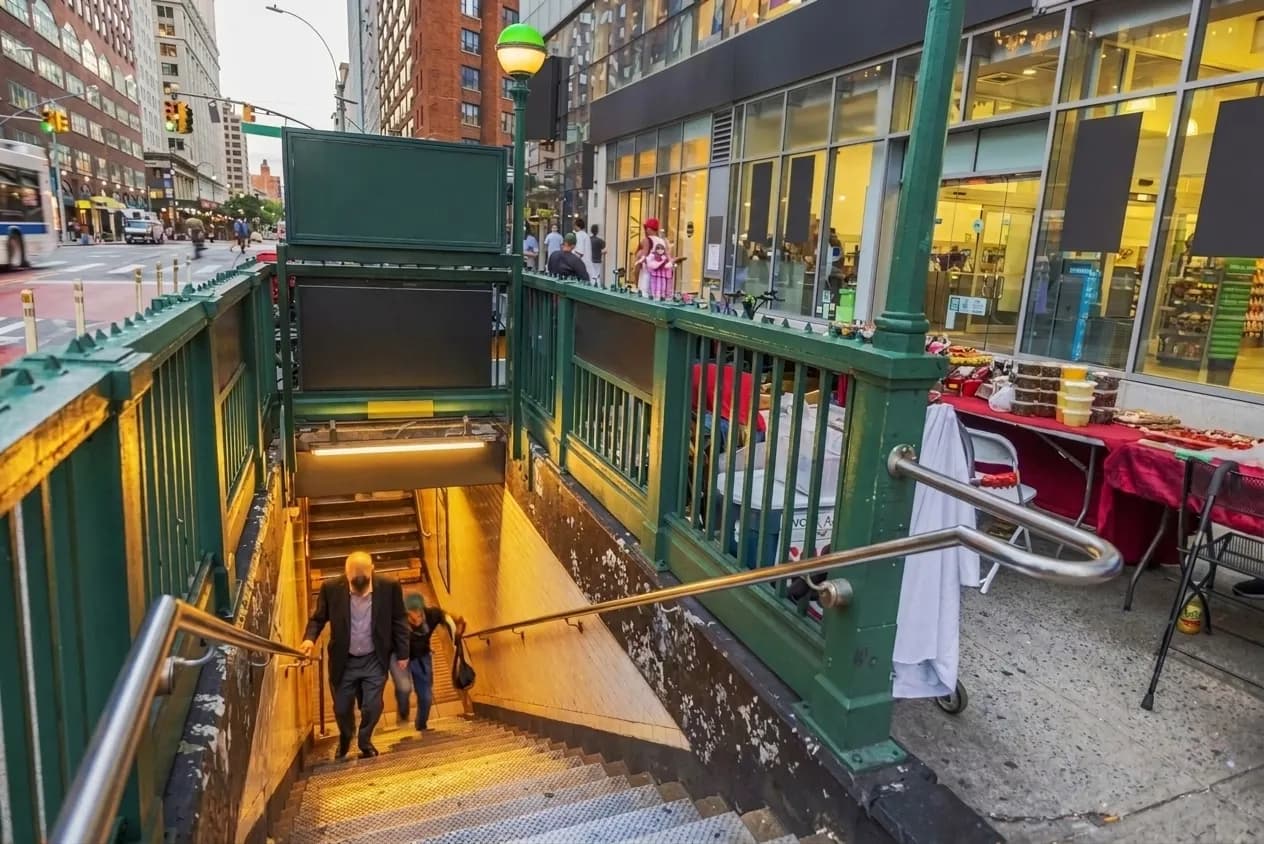
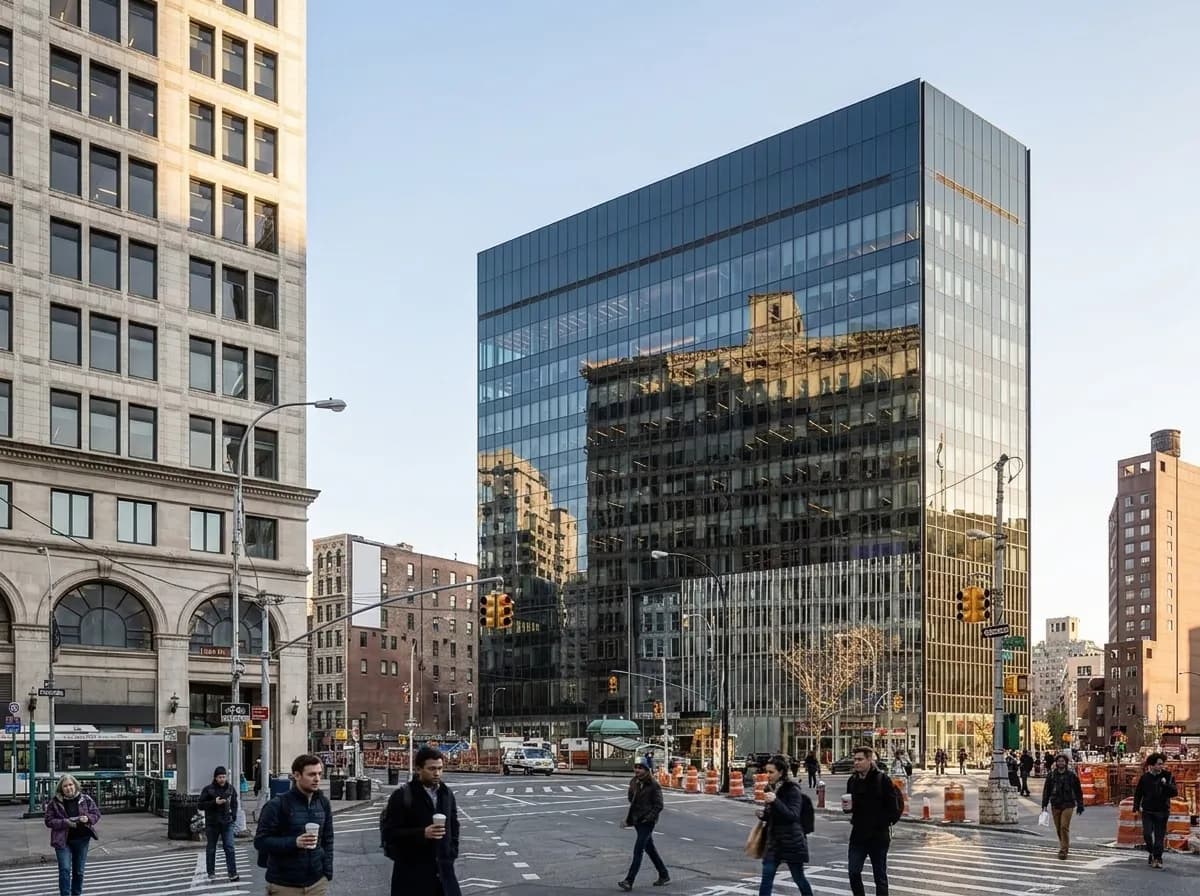
Stereo Exchange is on the Upper West Side near Broadway; verify the exact cross street and nearest station before publishing Street parking is difficult; public transit is recommended. Hours vary and the shop occasionally closes for estate acquisitions or installations, so verify directly before visiting. The Saturday morning demonstrations run from 11 a.m. to noon and require no reservation. Listening-room appointments are scheduled by phone. The shop floor is accessible, though the downstairs vault involves a steep staircase. Bring records if you want to audition systems with familiar material, and bring patience—this is analog audio, and nothing here moves quickly.
Tags: #VintageHiFi #UpperWestSide #StereoExchange #AnalogAudio #VinylCulture #NYCAudio #TubeAmps #McIntoshAmplifiers #MarantzReceivers #AudiophileNYC #TheOddEdit #ReelToReel #TurntableRepair #Summer2026 #KarposFinds
Sources consulted: High Fidelity · McIntosh Laboratory · Upper West Side · NY Times - NY Region · Time Out New York
All trademarks are the property of their respective owners.