Political phrases can trend faster than the documents behind them. If you are trying to understand house republicans midterm election priorities from New York City, treat the search as a verification workflow, not a debate to win. Start indoors, preferably at a public library where you can compare official records, reputable reporting, and election-office guidance without rushing. The goal is simple: separate a claim about policy, voting, candidates, or Congress from the source that proves it. On July 27, 2026, the strongest approach is to check current library hours before leaving, use official election and congressional pages first, and save screenshots or citations only after confirming dates and jurisdiction.
Want a same-day source check before you share a political claim? Text Karpo with the claim, borough, and deadline, and ask for a verification route built around NYC libraries and official records.

NYPL Schwarzman Building: Start With a Research Desk, Not a Feed
The Stephen A. Schwarzman Building at Fifth Avenue and 42nd Street is the most useful first stop when a claim needs context beyond one article. NYPL lists it as a research center with public reading rooms, research divisions, and Ask NYPL support. Its posted regular hours vary by day, and division hours may differ, so confirm the page the morning you go. The tradeoff is Midtown noise and possible renovation disruption, but the upside is staff guidance and a quiet setting for careful comparison.
Use the building for claims that mention legislation, historical precedent, budget language, or official statements. Bring the exact wording, where you saw it, and the date attached to it. Ask a librarian which database or government source best verifies the claim; do not ask them to settle a political argument. Accessibility is a strong fit here: NYPL notes wheelchair-accessible public service units, accessible entrances at 40th Street and 42nd Street, and onsite staff for accommodation questions.
Rose Main Reading Room: Build a Two-Column Claim Log
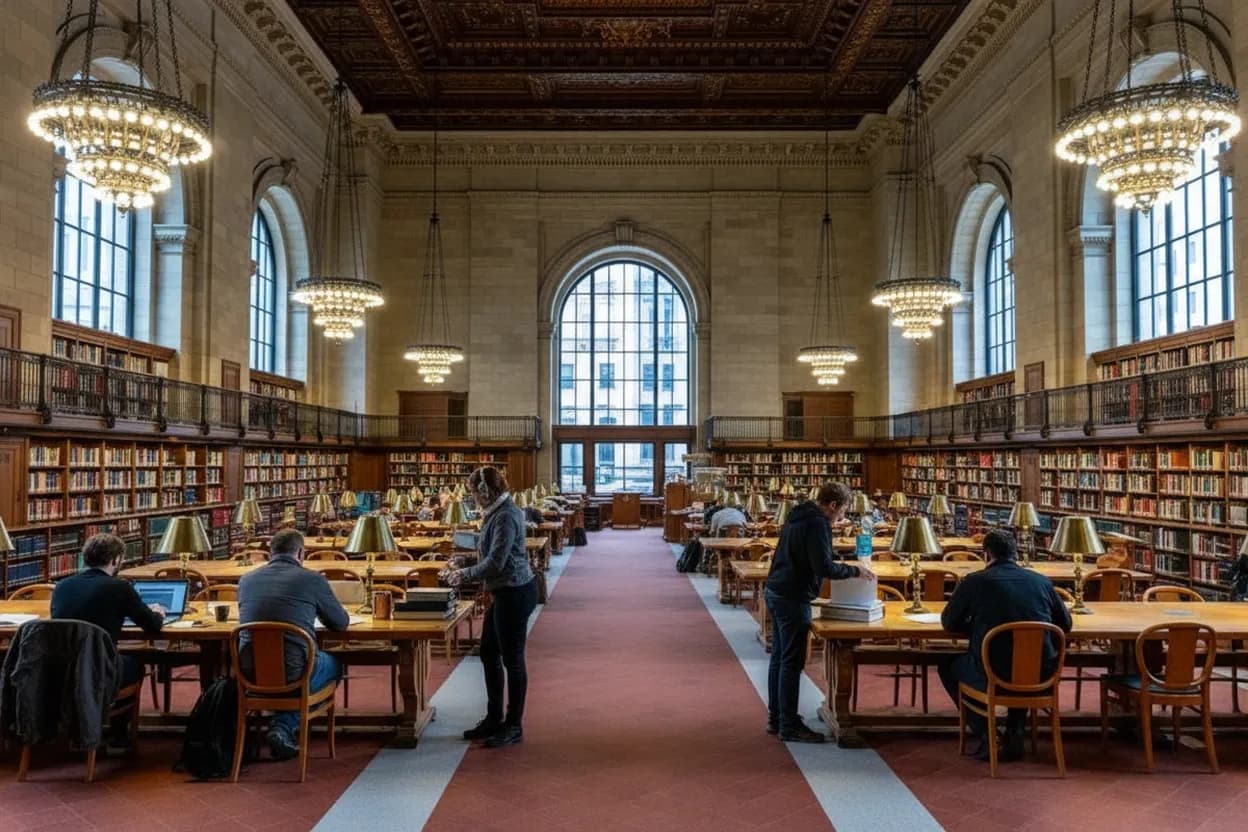
For solo daytime work, the Rose Main Reading Room works best as a low-friction sorting station. Put the claim in one column and the evidence needed in the other: bill number, sponsor, committee, voting deadline, candidate status, or election rule. This pacing keeps the session from becoming open-ended browsing. If the room is crowded or closed for any reason, use another public research area in the building and preserve the workflow rather than waiting for a specific seat.
Failure mode one is treating a headline as a primary source. Failure mode two is mixing jurisdictions, such as applying a national House claim to a New York City election rule. Your backup is to mark every unresolved point as unverified, then check Congress.gov for legislation, House.gov for current representative information, and NYC or New York State election pages for voting mechanics. The final step before leaving is to record the access date beside every source.
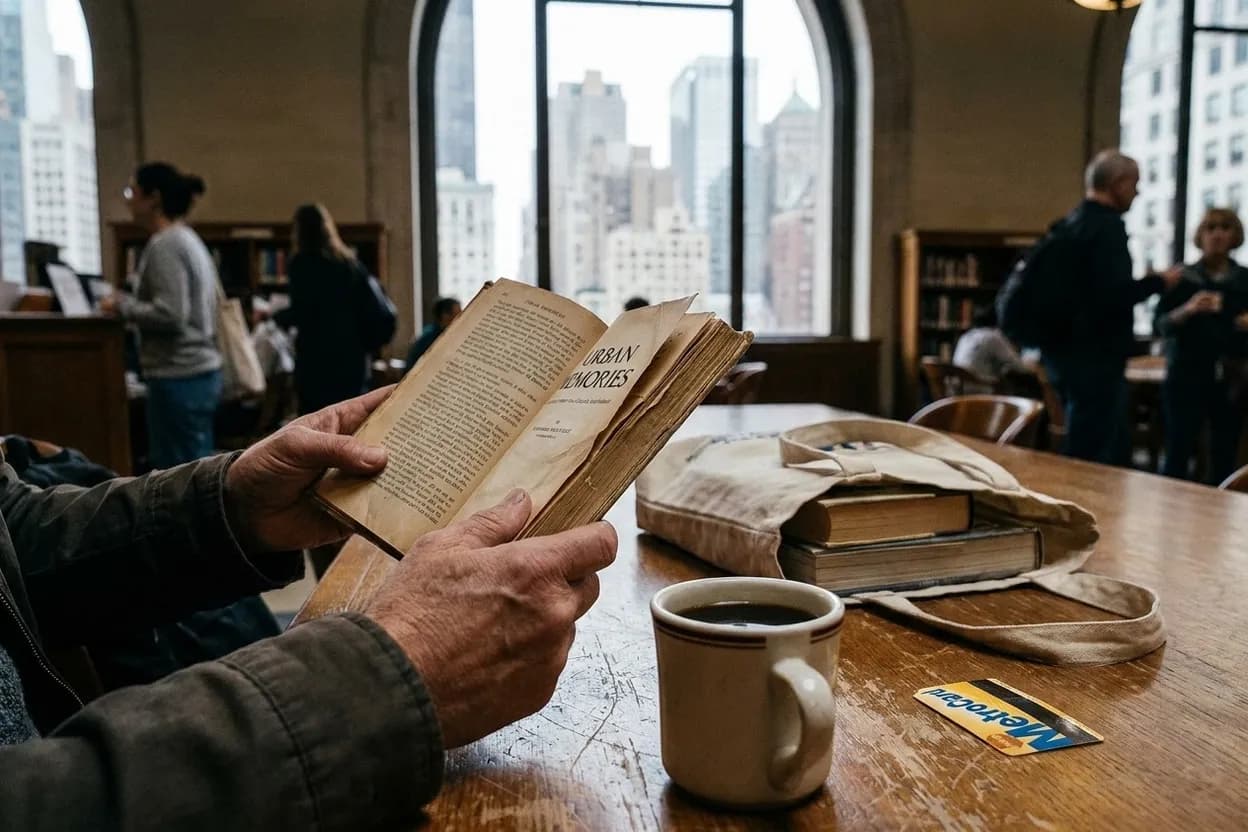
Ask NYPL: Use Librarian Help When the Source Trail Splits
NYPL’s Schwarzman page points visitors to Ask NYPL by email, chat, text, phone, and TTY. That matters when a political claim branches into older law, committee activity, public records, or archived news. A good request is narrow: “I need the official source for whether this bill advanced,” or “I need a nonpartisan way to verify this voting deadline.” Librarians can help locate sources; they are not a substitute for reading the source yourself.
This is a medium-difficulty workflow because the hard part is deciding what would count as proof. If the claim says a priority became law, you need a law or bill status, not a speech. If it says voters must do something, you need an election authority, not a campaign page. If staff are busy, submit the question and continue with official websites. Do not publish or forward until the answer and the page date line up.
Brooklyn Public Library Central: Use the Federal Depository Angle
Brooklyn Public Library’s Central Library at 10 Grand Army Plaza is a strong alternative for Brooklyn readers who want civic research without crossing Midtown. BPL lists Central as fully accessible, with subway and bus connections, broad weekly hours, meeting rooms, and an Information Commons. Its page also identifies BPL as a selective Federal Depository for U.S. Government documents, which makes it especially relevant when a claim depends on federal publications or congressional material.
The tradeoff is popularity: Central can be busy, and BPL notes occasional alternate service hours for large events. Check the branch page before you go, then choose a task that fits the available time. For a 45-minute visit, verify one claim fully instead of half-checking five. If you need a computer, printing, or a calmer workspace, ask staff what is available that day rather than assuming every amenity is open.
BPL Information Commons: Compare Congress.gov With the Claim Text
When the claim mentions a bill, resolution, amendment, or committee, Congress.gov is the baseline federal source. Its quick-start guidance says users can search by bill number, law number, keyword, or phrase, and then narrow results with filters. At a library computer, search the exact phrase first, then search the policy subject in plainer language. If a social post gives no bill number, treat that as a warning sign, not a conclusion.
Congress.gov can still be misunderstood. A bill introduced in the House is not the same as a law; a committee referral is not passage; a cosponsor is not always a sponsor. Read the latest action, chamber, congress number, and summary date. If the result is unclear, save the URL and ask a librarian how to interpret the legislative status. Your final verification step is to compare the claim’s verb against the official action: proposed, passed, signed, blocked, funded, or debated.
NYC Board of Elections Pages: Keep Voting Rules Local
For voting logistics, use the NYC Board of Elections rather than national commentary. The BOE FAQ states that NYC polling places are open from 6:00 AM to 9:00 PM, that voters must use their designated polling place, and that the poll-site locator or voter phone bank can confirm location. It also lists eligibility basics and assistance options. These are practical details, so verify them on the live page before relying on them.
Accessibility and failure planning belong in the same check. The BOE FAQ says most city polling sites are barrier-free but problems remain, and it directs voters with inaccessible sites to call the local borough office. That means the backup plan is not improvising at the door; it is checking the assigned site, borough contact, and assistance rules ahead of time. For any election-specific date, also confirm against the New York State Board of Elections calendar.
House.gov and a Library Table: Finish With Representative and Date Checks
Use House.gov’s Find Your Representative tool when a claim depends on who currently serves a district. The page explains that it reflects the current Congress and that district-boundary or election-result timing can affect what appears before a new Congress begins. That distinction matters in 2026: a campaign result, a current officeholder, and a future representative are not always the same thing on the same date.
Before you close the laptop, do one final pass. Confirm the source is official or clearly reputable, the date is current for July 27, 2026, the jurisdiction matches New York City or the relevant congressional district, and the claim uses the same level of certainty as the evidence. If any piece fails, label it “not verified yet” and decide whether to ask a librarian, contact an election office, or wait for an updated official page.
Tags: #AskKarpo #BeforeYouGo #NYC #NYCLibraries #ElectionInfo #CivicResearch #PublicLibrary #CongressGov #HouseGov #NYCVotes #VoterInfo #SourceCheck #MediaLiteracy #NeighborhoodGuides
Sources consulted: Source 1: nypl.org · Source 2: bklynlibrary.org · Source 3: vote.nyc · Source 4: house.gov · Source 5: congress.gov · Source 6: elections.ny.gov
All trademarks are the property of their respective owners.
Ask Karpo first
Tell Karpo your date, group size, budget, and starting neighborhood. We’ll check current access, timing, transit, and the cleanest plan for public library before you head out.