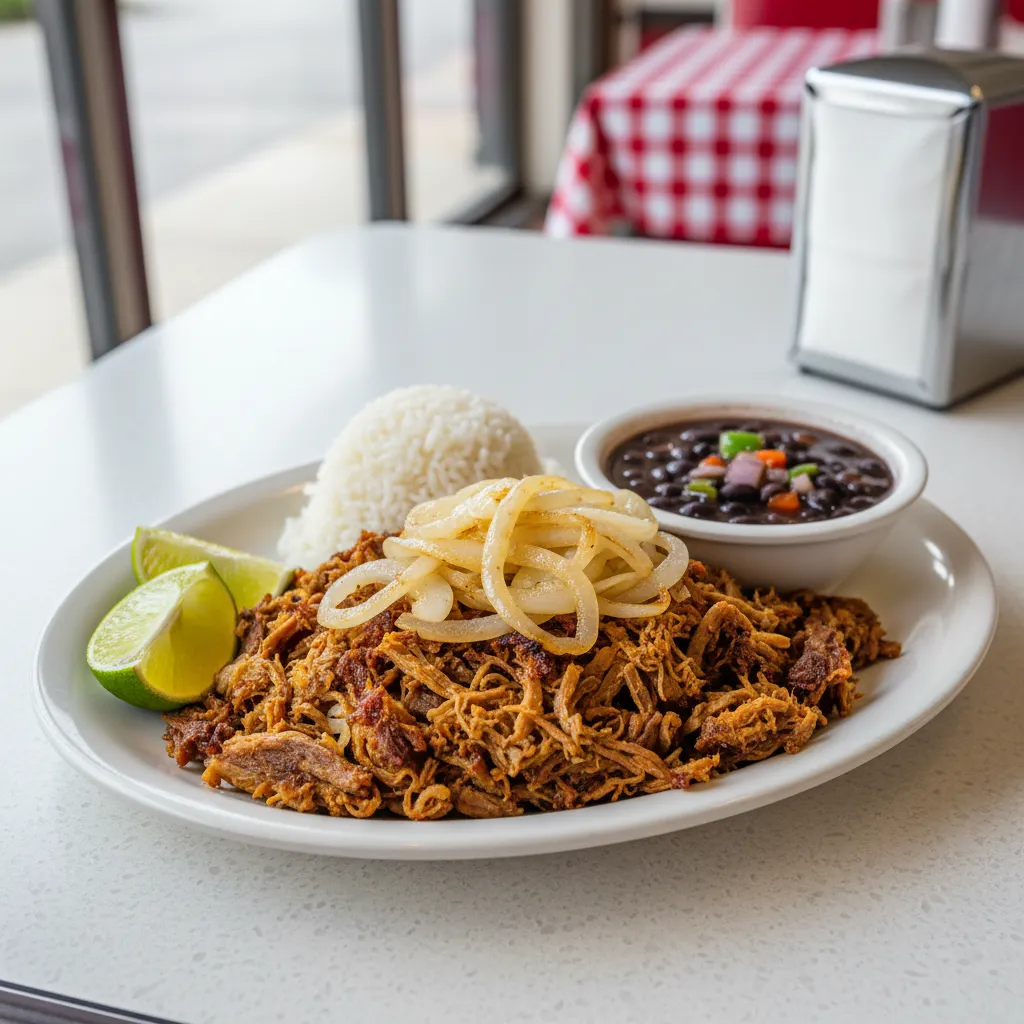
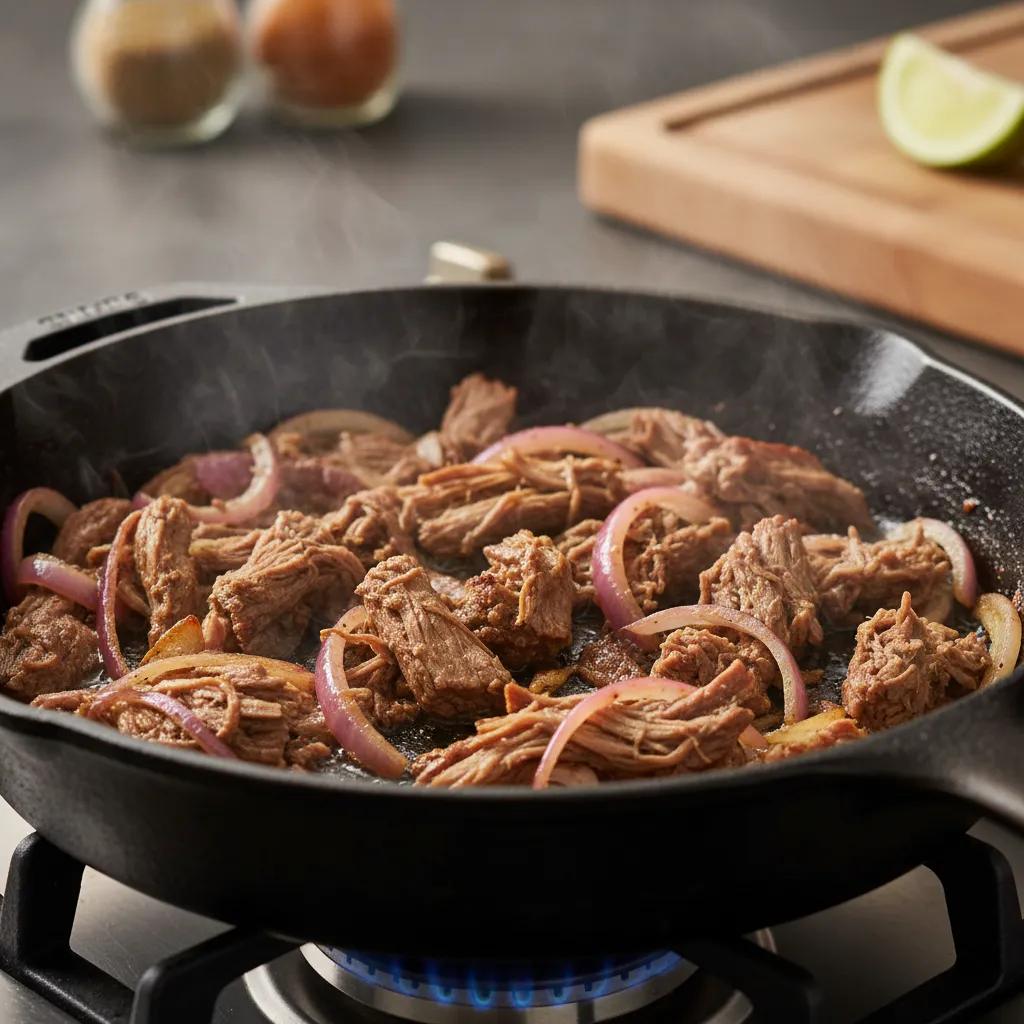
Vaca frita translates to 'fried cow,' and that bluntness is the whole point. Take flank steak, boil it until it surrenders, shred it, hit it with mojo — garlic, lime, bitter orange — then press it onto a screaming-hot flat-top until the edges shatter. Done right, you get a plate that's half tender beef, half crackling lace, buried under onions and begging for white rice. Miami is the world capital of this dish, and locals argue about who does it best with the same energy they bring to croquetas and cafecito ratios. Here's the map.
Text Karpo your corner of Miami and it'll tell you where the nearest properly seared vaca frita is waiting.

First, the ropa vieja question
The two dishes start life identically — cheap, tough flank steak, boiled and shredded — then split at the last step. Ropa vieja goes into a simmering tomato-pepper sauce and comes out saucy and stewy; vaca frita goes into hot oil and comes out dry, crispy and sharp with citrus. No tomato, no stew, no mercy. If ropa vieja is a Sunday braise, vaca frita is a Friday night sear. We've already written up who makes the best ropa vieja in Miami separately; this guide is strictly for the crispy side of the family. One rule before we start: good vaca frita must have contrast. All-soft means the plancha wasn't hot enough. All-crunch means someone walked away from the flat-top. You want both textures on one fork.
Habana Vieja: the standard-setter
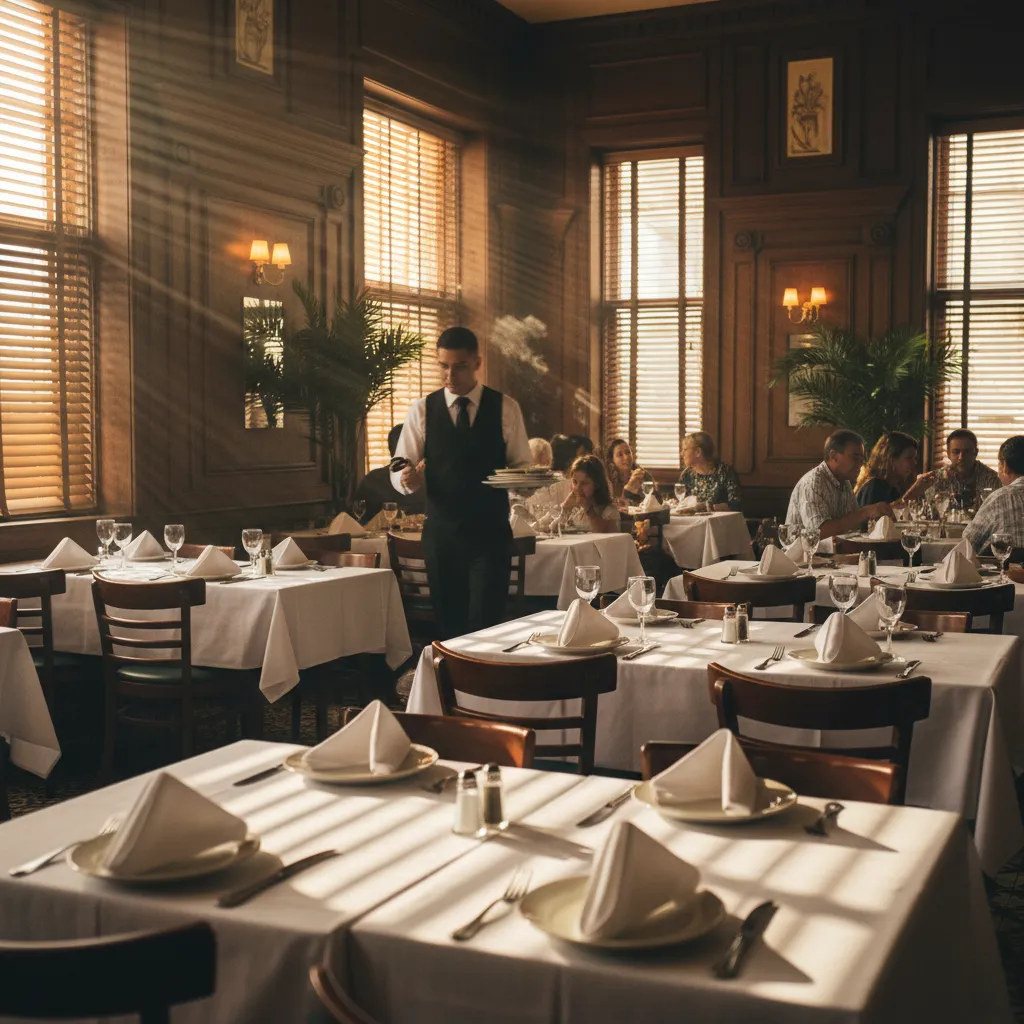
Ask around Coral Gables and one name keeps surfacing: Habana Vieja, the white-tablecloth Cuban stalwart on SW 37th Avenue that has been at it for over three decades. Its vaca frita is the version other versions get measured against — vinegar-soaked onions piled on top so the tart juices work their way into every strand of the beef. It's a proper sit-down room, the kind of place abuelos take the family after church, which means the dish arrives with the full supporting cast of rice, beans and maduros done with equal care.
La Casita and El Rinconcito Latino: the SW corridor
A few blocks away on the Gables end of SW 8th Street, La Casita has been doing homestyle Cuban cooking under white tablecloths since 1990, and its vaca frita is the delicate take — thin, lacy-edged, the curls of steak catching mojo-drenched onions like a net. It's proof that crispy doesn't have to mean heavy. Further southwest on Coral Way, El Rinconcito Latino is the unpretentious neighborhood option, serving Cuban standards from breakfast through dinner; its vaca frita gets seared on both sides for extra crunch and lands as one of the most generous portions in the city, sprawled across its own oblong plate. Bring an appetite or a to-go box.
Islas Canarias: the family benchmark
Islas Canarias in west Miami-Dade has been family-owned since 1977 — founded by Raul and Amelia Garcia, now run by their daughter and grandchildren — and while the croquetas get the headlines, regulars know the vaca frita is quietly elite: citrusy, properly salted, and juicy under its crisped exterior. This is the version to order if you think vaca frita has to be dry to be crispy; the kitchen here proves it doesn't. The SW 26th Street original is the one with the history.
La Carreta and Versailles: the Calle Ocho institutions
Yes, the two most famous names in Cuban Miami both belong on this list. La Carreta's original Calle Ocho location serves from sunrise to well past midnight, and its vaca frita runs sweeter than most thanks to thick-cut onions that char into the meat — the free basket of pressed, buttered Cuban bread on every table exists to be loaded with stray crispy bits, and you should not fight this. Versailles, a few blocks east, is the most famous Cuban restaurant on the planet, and while locals love to debate it, its vaca frita remains a fixture on the iconic-dishes circuit for a reason. Go at an off-hour, order it with extra lime, and watch the dining room theater.
The cheat sheet
- Habana Vieja: 2475 SW 37th Ave, near Coral Gables — 30-plus years old; vinegar-soaked onions, the benchmark plate
- La Casita: 3805 SW 8th St, Coral Gables — homestyle since 1990; thin, lacy, mojo-drenched edges
- El Rinconcito Latino: Coral Way at SW 24th St — double-seared, huge portion, breakfast-to-dinner neighborhood spot
- Islas Canarias: 13695 SW 26th St, west Miami-Dade — family-run since 1977; citrusy and juicy under the crust
- La Carreta: 3632 SW 8th St, Little Havana — sweeter take with thick charred onions; open sunrise to past midnight
- Versailles: Calle Ocho, Little Havana — the world's most famous Cuban restaurant; order it with extra lime
Practical notes
These are mostly old-school rooms: some are cash-friendly, portions are large enough to split, and lunch is the value window. Hours shift, especially at family-run spots, so call before a long drive. And wherever you land, squeeze the lime over the top the second the plate arrives — the acid against the sear is the entire argument for this dish.
Tags: #vacafrita #cubanfood #miamieats #calleocho #coralgables #littlehavana #crispybeef #miamirestaurants
Sources consulted: theinfatuation.com · tastingtable.com · islascanariasrestaurant.com · yelp.com · yelp.com · yelp.com
All trademarks are the property of their respective owners.
Ask Karpo first
The best vaca frita near you depends on where 'near you' is — this is a dish worth routing around traffic for. Text Karpo before you get in the car: tell it where you're starting from, whether you want white-tablecloth or counter stool, and it'll pick your plate. It lives in iMessage, so the answer shows up like a text from a friend who grew up on Calle Ocho.