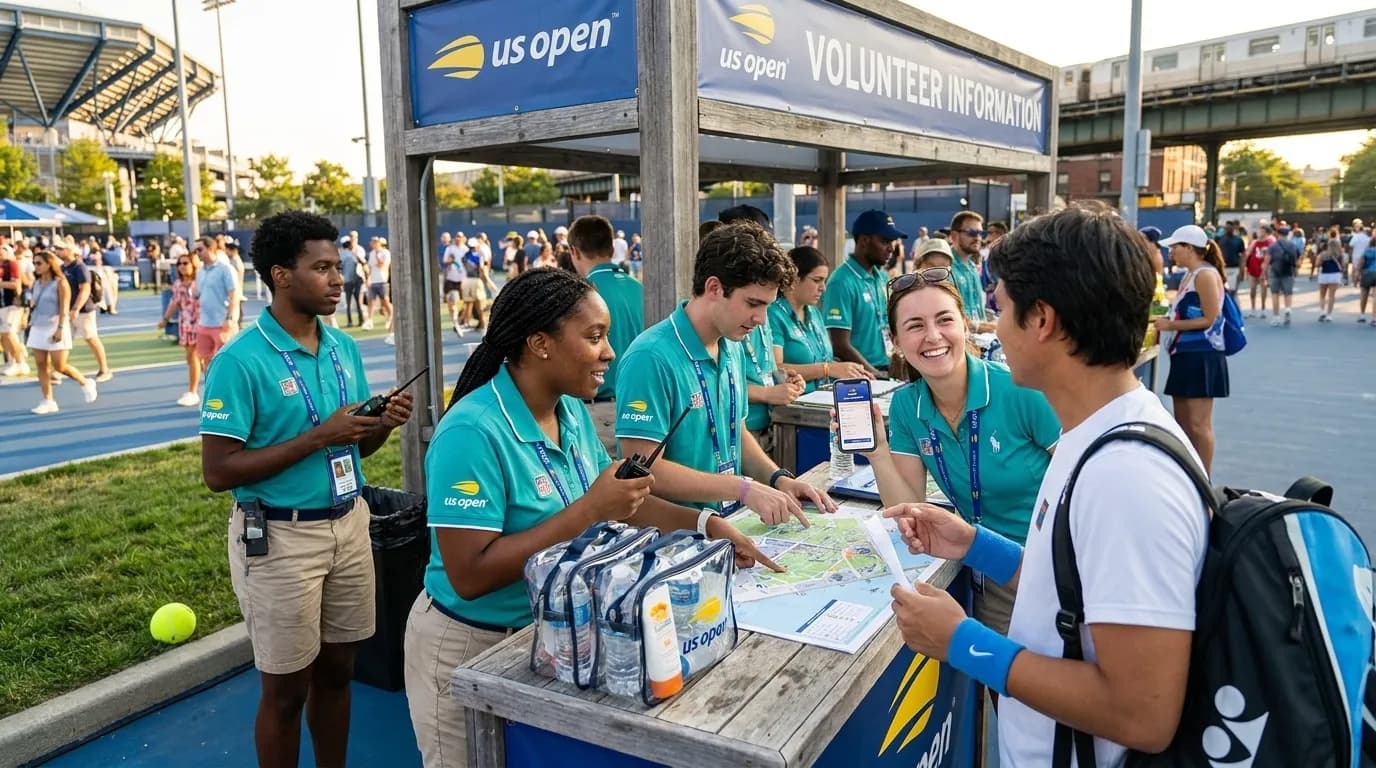
If you are heading to the 2026 US Open, the practical question is not only which match you hope to see, but how smoothly you can move through a busy tournament day. As of July 23, 2026, the official calendar runs August 23 through September 13, with singles main-draw play beginning August 30. Between now and then, schedules, gate timing, player fields, transportation details, venue rules, weather, local services, and availability can change. The safest approach is to treat volunteers and event staff as part of your day-of navigation system: ask early, follow posted signs, keep your ticket and official pages handy, and recheck the US Open event schedule, A-Z guide, transportation and directions page, and prohibited-items page close to travel. The people you meet on-site cannot remove uncertainty, but they can often help you make better next decisions.
Text Karpo to understand which US Open helpers to look for when your day gets confusing.

The First Job Is Reducing Friction
Large tennis days are full of small decisions: which entrance to approach, where a line begins, whether you should keep walking or stop for help, and how to interpret a sign when thousands of other fans are moving around you. Volunteers and guest-facing staff help reduce that friction by turning a crowded setting into a sequence of manageable choices. Their value is not in guaranteeing a perfect day; it is in helping fans avoid preventable confusion.
Think of them as the human layer between the official plan and real-time conditions. The official pages tell you what the tournament intends to provide and prohibit. The people on-site help you apply that information in the moment. If the weather shifts, a queue looks different than expected, or a concourse feels more crowded than it did an hour earlier, a short, polite question to someone in an official position can save time and prevent unnecessary backtracking.
Directions Begin Before You Reach the Grounds
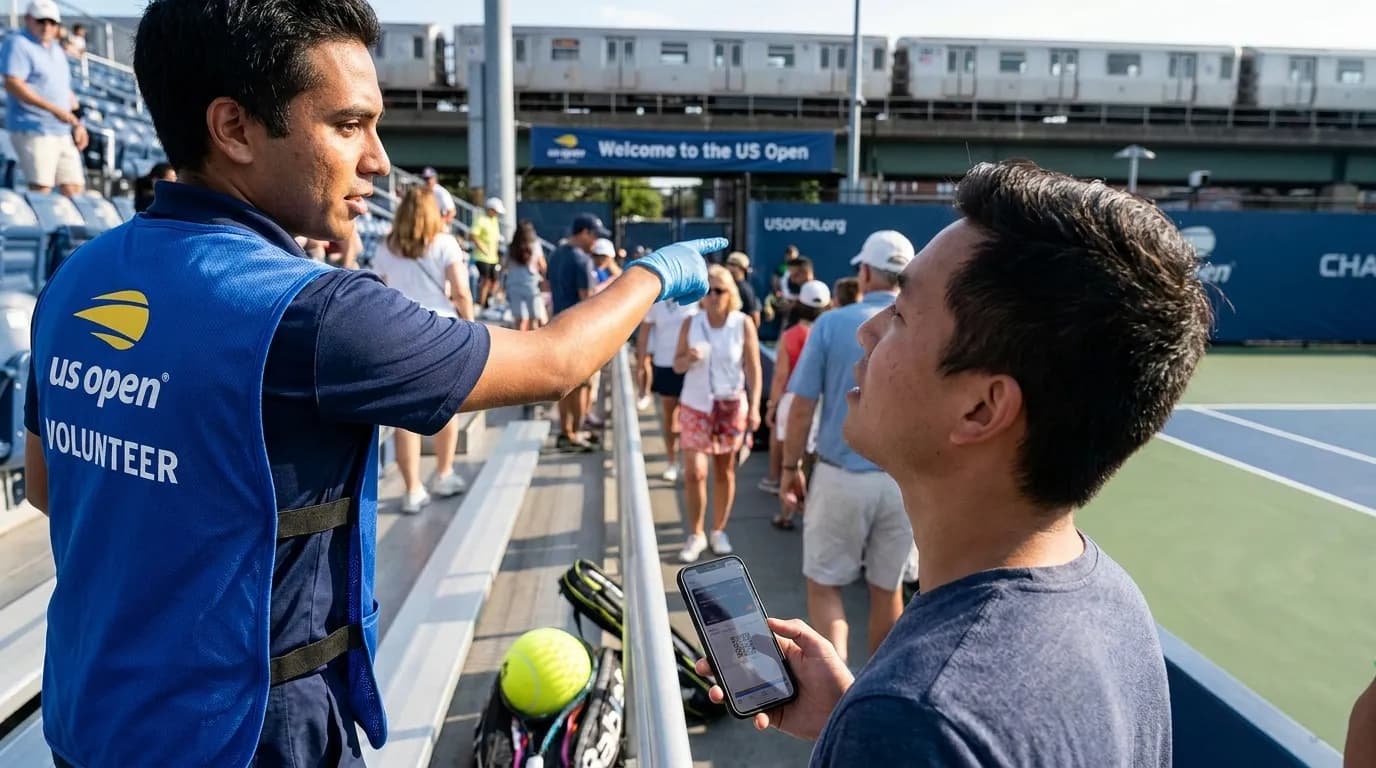
The transportation and directions page should be your first stop before leaving for the venue. It is the place to verify the current guidance on getting to the tournament, rather than relying on memory from a previous year or a friend’s older routine. Once you are near the grounds, visible wayfinding, posted instructions, and official personnel help translate those directions into your next few steps.
This is where human logistics becomes most noticeable. A fan may know the general route but still need help choosing the correct path at a split, understanding where to enter a queue, or deciding whether to pause and check the map again. Volunteers and staff cannot control transit conditions or guarantee your arrival time, so build in margin. Their best use is as a confirmation tool: ask a precise question, such as which way to continue for your ticketed area, rather than asking broadly where everything is.
Gate Areas Reward Prepared Fans
Entry points are where preparation and patience matter. The prohibited-items page and A-Z guide are the official references for what you should and should not bring, along with other visitor information. Because policies and operating details can change, the smartest packing choice is the current official guidance, not a saved screenshot from an earlier season.
At the gates, guest-facing teams help keep people moving by answering basic questions, pointing fans toward the appropriate next step, and reinforcing the posted process. Do not wait until you are at the front of a line to discover that you need to reorganize a bag or find information on your phone. Have your ticket ready, keep essential items accessible, and give yourself enough time that a short delay does not turn into a missed start.
- Before leaving, recheck the official event schedule for the day you plan to attend.
- Review the A-Z guide for current visitor information that may affect your route, comfort, or timing.
- Check the transportation and directions page close to departure, especially if your plan depends on a specific route.
- Read the prohibited-items page before packing, then avoid bringing anything you are unsure about.
- Arrive with your phone charged enough to show tickets, maps, messages, and updated official information.
- Ask staff or volunteers specific questions early, before a small uncertainty becomes a long detour.
Seating Help Is Part Courtesy, Part Crowd Flow
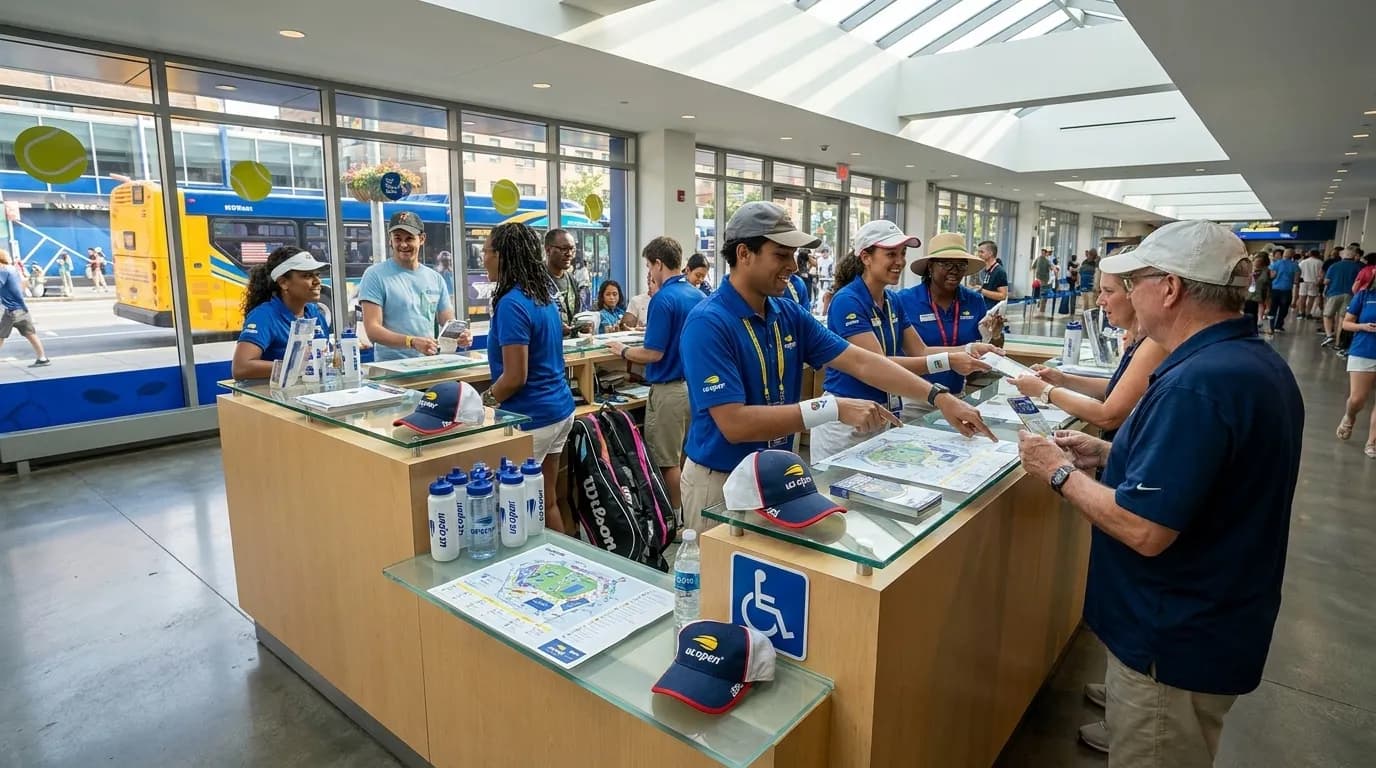
Once you reach a stadium or seating area, the human logistics change from wayfinding to flow. Fans are trying to find sections, rows, and seats while others are watching live points, returning from concessions, or moving between sessions. Seating help is therefore not merely a courtesy; it supports the rhythm of the venue. Follow the instructions you receive near seating areas, and be ready to pause if movement is being managed around play or crowd conditions.
This is also a place where polite timing matters. If you are uncertain about your seat location, ask before you enter a crowded row. If you arrive with a group, decide in advance who will lead and keep tickets accessible for quick reference. Volunteers and staff can help point you in the right direction, but they should not have to decode a group’s plan while people are waiting behind you. A calm, prepared fan makes the system work better for everyone nearby.
Questions Are Easier When You Know What to Ask
The most useful day-of questions are narrow, immediate, and answerable. Instead of asking, “What should I do now?” try, “Is this the correct direction for this court?” or “Where should I go to confirm this visitor rule?” Official personnel are most effective when they can connect your question to a location, posted sign, ticket detail, or current instruction.
Some questions still belong to primary sources. If you are deciding whether to attend on a particular date, what session to buy, how to travel, or what to bring, the official event schedule, visitor A-Z guide, transportation page, and prohibited-items page should lead. On-site helpers are invaluable once you are there, but they are not a substitute for checking the current official information before you commit to a plan.
The same distinction helps with expectations. A volunteer can often help you orient yourself. A staff member may point you toward a service location or posted instruction. Neither should be expected to promise access, predict match timing, confirm player participation beyond official information, or resolve changing weather and operational conditions. Treat every answer as part of a decision chain: listen, verify when needed, and keep moving thoughtfully.
Behind the Calm Day Is Constant Adjustment
Tennis tournaments look orderly when the day is working well, but that order depends on many small adjustments. A walkway may feel different between early matches and evening crowds. A line may form quickly after a popular match ends. A visitor question that seems simple may depend on the exact court, ticket, time of day, or current venue instruction. This is why the people stationed around the grounds matter: they help fans respond to the day as it is unfolding, not as it appeared on paper that morning.
For fans, the best mindset is flexible precision. Be precise about what you can control: your route, your ticket access, your packing, your meeting point, and your time cushion. Be flexible about what the tournament day controls: weather, crowd movement, match duration, and operational changes. Volunteers and staff fit in the middle, helping you adapt without making every adjustment feel like a problem.
Practical Notes
- Use the official US Open event schedule to confirm the date you plan to attend; the 2026 calendar runs August 23 through September 13, with singles main-draw play beginning August 30.
- Recheck the A-Z guide for current visitor details before travel, then keep it accessible on your phone.
- Verify transportation and directions shortly before leaving, especially if weather, service changes, or local conditions could affect timing.
- Review the prohibited-items page before packing and choose a simpler bag strategy when in doubt.
- On-site, look for official signage and clearly identified personnel rather than relying on overheard advice.
- Ask concise questions: where to go next, which direction to continue, or where to verify a rule.
- Build in time for security, walking, seating, weather, and crowd movement, because no volunteer or staff member can guarantee a delay-free day.
Tags: #USOpen2026 #Tennis #NewYork #Queens #FlushingMeadows #KarpoFinds #Karpo #USOpenVolunteers #TournamentOps #FanHelp
Sources consulted: usopen.org — Official reference · usopen.org — Official reference · usopen.org — Official reference · usopen.org — Official reference
All trademarks are the property of their respective owners.
Ask Karpo first
Ask Karpo how volunteers, ushers, and information desks fit into a smoother fan experience.