If you are building a US Open day around the matches most likely to feel tense, learn to read the tiebreak before it arrives. The official 2026 US Open calendar runs August 23 through September 13, with singles main-draw play beginning August 30, but schedules and courts can shift, so use the tournament’s official schedule close to your visit. Once you are in the seat, a tiebreak is the cleanest way to understand why a crowd suddenly gets louder, quieter, and more nervous. It shortens the contest into a sequence of mini battles: who serves first, who handles the change of ends, who protects a tiny lead, and who can restart after one loose point. The scoring is simple enough to follow, but the psychology is richer than “clutch” or “choke.”
Text Karpo at 3-3 in a breaker and we’ll explain the pressure swing you’re seeing.

Why One Point Can Feel Like Three
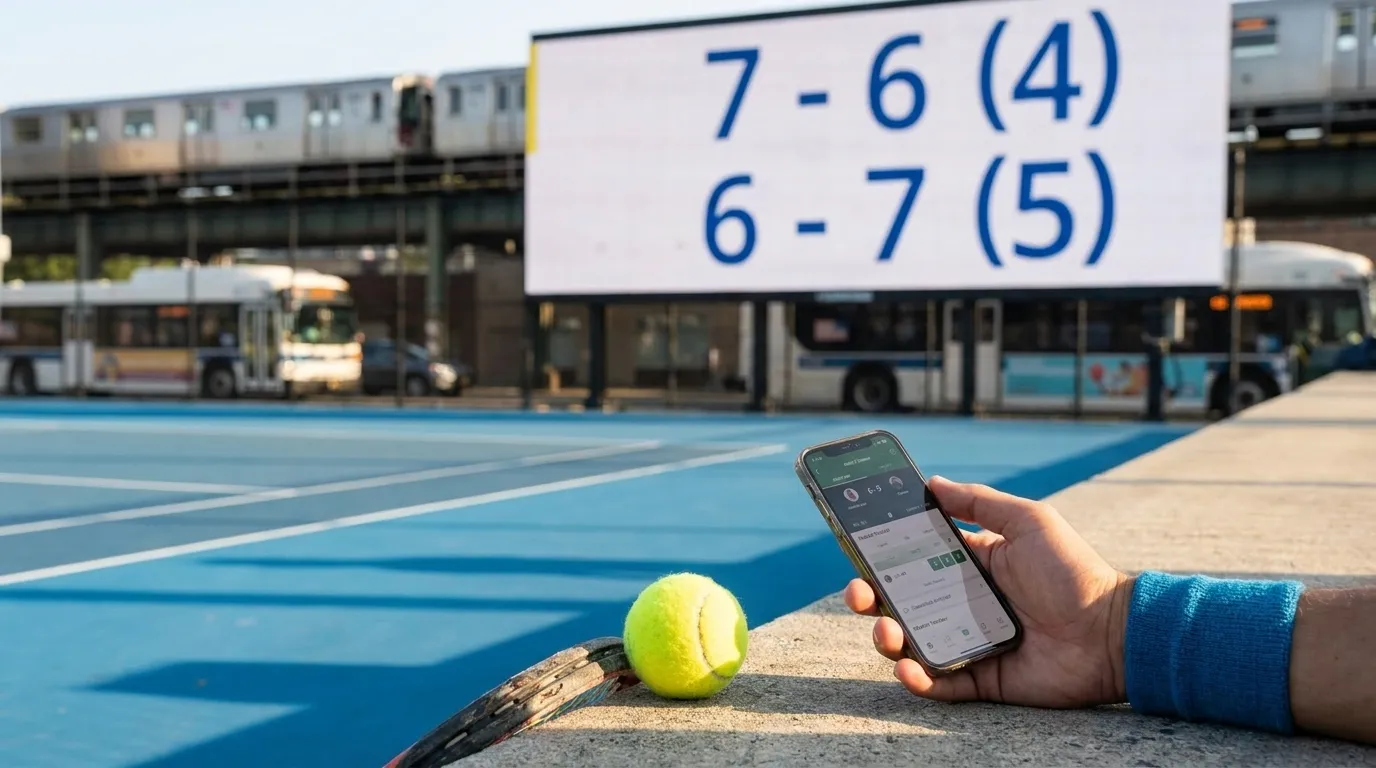
A regular game gives players room to repair damage. Lose the first point on serve, and there are still several familiar steps before the game is gone. A tiebreak removes that cushioning. Each point is displayed as its own public event, and the scoreboard makes small gaps look decisive: 3-1 feels controlled, 3-3 feels reset, 5-4 feels like a door cracking open.
That volatility is partly arithmetic and partly perception. Because a tiebreak is usually played to a short target with a two-point margin, one return winner or one double fault can redraw the emotional map. Fans feel this instantly because the match’s usual rhythm changes. Instead of thinking in games, everyone starts counting individual exchanges. The tension becomes easier to measure, which makes it feel sharper.
The key is not to assume that a player who loses one point has lost composure. At this level, good opponents create discomfort. A heavy first serve, a deep return, a smart body serve, or a patient rally pattern can all force an error that looks psychological but begins tactically. The best reading combines both: what was the player trying to do, and did the pressure make that choice smaller?
Serve Order Creates Built-In Swings
Tiebreak serve order is one reason momentum can feel strange. In the standard format, one player serves the opening point, then players alternate two serves at a time. That means the scoreboard often creates “mini service games” inside the tiebreak. A player can appear to be behind, then take two serve points and look in charge within about a minute.
Watch the first point carefully. It is not always more important mathematically than the rest, but it sets the emotional weather. The player serving first can create an immediate lead; the returner can create an immediate break of expectation. From there, the two-serve clusters matter because holding both points protects control, while splitting them keeps the tiebreak open.
The phrase fans often use is “mini break,” meaning a point won against serve in the tiebreak. It is useful, but it can mislead. A mini break is not a trophy; it is a temporary advantage that still has to be backed up. If a player wins a return point for 4-2 and then loses both serves, the scoreboard can flip to 4-4 without anything mysterious happening. The serve order did exactly what it is designed to do: create alternating pressure.
Pressure Points Are Not All the Same
Every tiebreak point counts, but not every point carries the same mental load. Early points are about positioning. Middle points are about avoiding drift. Late points are about accepting consequence. A player may swing freely at 1-1, hesitate at 4-4, and become very precise at 6-5. None of those reactions requires a secret injury, coaching plan, or hidden weakness. They are visible responses to scoreboard context.
- At 0-0 or 1-1, look for patterns: Does the server choose the wide serve, the body serve, or a safer first strike?
- At 3-3 or 4-4, watch footwork after the split step. Tightness often shows in late preparation more than facial expression.
- At 5-5, notice whether the player still commits to the intended target or merely tries to avoid missing.
- On set point or match point, separate bravery from recklessness. A bold shot is still a decision with a pattern behind it.
This is where tiebreaks become compelling for thoughtful spectators. The point score tells you the stakes; the shot selection tells you the state of mind. A player who keeps serving to the same location may be trusting a strength, hiding a vulnerability, or daring the opponent to solve a pattern. You do not need to know private strategy to appreciate the question being asked.
Routines Are the Player’s Reset Button
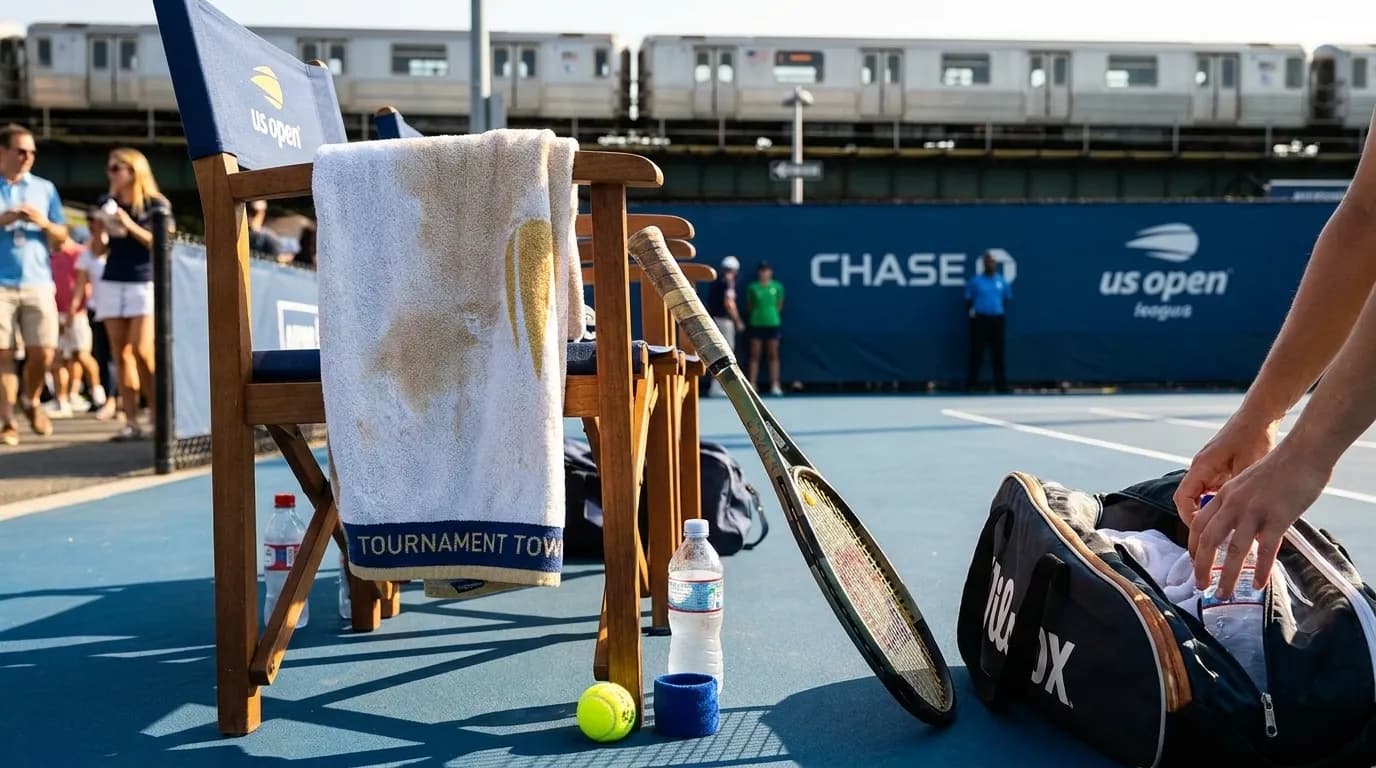
Between points, players have only a short window to recover. That is why routines matter. The towel, the ball selection, the walk to the baseline, the breath before the toss, the glance at strings: these habits are not decorative. They help convert the previous point from emotion into information.
For fans, routines are a better clue than dramatic body language. Some players look calm while playing anxiously; others look agitated while making clear decisions. A routine that stays consistent after a missed return or a lost mini break often suggests that the player is still organizing the moment. A routine that speeds up abruptly can signal urgency, though it is not proof of panic.
Also watch the receiver. The server’s routine attracts attention, but the returner’s positioning can reveal quiet adjustments. A half-step forward may challenge a second serve. A deeper return position may buy time. A shift toward the backhand side can invite one target while guarding another. In a tiebreak, these small choices feel larger because there are fewer points left to test them.
The Crowd Changes the Temperature
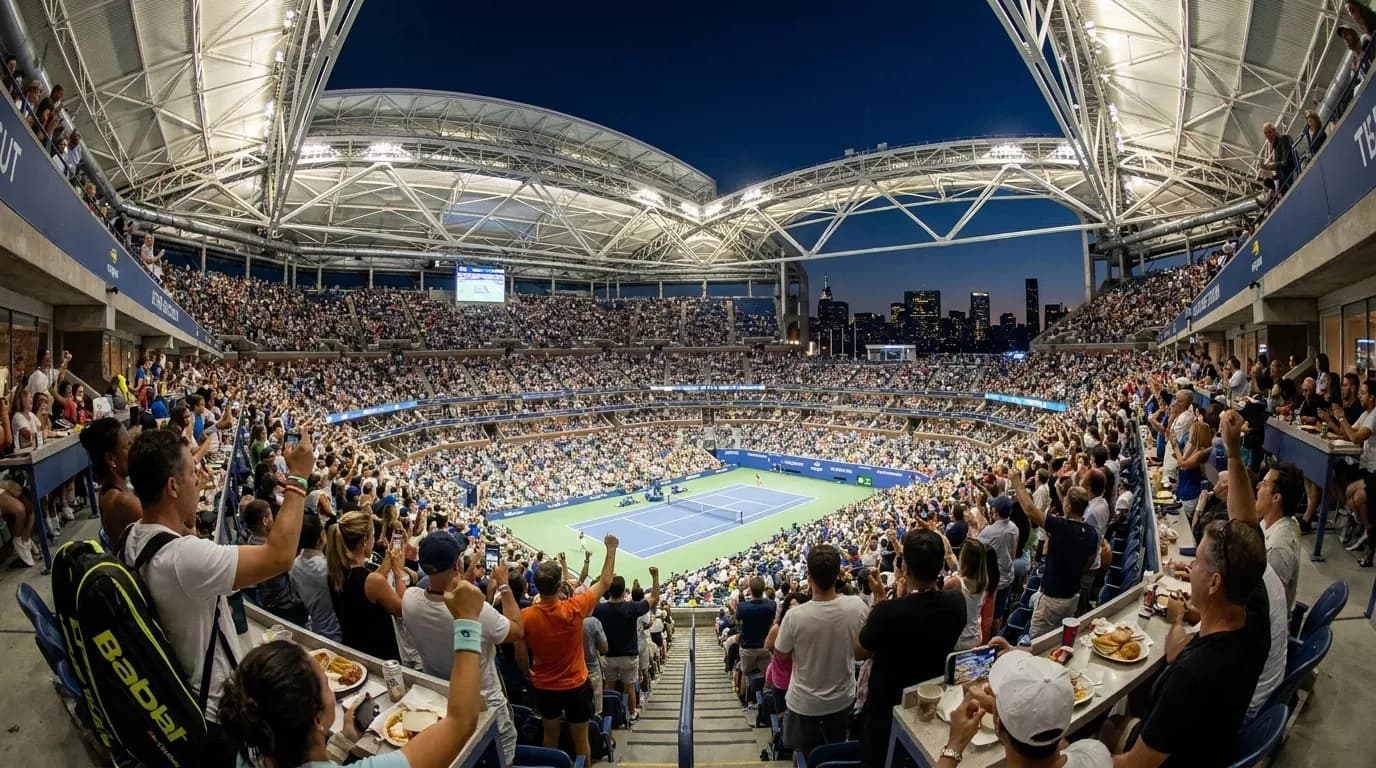
At the US Open, tiebreaks can become communal experiences. The crowd senses the compression and often reacts before the rally even starts. A first serve fault at 5-5 draws a different sound than the same fault at 1-0. A long rally at set point can make the stadium feel as if it is holding its breath.
That energy is part of the spectacle, but it can distort interpretation. Noise does not always mean momentum. Sometimes the louder player box is simply more expressive. Sometimes applause follows a spectacular shot that was tactically low percentage. Sometimes a crowd favorite appears to be surging because the building wants the surge to happen.
Use the scoreboard as your anchor. Ask whether the player who just won the loud point also changed the practical situation. Did it recover a mini break? Create two set points? Move the player to a serve cluster with control? If not, the emotion may be real while the tactical balance remains unresolved.
How to Watch a Tiebreak Like a Coach Without Pretending to Be One
You do not need technical certainty to watch intelligently. The goal is to notice repeatable evidence. Start with serve percentage by eye, not as a formal statistic: are first serves landing at pressure moments, and are they earning weak replies? Then look at rally length. A player who wants short points may become uncomfortable if every exchange turns physical. A player who thrives on rhythm may dislike being rushed by serve-plus-one tennis.
Next, watch which wing is being tested. If several late points go to one player’s backhand corner, that is not random. It may be a tactical target, a court-position issue, or simply the pattern that feels safest under pressure. The fascinating part is the response: redirect, defend higher, step in, slice, or change direction first.
Finally, resist instant verdicts. A player can make the right play and miss by an inch. Another can make a cautious choice and be rescued by an opponent’s error. Tiebreak psychology is not about labeling character from one point. It is about watching decision quality under a scoreboard that gives every choice a sharper edge.
Practical Notes
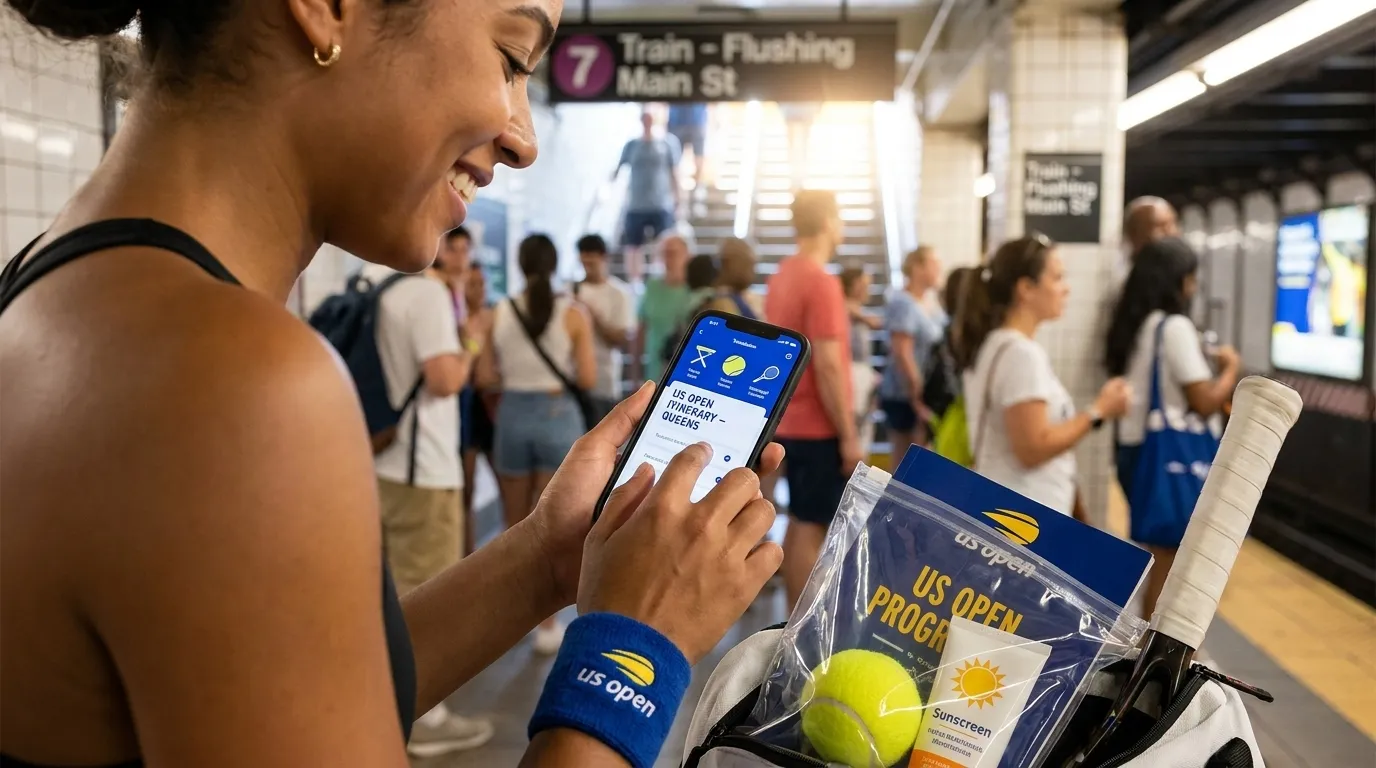
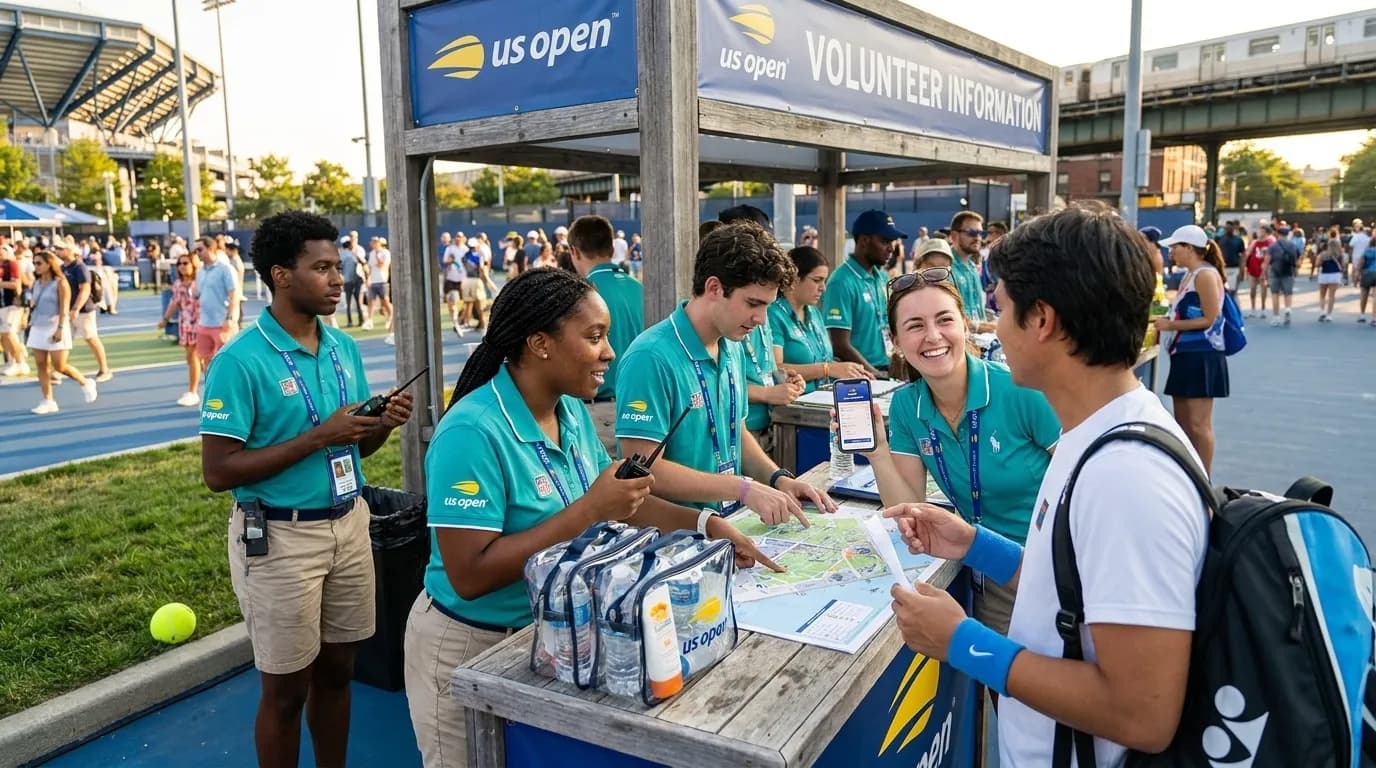
For 2026 attendance planning, start with the official US Open event schedule, visitor A-Z information, transportation and directions, prohibited-items guidance, and the current tennis rules published by the relevant governing bodies. Recheck them close to travel because schedules, gate procedures, transit options, venue rules, weather, inventory, and service availability can change.
- Before choosing a session, confirm the date, session type, and court information on the official schedule rather than assuming a preferred player or matchup will appear.
- Before leaving for the venue, review transportation guidance and build in backup time; practical backup planning is different from any legal entitlement to a particular outcome.
- Before packing, check the prohibited-items page so a small avoidable item does not slow your entry.
- During matches, keep the scoring format in mind and verify any event-specific rule details through official tournament or rules sources.
- When a tiebreak starts, track serve order, mini breaks, change-of-ends resets, and late-point shot choices. Those four cues explain most of the volatility fans feel.
Tags: #USOpen2026 #Tennis #NewYork #Queens #FlushingMeadows #KarpoFinds #Karpo #TiebreakPsychology #USOpenPressure #MomentumSwings
Sources consulted: usopen.org — Official reference · usopen.org — Official reference · usopen.org — Official reference · usopen.org — Official reference · itftennis.com — Official reference
All trademarks are the property of their respective owners.
Ask Karpo first
Ask Karpo to translate serve order, routines, and risk choices into a clearer tiebreak story.