If you are planning travel around the 2026 US Open, the practical question is not whether late-summer thunderstorms are possible in the New York area. It is how to make a calm departure decision without assuming a storm will affect your session, route, or day. As of July 23, 2026, the official US Open calendar runs August 23 through September 13, with singles main-draw play beginning August 30. Daily schedules, gate information, player fields, venue rules, transit conditions, weather impacts, local hours, inventory, and services can change. Before leaving, recheck the official US Open schedule and visitor information, compare that with National Weather Service alerts for the New York City region, and look at current conditions along your actual route. If storms remain uncertain, avoid making irreversible changes too early. Build in time, keep one backup route, and update your plan close to departure.
Text Karpo before you board so we can check storm alerts, train options, and safe timing together.

Use Alerts as Departure Signals
A thunderstorm alert is a decision tool, not a prediction that the tournament or your travel path will be affected. Summer storms can be scattered, and conditions may differ between your hotel, home, airport, transit stop, walking segment, and the venue area. The useful move is to read the alert for timing, location, and hazard language, then decide whether to leave earlier, wait indoors, reduce an exposed transfer, or allow more time for crowds and security.
Start with the National Weather Service office serving the New York City region at weather.gov/okx. Look for whether the information is a general forecast, a watch, a warning, or another statement. A broad mention of possible storms should not carry the same weight as a warning that identifies immediate hazards. If the alert language emphasizes damaging wind, frequent lightning, heavy rain, or flooding, pause and reassess before moving through exposed areas. If the concern is scattered storms later, a flexible timing adjustment may be more useful than canceling plans far in advance.
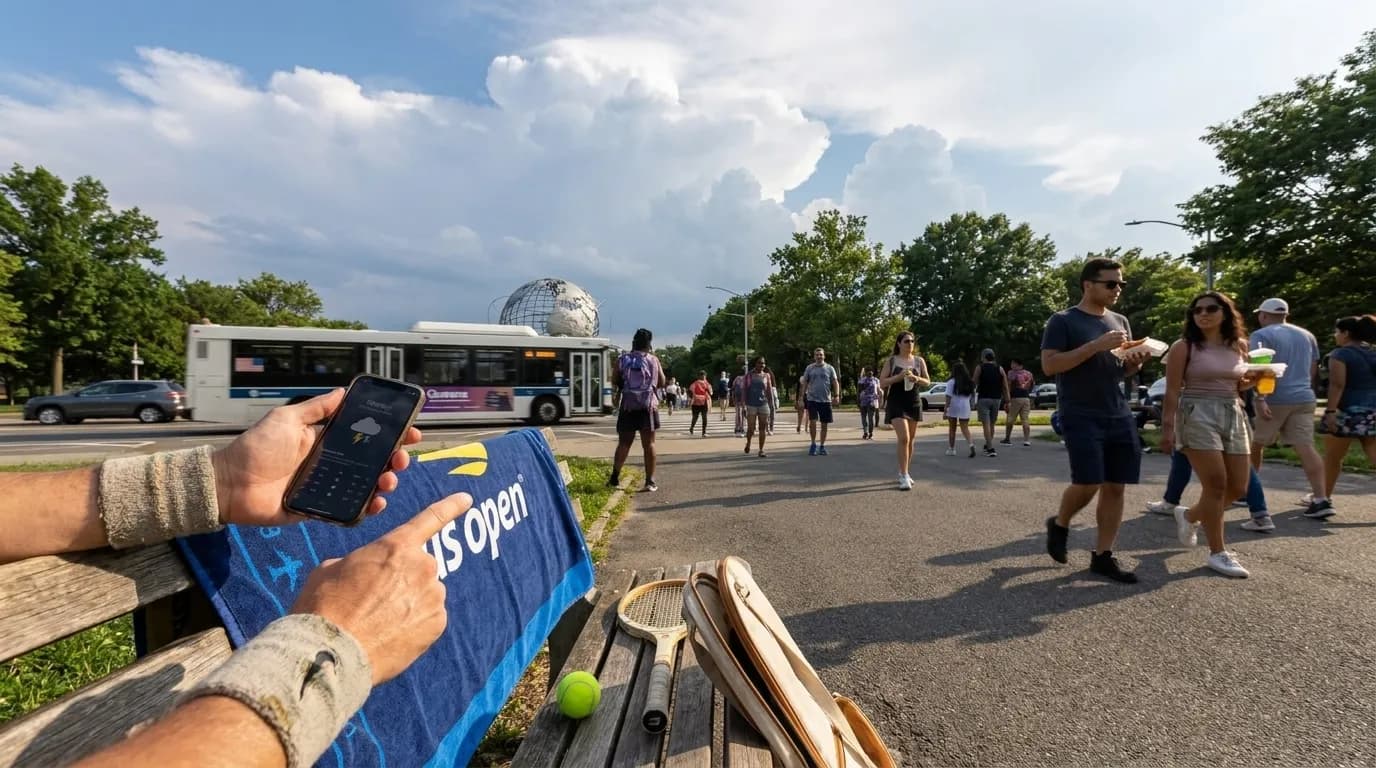
Check the Tournament Schedule First
Your first event-related check should be the official US Open schedule, because the value of leaving early depends on what you are trying to reach. A fan aiming for an earlier session may need a different cushion than someone planning to arrive later in the day. The official schedule is the place to confirm posted dates and session information, while the official A-to-Z and visitor pages are the places to review current gate, grounds, and guest guidance that may affect entry timing.
Do not rely on last year’s routine, a saved screenshot, or a social post if you have not verified the current source behind it. Tournament operations can shift, and weather can change the pace of movement around the grounds even when a session remains on the calendar. Check the schedule first, then layer weather and route information on top. That order helps you avoid overreacting to a vague storm chance when your actual arrival window may still be manageable.
Build a Route That Can Bend
Use the official US Open transportation and directions page as your baseline, then compare your preferred route with live transit or road information near departure. You do not need a complicated plan for every possibility. You need one realistic backup before weather pressure makes decisions harder. That backup might be a different connection, a later departure after an active cell passes, or a route with less walking if heavy rain is nearby.
Think about the weakest part of your trip. It may be an exposed walk, a transfer with limited shelter, a road segment that slows in heavy rain, or a meeting point that is inconvenient if the group arrives at different times. If lightning or flooding is reported along your route, wait for authoritative updates rather than trying to outrun the weather. If rain has just passed, allow extra time for wet pavement, crowd movement, security screening, and transit delays without assuming any specific service change.
- Save the official transportation and directions page instead of relying only on a map pin.
- Check live transit or traffic close to departure, especially if alerts cover your route.
- Choose one backup route and one backup departure time so decisions stay simple.
- Reduce exposed walking where possible if lightning, heavy rain, or flooding is part of the alert language.
- Recheck return-trip conditions too; a storm that misses arrival time can still affect the way back.
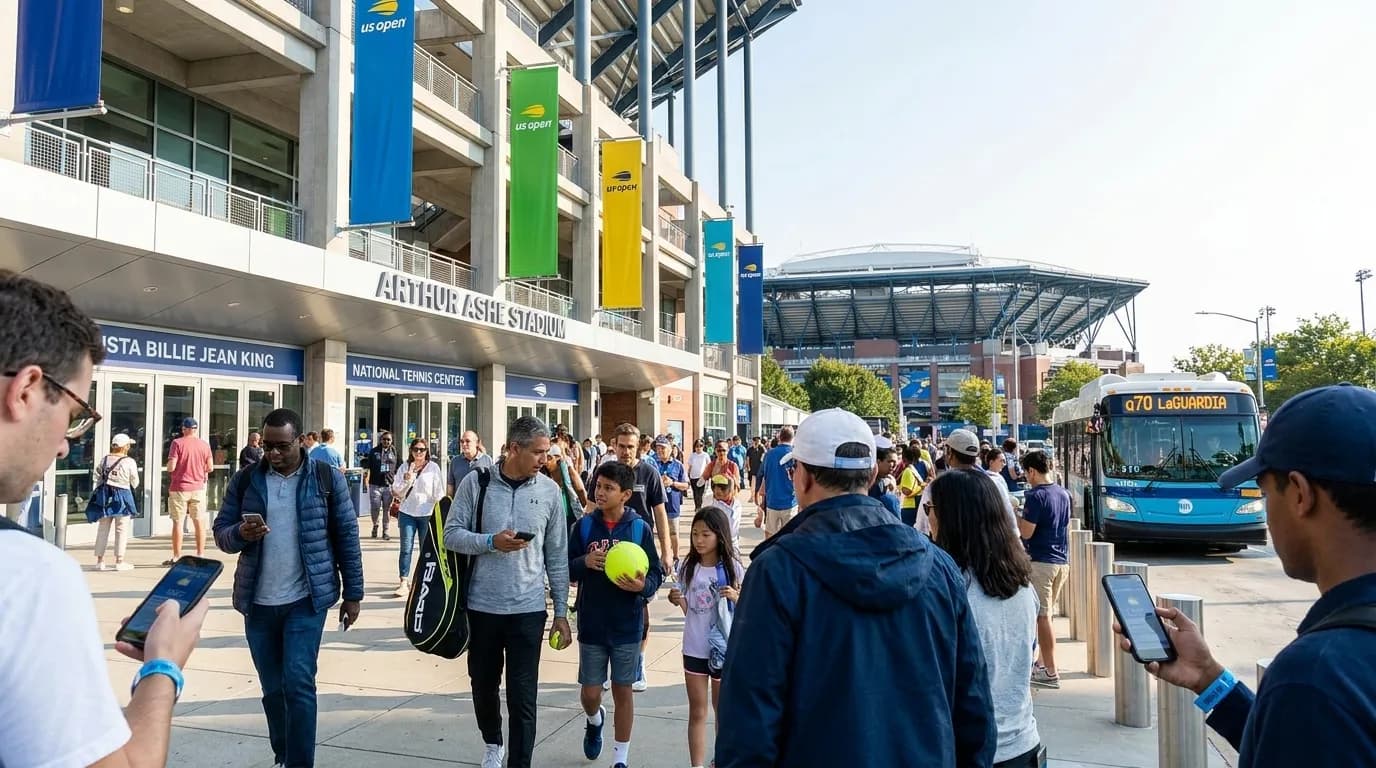
Treat Lightning and Flooding Separately
Different storm hazards call for different travel choices. Lightning is a near-term safety issue when you are outdoors, waiting in exposed areas, or walking between transit, parking, and venue approaches. Heavy rain can remain a travel problem after lightning has moved away because visibility, standing water, crowding, and delays may linger. Separating those hazards helps you avoid both underreacting and making unnecessary changes.
If alert language focuses on lightning, the safer decision may be to wait indoors, delay a walk, or avoid exposed meeting points until conditions improve. If the concern is heavy rain or localized flooding, focus on route reliability: station access, road conditions, transfer points, and whether your phone, tickets, identification, and clothing can handle a wet trip. A storm that does not pass over the venue can still complicate travel from another borough, airport, hotel, or suburb. Base the decision on your full path, not just the destination.
Pack Light and Verify Venue Rules
Weather preparation should be matched with the official prohibited-items page and A-to-Z visitor information. It is easy to respond to storm uncertainty by packing too much, but venue rules still matter. Before you fill a bag with rain gear, chargers, layers, bottles, or backup items, verify what is currently permitted through official US Open guidance. A weather plan that creates an entry problem is not a useful plan.
Aim for small, dry, and easy to inspect. Depending on current rules, compact rain protection, a light layer, a way to protect identification or tickets, and a charged phone may be more practical than bulky extras. If you rely on mobile tickets, transit apps, or weather alerts, charge devices before leaving and consider how long you may be away from an outlet. Avoid assuming on-site inventory, storage, food, merchandise, or services will solve a last-minute issue. Availability and procedures can change, so verify close to your visit.
Coordinate Before the Group Moves
Storm planning becomes harder when a group starts from several locations. Before the day arrives, agree on which sources everyone will use and when the leave-or-wait decision will be made. One person watching radar, another using an old screenshot, and another following a social post can create confusion. Anchor the plan in primary sources: official US Open pages for tournament and venue information, National Weather Service alerts for weather, and current transit or road information for the route.
Set a simple rule, such as not changing plans based on a screenshot unless someone checks the live source behind it. If some people leave earlier and others wait, choose any meeting point only after reviewing current venue guidance. Keep expectations flexible. A weather-aware plan is not a promise that entry, seating, play, transit, food, merchandise, or services will be available in a particular way. It is simply a way to reduce avoidable surprises while conditions remain changeable.
Practical Notes
- Recheck the official US Open event schedule before committing to a departure time.
- Review the official A-to-Z, transportation and directions, and prohibited-items pages close to travel.
- Use weather.gov/okx for National Weather Service alerts affecting the New York City region.
- Match alerts to your whole route, including home, hotel, airport, transfers, walking segments, and return travel.
- Choose one flexible adjustment: leave earlier, wait indoors, use a different connection, or reduce exposed walking.
- Do not assume a thunderstorm mention means tournament disruption, and do not ignore a warning because skies look calm nearby.
- Make decisions close to movement time, using current official information rather than old screenshots or broad forecasts.
Tags: #USOpen2026 #Tennis #NewYork #Queens #FlushingMeadows #KarpoFinds #Karpo #USOpenWeather #QueensTransit #StormSmartFans
Sources consulted: usopen.org — Official reference · usopen.org — Official reference · usopen.org — Official reference · usopen.org — Official reference · weather.gov — Official reference
All trademarks are the property of their respective owners.
Ask Karpo first
Ask Karpo for a travel-ready US Open weather plan that balances alerts, subway timing, and backup indoor stops.