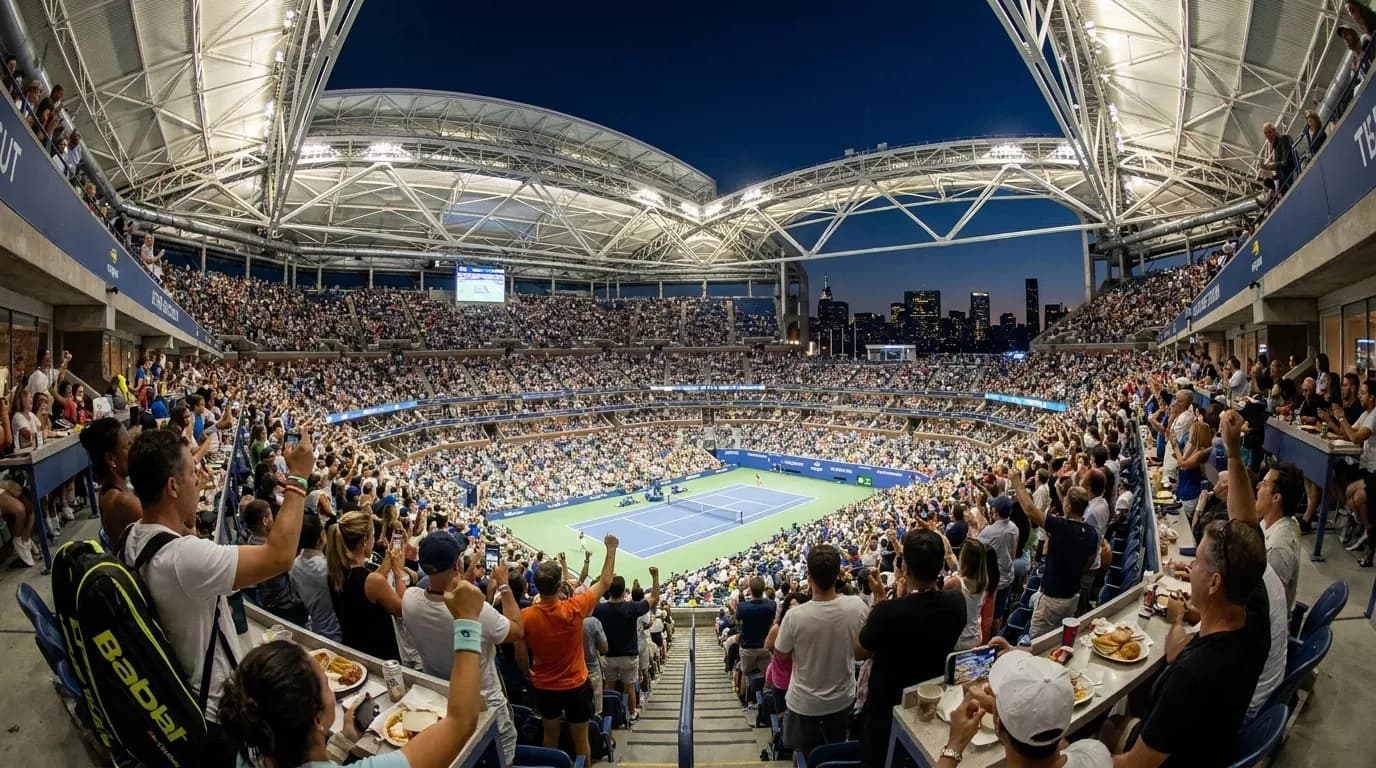
If your best US Open day starts before the grounds feel busy, build the morning around information you can still verify close to your visit: the official schedule, posted gate guidance, transportation status, venue rules, and weather. The 2026 US Open calendar runs August 23 through September 13, with singles main-draw play beginning August 30, but each date can feel different. A useful early plan is not a promise of empty paths or guaranteed practice access. It is a way to reduce friction: choose a reliable route, eat before hunger becomes distracting, pack for screening, and arrive with priorities broad enough to survive changes.
Text Karpo at breakfast and we’ll map the smoothest sunrise-to-practice US Open plan.

Start With the Official Day
Begin with the official US Open event schedule for the date you plan to attend. The tournament window includes days before singles main-draw play begins, followed by the main-draw stretch from August 30, and those periods may have different rhythms for crowds, court activity, and visitor movement. A morning built around relaxed grounds time may need a different pace than one tied to a reserved session or a specific match window.
Before leaving your hotel, apartment, or train connection, recheck the schedule, your ticket details, gate guidance, and current visitor information. Do not rely on a screenshot from weeks earlier if the official pages have changed. If the forecast includes heat, humidity, or rain, give yourself more flexibility than you think you need. Weather may affect comfort, walking pace, and how long it feels reasonable to wait near a court, even when the event day continues.
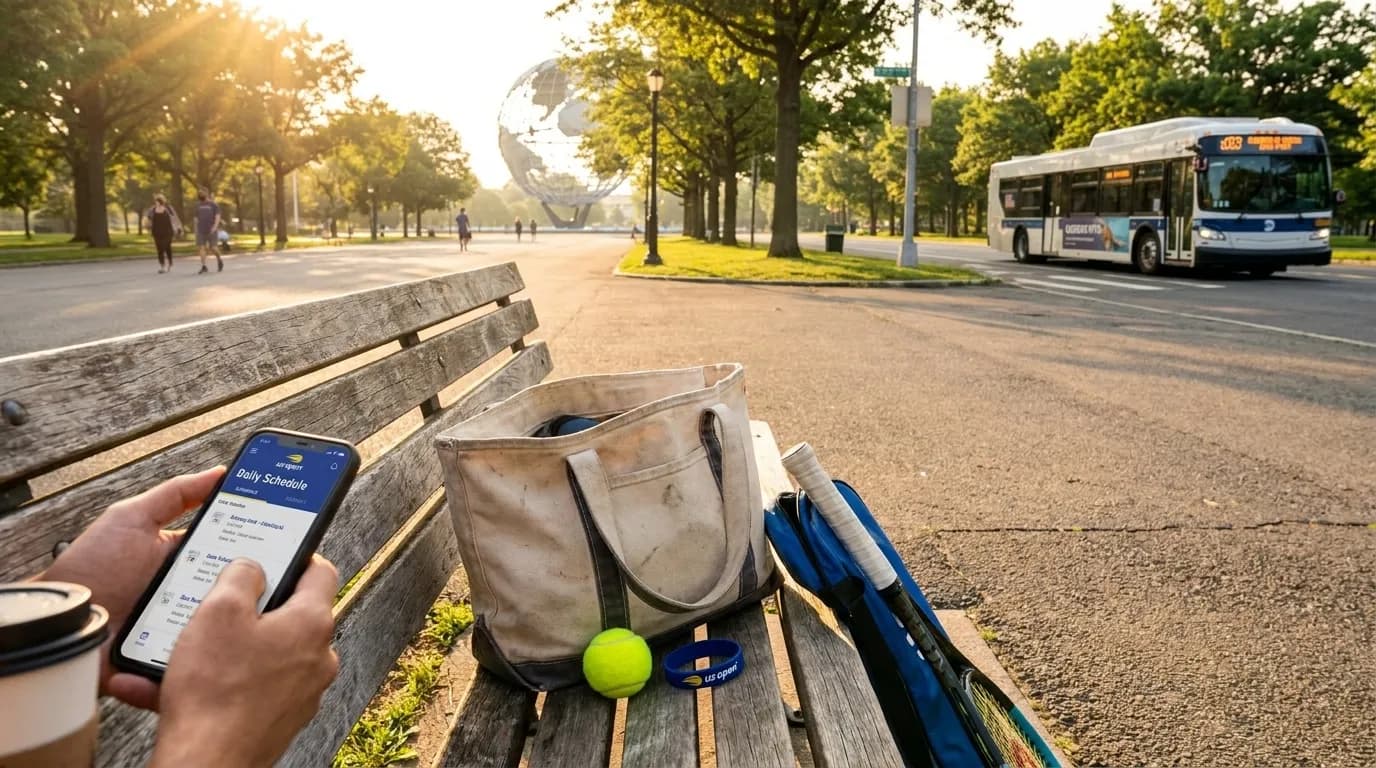
Choose the Quietest Route You Can Control
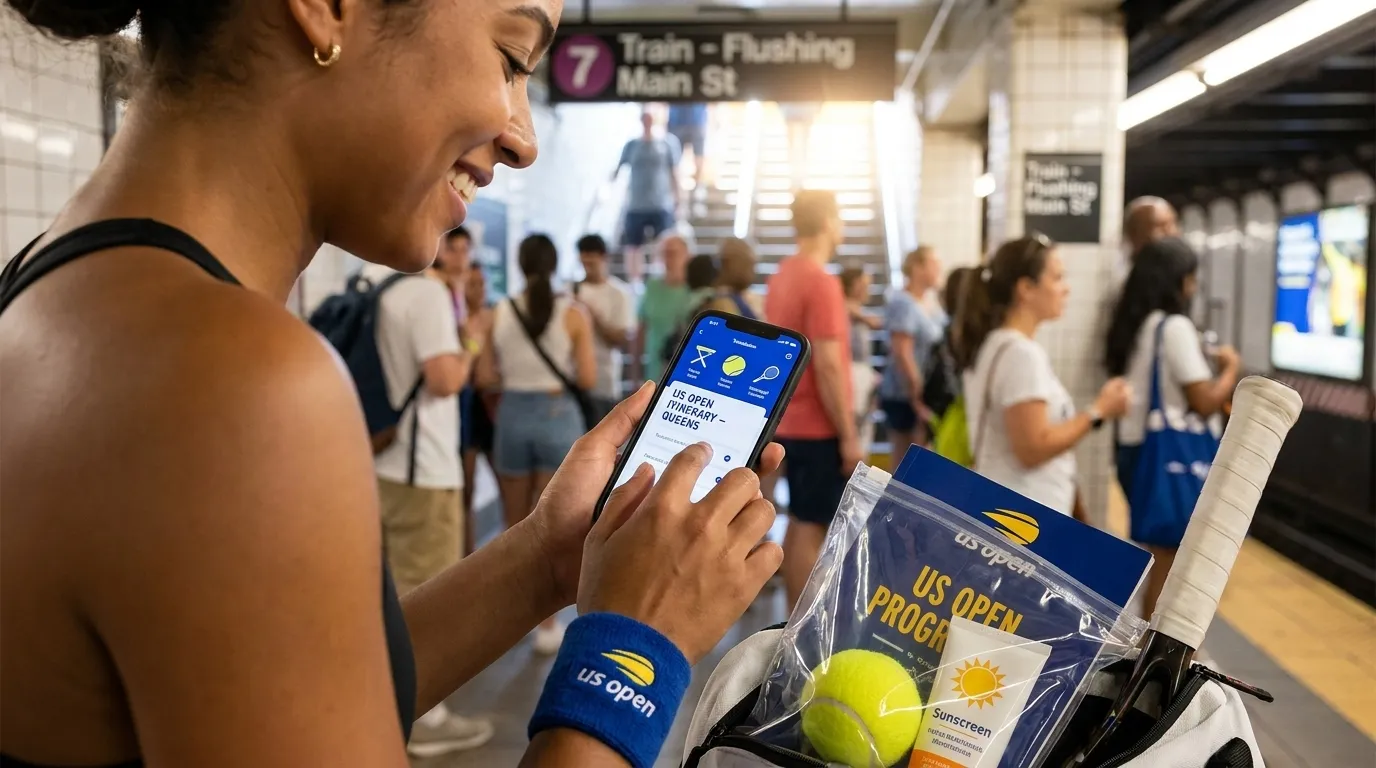
For many visitors, public transit planning will center on official directions for reaching the Flushing Meadows area and the Mets-Willets Point stop. Depending on your starting point, that may involve the 7 subway line, Long Island Rail Road service, or another connection. The calmest route is not always the one that looks fastest on a map. It is the route with fewer fragile transfers, clearer wayfinding, and an easier backup if service conditions change.
Check MTA service status before departure, and keep the official US Open transportation page available on your phone. If you use a taxi, rideshare, or private car, verify the current venue access guidance rather than assuming a pickup or drop-off pattern will be the same as a normal day. Around a major event, traffic control, walking paths, and access points can change.
- Choose one primary route and one backup route before you leave, rather than improvising on a platform or curb.
- Build in time for transit changes, walking, screening, and a possible restroom or coffee stop outside the grounds.
- If you are meeting others, pick a clear transit-side meeting point and a backup plan in case people arrive from different directions.
- Avoid unofficial shortcuts that depend on a gate, path, parking area, or entrance pattern that may not be available that day.
Time Breakfast Before the Rush
A good sunrise plan usually works better with a simple breakfast than with an overstuffed bag. Eat enough before the busiest part of the morning, then carry only what fits current venue rules and your own comfort. If you are coming from Manhattan, Queens, Brooklyn, or a nearby hotel, eating before boarding transit may be calmer than searching for a specific option near the venue at the same time as other early arrivals.
Avoid making the morning depend on one café, concession, product, or exact opening time unless you have checked directly and recently. Local hours, inventory, and service availability can shift during tournament weeks. Think in practical terms: hydration, caffeine if you use it, and food with enough staying power. Before packing any snacks, bottles, bags, camera equipment, umbrellas, or weather gear, read the current prohibited-items and A-Z information so that breakfast planning does not become a security problem.
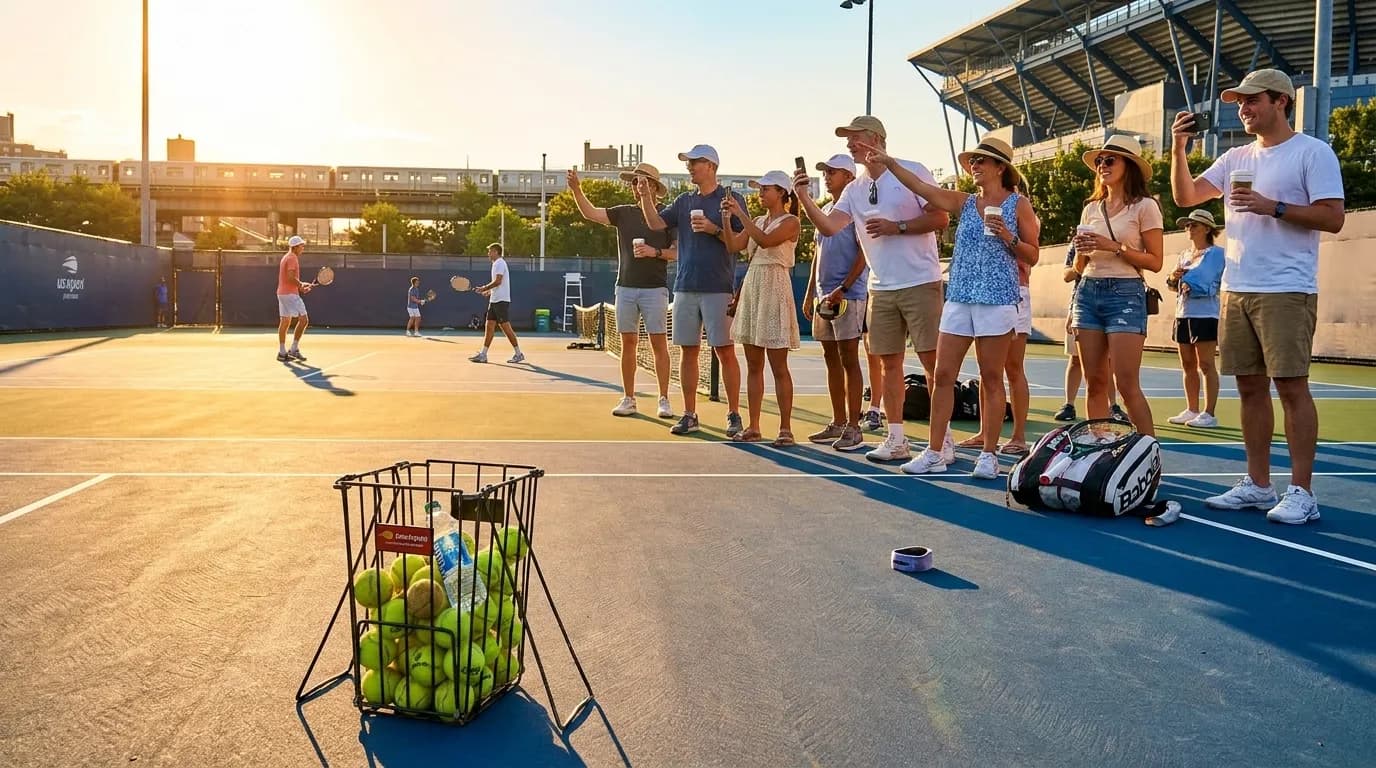
Treat Practice Courts as Priorities, Not Promises
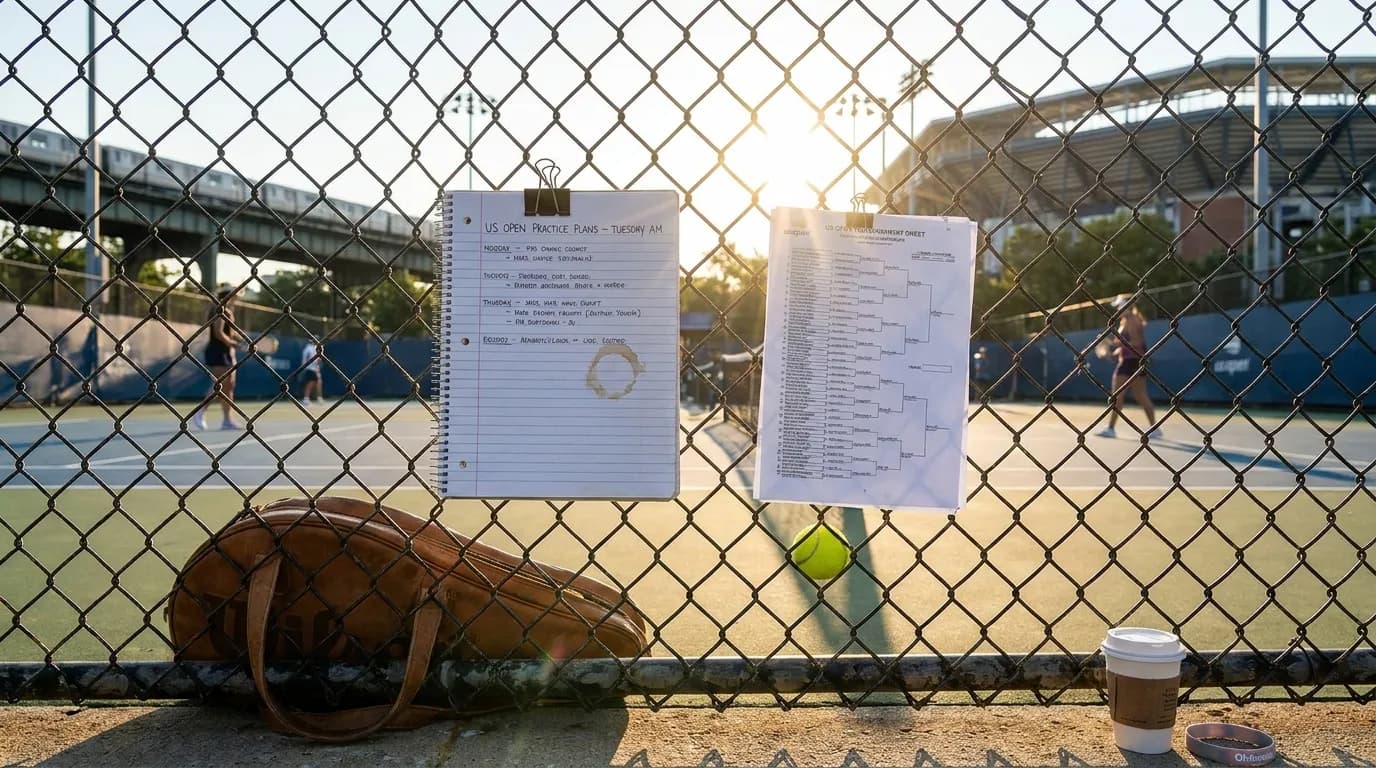
Practice-court watching can be one of the best reasons to arrive early, but it rewards patience more than certainty. Posted practice information, player fields, and access conditions can change, and no player appearance should be treated as guaranteed. Instead of building the whole morning around one name, choose a category: a favorite style of play, a doubles team if posted and accessible, a strong server, a younger player to watch closely, or simply the court with the clearest view.
When the grounds are still relatively calm, your advantage is mobility. Walk deliberately, notice where crowds are starting to form, and decide whether the view is worth the wait. A smaller crowd at a nearby court can sometimes offer a better look at footwork, warm-up patterns, coaching conversations, and shot shape than a distant glimpse of a famous player. If you are attending with children or less tennis-focused companions, agree on a time limit before you settle in.
Read the Grounds Before They Fill
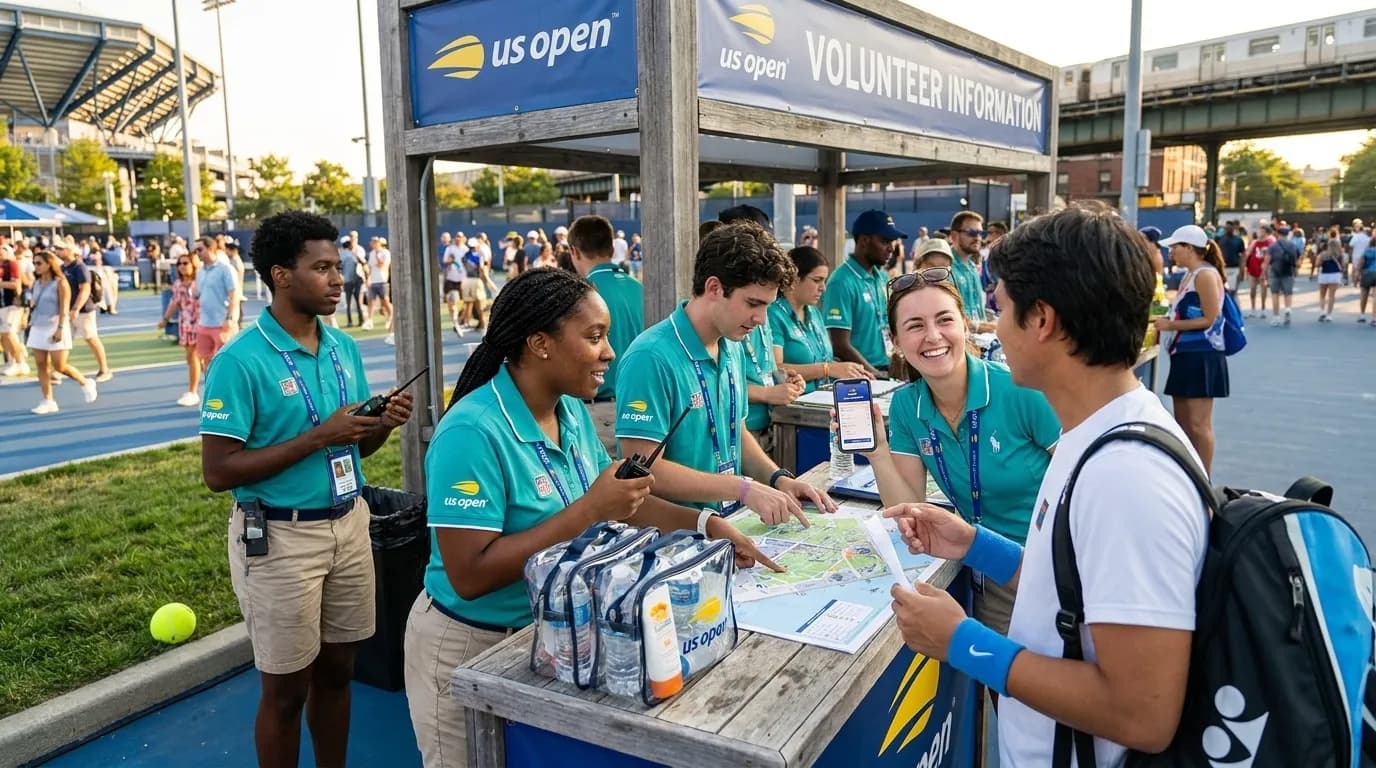
Early arrival is useful because it lets you understand the grounds while decisions are still easier. Once inside, identify practical anchors before chasing tennis: restrooms, water options if available, shaded or cooler-feeling places, the route to your assigned seat if you have one, and the general direction of the courts that matter most to you. This small orientation loop can prevent a midmorning scramble when lines, heat, and crowd flow may feel more demanding.
If you have a reserved stadium session later, use the quieter period to learn how long it takes you to move from outer courts or practice areas toward that entrance. If your plan is more flexible, think in loops instead of straight lines: practice area, outer court, shade, restroom, schedule check, then reassess. Conditions can change by hour, so your morning should be designed to evolve as the day becomes hotter, busier, or more match-focused.
Pack for Screening and Weather
The easiest early-riser to be is often the person with the least complicated bag. Before packing, review the current US Open A-Z information and prohibited-items page, because size limits, allowed items, and security expectations are not details to guess. A streamlined kit may include sun protection, personal medication, a charged phone, identification if needed, and payment options, but the exact choices should follow current official rules. If an item feels borderline, leave it behind or confirm through official guidance.
Late-summer New York can feel different from morning to midday. A pleasant start may become bright and humid, while unsettled weather can make waiting and walking less comfortable. Choose shoes that can handle a long day on hard surfaces, wear layers you can manage easily, and avoid items that become a burden if they cannot enter. The point of waking early is to preserve calm; an awkward bag or slow screening issue can use up that advantage quickly.
- The night before, check the official schedule, A-Z guide, transportation page, prohibited-items page, MTA guidance, ticket details, and weather forecast.
- Before departure, eat or identify a realistic food stop, then recheck transit status and any same-day official updates.
- On arrival, move toward the appropriate entrance with time for screening and possible changes in crowd flow.
- Once inside, locate practical anchors first, then choose two practice or court priorities to investigate.
- As crowds build, trade an unrewarding wait for a better view, shade, water, a restroom stop, or an earlier move toward your next match area.
Practical Notes
Close to travel, recheck the official US Open event schedule, visitor A-Z guide, transportation and directions page, prohibited-items page, and MTA US Open guidance. Confirm gate information, ticket details, player and practice updates, weather, local hours, inventory, and service availability before depending on them. A calm morning plan should stay light: one route, one backup, breakfast before the rush, a compliant bag, and practice-court priorities broad enough to change. The reward for getting up early is not certainty; it is more room to make good decisions before the grounds fill.
Tags: #USOpen2026 #Tennis #NewYork #Queens #FlushingMeadows #KarpoFinds #Karpo #SunriseTennis #USOpenPractice #EarlyFanPlans
Sources consulted: usopen.org — Official reference · usopen.org — Official reference · usopen.org — Official reference · usopen.org — Official reference · new.mta.info — Official reference
All trademarks are the property of their respective owners.
Ask Karpo first
Ask Karpo which early-day choices can help you see more warmups, spend less time wandering, and stay comfortable.