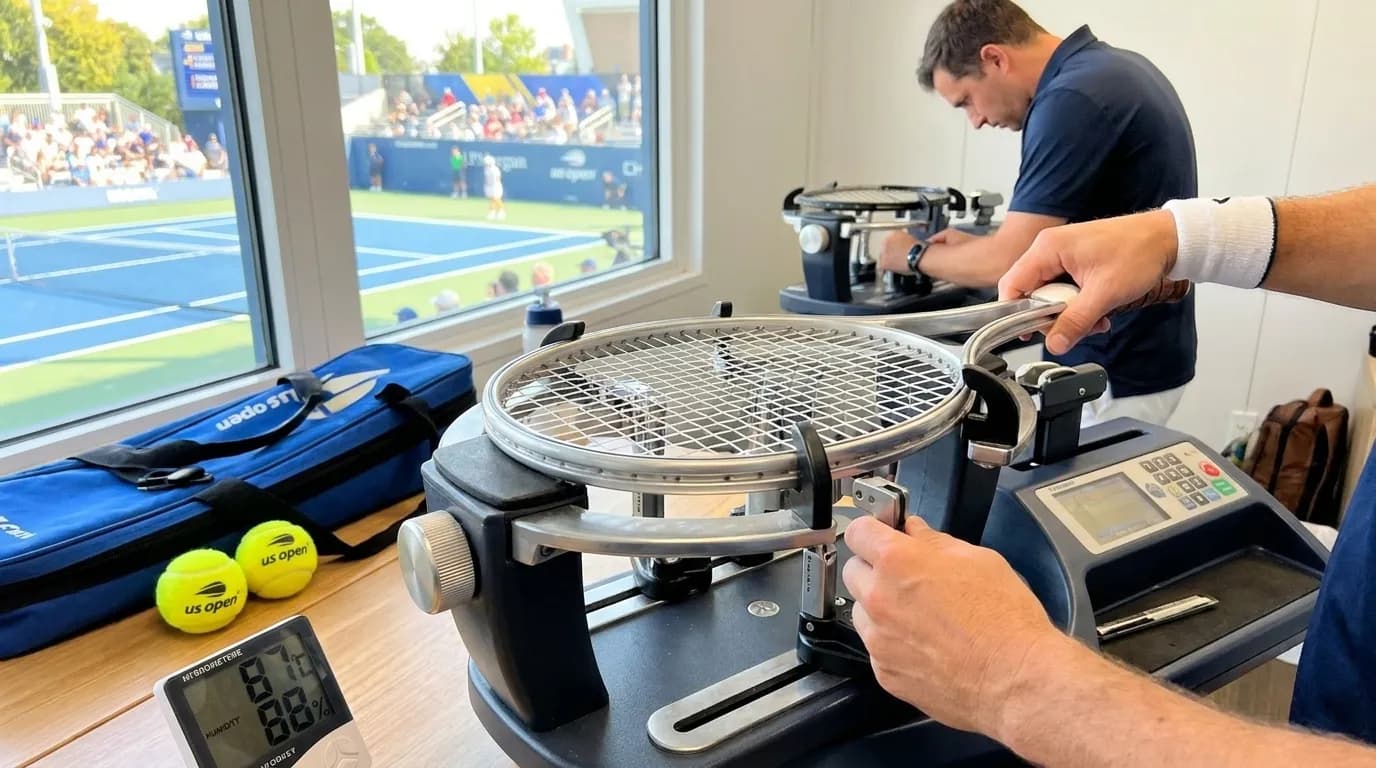
If you are heading to the 2026 US Open or watching from home, humidity is one of the quiet variables that can make a match look different without changing the scoreboard’s basic language. A heavy, damp evening can make rallies appear harder to finish, while a drier afternoon may make the ball come through the court with a livelier feel. Players may respond with equipment choices, but their exact string tensions and match-day preferences are usually private, changeable, and easy to misread from a camera shot. The practical takeaway for fans is simple: treat humidity as part of the playing environment, not as a guaranteed explanation for every miss or winner. The official 2026 US Open calendar runs August 23 through September 13, with singles main-draw play beginning August 30, and anyone attending should recheck the tournament schedule, venue rules, transportation guidance, and weather close to travel.
Text Karpo to understand what humid air might mean for racquet feel at the US Open.

Why Damp Air Can Make the Ball Feel Different
Humidity matters because tennis is a game of contact: ball to strings, shoe to court, hand to grip, and body to air. When conditions are damp, the felt on the ball may seem fluffier or heavier to players, especially after several games of hard hitting. That can change the sensation at impact. A shot that felt crisp in a dry practice block can feel muted in a humid session, and a player may need to swing through the ball with a slightly different level of commitment.
For spectators, the difference is often visible in small ways. The ball may appear to sit up a touch more after absorbing pace, or a player may work harder to generate depth from a defensive position. This does not mean the court itself has a fixed “speed” that can be declared from the stands. Court pace depends on many factors, and exact assessments are not public fan data. Humidity is better understood as one influence on feel, timing, and confidence.
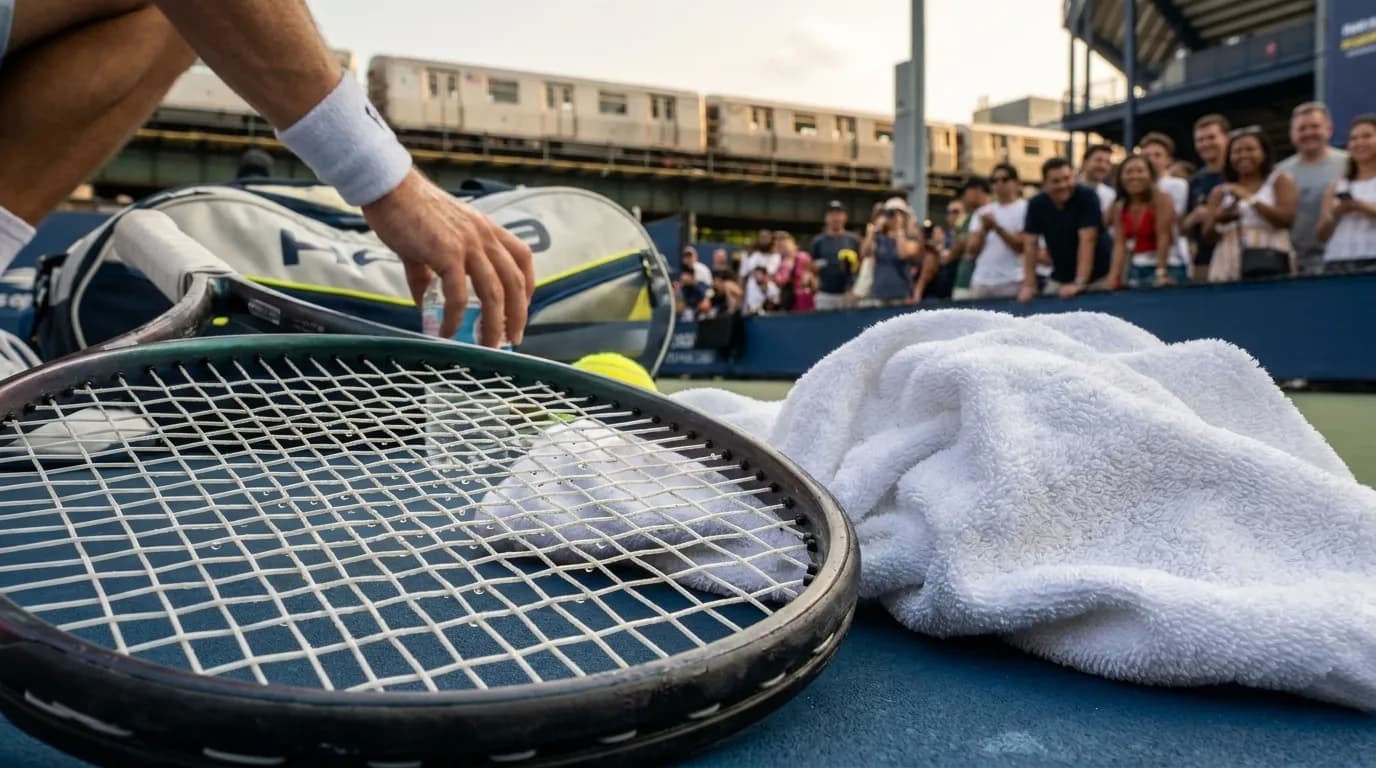
What String Tension Can Change
String tension affects how the string bed responds when the ball strikes it. In broad terms, a tighter string bed can feel firmer and may help some players sense greater directional control. A looser string bed can feel more elastic and may help some players access depth or comfort. Those are general tennis concepts, not universal rules. Different string materials, racquet frames, swing paths, and player habits can produce different outcomes.
Humidity complicates the decision because the ball may not come off the strings with the same liveliness a player expected earlier in the day. If a player feels the ball is not penetrating, a slightly different tension could be one possible response. If a player feels the ball is flying in warm, lively conditions, a firmer setup might be considered. But from a fan’s seat, it is not responsible to claim that a specific player raised or lowered tension unless that information has been publicly confirmed by the player, team, racquet technician, or tournament-facing source.
- A firmer-feeling setup may help some players trust flatter drives or sharper targets, but it can also feel less forgiving.
- A softer-feeling setup may help with depth, spin access, or comfort, but it can also require careful control under pressure.
- String material matters: polyester, natural gut, multifilament, and hybrid combinations can respond differently to heat, moisture, and wear.
- The same tension number can feel different in different racquets, with different string gauges, or after different amounts of hitting time.
Why Exact Player Setups Are Not a Safe Guess
Grand Slam tennis invites close observation, and racquet bags naturally draw curiosity. You may see a player switch frames, ask for a fresh racquet, or speak with a box during a changeover. Those moments are interesting, but they are not a reliable public record of tension, string model, grip change, or tactical plan. A racquet switch can reflect ball wear, string age, comfort, preference, habit, or a pre-planned rotation. It may have nothing to do with humidity.
The International Tennis Federation’s rules provide the framework for the sport’s equipment and play, but they do not turn every individual setup into public information. Professional players often travel with multiple racquets prepared for different conditions, yet the exact logic behind those options can remain private. Even when a number appears on a stringing sheet or is discussed on a broadcast, it should be treated as context, not a universal explanation for performance.
A cleaner way to watch is to connect equipment changes to visible patterns without overstating cause. Is a player missing long after trying to finish points early? Are returns landing short when the server’s pace is not overwhelming? Is a player taking bigger cuts but producing less depth? Those observations are fair. Declaring an unverified tension adjustment as the reason is not.
Day Sessions, Night Sessions, and the Feel of the Match
At the US Open, conditions can vary across a long day of play. A bright afternoon, a breezy early evening, and a humid night can each ask different questions of timing and control. The official schedule should be checked on the US Open site close to the day of attendance, because match order, court assignments, and timing can change. The same caution applies to gate information, transit choices, venue policies, and weather planning.
For players, a racquet that felt ideal during a warmup may not feel identical after the sun drops, the balls age, or the air grows heavier. For fans, that is part of the intrigue. A player who looked perfectly dialed in early may start shaping the ball with more margin. Another may step closer to the baseline to take time away before the ball loses speed. Some may lean on kick serves, high-margin crosscourt patterns, or earlier net approaches. These are tactical responses you can see without needing access to private equipment notes.
How to Read Control Without Blaming the Racquet
Control is not just string tension. It is footwork, contact point, racquet speed, court position, decision-making, and emotional steadiness. Humidity can make all of those feel a little more demanding because the player may need an extra half-step, a cleaner strike, or a more patient pattern. When the ball feels heavier, late contact becomes more costly. When hands get damp, grip changes and towel routines can become more noticeable. When rallies extend, physical discipline matters as much as equipment.
This is why the best fan reading is layered. If a player starts missing forehands long, ask whether the misses are coming from rushed preparation, overly ambitious targets, or a ball that is sitting up and inviting too much swing. If a player is netting backhands, look at balance and contact height before assuming a string-bed problem. If a player repeatedly changes racquets after lost points, notice it, but do not turn the act into proof of a specific technical adjustment.
Broadcast commentary can help, especially when it explains tendencies rather than claiming certainty. A useful comment might say that slower-feeling, heavier conditions can reward patience and shape. A less useful conclusion would be to assign a precise tension change without confirmation. The difference matters because tennis equipment is personal, and professionals often make small decisions that are tailored to their own feel rather than to a simple rule.
Fan Clues Worth Watching
A humid match can reward attentive viewing. Instead of searching for secret numbers, watch how players manage height over the net, depth near the baseline, and recovery after wide balls. Notice whether they choose safer targets on important points or keep forcing low-percentage strikes. Pay attention to serve patterns as well. A player may choose more body serves or higher-kicking second serves if the conditions make clean attacking returns harder.
Also watch the rhythm between points. More frequent towel use, extra attention to grips, longer looks at the string bed, or visible conversations with a player box can all be part of the atmosphere. None of these signs proves a particular equipment change. They do, however, show how much of elite tennis happens between the points as players try to keep feel, confidence, and decision-making aligned.
Practical Notes
- Before traveling, recheck the official US Open event schedule for current match timing and session information.
- Review the US Open A-Z guide and prohibited-items page before packing, because venue rules and service availability can change.
- Use the tournament’s transportation and directions page when planning your route, and keep a backup option in case local conditions shift.
- Check a reliable weather forecast close to departure; humidity, heat, rain, and evening conditions can affect both comfort and match feel.
- When watching, treat string-tension talk as informed context unless it comes from a confirmed public source tied to the player or event.
- Look for visible patterns: ball depth, net clearance, racquet changes, grip routines, and tactical patience often tell a richer story than a guessed tension number.
Tags: #USOpen2026 #Tennis #NewYork #Queens #FlushingMeadows #KarpoFinds #Karpo #StringTension #USOpenHumidity #TennisGear
Sources consulted: usopen.org — Official reference · usopen.org — Official reference · usopen.org — Official reference · usopen.org — Official reference · itftennis.com — Official reference
All trademarks are the property of their respective owners.
Ask Karpo first
Ask Karpo to explain string tension, control, and spin in plain English before you watch the next warmup.