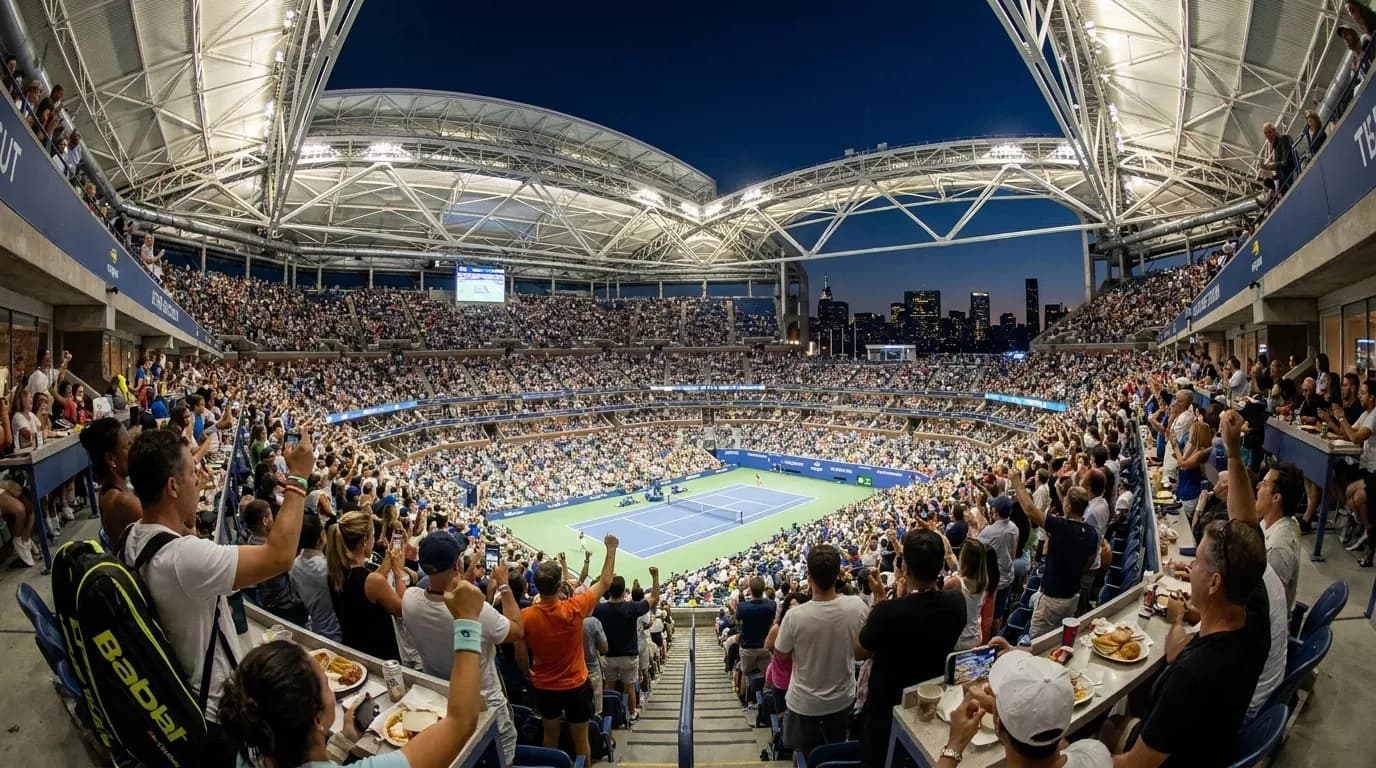
The easiest way to reduce wait frustration at the US Open is not to chase a perfectly empty line; it is to avoid stacking every task at the same emotional high point of the day. As of July 23, 2026, the official 2026 US Open calendar runs August 23 through September 13, with singles main-draw play beginning August 30, but daily schedules, gate times, venue rules, transit conditions, weather, and service availability can change. Build your visit around a simple sequence: verify the day’s schedule and gate information before leaving, arrive with bags and prohibited items already sorted, use a restroom before you feel rushed, eat before the most obvious meal window if your session allows, and shop either early or during a match window you are comfortable missing. This approach will not eliminate lines, but it gives you fewer decisions when everyone else is making the same ones.
Text Karpo to sequence your gates, food, and merchandise stops before the lines build.

Start With the Gate, Not the First Match
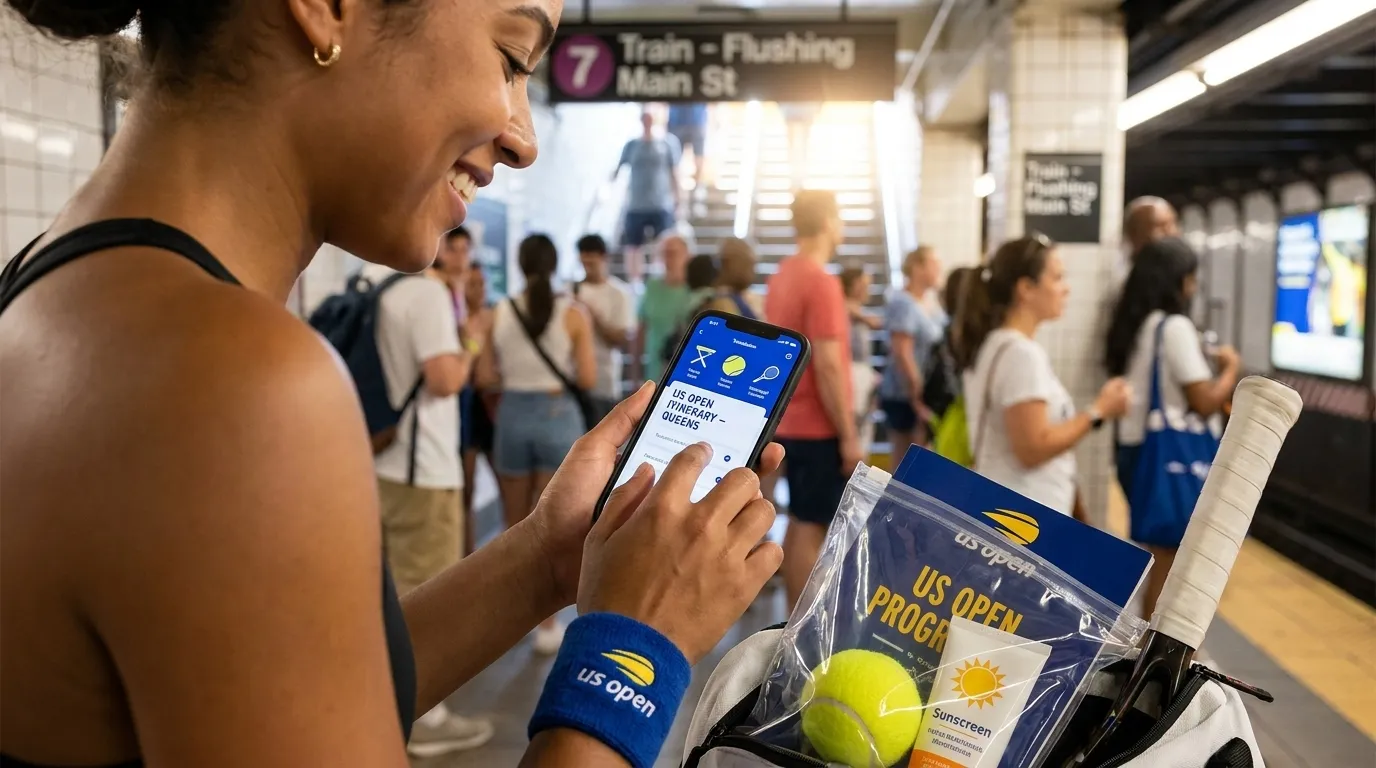
Many fans plan backward from the match they most want to see, then treat the gate as a formality. That is where the day can begin to feel compressed. Instead, give the gate its own planning window. Before you travel, check the official US Open event schedule for the day’s session structure and the official visit information for current entry guidance. If you are using public transit, compare the US Open transportation page with the MTA’s US Open guide close to your departure time, because service patterns and crowding can affect how much buffer you need.
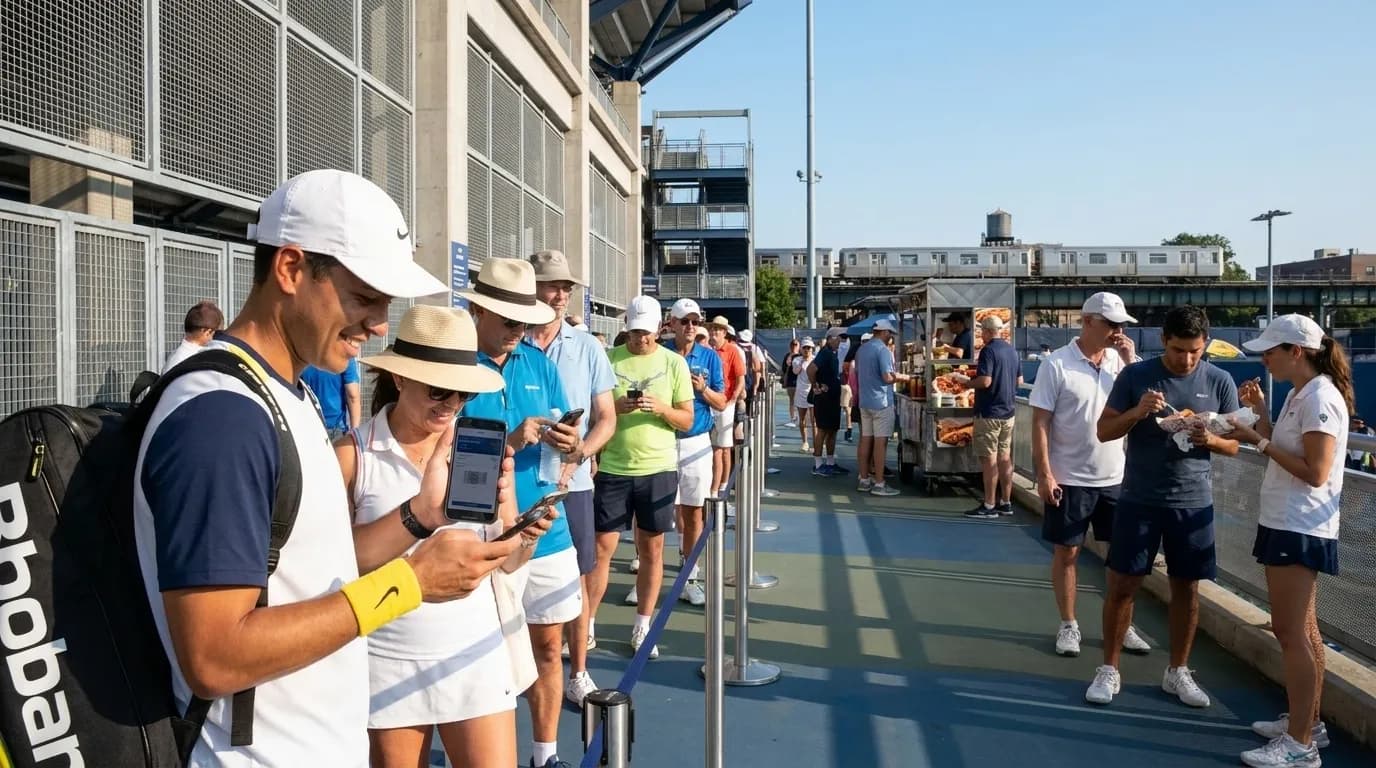
The most useful gate strategy is to reduce the number of problems you are solving at the security line. Review the prohibited items page before packing, keep essentials easy to inspect, and avoid treating the entrance area as the place to reorganize. If you are meeting friends, decide whether to enter together or reunite inside, because waiting outside for a late arrival can turn a manageable line into a missed opening stretch. The goal is not to be first; it is to enter without creating avoidable friction.
Use the First Thirty Minutes for Chores
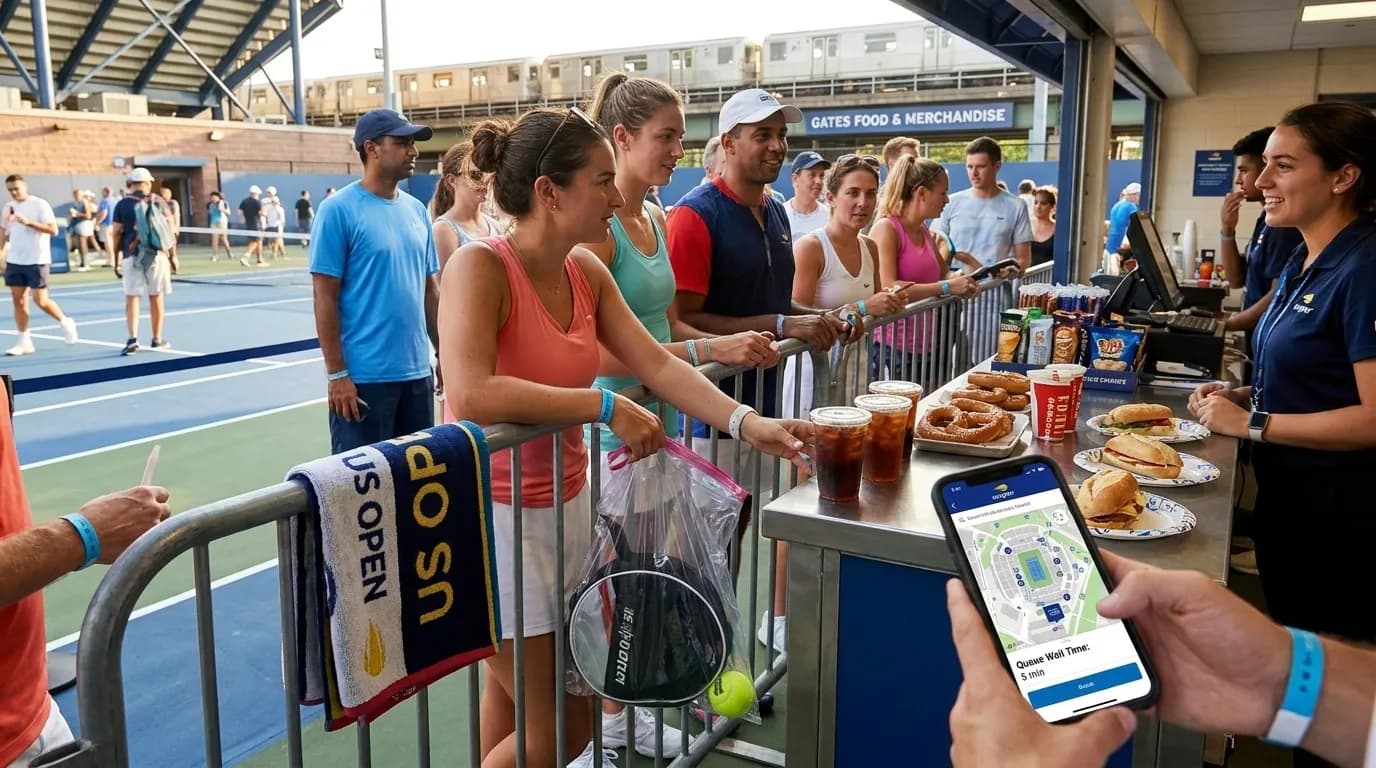
Once inside, the temptation is to rush directly toward the court, especially if you have been tracking a particular match. But the first half hour after entry can be the cleanest time to handle small tasks that become annoying later. If your session timing permits, orient yourself, identify restrooms near the courts you expect to use, and decide where you would return for food if a match runs longer than expected. This is also the right moment to check whether your group has different priorities: one person may want a program or merchandise stop, while another wants to save every minute for tennis.
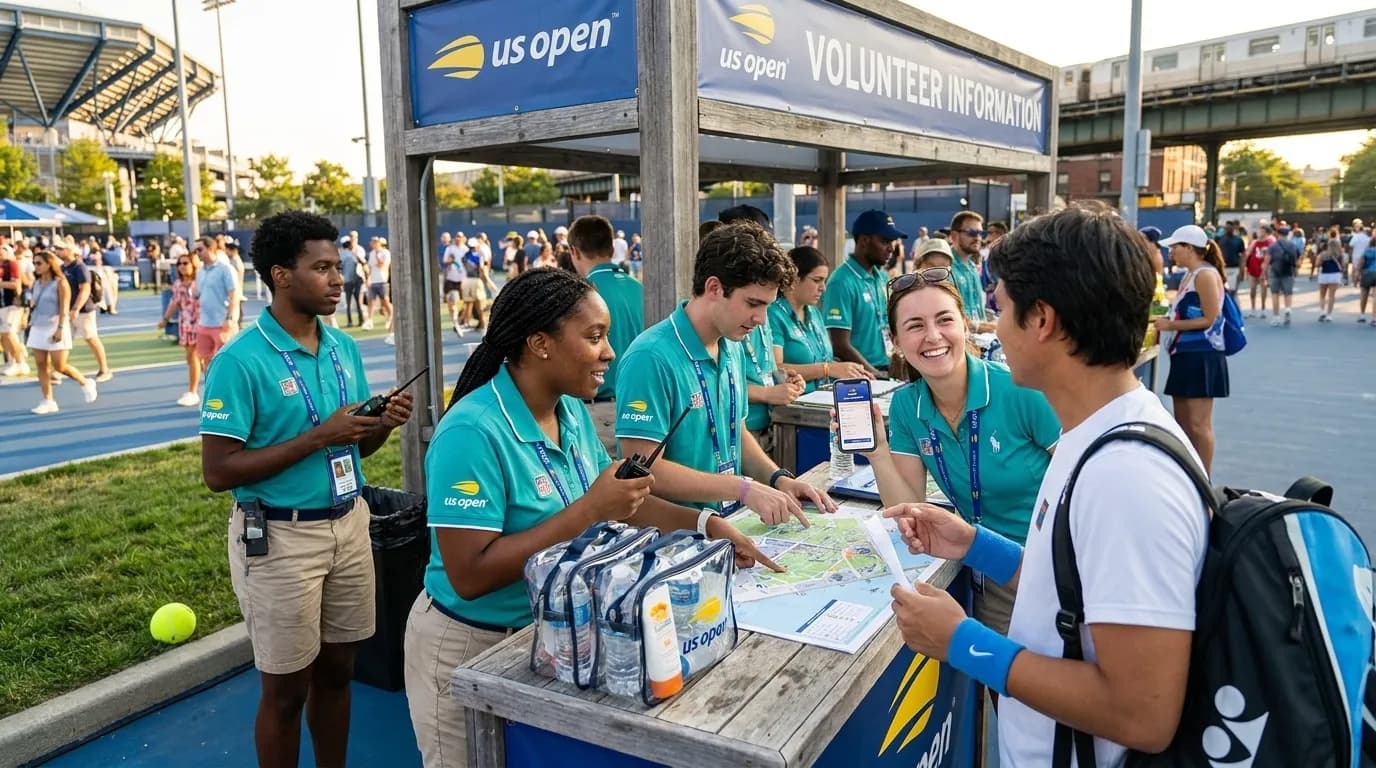
Treat early wandering as reconnaissance rather than idle time. You are looking for the nearest low-stress fallback options: a restroom that is not directly in the path of the largest crowd, a food area you can find again without circling, and a merchandise location you can revisit later. Venue layouts and operating details can change, so avoid building the day around a single counter, product, or shortcut. A little early scouting makes your later choices faster, which matters when a close set ends and thousands of people move at once.
Eat Before the Obvious Meal Rush
Food lines tend to feel most frustrating when hunger and uncertainty arrive together. Rather than waiting until everyone in your section has the same idea, choose a meal window based on match rhythm. If you are at a day session, consider whether an earlier lunch or a late snack fits better than joining the most predictable midday swell. If you are attending later in the day, think about eating before entering the venue area, if that suits your plans and current rules, or buying food before the session’s most anticipated stretch.
The key is to separate appetite from urgency. If a match is heading into a tight phase, decide whether you would rather miss a few routine games now or risk missing a pivotal moment later. There is no universal answer; some fans would rather eat early and settle in, while others prefer to watch uninterrupted and accept a longer wait afterward. What matters is making that trade-off deliberately. Current vendor availability, menus, hours, and inventory should be checked through official venue information and on-site signage rather than assumed from a previous year’s visit.
- If you arrive soon after gates open, consider handling a light food stop before the first major crowd wave builds.
- If you are watching a court with frequent turnover, use a less meaningful changeover in your own schedule rather than the crowd’s obvious break point.
- If you are with children or a larger group, set a snack threshold early so one person’s hunger does not force a rushed decision for everyone.
- If weather looks unsettled, avoid postponing food, water, and restroom needs until the moment everyone seeks shelter or resets plans.
Time Restrooms Like a Tennis Fan, Not a Commuter
Restroom timing is one of the quiet differences between a smooth visit and a day of constant interruption. The worst time to go is often the moment that feels most obvious: immediately after a match ends, just before a headline match begins, or during a broad meal break. If you are moving between courts, build in a restroom stop before you are desperate. This is especially useful for families, older guests, and anyone who wants to avoid sprinting between lines and seats.
Think in layers. Use a restroom when you pass one with a manageable line, even if you could wait. Choose the stop that protects your next hour, not just the next ten minutes. If your group is splitting up, set a meeting point that does not block traffic or depend on everyone exiting a restroom at the same moment. At a crowded sports venue, the most polite plan is often the most efficient one: step aside, regroup away from the flow, and make the next decision without clogging a corridor.
Shop When Attention Is on the Courts
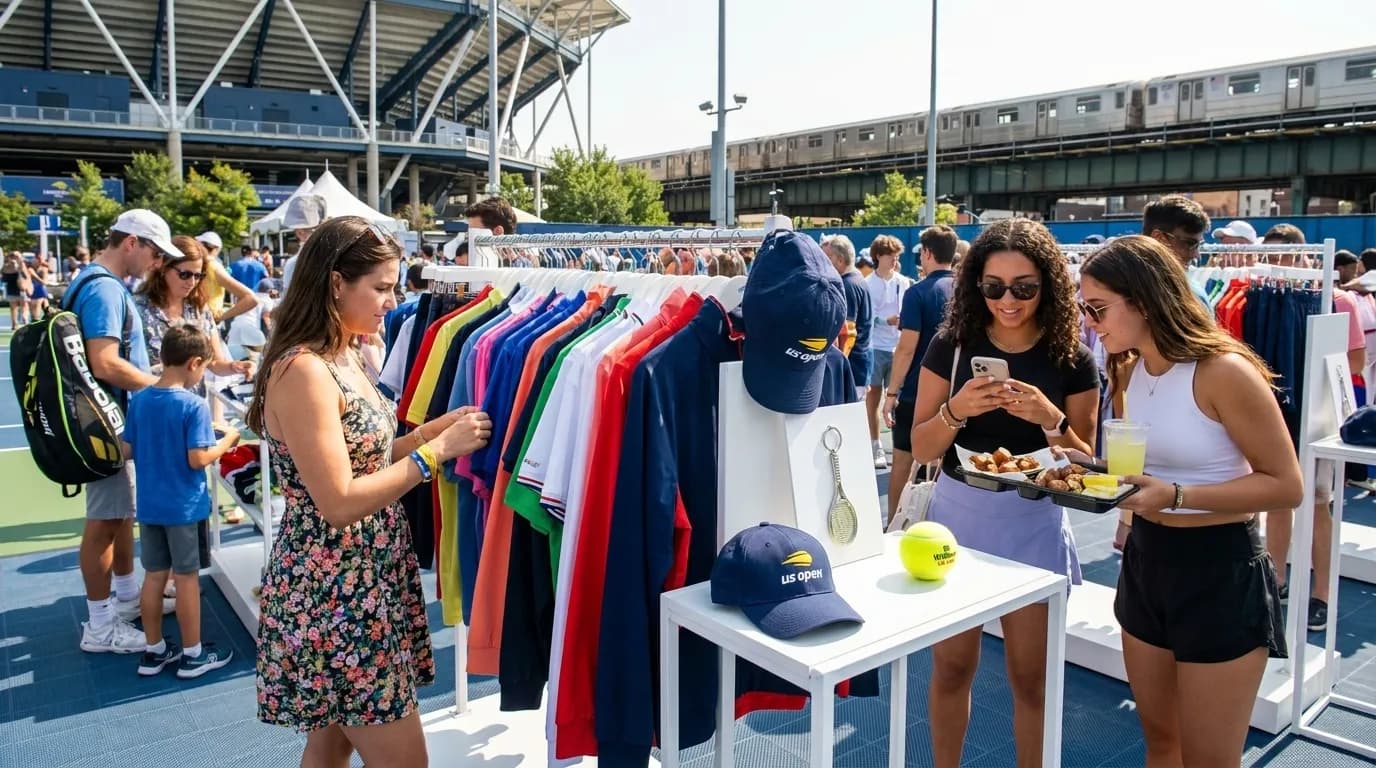
Merchandise shopping has its own rhythm. Fans often browse at arrival, between major matches, or on the way out, which means lines can form when the day feels least flexible. If a specific item matters to you, look early, but avoid assuming that any product, size, color, or restock will be available. If shopping is more casual, wait for a moment when the match schedule pulls attention elsewhere and you are not trying to beat a transit rush.
A useful compromise is to browse early and buy later only if the item is still worth the time. Take note of where you saw it, but do not build the day around returning to one shelf. If you are traveling light, remember that whatever you buy becomes part of your carry for the rest of the session and may affect your comfort in seats, lines, and transit. For gifts, confirm return or exchange details on-site before purchasing rather than relying on assumptions from other events or retailers.
Move During Uneven Moments
The best movement windows are rarely the most dramatic ones. If you wait for a match to end, you move with the crowd. If you leave during a tense late-game moment, you may miss what you came to see. Look for uneven moments instead: after you have seen enough of a lopsided set, when your group agrees that the next court is the priority, or when a break in your personal schedule does not align with everyone else’s. This is less about predicting the perfect lull and more about not joining the largest wave by default.
For fans moving between reserved and general areas, decision discipline helps. Before leaving a seat, know whether you are going to a restroom, food, merchandise, or another court. Wandering can be pleasant early in the day, but at peak movement times it turns into extra steps and extra lines. If you are attending with a group, one person should not be expected to solve the entire plan in real time. Agree on the next priority before you stand up, then adjust calmly if signage, staff direction, weather, or crowd flow points you elsewhere.
Practical Notes
Before you leave, recheck the official US Open event schedule, A-to-Z visitor information, transportation directions, prohibited items page, and the MTA’s US Open guide. These are the best places to confirm the details that can change close to your visit, including schedule structure, venue guidance, travel options, and entry restrictions. Save the pages you need, but do not rely only on screenshots if the day is weather-sensitive or schedule-dependent.
- Pack for inspection, not just convenience: remove anything questionable before you reach the gate.
- Give the entrance its own buffer, especially if you are aiming for an early match or meeting others.
- Use your first minutes inside to identify restrooms, food areas, and a realistic meeting point.
- Eat before the most predictable rush if your session timing and appetite allow.
- Make restroom stops opportunistic rather than urgent.
- Browse merchandise early if selection matters; shop later if time matters more.
- Let official signage, staff direction, weather, and live schedule changes override any preplanned route.
Tags: #USOpen2026 #Tennis #NewYork #Queens #FlushingMeadows #KarpoFinds #Karpo #USOpenQueues #FanPlanning #MerchAndMeals
Sources consulted: usopen.org — Official reference · usopen.org — Official reference · usopen.org — Official reference · usopen.org — Official reference · new.mta.info — Official reference
All trademarks are the property of their respective owners.
Ask Karpo first
Ask Karpo to create a queue-aware route for your exact arrival window and match priorities.