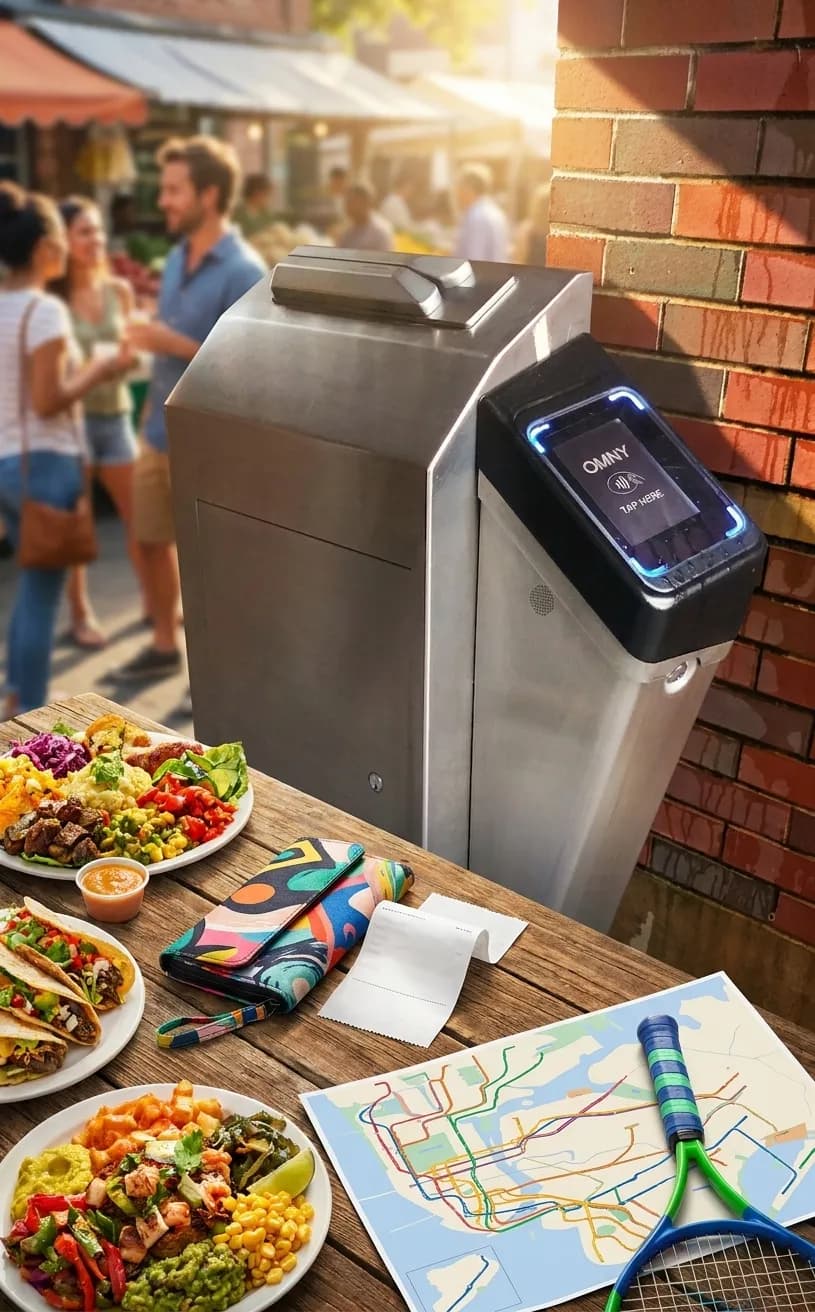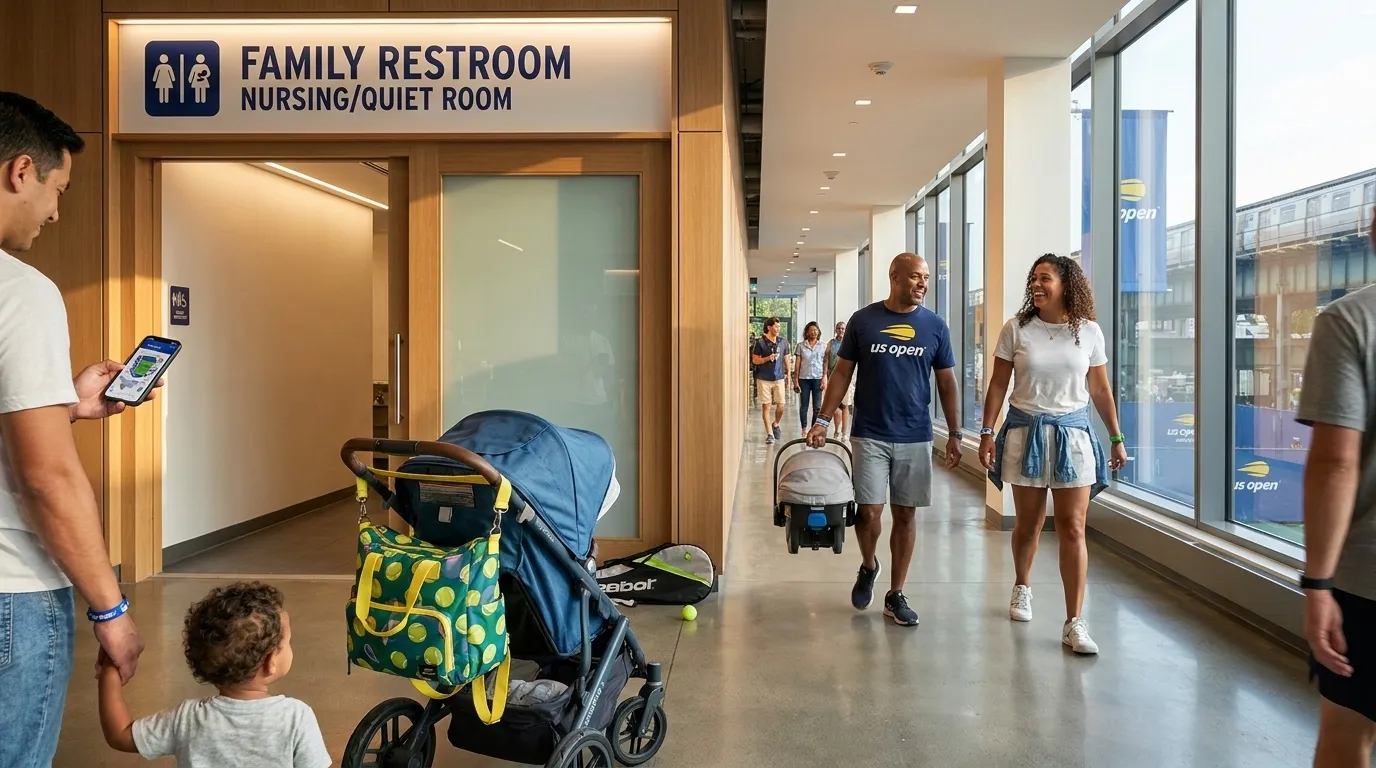
If you are visiting the US Open with a baby, toddler, nursing parent, or child who needs predictable breaks, the key is not to assume the grounds will work like a mall, airport, or local park. Treat the day as a moving plan: confirm the current event date, check the official A-Z guide for family, nursing, restroom, accessibility, and guest services information, then pack only what the venue rules allow. The official 2026 US Open calendar runs August 23 through September 13, with singles main-draw play beginning August 30, but match times, gate operations, weather, transportation conditions, and service availability can shift. Build your visit around shorter court sessions, planned pauses, and an exit option, so the family can enjoy tennis without every need depending on one perfect room, one perfect schedule, or one perfect bag.
Text Karpo to organize a parent-friendly US Open day around feeding, resting, and shorter walks.

Start With the Calendar, Not the Wish List
Families often begin by imagining a full day of tennis, food, photos, and shopping. A calmer approach starts with the official schedule. As of July 23, 2026, the US Open lists its 2026 calendar from August 23 through September 13, and singles main-draw play is scheduled to begin August 30. That difference matters because the rhythm of a qualifying-session visit may not feel the same as a main-draw visit, and the number of people on-site, the courts you prioritize, and the amount of walking you tolerate may vary by day.
Before you buy, print, download, or share a family plan, recheck the official event schedule for the date you intend to attend. Then look at the session structure and decide what your household can reasonably handle. With a nursing infant, an early arrival plus a midafternoon departure may be more realistic than trying to stretch through evening play. With older children, a shorter day focused on one marquee experience and one quieter court can feel more successful than chasing every possible match.
Where to Verify Nursing, Family, and Accessibility Support
The most important family-rest question is simple: where can you go when someone needs privacy, calm, assistance, or a reset? The answer should come from the official US Open A-Z guide and, when relevant, the venue’s current accessibility information rather than from an old blog post, a social media comment, or a memory from a past year. Official services can change, and accessibility needs are individual, so the right question is not only whether a space exists, but how it works on the day you attend.
Parents may want to look specifically for current entries related to nursing, family services, restrooms, guest services, first aid, accessibility, mobility support, companion arrangements, and permitted medical or infant-care items. Avoid relying on a single label. A nursing parent may need privacy and a seat; another family may need a low-stimulation pause; another may need to know how to request assistance if a child or caregiver becomes overwhelmed. If an accommodation is important to the visit, contact the official channel listed by the US Open before travel and ask what is currently available, where to enter, and what documentation or screening process, if any, applies.
Pack for Needs, Then Edit for Venue Rules
A family tennis bag is a balance between comfort and compliance. Start with the care items your child or nursing parent genuinely needs, then compare that list with the US Open’s current prohibited-items page before leaving home. Bag policies, allowed items, and screening practices can change, and an item that feels ordinary in daily life may still create a delay or problem at entry. The goal is not to bring everything; it is to bring the small set of items that prevents predictable stress while keeping security screening straightforward.
- Check the current prohibited-items page before packing any stroller accessory, cooler-style item, bottle, pump part, food item, toy, or comfort object that could be restricted or require inspection.
- If nursing or pumping is part of the day, pack only the supplies you can manage while walking, waiting, and passing through screening, and verify current venue guidance for any related equipment or storage questions.
- Bring child basics in compact form: a change of clothes, simple layers, sun protection that complies with venue rules, wipes, and any necessary health or comfort items.
- Use a bag layout that makes inspection easier. Keep care items grouped, remove unnecessary packaging, and avoid burying essentials under souvenirs or extra clothing.
- For children who need sensory breaks, consider quiet comfort items only after checking size and item rules; do not assume every toy, headset, or blanket will be permitted.
- Prepare a backup plan outside the grounds for items that are not allowed, because same-day storage options, inventory, or assistance should not be assumed.
If your family depends on a particular item for feeding, medical care, mobility, or regulation, do not leave the interpretation until you reach the gate. The practical step is to verify through official information close to the visit, then decide whether the day still works if that item requires extra screening, cannot be brought in, or needs an accommodation request.
Pace the Grounds Like a Series of Short Visits
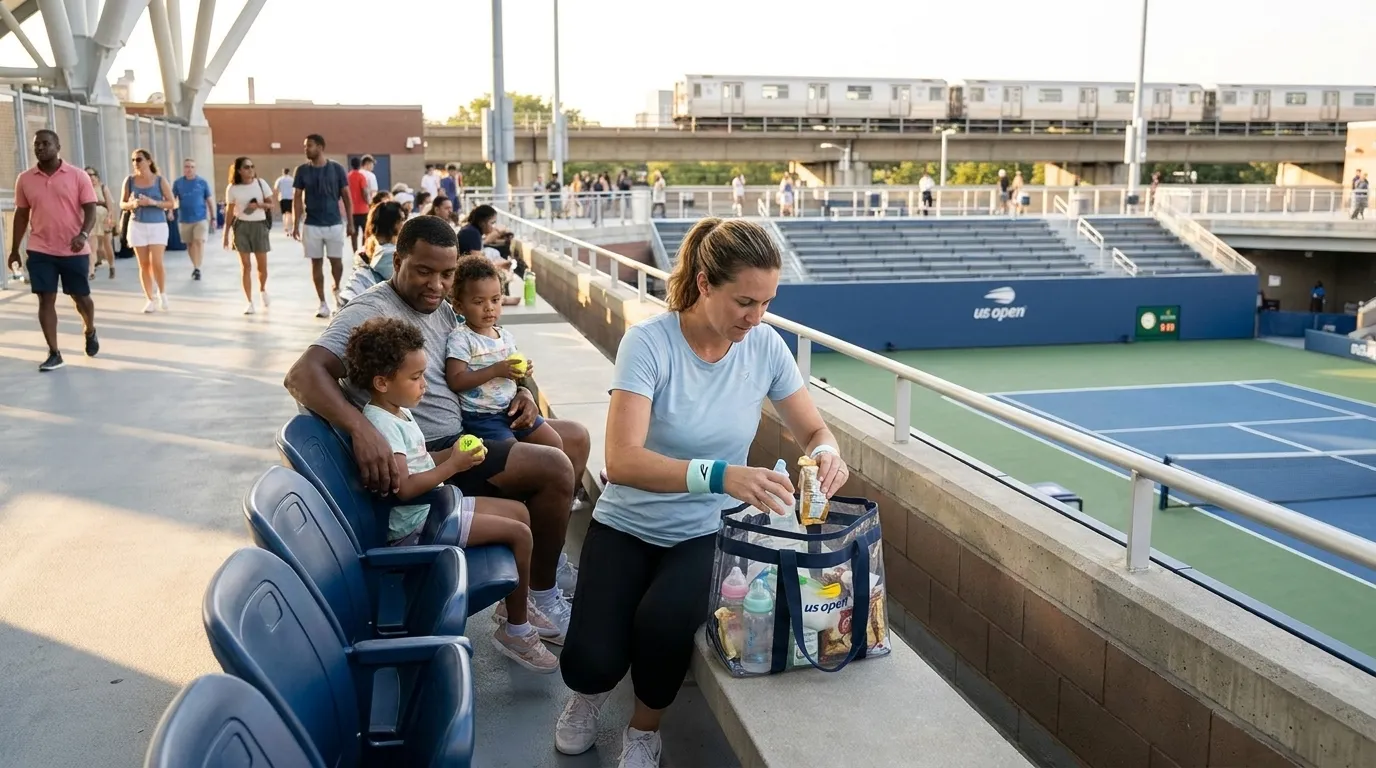
The US Open can be exciting precisely because there is so much happening: multiple courts, crowds, food lines, merchandise, screens, announcements, and changing match momentum. For families with rest needs, that energy is easier to manage when the day is divided into short chapters. Think in blocks of arrival, first match, pause, second match, food or restroom stop, and decision point. A decision point is the moment when you ask whether to continue, simplify, or leave while everyone is still coping.
For nursing parents, the best pacing plan usually avoids waiting until the last possible minute. If you know a baby typically feeds after a certain interval, begin moving toward the appropriate area early enough to account for crowds, restroom lines, wayfinding, and security boundaries between spaces. If an older child needs a break from noise or sun, do not make rest conditional on finishing a full set. Tennis scoring can be unpredictable, and a “quick game” can stretch longer than expected.
It also helps to choose a family base style rather than a rigid itinerary. Some families do better selecting one main court session and allowing everything else to be optional. Others prefer sampling outer-court play in smaller doses. Neither approach is universally better; the right one is the version that leaves enough energy for the walk back to transit, the wait for a ride, and the evening routine after leaving the grounds.
Transit and Entry Are Part of the Rest Plan
A family rest strategy begins before the first match. The official transportation and directions page should be checked close to travel for current guidance on reaching the venue, because transit conditions, driving routes, rideshare patterns, and local operations can change. Parents should treat the inbound and outbound trip as part of the child’s stamina budget. A smooth arrival can make the day feel possible; a rushed arrival can spend everyone’s patience before the tennis begins.
If using public transportation, consider where your child is likely to need a snack, bathroom, carrier, or stroller adjustment before the final approach. If driving or using a car service, think through the walk from drop-off or parking areas, the possibility of traffic, and the fact that leaving during a popular window may take longer than leaving at an odd time. None of these details should discourage a visit; they simply belong in the same plan as tickets and match preferences.
Entry timing matters too. Gate times and procedures should be verified through official US Open information near the visit. Families often benefit from arriving with a cushion, but “early” should still be realistic for naps, feeds, and heat. If your child has a narrow window of tolerance, a later, shorter visit may be kinder than a long day that begins with a stressful queue.
Heat, Weather, and Quiet Breaks Need a Backup
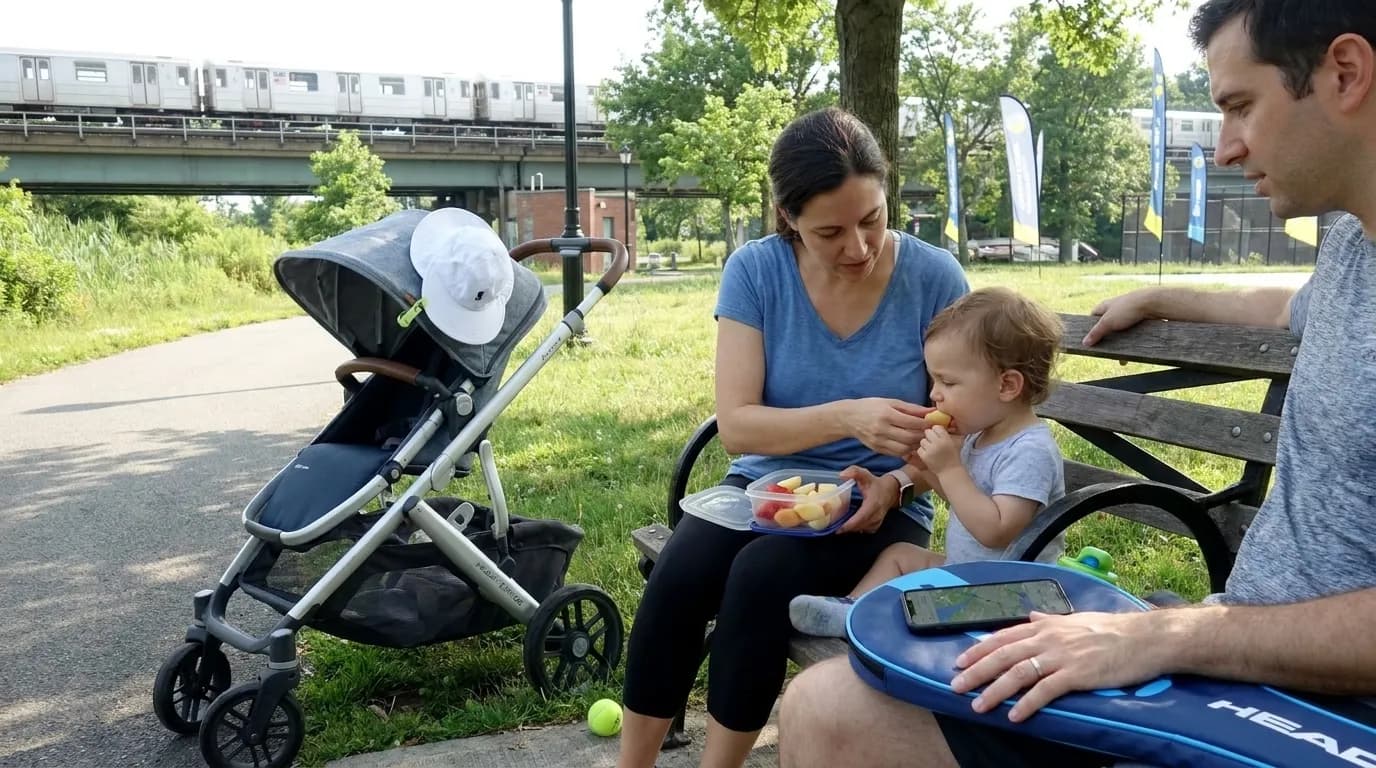
Late-summer tennis in New York can involve bright sun, humidity, rain delays, or changing evening conditions. Weather can also affect crowd flow, court movement, and how much shade or shelter families seek at the same time. Before leaving, check the forecast and the official venue information for current rules and operations. Then make a simple family threshold: when the baby cannot settle, when a child stops listening, when a caregiver feels depleted, or when weather changes the comfort level, the plan gets smaller.
Quiet breaks do not have to be elaborate to be useful. A pause away from the busiest walkway, a reset after restroom use, a shaded moment if available, or a calm snack break can prevent the day from tipping into urgency. The important part is to identify possible pause points after you arrive rather than discovering them only when someone is already crying, overheated, or overwhelmed.
Families with accessibility needs should avoid one-size-fits-all assumptions. A child who needs reduced stimulation, a parent recovering from birth, a caregiver with mobility limits, and a visitor with a medical device may all require different support. Official venue information is the place to verify accommodations, but your own plan should include conservative pacing, realistic walking expectations, and permission to leave earlier than planned.
Practical Notes
- Recheck the official US Open event schedule for your date, especially if you are choosing between the August 23 opening of the 2026 calendar and main-draw singles play beginning August 30.
- Use the official A-Z guide to verify current nursing, family, restroom, guest services, first aid, and accessibility information before travel.
- Review the prohibited-items page before packing, and make a separate plan for anything your family cannot bring through screening.
- Check the transportation and directions page close to departure, then add time for walking, crowds, bathroom stops, and a slower exit.
- Choose one or two tennis priorities, not six. A family visit with rest needs works better when optional activities are truly optional.
- Set a leave-early rule in advance. If feeding, weather, sensory, mobility, or caregiver fatigue becomes the main event, ending the visit can be the successful choice.
The best family US Open day is not the longest or most ambitious one. It is the day built around verified information, allowed essentials, flexible timing, and enough rest to let the tennis remain enjoyable.
Tags: #USOpen2026 #Tennis #NewYork #Queens #FlushingMeadows #KarpoFinds #Karpo #USOpenFamilies #NursingParents #FamilyRestSpaces
Sources consulted: usopen.org — Official reference · usopen.org — Official reference · usopen.org — Official reference · usopen.org — Official reference
All trademarks are the property of their respective owners.
Ask Karpo first
Ask Karpo which official family services to confirm before arrival and how to build a flexible backup plan.