For a full US Open day, choose the pair that keeps your feet calm after hours, not the pair that looks best for one photo. As of July 23, 2026, the official 2026 US Open calendar runs August 23 through September 13, with singles main-draw play beginning August 30, so many fans will be planning for warm-weather walking, standing, transit transfers, security screening, concourses, and stadium stairs. Your best setup is usually a broken-in athletic sneaker or supportive walking shoe with enough cushioning for pavement and enough stability for quick changes in pace. Add thin, breathable socks, a small blister kit that complies with venue rules, and a backup plan for wet or swollen feet. Before travel, recheck the official US Open schedule, A-Z guide, prohibited-items page, transportation page, and the MTA US Open guide, because access details can change.
Text Karpo to sanity-check your shoe choice before a twenty-thousand-step US Open day.

Start With the Route, Not the Outfit
A stadium day is not a normal day of city sightseeing. The distance comes in pieces: walking to transit, moving through stations, approaching the venue, crossing the grounds, climbing to seats, leaving for food or shade, and reversing the route after the last match you choose to watch. Even if each segment seems small, the total can feel like a long urban hike by evening.
That is why dress shoes, barely worn fashion sneakers, flat sandals, and rigid leather slip-ons are risky choices. They can feel acceptable at breakfast and unforgiving by the second stadium climb. If you are deciding between two pairs, pick the one you have already worn for a long city day without hot spots. If neither pair has passed that test, solve the shoe problem before you solve the outfit problem.
The safest style is usually a shoe with a stable heel, a secure midfoot, a toe box that does not squeeze when your feet swell, and a sole that grips on smooth indoor surfaces as well as pavement. You do not need a performance running shoe, but you do need a shoe built for repeated impact.
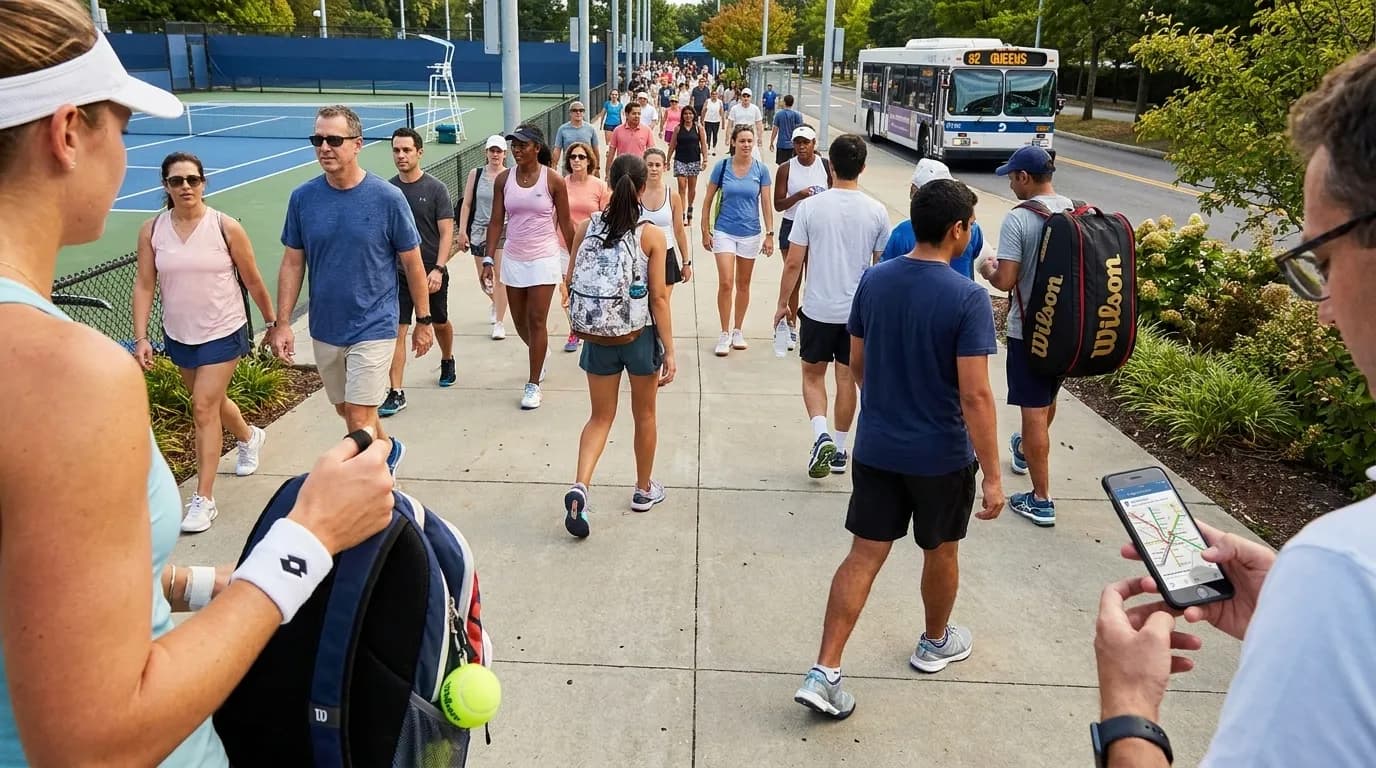
The Shoe Test to Run Before Queens
Do not judge a shoe while standing in your bedroom. Test it under the conditions that resemble the day: heat, stairs, waiting, and uneven walking pace. A shoe that feels plush for ten minutes can become unstable after two hours; a minimalist shoe can feel elegant until your calves and arches begin doing all the work.
- Walk at least two miles in the exact shoe-and-sock combination you plan to wear, ideally on pavement and stairs.
- Check for rubbing at the heel, outside toe, big-toe joint, and under the arch after the walk, not only during it.
- Try the shoes later in the day, when feet are more likely to be slightly swollen.
- Make sure the laces or straps can be adjusted without creating pressure on the top of the foot.
- Avoid wearing brand-new insoles, arch supports, or compression socks for the first time at the tournament.
- If you use orthotics, test them inside the actual shoes you will wear, because volume and heel fit can change.
If a shoe produces one small hot spot during the test, assume that spot will become louder over a full day. Sometimes a different sock solves it; sometimes a lace adjustment helps. If the problem is toe crowding, heel slip, or arch pain, choose another pair rather than hoping the excitement of the day will distract you.
Socks Matter More Than Most Fans Think
Socks are the cheapest insurance in the footwear plan. Cotton can feel familiar, but once damp, it often holds moisture against the skin. For long walking days, many fans do better with lightweight synthetic or merino-blend socks designed to manage moisture. The goal is not heavy padding; it is friction control.
Thickness should match the shoe. A cushioned sock inside a tight sneaker can make the toe box too crowded. A very thin sock inside a roomy shoe can allow sliding. If your feet tend to blister, test a double-layer sock or a targeted anti-friction balm before the trip, not at the gate. Small changes in sock texture can alter how your foot moves inside the shoe.
Consider packing a second pair of socks if your bag plan allows and current venue rules permit the rest of what you are carrying. Changing socks mid-day can reset damp feet, especially after a humid transit ride or a passing shower. Keep the spare pair in a small resealable pouch so it stays dry and does not disappear into the bottom of a bag.
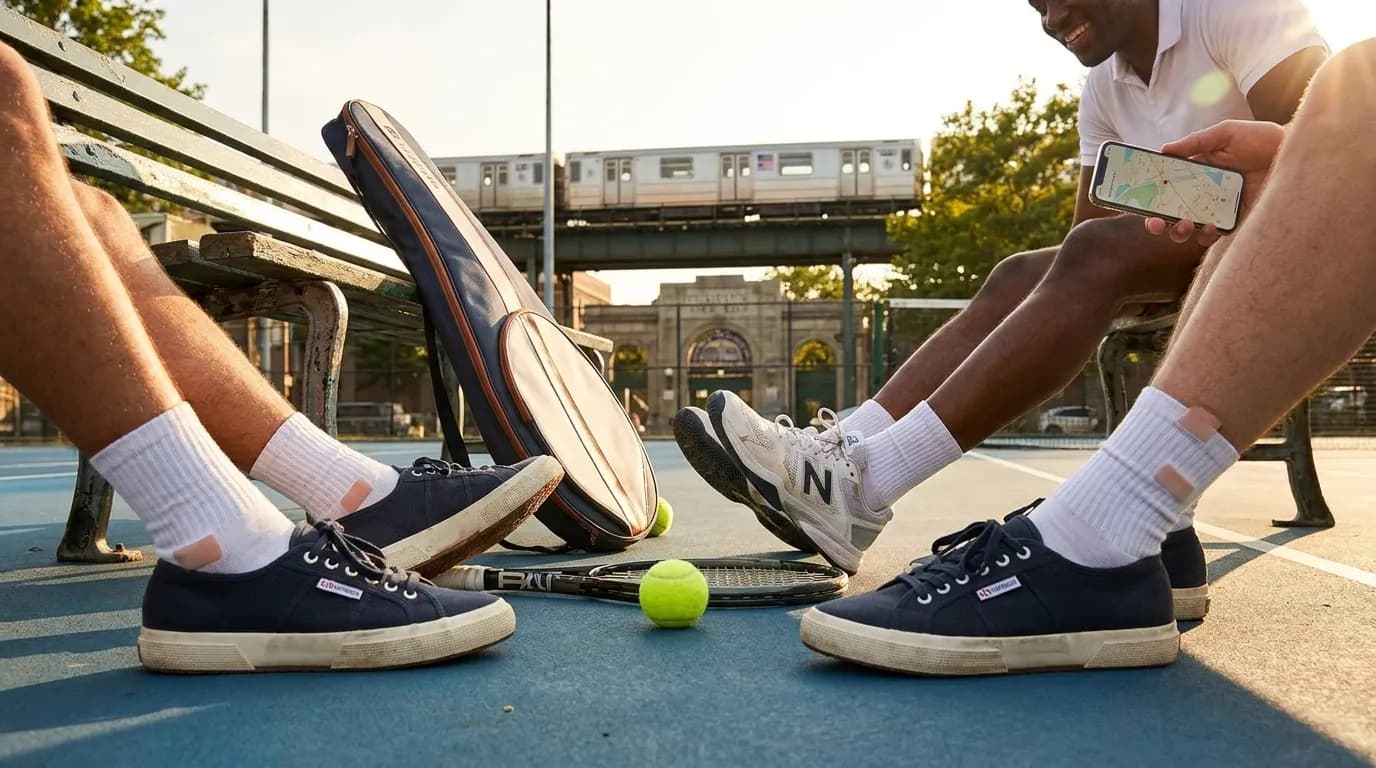
Build a Small Blister Plan
The best blister plan begins before skin breaks. If you know your heel, little toe, or ball of foot is vulnerable, apply a protective bandage or friction patch at home. Waiting until pain arrives usually means you are treating damage rather than preventing it. A few low-profile adhesive bandages, blister cushions, or hydrocolloid dressings can be useful, but pack only practical quantities and check the official prohibited-items guidance before relying on any kit.
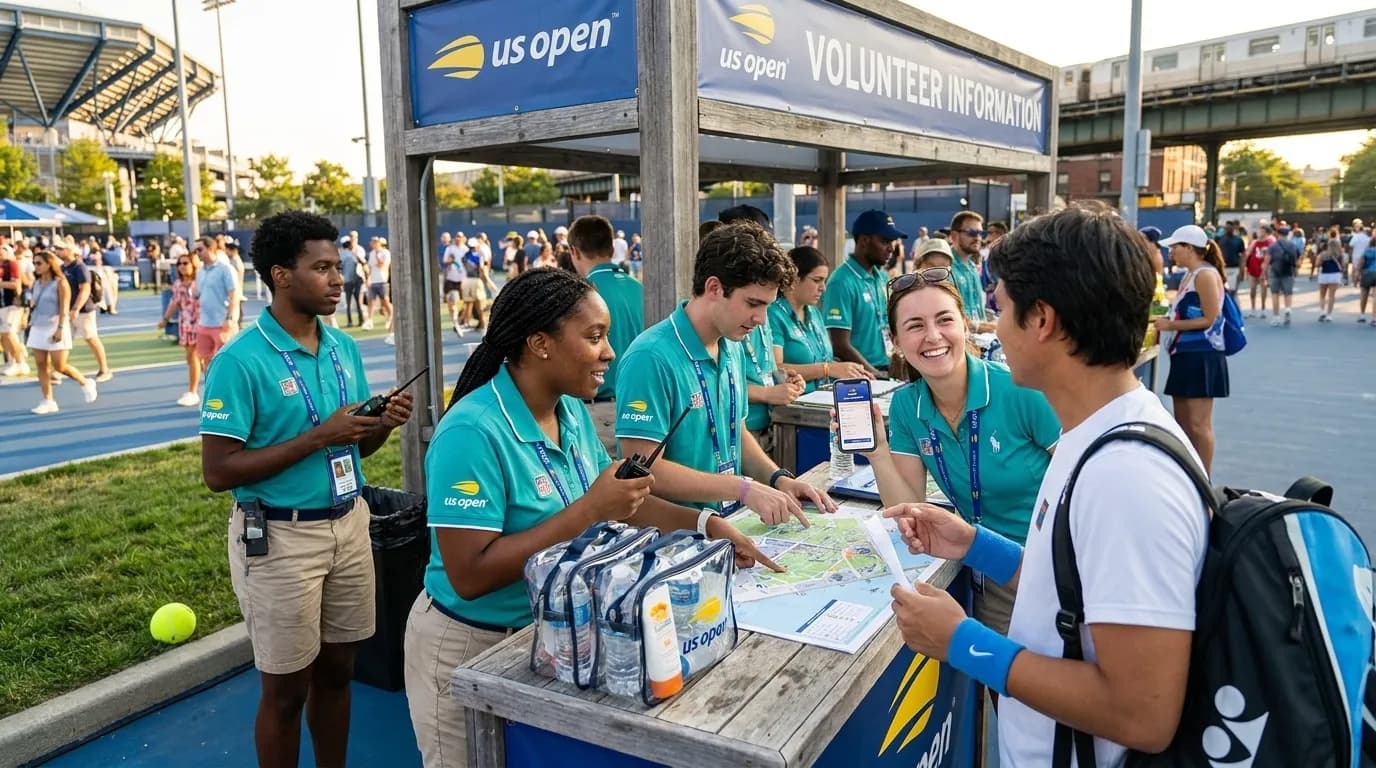
Liquids, gels, sprays, and sharp tools require extra caution because venue rules may restrict what can be brought in, and those rules can be updated. Do not assume that a favorite travel-size product will be allowed just because it is small. If you need medical or mobility-related items, review the current US Open A-Z information and contact the appropriate official channel close to your visit rather than improvising on arrival.
A simple approach works well: prevent friction, keep feet dry, reduce pressure, and avoid performing bathroom-sink surgery on a blister. If pain changes your gait, you may create knee, hip, or back discomfort by continuing to push. Build enough flexibility into your day to sit, slow down, or leave earlier than planned.
Stairs, Seats, and the Case for Stability
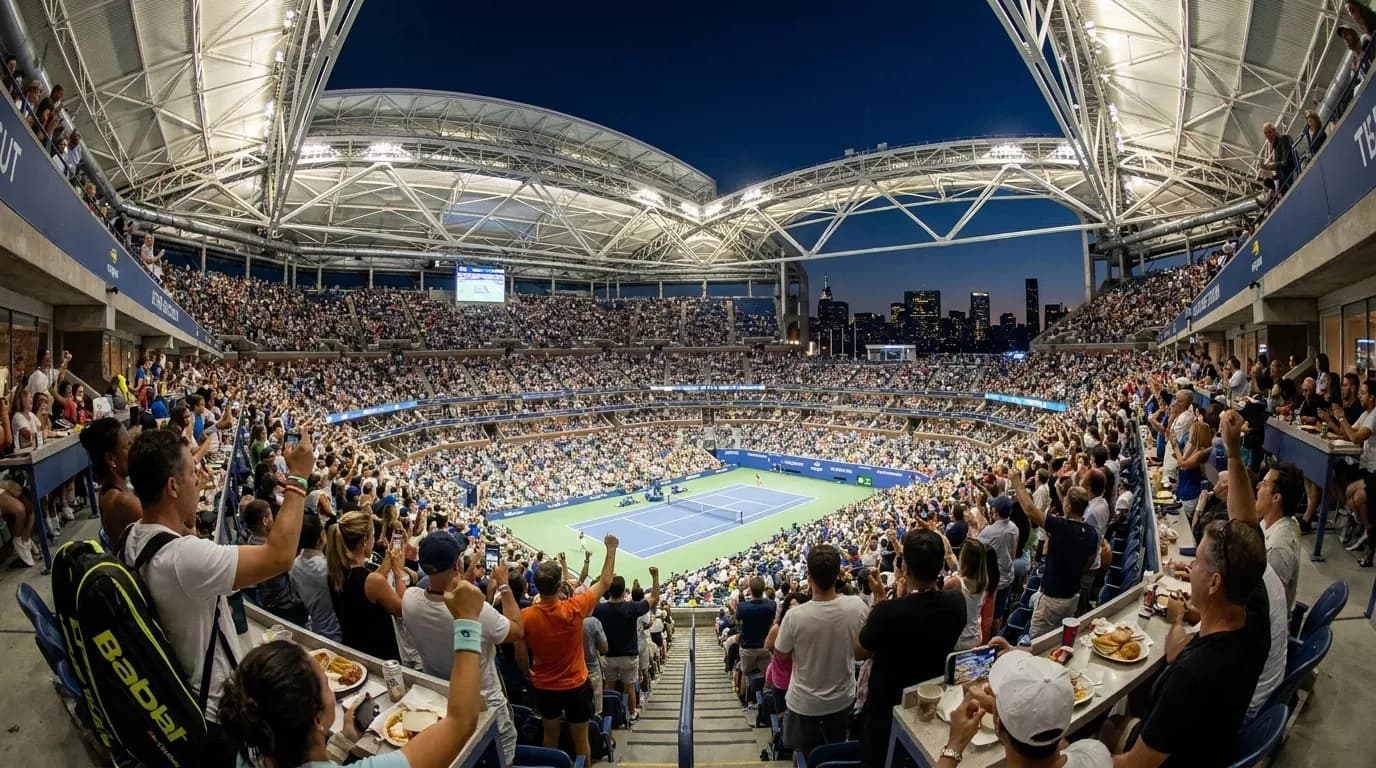
Stadium seating changes the footwear equation. A shoe that is fine on flat sidewalks can feel insecure on stairs, narrow rows, and crowded exits. Look for a sole that bends at the forefoot but does not twist easily through the middle. Very soft, tall platforms can feel comfortable at first but may be less steady when you are stepping down through a busy section.
Backless shoes are another common mistake. Slides and loose sandals can make each stair a small negotiation, especially if your hands are full or the ground is wet. If you prefer sandals, choose a pair with a heel strap, arch support, and a sole you have already tested for long walking. Even then, a supportive sneaker is often the more forgiving choice for a first-time or all-day visit.
Think about departure, too. Feet are usually most tired when crowds are moving in the same direction and patience is lower. Secure, familiar shoes help you focus on wayfinding, transit decisions, and the people you are with instead of every step.
Transit Days Need a Dry-Feet Backup
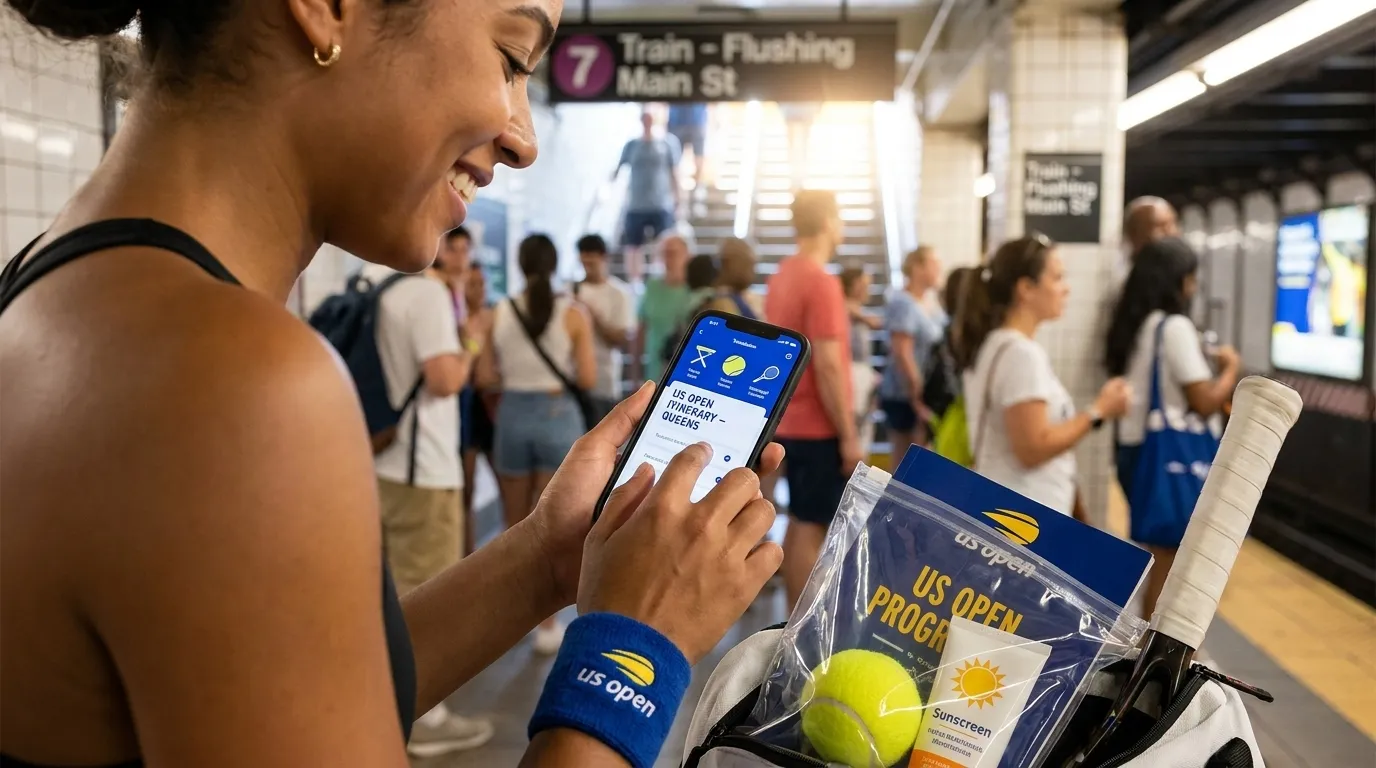
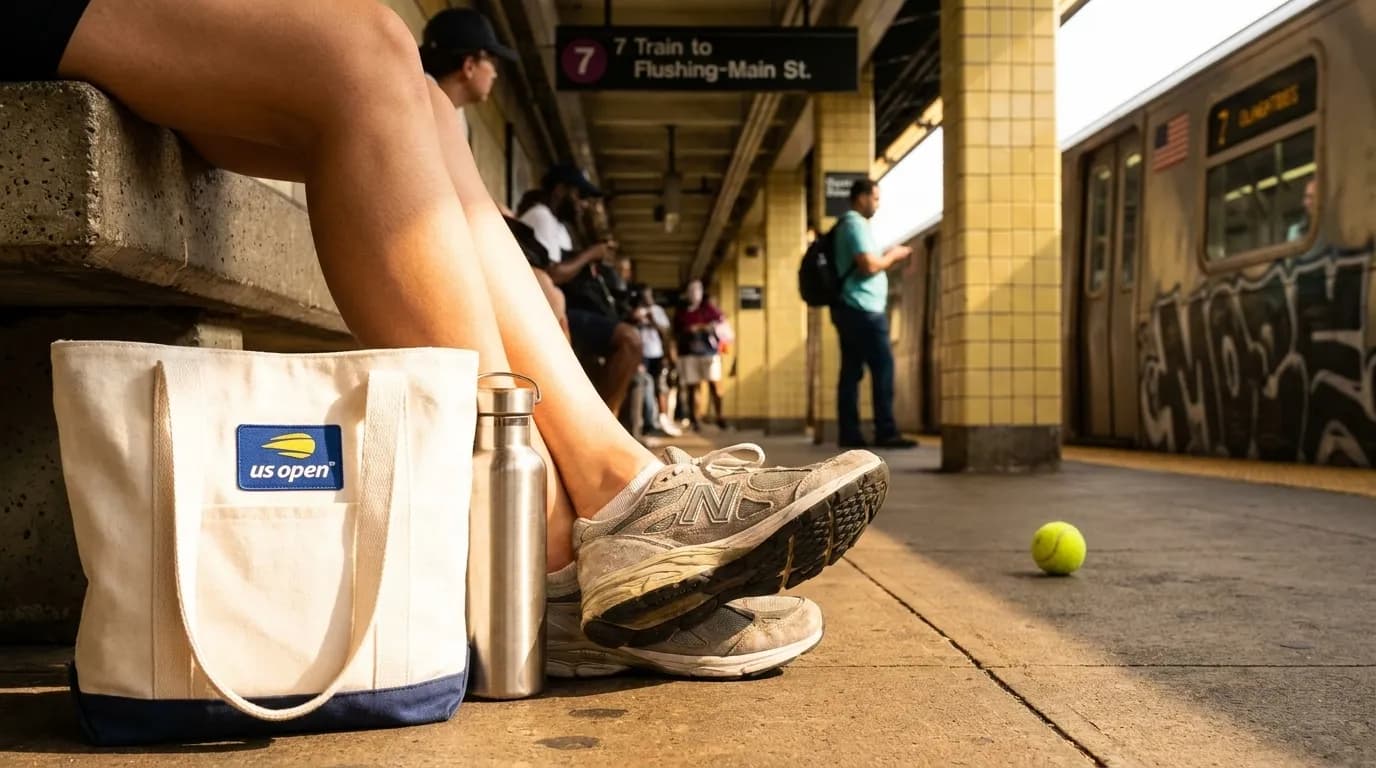
Many fans use public transportation or a mix of walking and transit to reach the tournament. The official US Open transportation information and the MTA’s US Open guide are the places to verify current routes, station guidance, service updates, and timing close to your travel day. Do not build a footwear plan around a best-case curb-to-seat journey; build it around stairs, platforms, queues, and weather.
A light rain layer for your body is not enough if your shoes soak through early. Mesh sneakers breathe well in heat but can absorb water quickly. Water-resistant shoes can help in damp conditions but may run warmer. There is no perfect pair for every forecast, so choose based on the day you are most likely to have: hot and dry, humid with possible showers, or cool and wet.
If the forecast looks unsettled, prioritize darker socks, quick-drying materials, and shoes with reliable traction. A spare pair of socks may matter more than a second pair of shoes, since carrying extra footwear can be bulky and may complicate bag choices under current venue rules. Recheck the official US Open prohibited-items and A-Z pages before packing anything unusual.
Practical Notes
- Verify the official US Open event schedule before choosing your arrival window, especially because the 2026 calendar spans August 23 through September 13 and singles main-draw play begins August 30.
- Check the US Open A-Z guide and prohibited-items page close to travel for bag, item, and venue-rule updates.
- Review the official transportation page and the MTA US Open guide before departure rather than relying on an old route screenshot.
- Wear the exact shoes and socks on a real test walk before the event; do not debut new footwear on tournament day.
- Pack a small, rule-compliant foot-care backup: spare socks, a few adhesive bandages, and friction protection if allowed and already tested.
- Choose stability over novelty for stadium stairs, crowded concourses, and late-day departures.
- If your feet are prone to swelling, leave modest toe room and use adjustable lacing rather than tight slip-on shoes.
The best US Open shoe is the one you stop thinking about. If it has already handled pavement, stairs, heat, and a long return trip, it is a stronger choice than anything bought at the last minute. Give your feet the same planning attention you give tickets, transit, and match schedules, and the tennis will have more room to be the memorable part of the day.
Tags: #USOpen2026 #Tennis #NewYork #Queens #FlushingMeadows #KarpoFinds #Karpo #USOpenFootwear #StadiumSteps #TennisComfort
Sources consulted: usopen.org — Official reference · usopen.org — Official reference · usopen.org — Official reference · usopen.org — Official reference · new.mta.info — Official reference
All trademarks are the property of their respective owners.
Ask Karpo first
Ask Karpo how to balance comfort, weather, style, and backup socks for a full tennis itinerary.