 Distillery Tour Near Me in Bushwick: New York Distilling Company
Weekend Plans
US Open 2026 First Weekend: The Flushing Meadows Circuit Beyond Center Court
Navigate outer courts, practice sessions, and neighborhood corridors during the tournament's most match-dense days.
The outer court advantage
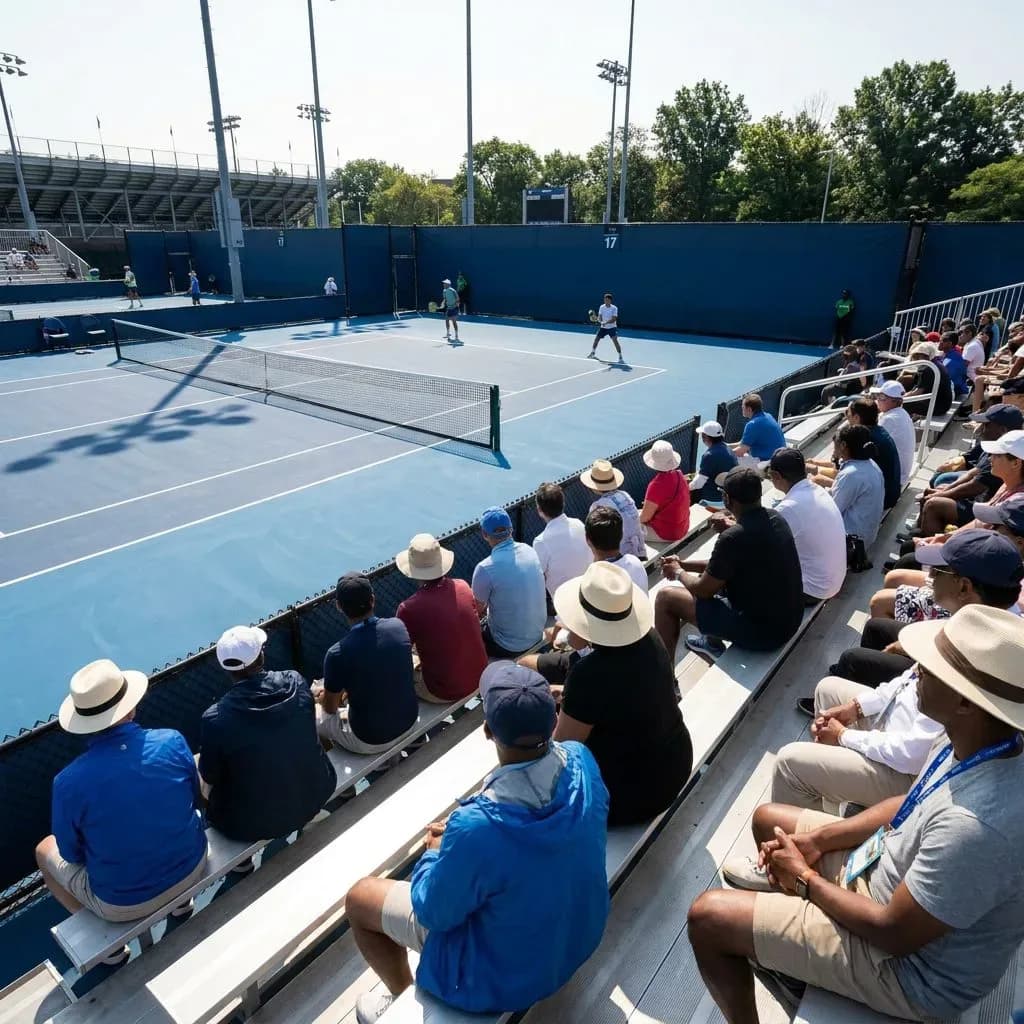
The first Saturday and Sunday of the US Open—September 5 and 6 in 2026—deliver what no other tournament weekend can match: seventy-plus singles matches compressed into two days, with general admission tickets granting roaming access to a dozen outer courts where you'll sit close enough to hear racket strings ping and watch players towel off between games. While Arthur Ashe Stadium and Louis Armstrong Stadium require separate reserved seats, Courts 4 through 17 operate on a first-come basis, and the sightlines—particularly from the front eight rows—put you within twenty feet of baseline play.
Court 11 and Court 17, tucked along the eastern edge of the Billie Jean King National Tennis Center grounds, offer the tightest quarters. These single-grandstand venues seat roughly 750 each, with aluminum bleachers that fill quickly when a top-thirty player appears on the schedule. Arrive thirty minutes before a posted start time to claim a front-row spot. Court 5, the largest outer court at nearly 3,000 capacity, sits just south of the Grandstand and handles second-round men's and women's matches that would headline smaller tour stops.

Practice court logistics
The practice courts open to general admission ticket holders at 10:00 a.m. sharp, and the first ninety minutes offer the most reliable window for spotting ranked players. Court 6 and Court 8, nearest the South Gate entrance off Roosevelt Avenue, see top players between 10:30 and 11:45 a.m. before their afternoon matches. These courts lack permanent seating—spectators stand two or three deep along the chain-link fencing—but the proximity is unmatched. You'll watch serve routines, baseline drills with hitting partners, and the brief conversations between players and coaches that reveal pre-match strategy.
Bring a hat and sunscreen; the practice courts offer no shade structures, and early September in Queens pushes into the high eighties by mid-morning. The South Plaza, a paved concourse between the practice courts and Court 17, hosts a small merchandise stand and a hydration station. Refill your water bottle here before heading deeper into the grounds.
Grandstand walk-up windows
The Grandstand, the tournament's third-largest venue at 8,125 seats, operates on a hybrid ticketing model. Reserved seats fill the lower bowl for marquee day sessions, but the upper sections convert to general admission after 5:00 p.m. on the first Saturday. Enter via the northwest tunnel for shade-side seating in sections 3 through 5, which face away from the late-afternoon sun and offer clean angles on the near baseline and service boxes.
The evening session typically features a men's second-round match followed by a women's match, both best-of-three or best-of-five sets depending on the draw. Matches scheduled for 7:00 p.m. often run late due to earlier delays, so a 6:30 p.m. arrival gives you time to settle in and watch warm-ups. The Grandstand's food concourse, located on the main concourse level, includes a taco stand, a burger grill, and a dedicated bar serving local craft beer and wine.
The 7 train strategy
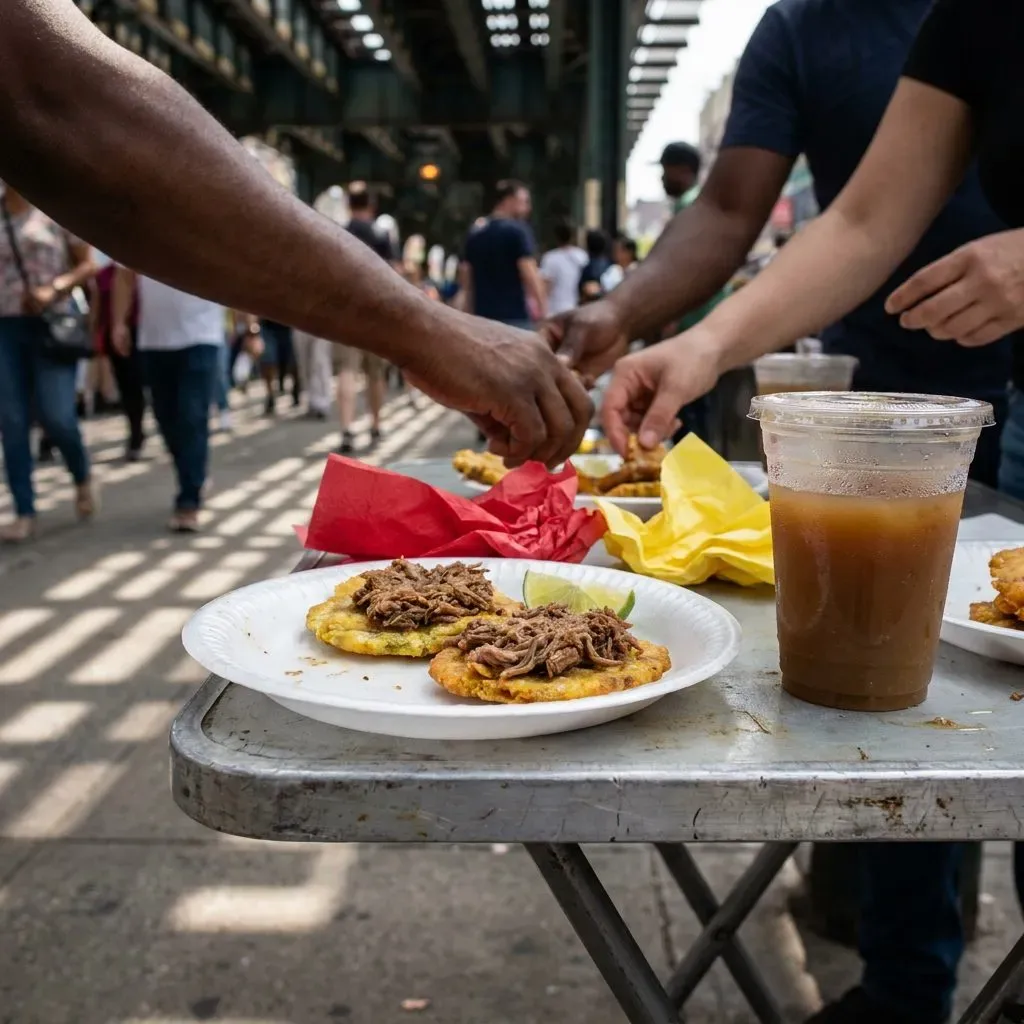
The 7 train from Manhattan runs express from Queensboro Plaza to Mets–Willets Point during tournament hours, shaving eight minutes off the local route. Eastbound wait times drop to four to six minutes between 8:30 and 10:00 a.m. before the mid-morning rush, making this the optimal departure window for anyone targeting practice courts or early outer-court matches. Board at Grand Central–42nd Street or Fifth Avenue–Bryant Park for the straightest shot; avoid the Flushing–Main Street terminus, which requires a westbound backtrack.
Exit at Mets–Willets Point and follow the elevated walkway east toward the tennis center. The walk takes seven minutes and deposits you at the South Gate, the fastest entry point for practice courts and the eastern outer courts. The North Gate, accessible via a longer pedestrian bridge, serves the Grandstand and Armstrong Stadium but adds five minutes to your route.
Roosevelt Avenue and Corona food corridor
The blocks along Roosevelt Avenue between 103rd and 111th Streets form the tournament's unofficial pre-match fueling station. Tacos El Paisa, a taqueria at 103rd Street, opens at 9:00 a.m. and serves chorizo and egg tacos on house-made tortillas for under five dollars. The line moves quickly; order at the counter, grab a plastic chair at one of the sidewalk tables, and eat before heading to the gates.
Rincon Criollo, a Colombian restaurant at 111th Street, offers a fuller sit-down experience with bandeja paisa platters and fresh arepas. Expect a twenty-minute wait during the lunch window between noon and 1:30 p.m., but the portions justify the delay if you're planning a long afternoon on the grounds. Lemon Ice King of Corona, a cash-only stand on 108th Street, has operated since 1944 and serves Italian ices in twenty flavors. The peanut butter and cherry varieties are the local favorites.
Late-afternoon court rotation
By 4:00 p.m., the outer courts shift into their second wave of matches, and the crowds thin as casual fans head home. This is the window to catch a third-round preview or a doubles match featuring former singles champions. Court 10, positioned between the Grandstand and Armstrong Stadium, often hosts mixed doubles in the late afternoon, and the relaxed atmosphere—players joke with the crowd, linespeople reset chairs between games—offers a different texture than the main stadium intensity.
Court 4, the northernmost outer court, sits near the player facilities and occasionally draws off-duty competitors who stop to watch friends or practice partners. The seating is minimal—four rows of bleachers on one side—so arrive early if a notable name appears on the schedule board.
Neighborhood evening circuit
After the final outer-court matches wrap around 7:30 p.m., the Roosevelt Avenue corridor shifts into dinner mode. Chao Thai, a Thai restaurant at 85th Street, serves pad see ew and drunken noodles until 10:30 p.m. in a narrow dining room with a dozen tables. The kitchen moves quickly; order at the counter and expect your dish within ten minutes.
For a quieter wind-down, walk south on 108th Street to Corona Plaza, a pedestrian square with outdoor seating and a rotating lineup of food vendors. The plaza hosts live music on weekend evenings during the summer, and the benches offer a place to rest before heading back to the 7 train.
Practical notes
- General admission tickets for the first weekend range from $90 to $110 and grant access to all outer courts, practice courts, and walk-up areas in the Grandstand after 5:00 p.m.
- Bags larger than 12" x 12" x 16" are prohibited; soft-sided coolers under those dimensions are allowed with sealed plastic bottles and snacks.
- The South Gate opens at 9:30 a.m.; the North Gate opens at 10:00 a.m.
- Cell service slows during peak hours; download the US Open app and offline maps before arriving.
- Sunscreen, hats, and refillable water bottles are essential; hydration stations are located near each outer court cluster.
- The 7 train runs every 8–10 minutes after 6:00 p.m.; plan for a fifteen-minute platform wait during evening exit surges.
Tags: #usopen #usopen2026 #flushingmeadows #queens #nyc #tennis #grandslam #coronanyc #rooseveltavenue #7train #billijeankingntc #sportsnyc #nycguide #tennisguide #nycweekend
Please drink responsibly. Must be of legal drinking age.
All trademarks are the property of their respective owners.
Ask Karpo for more information.
Keep reading
- Distillery Tour Near Me in Bushwick: New York Distilling Company
 Distillery Tour Near Me in Industry City: Fort Hamilton Whiskey Tasting
 Distillery Tour Near Me in Red Hook: Widow Jane Whiskey Tasting