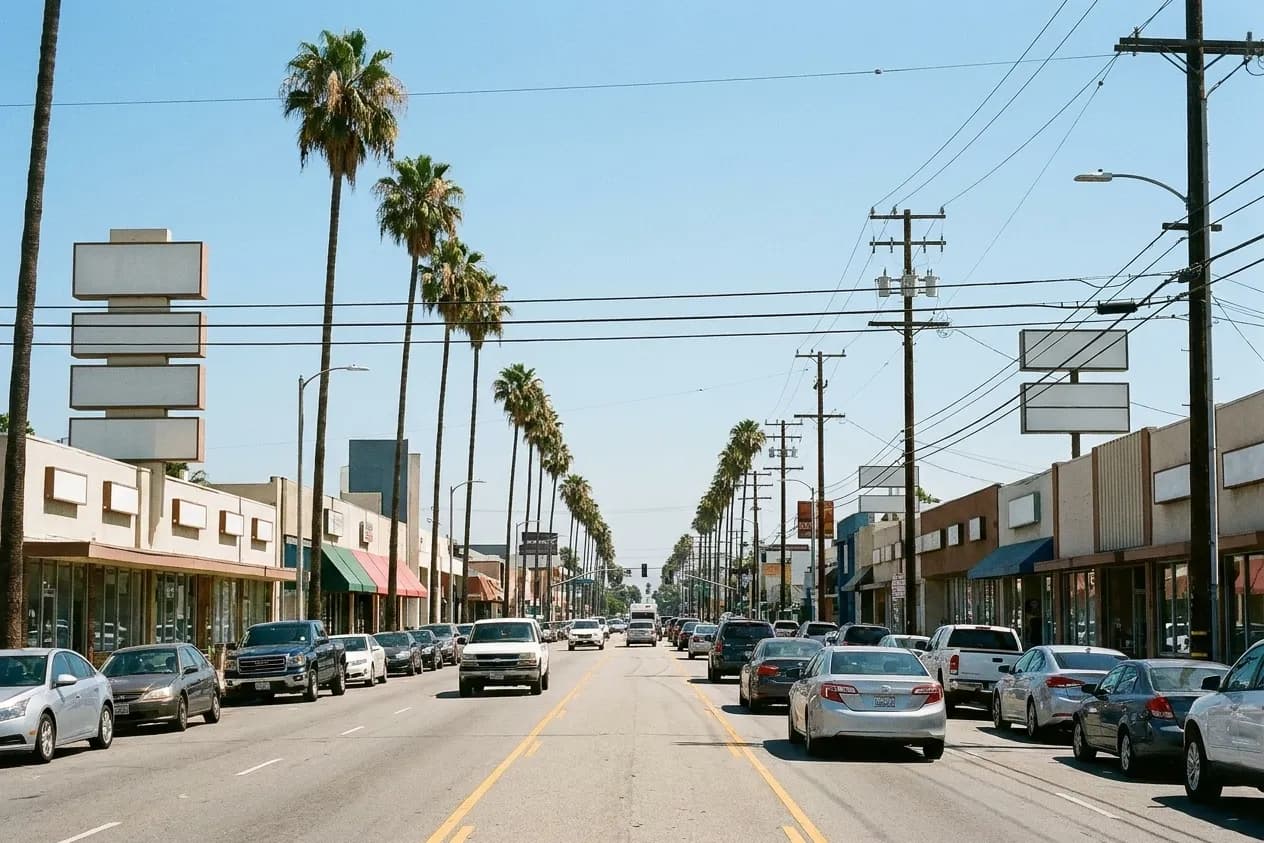
Koreatown is the densest restaurant neighbourhood in Los Angeles and one of the densest in the country, and the great majority of visitors experience about four things in it: all-you-can-eat barbecue, fried chicken, a soondubu house and a karaoke bar. All four are good. They are also roughly two percent of what is here, and the gap between the searchable Koreatown and the lived one is wider than in any other part of the city.
The gap between the famous Koreatown and the actual one is about three blocks wide. Tell Karpo what you have already tried and what you are near, and it will point you at the version of the neighbourhood that regulars use.
The neighbourhood is not only Korean
The first thing that surprises people is the demographics. Koreatown is one of the most densely populated neighbourhoods in Los Angeles and has a large Latino population alongside the Korean one, which means Oaxacan, Salvadoran and Mexican cooking sit on the same blocks as the Korean restaurants — frequently in the same mini-malls. Some of the best Oaxacan food in the city is in Koreatown, which is consistently the last thing a visitor expects.
There are also Bangladeshi, Thai and Japanese kitchens scattered through the same few square miles. The neighbourhood rewards treating it as a general food district rather than as a single cuisine's enclave, and the cheapest excellent meal on a given block is frequently not the Korean one.
The Korean dishes that get skipped
Within Korean cooking, the famous exports crowd out an enormous amount. Knife-cut noodle soup, cold buckwheat noodles in chilled broth, ox bone soup simmered overnight, braised short rib stew, blood sausage soup, whole steamed fish, raw marinated crab, and the entire category of jeon — savoury pancakes — are all everyday food here and almost never the thing people order on a first visit.
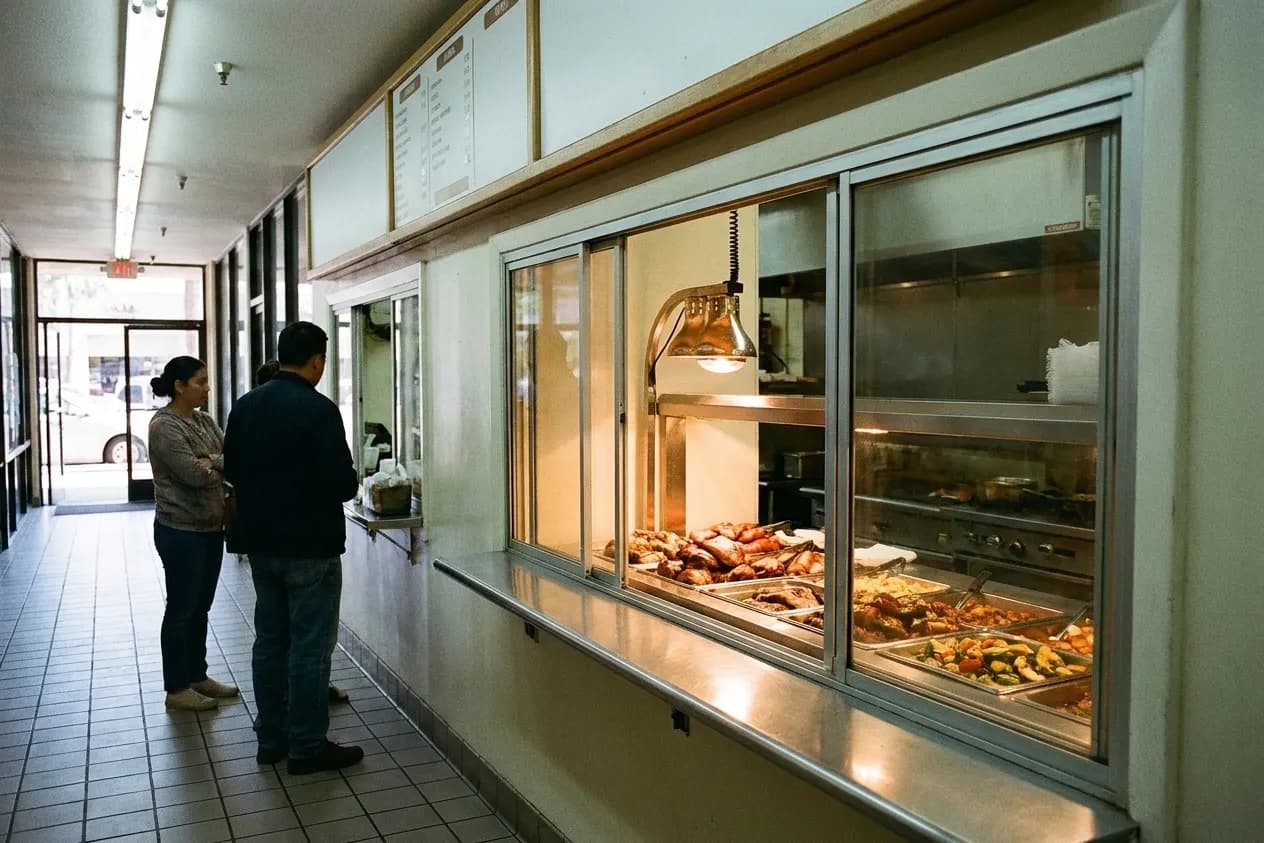
The rule that unlocks it: look for restaurants whose sign names one dish. Specialist kitchens dominate this neighbourhood — a place that does only ox bone soup has been simmering the same pot for decades — and they are almost always better and cheaper than a general menu doing forty things. If a room has ten items and half of them are soup, you are in the right place.
Banchan tells you everything
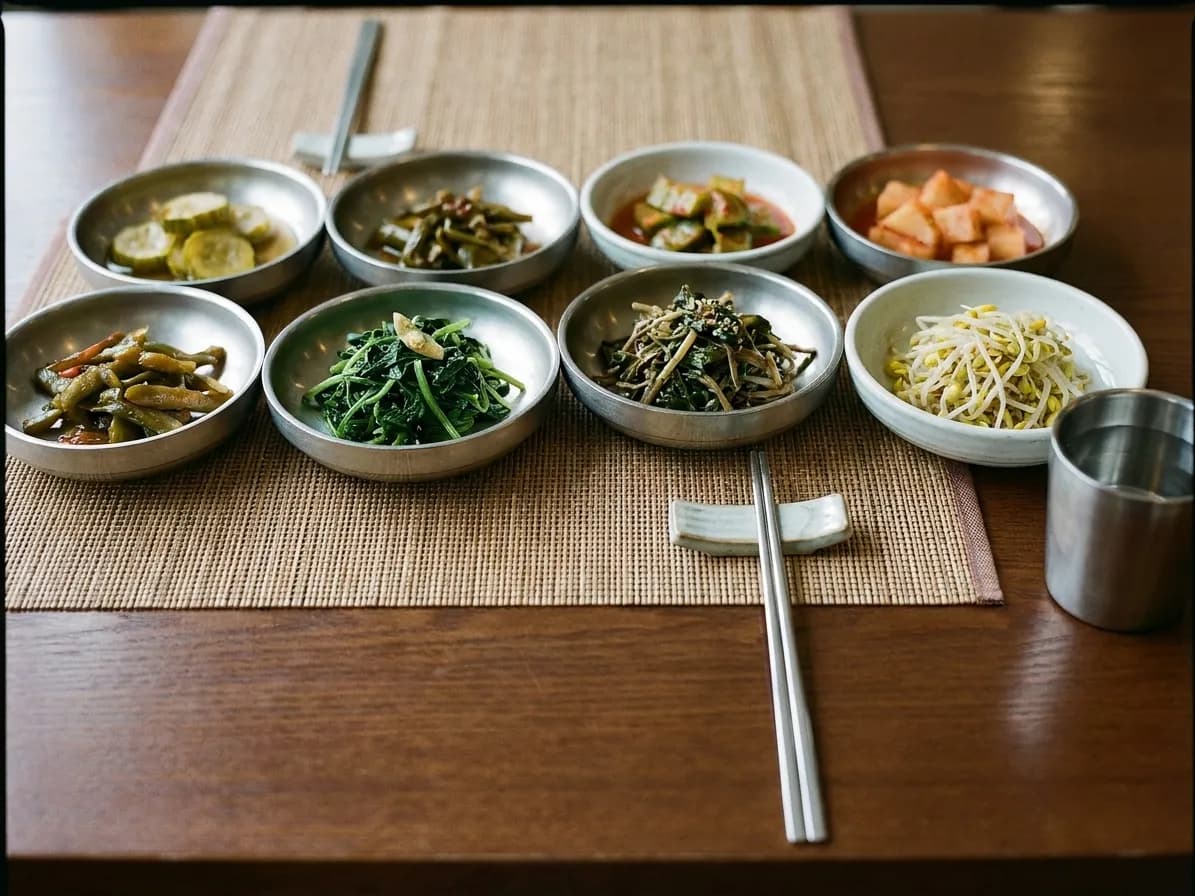
The small side dishes that arrive before the meal are the most honest signal in a Korean restaurant. A kitchen making its own banchan will bring six or eight, they will vary with the season, and they will be different from the place next door. A kitchen buying them in brings four identical ones. That difference correlates with everything else about the food more reliably than any review score.
Refills are free and asking is expected, but taking more than you will eat is poor form and genuinely wasteful, since anything returned to the kitchen has to be thrown out. Ask for more of the one you liked rather than another round of everything.
The bakeries, markets and everything after dinner
Koreatown's Korean bakeries are one of its best and least discussed features — soft milk breads, cream buns, injeolmi pastries and coffee, open early and late, cheap enough to be a habit. The Korean supermarkets are a destination in themselves, with prepared-food counters, banchan sold by weight, and food courts that will feed you well for under ten dollars.
The dessert cafés are the other thing visitors miss. Bingsu — shaved milk ice with fruit or red bean — is the neighbourhood's late-night social food, and the cafés serving it stay open past midnight and are full of people who were never at a bar. It is one of the few genuinely good non-drinking late-night options in Los Angeles.
How to explore it without a plan
The structural thing to understand about Koreatown is that it is vertical. Restaurants sit on second and third floors of plazas with no street presence, reachable only by a stairwell beside a car park entrance. Almost nothing up there appears in a search result with a photograph. Park once, walk a plaza's full circuit, and read the doors.
The other structural quirk is that the neighbourhood does not sleep on the same schedule as the rest of the city, so the hour you visit changes what is available more than the block you visit does. A plaza that looks dead at three in the afternoon is fully alive at eleven at night, and the reverse is true of the lunch counters and the bakeries.
Go at lunch at least once. Lunch specials in this neighbourhood are dramatically cheaper than the same food at dinner, the rooms are calm, and the kitchens are cooking for regulars from the surrounding offices rather than for a night out. It is the best and cheapest way to work through a neighbourhood this deep.
Tags: #LosAngeles #Koreatown #KTown #KoreanFood #HiddenGems #LAEats #Banchan #OaxacanFood #LAFoodie #WhereToEatLA #UnderratedLA #CheapEatsLA #LADining #FoodNearMe
Sources consulted: discoverlosangeles.com · publichealth.lacounty.gov · laconservancy.org
All trademarks are the property of their respective owners.
Ask Karpo first
Upstairs restaurants, lunch-only specials and the kitchens that close between services are exactly the things a search engine cannot see. Ask Karpo what is open near you right now in Koreatown, which places specialise in one dish, and where the nearest plaza worth walking is — it answers in iMessage, in a sentence.