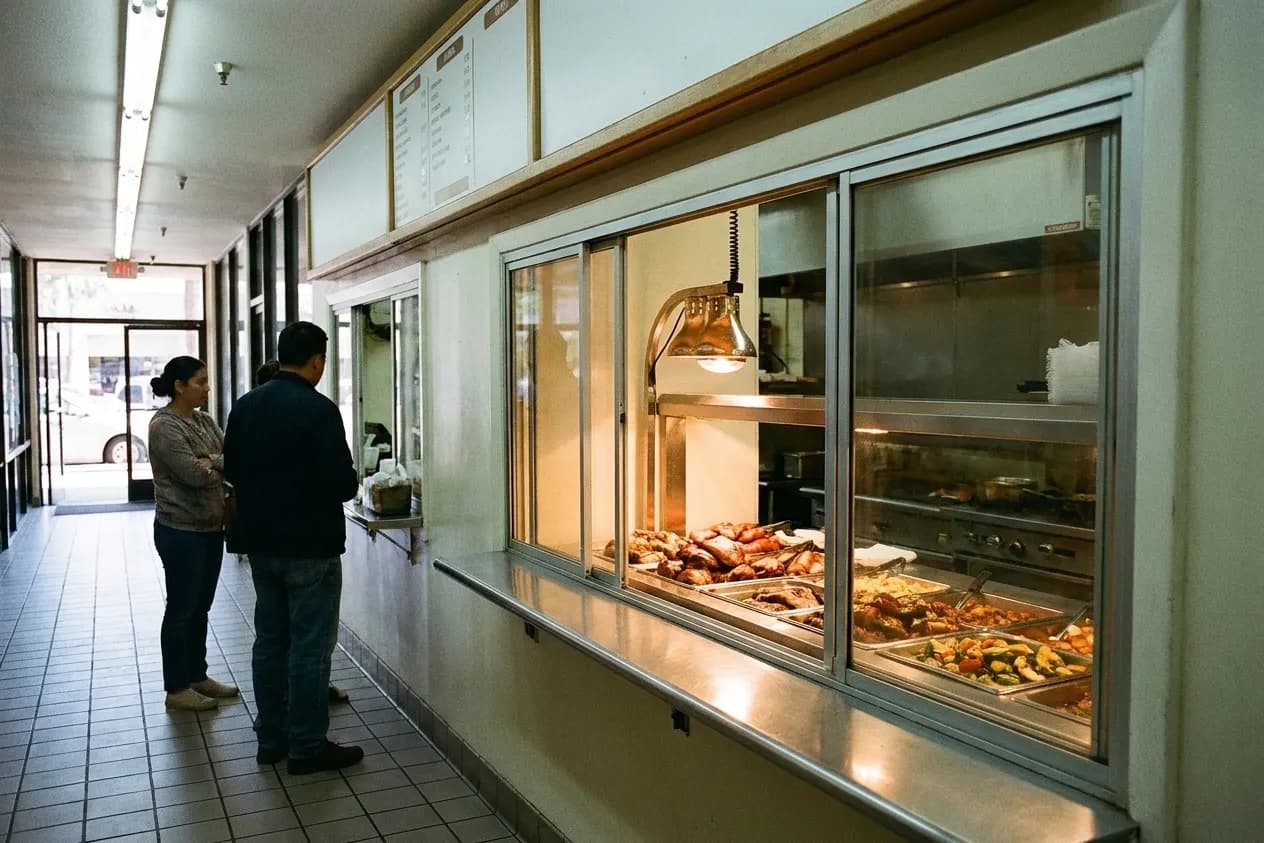
Koreatown is not where anyone in Los Angeles thinks to look for seafood, and that is a categorisation failure rather than a supply one. The neighbourhood eats a great deal of fish and shellfish; it just arrives in forms that a search engine does not file under seafood — in a stew at the centre of the table, in the row of small side dishes, out of a live tank by the door. Once you know what shape it comes in, one of the better seafood neighbourhoods in the city opens up.
Some of the best fish in Los Angeles is served in rooms nobody files under seafood, which is why it stays quiet. Tell Karpo what you feel like and it will point you at the tank rather than the raw bar.
The tank is the freshness guarantee
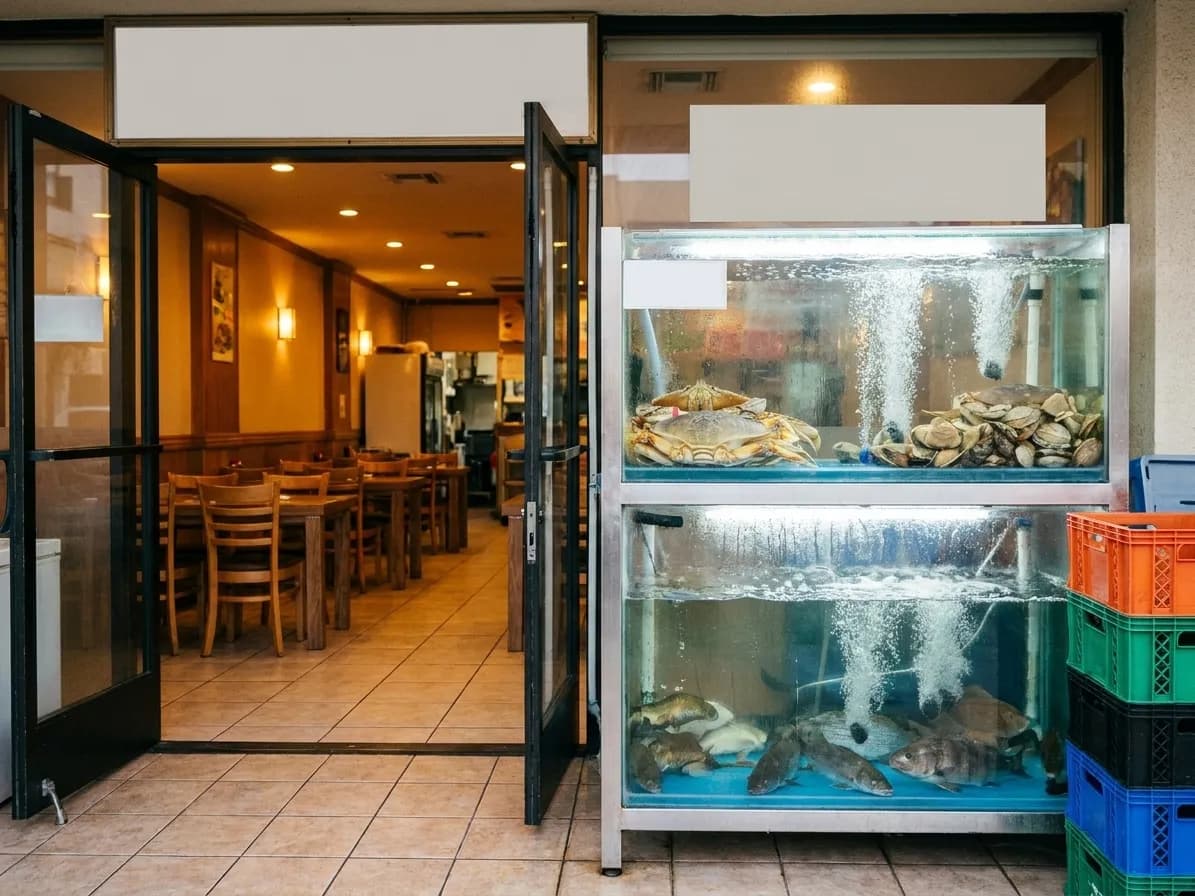
The strongest signal in this neighbourhood is a live tank at the entrance. A restaurant keeping fish and shellfish alive is making a commitment: it has to sell them, it has to maintain the water, and it cannot disguise anything about what it is serving. Choosing from a tank is the shortest supply chain available anywhere in Los Angeles that does not involve driving to the harbour.
Tank pricing is usually by weight and by market rate, which means it changes and is worth asking about before you point at anything. That variability is a good sign — a fixed price for a live item generally means the item is not particularly live.
Stews are where most of the fish actually is
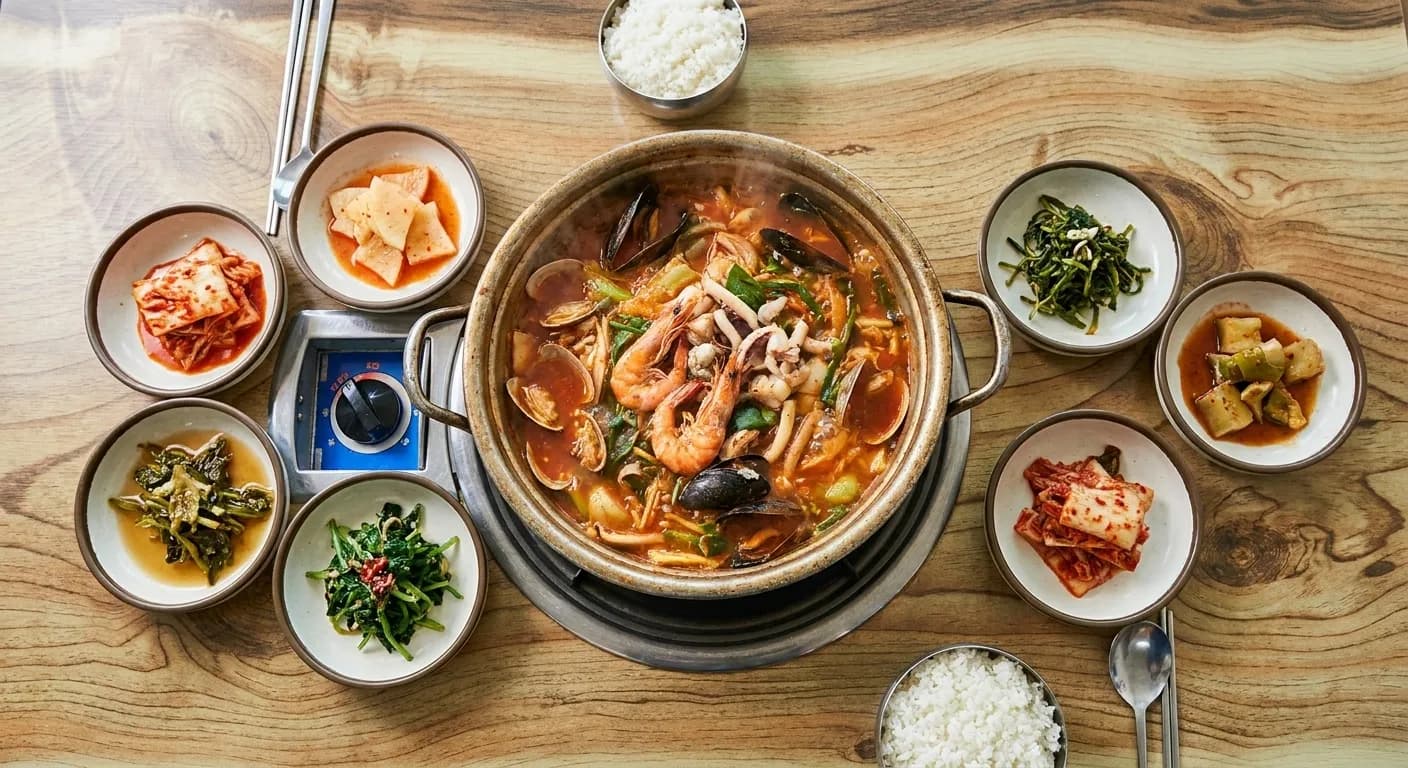
The dominant seafood format here is the shared stew: a pot at the centre of the table on a burner, full of shellfish, fish and vegetables in a broth that has been developing all day. It is not marketed as seafood because it is marketed as a stew, which is why it stays under the radar. It is also the best-value way to eat shellfish in Los Angeles by a wide margin, because the broth and the vegetables carry the meal and the seafood does not have to be the whole portion.
Order it for a table of three or four rather than for one. The format is built for sharing, the pot sizes assume it, and eating it alone means either a small version or far too much food. This is the single dish most worth organising a group around in the neighbourhood.
The side dishes are a seafood menu in miniature
The ring of small dishes that arrives before the meal frequently contains more variety of seafood than the main course does — cured, salted, marinated and pickled preparations of fish, roe and shellfish that would be a specialist item anywhere else and are here a free accompaniment. Paying attention to them tells you a great deal about the kitchen.
A room where these are varied, seasoned confidently and replenished without asking is a room that cares. A room where they are three predictable items is fine but not interesting. This is the cheapest and fastest quality read available in the neighbourhood, and it happens before you have ordered anything.
Whole fish, grilled and stewed
Whole grilled fish is a staple here and an underused order. It is straightforward cooking, it is cheaper per person than most of the grill menu, and it is hard for a kitchen to fake — a whole fish is either fresh or obviously not. Ordering one for the table alongside a stew gives you two completely different treatments of the same category in one meal.
Menus in this neighbourhood often list fish by species rather than by dish name, which is a good sign and also means the list changes with availability. If something is unavailable, take that as evidence the kitchen is buying rather than defrosting.
How to order well here
Go with three or more people, order one shared pot, one whole fish and rice, and let the side dishes fill the rest of the table. Ask what came in today, particularly if there is a tank. Go later rather than earlier — this neighbourhood's kitchens run long and are at their most characteristic after nine.
Market pricing, seasonal availability and hours all move, and the tank contents in particular change week to week. Ask rather than assume, and treat the format guidance rather than any specific dish as the durable part.
Eating this way as two people
The shared-pot format is built for a table of three or four, which makes a couple's visit slightly awkward if you order the obvious thing. The fix is to skip the pot and build the meal from a whole grilled fish, a rice dish and whatever cold seafood preparations the kitchen offers as small plates — you get the same range without committing to a pot sized for a group.
The other option is to go earlier, when the smaller rooms are quieter and more willing to make a half portion of something built for sharing. Asking is normal and usually works; the answer is more often yes at seven than at eleven, when the room is full of tables that ordered the full size.
Tags: #LosAngeles #LA #SoCal #HiddenGems #LocalFinds #OffTheBeatenPath #Koreatown #Seafood #LAEats #LAGuide #ExploreLA #LALocal #LAWeekend #LANights
Sources consulted: laist.com · eater.com · latimes.com
All trademarks are the property of their respective owners.
Ask Karpo first
Karpo is a proactive AI assistant that lives in iMessage. Ask where the tanks are before you book a raw bar.