Searching twins vs royals before an early evening game usually means your group is hungry, opinionated, and trying to avoid a bad table choice near Oracle Park. The smart restaurant decision is less about finding a mythical perfect spot and more about choosing the right tradeoff: a better meal with uncertain screen visibility, a sports-first table with simpler food, or dinner nearby followed by a short move to a bar once first pitch gets close. Because game time, TV rights, reservations, kitchen hours, and transit conditions can change, treat every option as something to verify the same day. San Francisco gives you useful flexibility: SFMTA supports Muni, walking, biking, driving and parking, taxis, and accessibility resources, so your plan can shift without turning the night into a logistics argument.
Sort Oracle Park dinner choices with Karpo by sending group size, first pitch time, cuisine craving, and seating needs before choosing food-first or screen-first.

Pick The Screen Promise Before The Menu
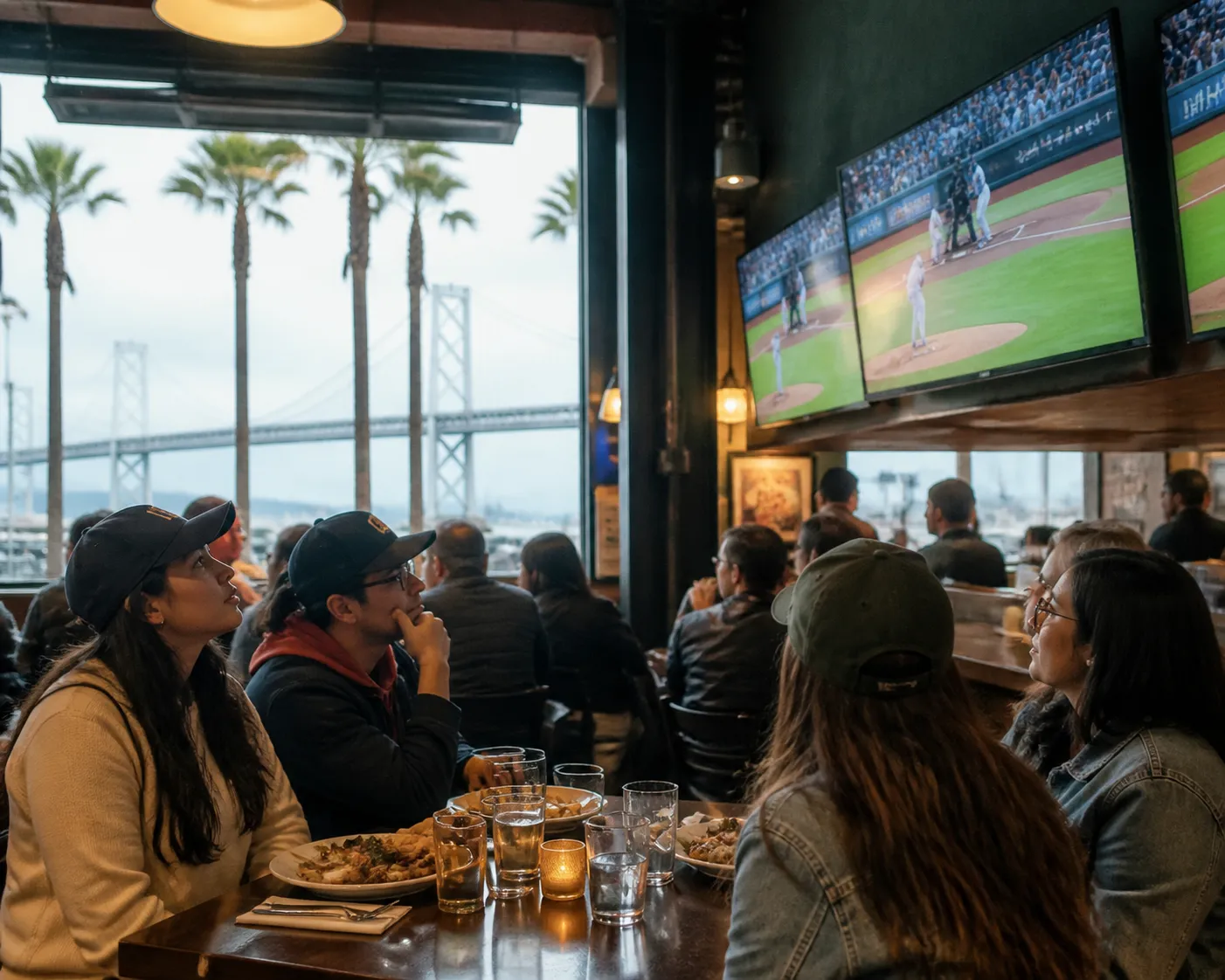
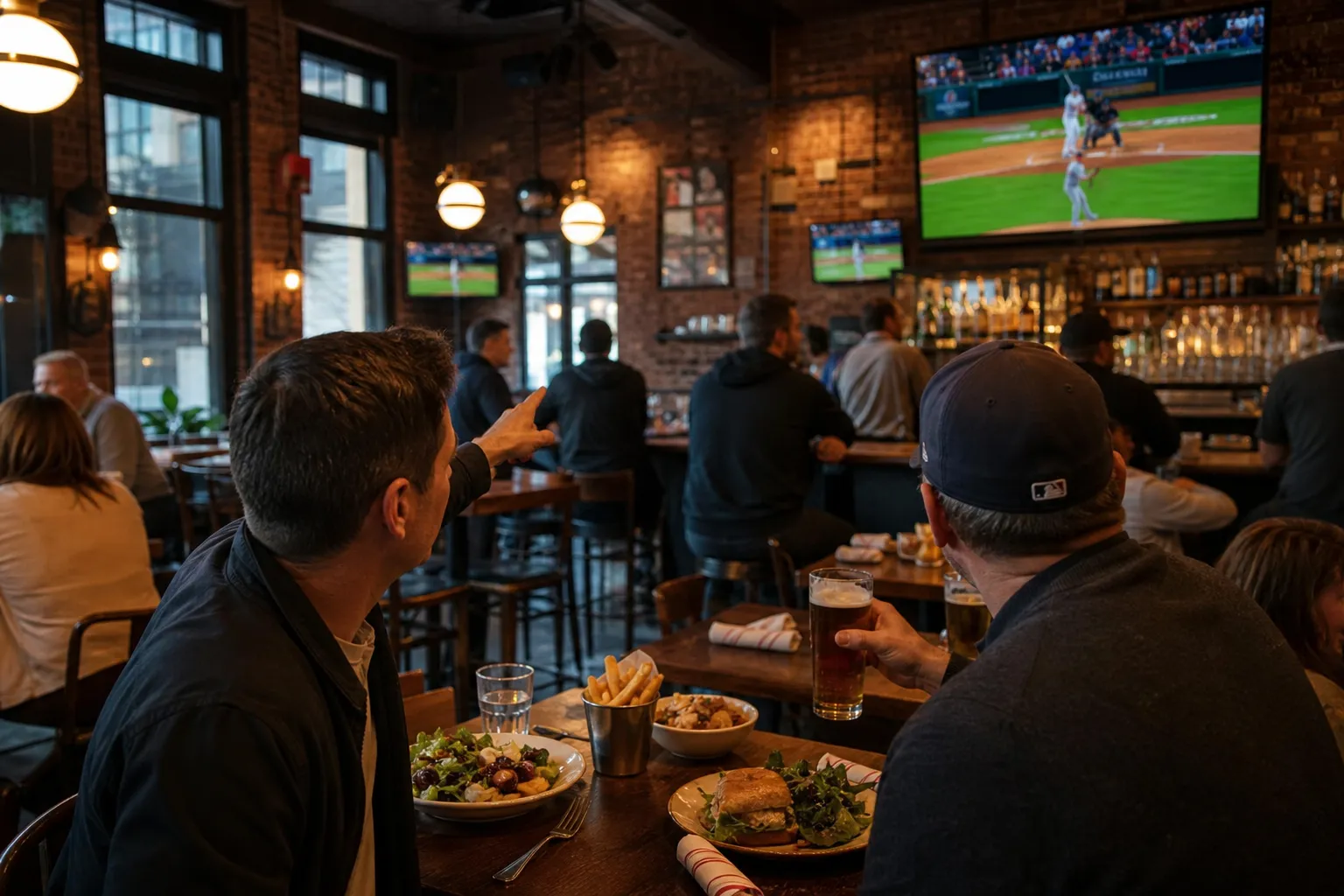
Start by asking one question before anyone debates cuisine: does the group need to see every inning from the dinner table? If the answer is yes, prioritize restaurants and bars where staff can confirm the game will be shown, where the table has a view of a screen, and where the sound situation will not matter to your group. This is especially important for twins vs royals fans who may be following a specific matchup rather than casually glancing at scores. A place can be close to Oracle Park and still be wrong if the TV is behind half the seats or tuned to another event.
If the answer is no, choose food first and make the screen a bonus. This works best for small fan groups that want a real meal, can check the score by phone, and do not mind moving after dinner. Near a ballpark, screen certainty often competes with kitchen ambition, noise level, and table comfort. A restaurant designed around dinner may give you a better start to the evening, while a sports bar may give you better control once the game begins. The winning plan is the one that matches your group’s tolerance for missed plays, not the one that looks most convenient on a map.
Use Distance As A Time Budget
Near Oracle Park, distance should be treated as a time budget, not a bragging point. The closest table is useful when your group is late, carrying gear, or trying to minimize walking in warm weather. But close-in dining also concentrates demand around game windows, which can make reservations, seating timing, and kitchen pace more important than the cuisine itself. For an early evening game, build your dinner choice around when people can realistically arrive, how quickly the group orders, and whether everyone is comfortable leaving before lingering over another round. Easy only stays easy when the clock is visible from the start.
A slightly farther restaurant can be the better choice if it reduces pressure and gives the group a cleaner handoff into the game plan. SFMTA describes San Francisco as navigable by Muni, bike, walk, drive, taxi, and accessibility options, which matters because your evening does not have to depend on one block or one door. If you dine first, choose a public, simple route toward the ballpark or the next bar, and avoid plans that require complicated crossings or last-minute rides. The group should know the second stop before sitting down, so the competitive energy goes into baseball, not deciding where to go next.
Call With Four Specific Checks
Before committing, make one direct call or message with four checks: game availability, reservation timing, kitchen hours, and table visibility. Do not ask, “Do you have sports?” Ask whether they expect to show the baseball game you want, whether your party size can be seated at the time you need, whether the kitchen will still be serving when late arrivals get there, and whether a table can reasonably see a screen. Staff may not be able to guarantee every variable, but precise questions produce better answers than vague hope. For a small fan group, this call is often the difference between a smooth night and a scattered one.
Also verify the game time independently the same day, because this article treats team names and matchup searches as planning hooks, not proof of a local event or broadcast arrangement. The restaurant may be available, the screen may exist, and the kitchen may be open, but none of that confirms the channel, package, or competing programming. If the venue sounds uncertain, downgrade it from “watch at table” to “dine first” in your plan. That way, a good meal is still a success even if the baseball screen does not happen. Keep one nearby bar option in reserve, and make the switch before frustration takes over.
Plan Around Heat, Water, And Waiting
On August 7, 2026, the National Weather Service San Francisco Bay Area page showed heat-related advisories for the region, including weekend heat concerns and guidance about drinking water, taking breaks in air conditioning or shade, and shifting outdoor activity to cooler times of day. That does not mean every block near Oracle Park will feel the same, but it should influence how you plan an early evening meal. A long outdoor wait, an uncovered walk, or a delayed seating can feel worse when the group is already hungry. Favor confirmed reservations, short transitions, and places where waiting does not depend entirely on standing outside.
The same weather page also flagged a Coastal Flood Advisory beginning Friday evening for Bayshore locations along San Francisco, San Pablo, and Monterey Bays, with low-lying shoreline and tidal areas called out. For restaurant planning, the practical takeaway is simple: allow extra travel time near bay-adjacent routes and do not build the night around cutting it close. If your group includes anyone sensitive to heat, mobility limits, or low patience for crowds, choose the plan with the fewest outdoor pauses. Hungry and competitive fans make better decisions when water, shade, and timing are handled before the first argument about where to sit.
Choose The Right Fan Group Pattern
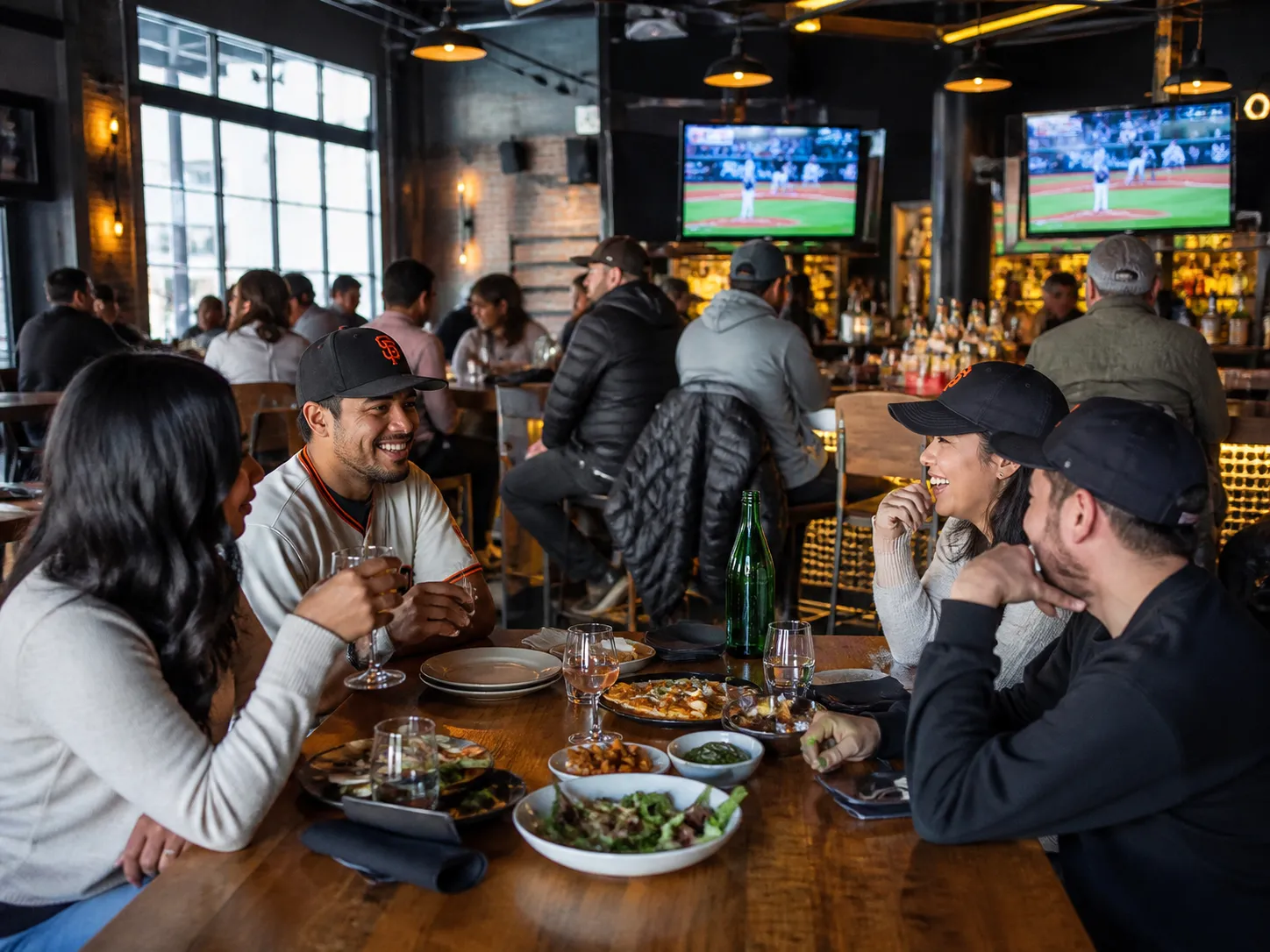
The best “eat and watch” pattern fits groups that care most about staying in one place. Pick it when everyone arrives early, the restaurant can confirm the screen situation, and the menu is acceptable to the least flexible eater in the group. The advantage is emotional continuity: the group orders, settles in, and tracks the game together without splitting attention between checks, routes, and closing tabs. The drawback is that the table may shape the whole night. If the screen angle, volume, service pace, or broadcast choice is wrong, the group has fewer graceful exits once food and drinks are already underway.
The better “dine first, move after” pattern fits groups that want stronger food and are comfortable treating the game as the second act. Pick a restaurant for dinner quality and reliable seating, then preselect a bar or public route for the watch portion. This is often the calmer choice for an early evening game because it separates eating from screen logistics. SFMTA’s travel update page is worth checking before heading out, since it lists transit, walking, driving, parking, and event-related advisories, including city activity around the same August 2026 weekend. A good plan leaves room to adapt while keeping the group moving together.
Tags: #SanFranciscorestaurants #OracleParkdining #baseballwatchplan #sportsbarplanning #earlyeveningdinner
Sources consulted: Source 1: sfmta.com · Source 2: sfpl.org · Source 3: sfmta.com · Source 4: weather.gov
All trademarks are the property of their respective owners.
Ask Karpo first
Ask Karpo to turn this San Francisco idea into a current plan for your date, budget, companion, transit preference, and energy level. Karpo can narrow the route and flag what to verify before you go.