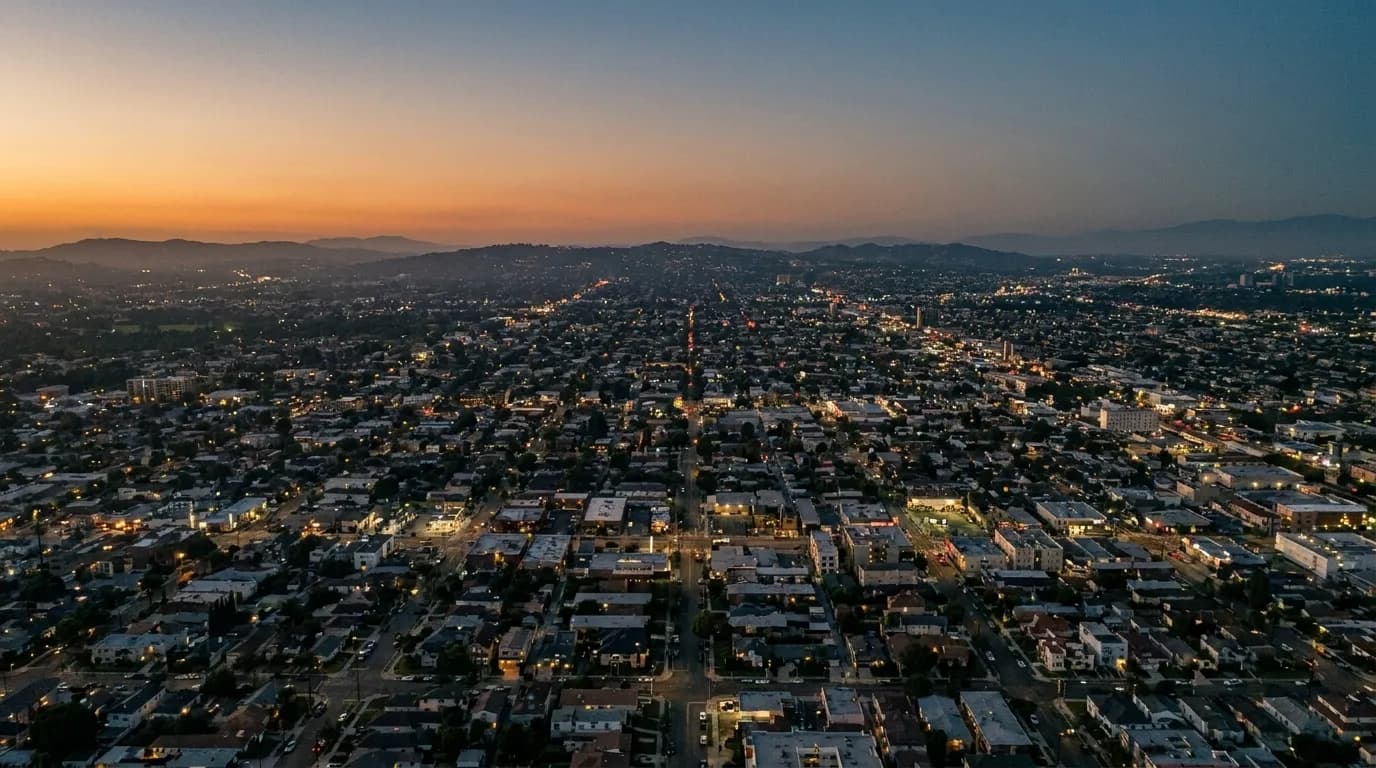
Almost every disappointing first trip to this city has the same cause, and it is not the traffic or the sprawl — it is an itinerary built as a list rather than as a map. The best things to do in Los Angeles are not far apart in miles; they are far apart in time, and an itinerary with four items in four areas is an itinerary with three hours of driving in it. Grouping by geography is the entire skill, and everything else is detail.
The list matters less than the order you do it in. Ask Karpo what is worth doing near you today without the cross-town drive.
Think in four days, not twelve items
The workable division is roughly: a coastal day, an eastside and downtown day, a museum and mid-city day, and a hills and outdoors morning. Each of those is a cluster you can spend six hours in without getting back in a car more than once or twice. Trying to combine the beach and the eastside in one day is the classic error and it costs the afternoon.
If you have three days, drop one cluster entirely rather than compressing all four. A visitor who saw three neighbourhoods properly has a much better sense of this city than one who touched six for ninety minutes each, and the second version is also considerably more expensive in parking and ride fares.
The coastal day
Santa Monica, Venice and the path that runs between them, plus the canals and the residential streets behind the beach, is a full day on foot. Further north, the coast highway and the beaches beyond it are a drive with a purpose rather than a wander. Further south, the beach cities are quieter and more residential and are the better choice if crowds are the concern.
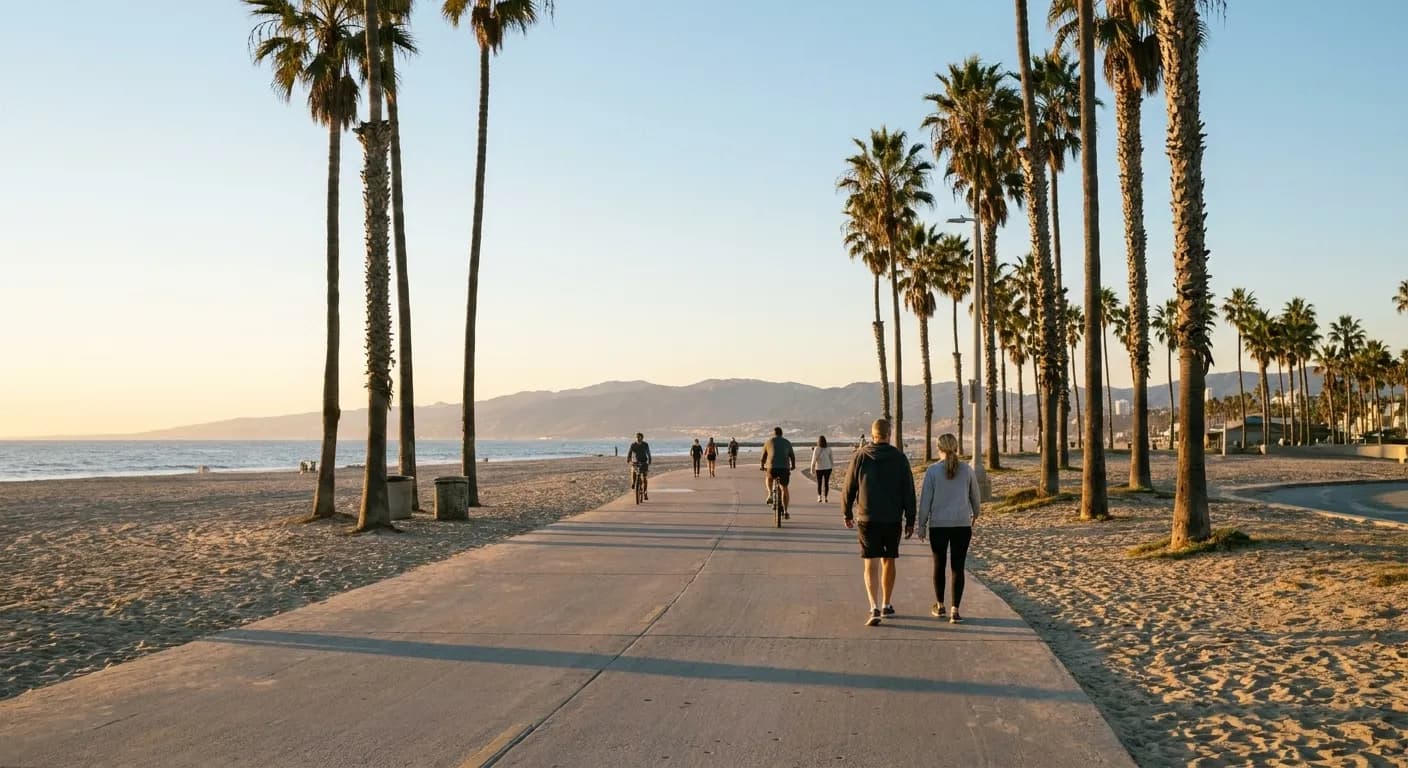
Go in the afternoon and stay for sunset. The coast is frequently overcast until midday — the local term is the marine layer, and it burns off between eleven and one — so a nine o'clock arrival at the beach is a grey and disappointing experience that people wrongly attribute to bad luck.
Downtown and the eastside
Downtown has become genuinely walkable and holds the greatest concentration of architecture, museums, historic market halls and bars within a small radius. It is the one part of the city that works like a conventional city centre, and a day there requires no driving at all once you have arrived.
The eastside neighbourhoods immediately north and east — the arts district, Highland Park, Echo Park, Silver Lake — are where the food and the independent shops are, and they are strung along a corridor that makes a natural second half of that day. This is the part of a first trip that most people skip and most people who return wish they had done first.
Museums and the mid-city cluster
The museum district holds several major institutions within walking distance of each other, and the collections are genuinely first-rank. Add the tar pits, the architecture along the boulevard, and the surrounding neighbourhoods and it is an easy full day with almost no transit.
Book ahead. Several of the best institutions here are free or nearly free and operate timed entry, which means the constraint is availability rather than cost. Tickets for a Saturday go weeks out; a Tuesday is usually available two days ahead. This is the single most common practical mistake first-timers make.
The hills, the observatory and the outdoors
The observatory is the rare famous attraction that fully deserves the visit — the building, the views over the whole basin, and the exhibits are all good, and it is free to enter. Go at dusk on a weeknight, and either take a ride share or park far below and walk up, because the road at the top is a slow-moving queue at weekends.
Beyond that, the canyon trails above the city are the thing to do early in the morning, before eight, when they are cool and quiet. A short hike, a view over the basin, and breakfast in a neighbourhood afterwards is the single best three hours available to a visitor and costs nothing but an early alarm.
What to eat, framed usefully
Do not organise the trip around celebrated restaurants. Organise it around cuisines and neighbourhoods: Mexican and Central American on the eastside, Korean in Koreatown, Thai in Thai Town, Chinese regional food in the San Gabriel Valley, Armenian and Persian toward Glendale. Any one of those, chosen almost at random, will be better than a researched booking at a place with a publicist.
The other thing to know is that eating well here is cheap. A twelve-dollar plate at a strip-mall room in the valley routinely beats a sixty-dollar plate on the westside, and that is not a contrarian position — it is the settled view of most people who live here and eat a lot.
The things worth skipping
The Walk of Fame is a crowded pavement. The studio backlot tours are expensive and thin. The bus tours of celebrity houses are a slow drive past hedges. And the sign on the hill cannot be reached and is best seen from somewhere you were going anyway. Cutting all four frees the better part of a day.
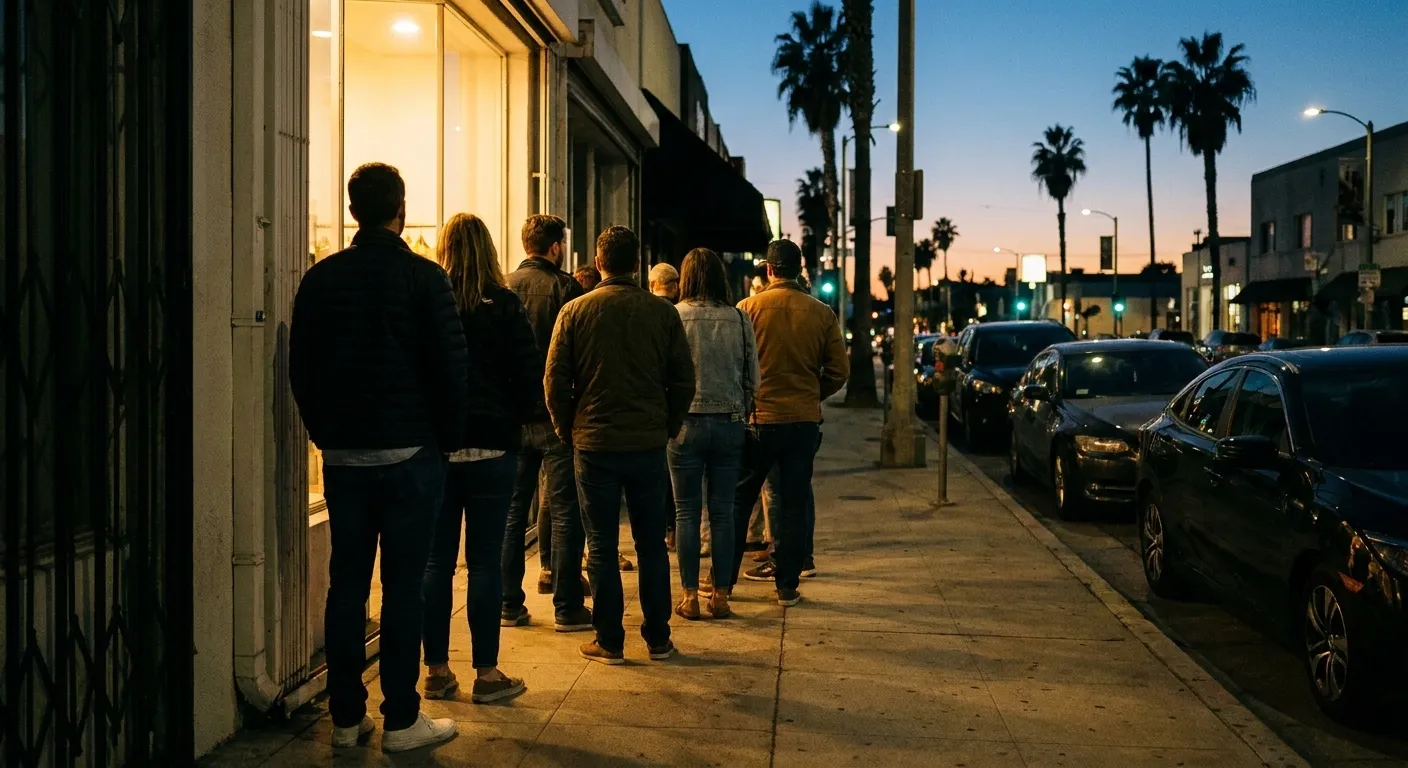
The general filter: if the primary activity is queueing to photograph something, it is probably not worth a Los Angeles day, because the opportunity cost here is a neighbourhood you did not see. This city rewards being somewhere specific and staying there, which is the opposite of how a first visit is usually sold.
Tags: #LosAngeles #ThingsToDoLA #FirstTimeLA #LAItinerary #Downtown #HighlandPark #SantaMonica #Koreatown #LAMuseums #Observatory #NeighbourhoodGuide #SoCal #ExploreLA
All trademarks are the property of their respective owners.
Ask Karpo first
Ask Karpo what is worth doing near you in Los Angeles today, grouped so you are not spending the afternoon driving between things.