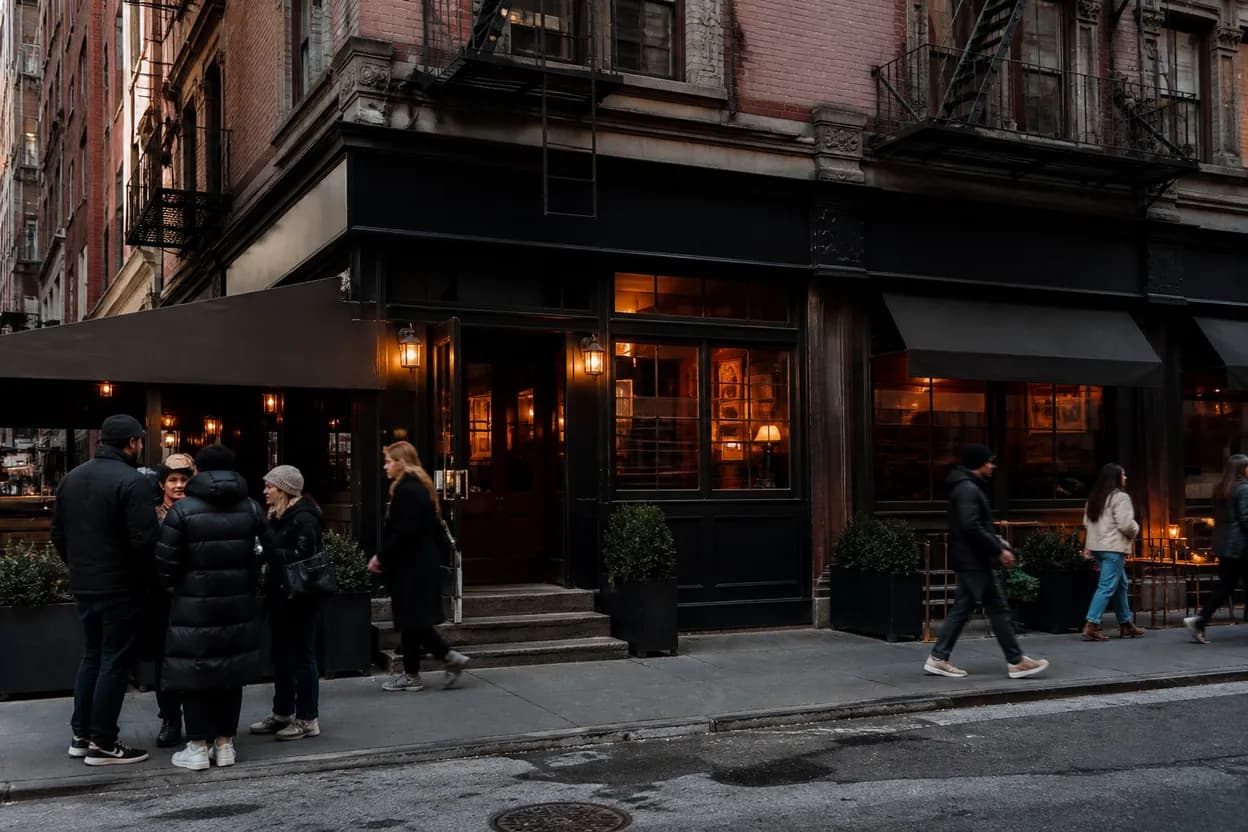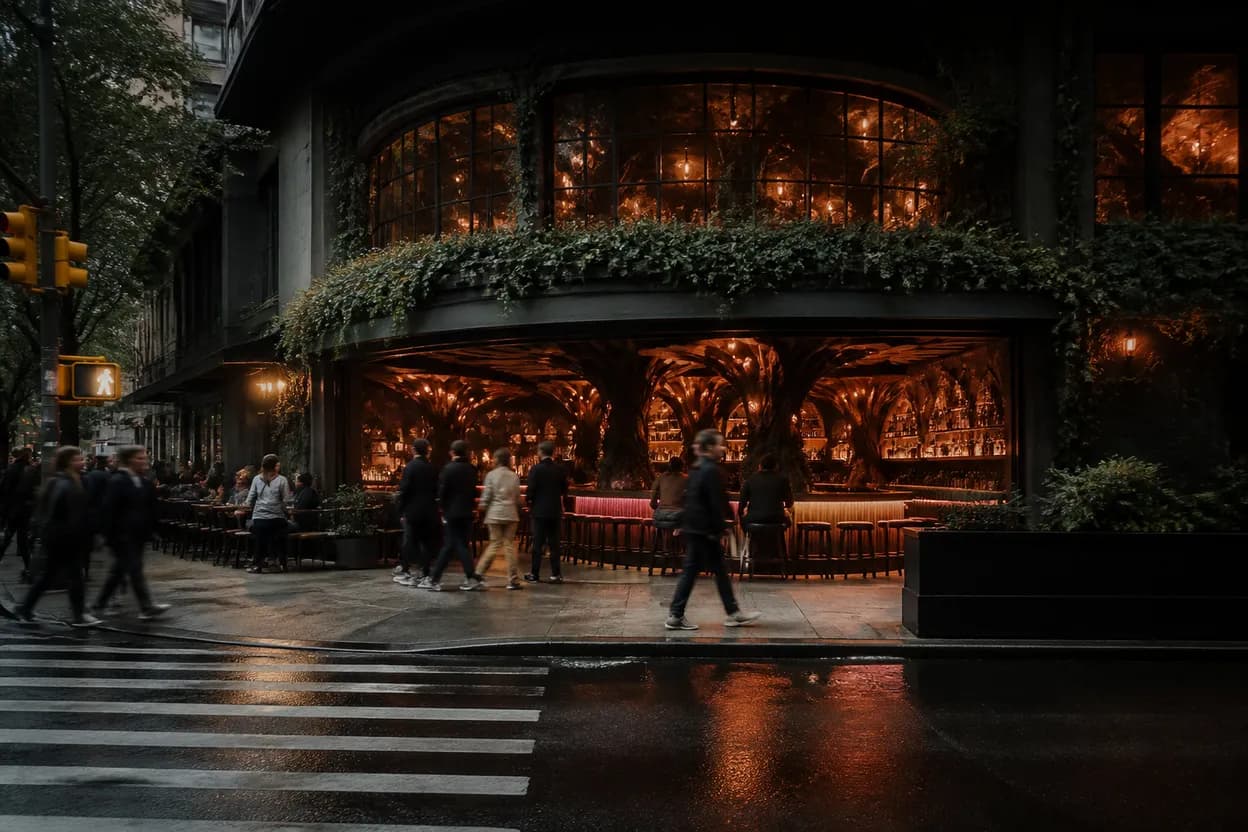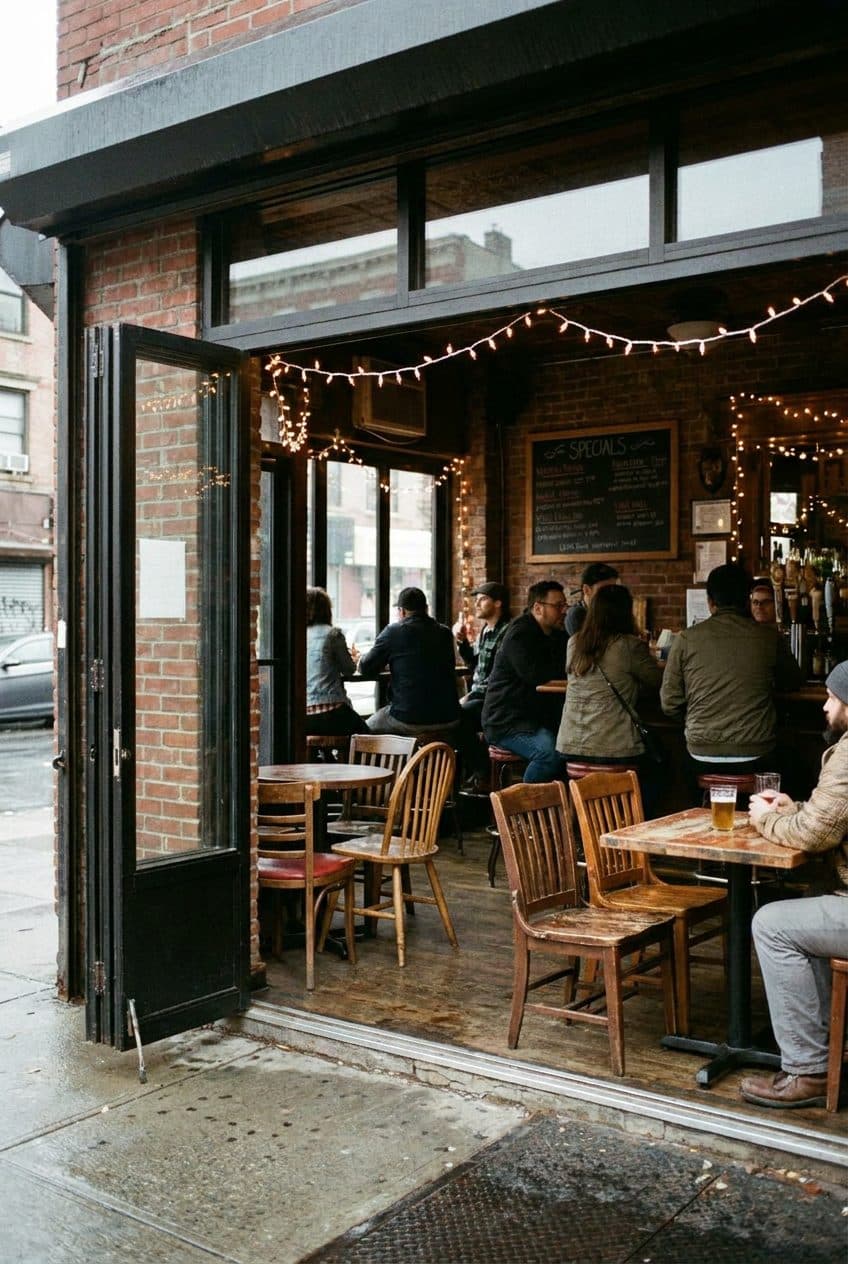
The door stays propped open most evenings, a deliberate gesture that lets the sidewalk and the barroom share the same air. On Seneca Avenue, where the M train rumbles overhead and Ridgewood's Polish bakeries sit three doors down from newly opened wine bars, this corner spot operates as a kind of neutral zone—a queer-friendly establishment where the neighborhood's older residents and its recent arrivals find themselves shoulder to shoulder over dollar oysters on Tuesday nights. The energy never tips into urgency, even when the room fills.
The Geography of the Room
The bar runs along the left wall, a long wooden counter that seats maybe fifteen if everyone keeps their elbows in. High-top tables line the opposite side, pressed against windows that look out onto the intersection where Seneca meets the elevated tracks. The back opens into a smaller room with booths, quieter but not separate—sound carries, so conversations from the bar drift back, and anyone heading to the restroom passes through both zones. The layout creates a natural circulation, a reason to move and see who else has arrived. First-timers usually pause just inside the door, scanning for an open stool, while regulars make straight for their usual spots without looking. The bartender knows which is which.
What Arrives on Tuesday
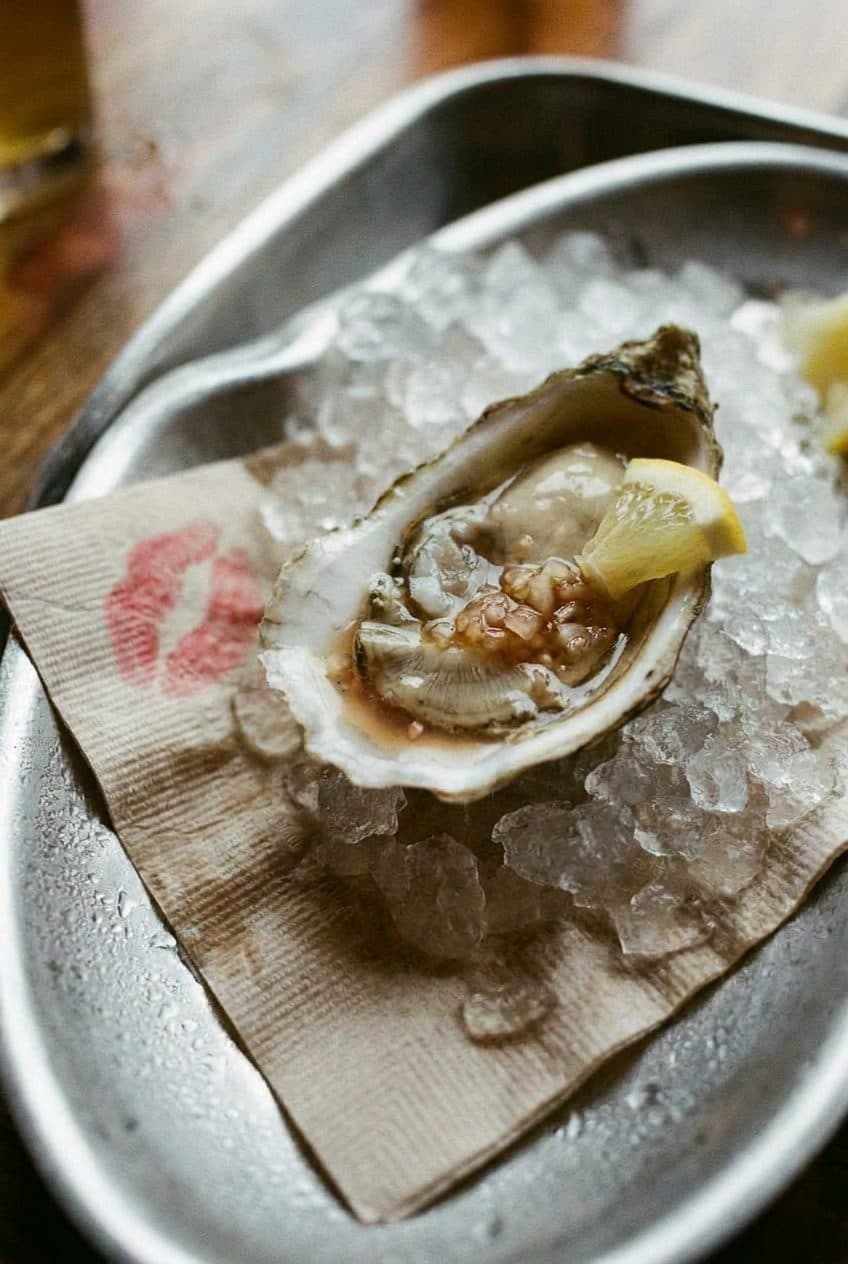
The oyster deal starts at six and runs until they're gone, which on a good night means around nine-thirty. East Coast varieties, served on ice with mignonette and hot sauce, the kind of simple setup that doesn't need elaboration. The crowd that shows up for them skews mixed—service industry workers between shifts, couples splitting a dozen, solo drinkers who treat it as dinner. The price point pulls in people who wouldn't otherwise order oysters, and the ritual of shucking them behind the bar adds a rhythm to the evening, a small performance that everyone at the counter can watch. By seven, the stools fill. By eight, people stand in the gaps between tables, holding their drinks at chest height, half-turned toward whichever conversation sounds most promising.
The Texture of Queer-Friendly
The rainbow flag by the register isn't large, but it's positioned where anyone ordering will see it—a signal rather than a statement. What "queer-friendly" means here is less about programming and more about atmosphere: the staff doesn't assume pronouns, the crowd doesn't police who holds hands, and the music selection veers toward dance-adjacent pop without tipping into full club mode. It's a neighborhood bar first, which means the clientele includes plenty of straight regulars who live two blocks away, but the vibe never defaults to heteronormative. A weeknight feels like neutral ground. Weekends, especially Saturdays after ten, the energy shifts more explicitly queer, with a younger crowd and a DJ in the back room. But Tuesday remains the night when the space feels most like what it claims to be: a place where different versions of the neighborhood overlap without friction.
The Seneca Avenue Context
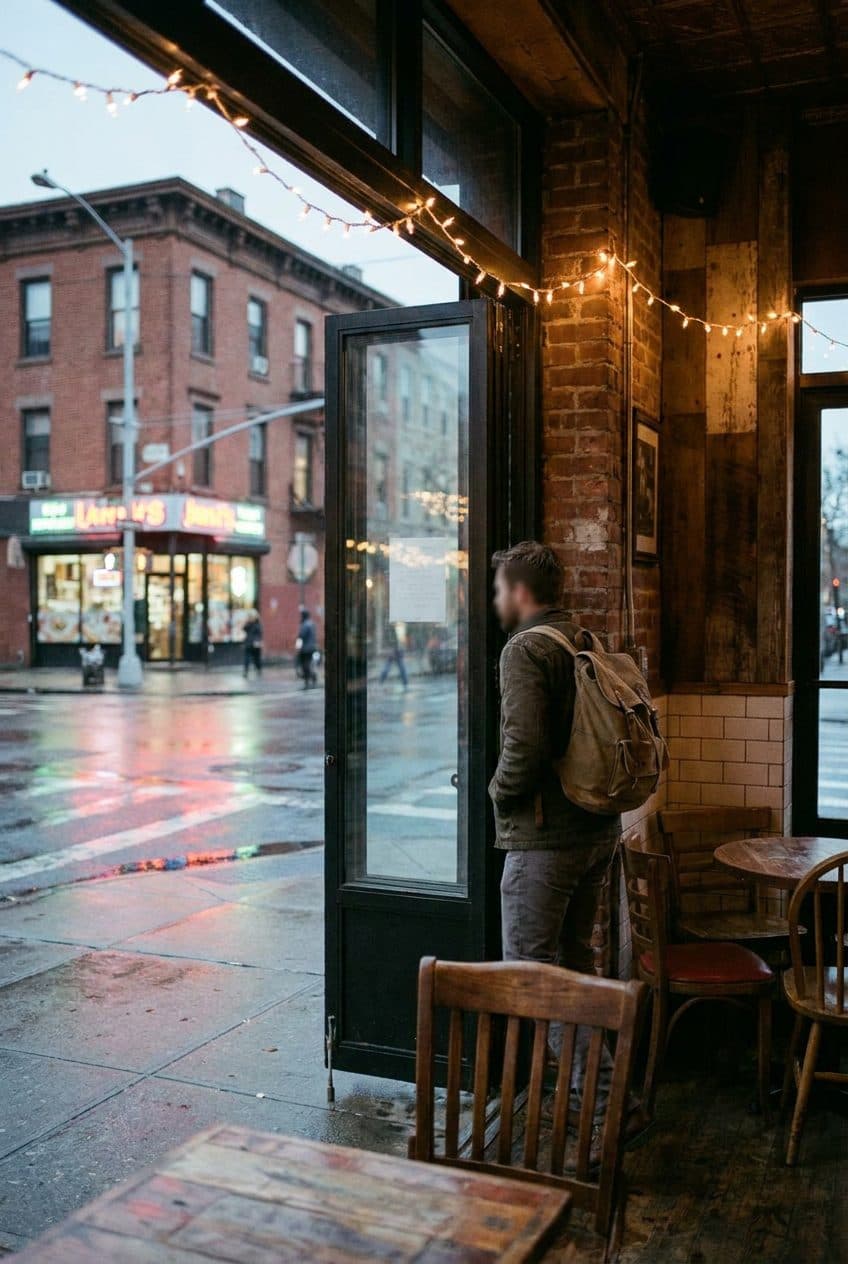
Ridgewood sits in the overlap zone, technically Queens but culturally adjacent to Bushwick, cheaper than Williamsburg but no longer cheap. Seneca Avenue itself runs perpendicular to the M train, a commercial stretch where Polish delis and Ecuadorian restaurants still outnumber the wine bars and coffee roasters that have opened in the past three years. The bar occupies a corner that used to house a different establishment—older locals remember it as a dive with a back room for private parties—and the current owners kept some of the bones: the tin ceiling, the wood paneling, the narrow dimensions that force intimacy. What changed is the lighting, now warmer, and the clientele, now broader. The propped door matters because it refuses the sealed-off feeling that some of the newer spots cultivate. The sidewalk and the bar share the same September air, the same sounds of the train overhead, the same sense of being in a neighborhood still negotiating what it's becoming.
The Timing and the Rhythm
Arriving before seven means finding a seat easily, but it also means missing the moment when the room starts to hum. The bartenders move faster once the oyster orders stack up, and the conversations at the bar begin to connect—someone overhears a comment two stools down, leans over to add their own take, and suddenly a thread forms. By eight-thirty, the energy plateaus. Not louder, just denser. The back room fills with people who came for the oysters but stayed for the atmosphere, and the music gets turned up half a notch, enough to make talking require leaning in. The kitchen, a small operation tucked behind the bar, sends out bar snacks—fries, pickles, a rotating special that might be meatballs or might be fried artichokes—and the smell of salt and oil layers over the oyster brine. Regulars know to eat before coming if they want more than snacks, but the food holds its own for those who don't.
Practical Notes
The M train stops at Seneca Avenue, a short walk north to the bar. The L train at Halsey Street is another option, about ten minutes on foot through residential blocks that feel quiet even on weekend nights. The bar opens at five on weekdays, earlier on weekends, and stays open until two most nights, later if the crowd warrants it. No reservations, no cover, no dress code. Walk-ins only, and the door policy is straightforward: be kind, don't be loud in a way that disrupts, and if the bartender cuts someone off, don't argue. Cash is easier, though cards work. The oyster deal is Tuesday-specific, but the regular menu runs every night—solid, unfussy, built around whatever pairs well with beer and natural wine. Seating is first-come, but the bar stools turn over faster than the booths.
What the Regulars Know
The best time to arrive is seven-fifteen, late enough that the room has energy but early enough to claim a stool. The bartender on the left side of the bar pours heavier than the one on the right, a detail the regulars have mapped. The back room has a small bookshelf with queer literature and zines, free to read or take, restocked by patrons who leave their own contributions. The bathroom has good lighting, a rarity, which makes it a popular spot for quick adjustments before heading out to the next place. And on nights when a major match is on—when the Ecuadorian diaspora fills the bar to watch their team—the atmosphere shifts entirely, louder and more focused, the kind of collective energy that turns a Tuesday into an event. Those who know come early or wait until after the final whistle.
Tags: #TheeLongWayHome #RidgewoodQueens #QueensNightlife #QueerFriendlyBars #NeighborhoodBars #SenecaAvenue #DollarOysters #NYCBarScene #BushwickAdjacent #MTrainLife #TuesdayNightOut #QueerNYC #RidgewoodEats #NYCHiddenGems #BarCulture
Sources consulted: timeout.com · atlasobscura.com · nycgo.com
Please drink responsibly. Must be of legal drinking age.
All trademarks are the property of their respective owners.
Ask Karpo first
Want to know which other nights have specials and when the DJ sets happen?
Ask Karpo for the full weekly schedule and what the bartender's actually pouring when you order the house cocktail before you head out.