 Carousel Restaurant: East Hollywood's Essential Armenian-Lebanese Mediterranean Food Feast
Restaurants
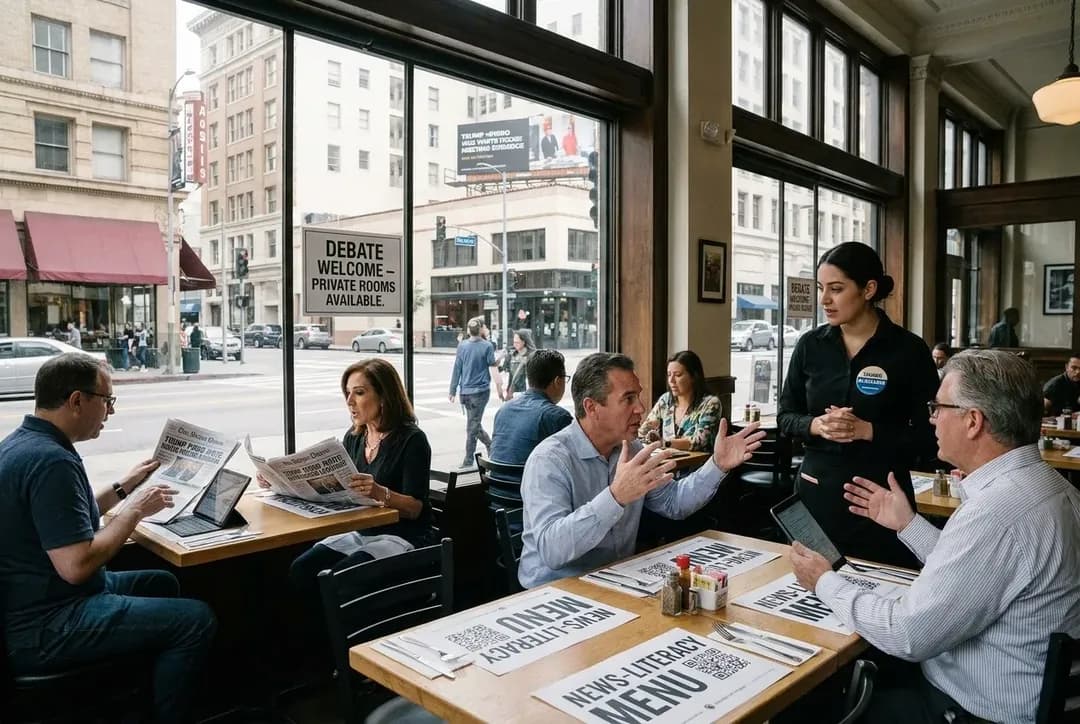
Trump Pirro White House Meeting Evidence Discussion: LA Restaurants With News-Literacy Menus
Los Angeles restaurants are quietly becoming venues where news junkies can debate current headlines—including the trump pirro white house meeting evidence conversation—over dinner, with some establishments offering fact-check resources and staff trained to keep political discussions civil. Before you book, confirm house rules on debate intensity and whether private rooms are available for animated groups.
When your group of four to six friends wants to spend a weeknight dinner dissecting the latest trump pirro white house meeting evidence headlines, choosing the right Los Angeles restaurant becomes as important as the arguments you'll make. A small but growing number of LA dining spots now acknowledge that political conversation is part of the evening's texture, and a few have introduced news-literacy placemats, fact-check QR codes on tables, or staff briefings on de-escalation techniques. These aren't debate halls with podiums—they're restaurants that recognize opinionated diners need elbow room, reasonable noise tolerance, and sometimes a private corner when the discussion heats up. The challenge lies in matching your group's energy to a venue's house culture: some kitchens welcome spirited exchange as dinner theater, while others prefer neutral small talk and will gently redirect loud tables. Because no official directory tracks "debate-friendly" status, you'll need to call ahead, ask specific questions about group size and conversation style, and weigh tradeoffs between ambiance, menu variety, and the restaurant's patience for a two-hour sit.
Text Karpo your Los Angeles starting point, timing, companion, and priorities for a current debate-friendly dining guide inspired by trump pirro white house meeting evidence, with one realistic backup before you leave.
Verifying Debate Tolerance and Private-Room Availability Before You Reserve
The first decision point is whether to request a private room or risk the main dining floor. Private spaces insulate other guests from your group's volume and give you freedom to gesture, interrupt, and raise voices without a server hovering nervously; the tradeoff is that private rooms often carry minimum spends, limited menu options, or earlier seating windows. When you call, ask three questions: Does the restaurant have a semi-private alcove or buyout option for six people on a weeknight? What is the noise policy if our conversation becomes animated? Has staff received any training—formal or informal—on managing political discussions? The answers reveal whether management sees debate as a liability or an expected part of urban dining.
If no private room exists, inquire about corner booths, patio sections, or late seatings when the room thins out. Some restaurants will note your reservation as "discussion group" and seat you away from date-night couples or families with young children. Confirm the restaurant's stance on lingering: a two-hour dinner with one round of appetizers, entrees, and drinks is standard, but if your group plans to nurse coffee through a third hour of back-and-forth, clarify whether table turnover pressure will cut the evening short. Websites and review platforms rarely capture these nuances, so a direct phone conversation—ideally with a manager rather than a host—is the only reliable verification step.
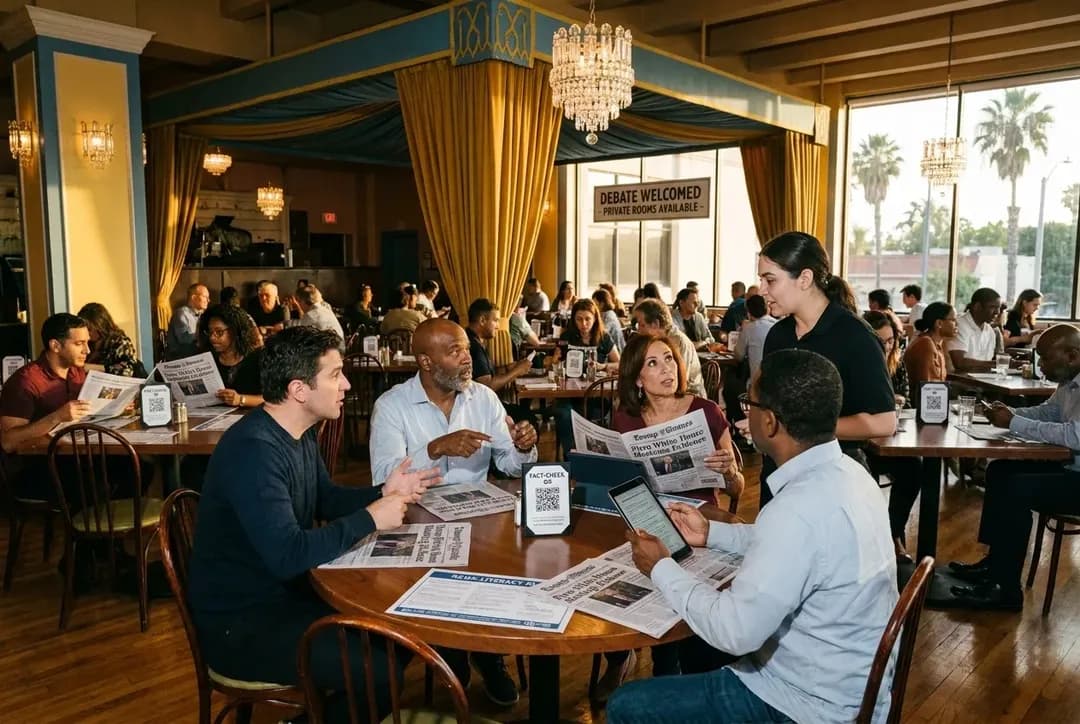
News-Literacy Placemats, Fact-Check QR Codes, and the Mechanics of In-House Resources
A handful of Los Angeles restaurants have experimented with table-top interventions: laminated placemats listing common logical fallacies, QR codes linking to nonpartisan fact-checking sites, or even one-page primers on media literacy printed on the back of menus. These tools don't adjudicate your debate—they offer a shared reference point when someone says, "I read that…" and the table erupts in competing claims. The QR codes typically route to sites that aggregate primary sources, timelines, or side-by-side comparisons of news coverage, giving diners a thirty-second way to test an assertion without pulling out phones and disappearing into individual rabbit holes.
In practice, the effectiveness depends on your group's willingness to pause and scan a code mid-argument. Some tables ignore the resources entirely; others find that a quick fact-check defuses tension and lets the conversation pivot from "who's right" to "what does this mean." When you call ahead, ask if the restaurant currently offers any news-literacy materials and whether they're updated regularly—a QR code pointing to a 2024 election guide won't help parse 2026 stories. Also ask if staff are briefed on how to introduce these tools; a server who drops a placemat with a cheerful "In case things get spicy!" sets a different tone than one who pretends the materials don't exist. The goal is not to sanitize debate but to give your group a circuit-breaker when emotions run high.
Staff De-Escalation Training and What It Means for Your Evening
Restaurants that welcome debate-prone groups sometimes train front-of-house staff to recognize when a table's energy shifts from lively to hostile. This isn't about policing opinions—it's about protecting the dining room's overall atmosphere and ensuring your group doesn't alienate neighboring tables or each other. Training might include role-play scenarios, a list of neutral phrases ("Can I refresh anyone's water while you think that over?"), or a manager check-in protocol when voices rise above a certain decibel. The presence of this training signals that the restaurant has thought through the risks and decided that spirited conversation, managed well, adds to rather than detracts from the experience.
For your group, this means a server might gently suggest moving to a quieter corner if the debate grows loud, or a manager might pause by the table to ensure everyone's comfortable. It does not mean you'll be silenced or asked to leave for holding strong opinions; it means the restaurant has a plan beyond hoping conflict resolves itself. When you book, ask whether staff have received any guidance on handling animated discussions and what the restaurant's threshold is for intervention. Understanding the house's boundaries lets you calibrate your group's volume and helps you decide whether this venue matches your tolerance for external moderation. If your friends thrive on unfiltered argument, a restaurant with active de-escalation may feel stifling; if you value civility guardrails, that same oversight becomes an asset.
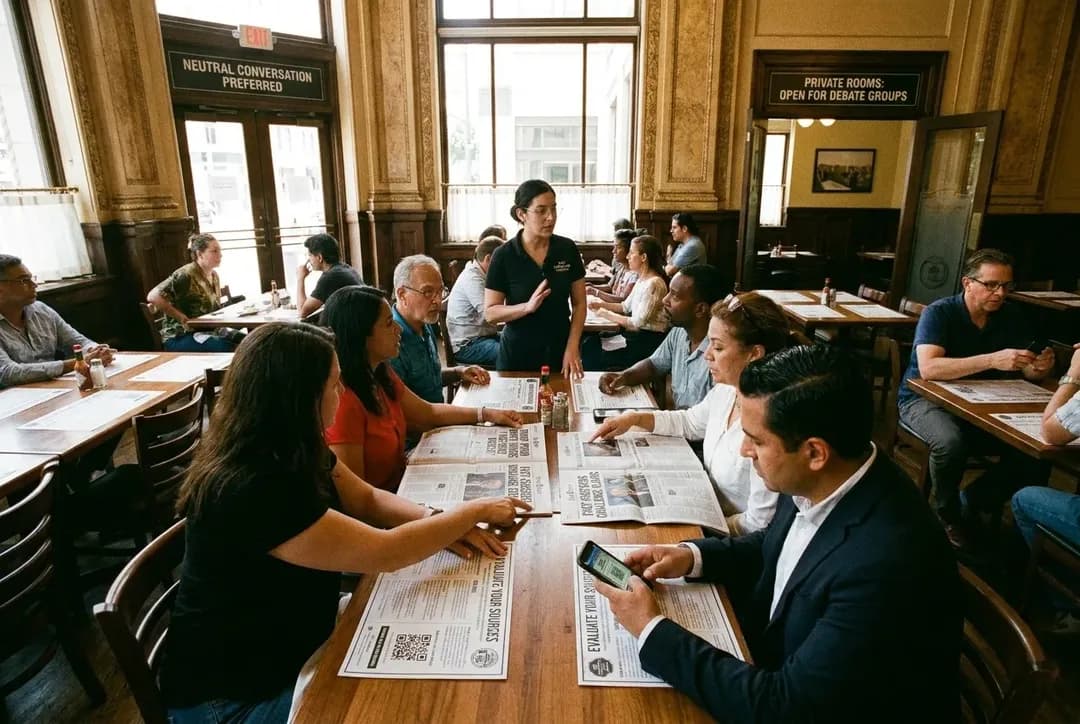
Choosing Cuisine, Location, and Transit to Support a Two-Hour Commitment
A successful debate dinner hinges on logistics that keep everyone present and engaged. Start with cuisine: shareable plates (tapas, Korean barbecue, family-style Italian) encourage communal eating and give hands something to do during pauses; individual entrees can create siloed experiences where people finish at different times and disengage. Next, consider location relative to your group's starting points. If friends are scattered across LA County, a restaurant near a Metro rail stop—using the system's $1.75 base fare and free two-hour transfers between buses and trains—makes arrival and departure predictable. According to Metro's official site, real-time arrivals and trip-planning tools are available through the LA Metro app, and all trains and buses are wheelchair accessible, which matters if anyone in your group has mobility needs.
Parking availability and neighborhood walkability also shape the evening's rhythm. A restaurant in a dense area like Koreatown or Silver Lake may require circling for street parking, eating into your two-hour window; a spot with a dedicated lot or valet removes that friction. Check whether the restaurant is near public parks, bookstores, or cafes where the group can continue talking if you're asked to vacate the table but aren't ready to disperse. The goal is to remove logistical stress so your group's energy goes into the conversation, not into coordinating rides or hunting for parking. A venue that's easy to reach, easy to leave, and surrounded by spillover options will feel more hospitable than one that requires complex choreography.
Who This Dining Style Fits and When It Falls Apart
Debate-friendly dining works best for groups that share baseline respect and a genuine interest in hearing opposing views, even when disagreement is sharp. If your friends treat argument as intellectual sport—voices rise, interruptions fly, but no one takes offense—a restaurant with high ceilings, booth seating, and a bustling bar can absorb the energy. It works less well for groups where one person dominates, where political differences map onto personal grudges, or where someone's presence is contingent on avoiding certain topics. The intermediate difficulty rating reflects the need for emotional regulation: you must be opinionated enough to sustain two hours of discussion but respectful enough that staff don't feel compelled to intervene.
This format also assumes your group can toggle between intensity and levity—cracking jokes, complimenting the food, asking about each other's lives—so the evening doesn't become a grinding seminar. If someone leaves feeling unheard or attacked, the restaurant's news-literacy tools and staff training won't repair that harm. Before you book, have a candid conversation with your friends about ground rules: Will you take turns speaking? Will anyone moderate? What happens if someone wants to tap out of a topic? Restaurants can provide the stage and a few props, but your group writes the script. When the chemistry is right, a debate dinner becomes a memorable blend of food, friendship, and the thrill of testing ideas in real time; when it's wrong, you're left with cold entrees and a group text full of apologies the next morning.
Tags: #debatedining #politicalconversationrestaurants #newsliteracyLA #groupdinnersLosAngeles #privatediningrooms #weeknightrestaurants #civilitytraining #factcheckingresources #Metroaccessibledining #discussionfriendlyvenues
Sources consulted: Source 1: metro.net · Source 2: discoverlosangeles.com · Source 3: lacity.gov · Source 4: lapl.org
All trademarks are the property of their respective owners.
Ask Karpo first
Ask Karpo to turn this Los Angeles idea into a current plan for your date, budget, companion, transit preference, and energy level. Karpo can narrow the route and flag what to verify before you go.
Ask Karpo for more information.
Keep reading
- Carousel Restaurant: East Hollywood's Essential Armenian-Lebanese Mediterranean Food Feast
 Late-Night Restaurants Open Near Me: The Barkley, South Pasadena's Enduring Anchor
 Connie & Ted's: West Hollywood Seafood Near Me, New England Soul