 Artisan Macaron Shop Near Me at Sébastien Bouillet Ikebukuro Tokyo
Coffee & Dessert
Ippodo's Aoyama Kaboku Tearoom: A Matcha Cafe Near Me Worth Booking
Ippodo's Aoyama store at 2F, 4-23-6 Minami-Aoyama pours ¥1,650 Ikuyo usucha and a ¥5,500 three-koicha tasting in a 21-seat Kaboku Tearoom, open 10am to 6pm and closed Mondays.
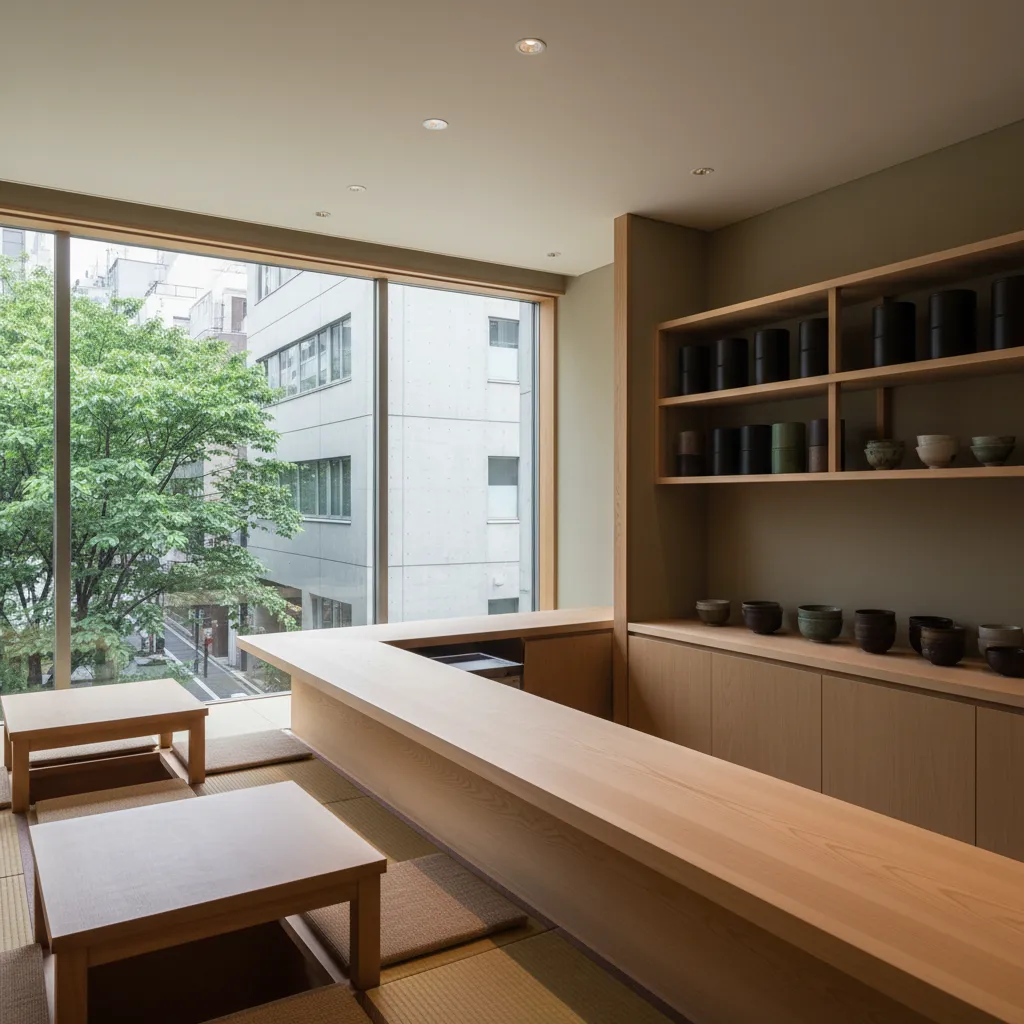
Ippodo's Kaboku Tearoom in Aoyama has 21 seats, takes bookings, and closes every Monday. It sits on the second floor of 4-23-6 Minami-Aoyama, Minato-ku, and pours tea from 10am, with last call at 5:30pm before the 6pm close. The cheapest bowl of matcha on the October menu, Ikuyo usucha, costs ¥1,650 and arrives with a confection. If your phone keeps answering matcha cafe near me with latte stands around Omotesando, this is the room where a 300-year-old Kyoto tea house teaches you to make the bowl yourself.
Finding the second-floor door
The walk is the first lesson in patience. From Omotesando Station on the Ginza, Hanzomon and Chiyoda lines, take Exit A5 and allow eight minutes; Exits B3 and B4 add another two. Ippodo describes the route as heading in the direction of the Nezu Museum, past the stretch where fashion boutiques line the street and window shoppers slow everything down. The shop is upstairs, so look for the building entrance rather than a street-level tea counter, and do not expect a queue on the pavement to guide you.
How Kaboku differs from a latte bar
Kaboku is built around preparation rather than speed. The official store page says the tearoom menu lets you experience preparing Japanese tea, and Ippodo staff who specialise in tea are on hand the whole time to answer questions. In practice that means the pot, bowl and whisk come to your table and you do the work with guidance, which is why a visit runs longer than a coffee stop. Ippodo also asks tearoom guests not to wear perfume, scented hand cream or strongly scented fabric softener, because the aroma of the tea is the point.
What to order: koicha first
The matcha side of the menu is split by strength. Ummon, described as strong and rich, is the top koicha at ¥3,080; SEIZAN, with a smoother aftertaste, is ¥2,860 as koicha and ¥2,090 as usucha; Ikuyo, the well-balanced house option, is ¥1,650 as usucha. Each order comes with a confection. The menu suggests tasting the thick koicha first, then adding hot water to the same bowl and whisking it into usucha so you can compare the two textures without ordering twice.
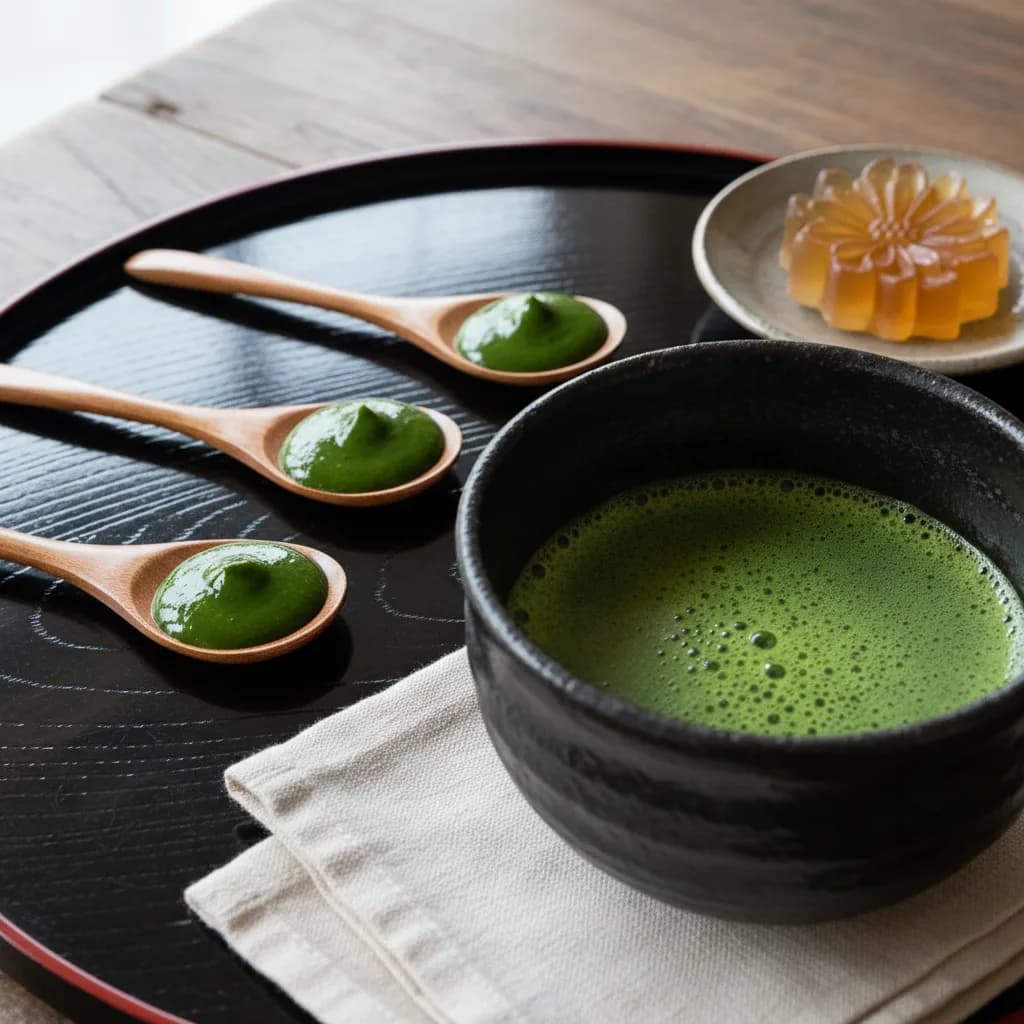
The Aoyama-only Matcha Gourmand costs ¥5,500 and is the order for anyone who has flown in specifically for matcha. Three brands arrive as thick koicha on separate spoons, served with kohaku, a translucent sugar jelly made by the confectioner Juko. You taste them side by side for aroma, sweet umami and aftertaste, then choose one to be prepared as a full bowl. It is the most expensive line on the menu, and stock is limited, so book an early slot if this is the reason you came.
Leaf teas are just as serious here. Gyokuro Kanro, the shaded tea Ippodo is known for in Kyoto, costs ¥2,860, with the lighter Tekiro at ¥1,870. Sencha Kaboku, named after the tearoom, is ¥2,090, and Nichigetsu is ¥1,760. Hojicha and Iribancha, the smoky Kyoto bancha, are ¥1,650 each. For a group of three, ordering one matcha, one gyokuro and one hojicha gives the table the full range of roasting and shading without overlap.
Hungry visitors get a small savoury option. For ¥1,980 you can pair any tea with a snack: inari sushi, rice tucked into broth-soaked fried tofu, on Wednesday, Thursday and Sunday, or buttery jam toast with a seasonal jam on Tuesday, Friday and Saturday. Both are limited in quantity. The Matcha Latte with a small sweet is ¥1,870, and an honest take is that you can skip it here; the same latte is easy to find all over Tokyo, while the self-whisked bowls are what make Kaboku worth the trip.
Booking, timing and the Monday trap
Monday is the trap. Kaboku shuts that day, along with the whole store, so plan Aoyama for Tuesday through Sunday. Booking runs through the Book a Table link on Ippodo's store page, and with only 21 seats a weekend afternoon can fill. Weekday mornings at the 10am opening are the calmest. The last call at 5:30pm is firm, so arriving at 5:20 on a Saturday is the surest way to leave without tea.
If Aoyama is full or you only have Tokyo Station time, Ippodo's Shin-Marunouchi Store at B1F of the Shin-Marunouchi Building, 1-5-1 Marunouchi, is two minutes underground from the JR Marunouchi North Exit. It is a takeout counter rather than a tearoom, with usucha at ¥972, koicha at ¥1,620 and a matcha latte at ¥1,080, open 11am to 9pm and to 8pm on Sundays and holidays. That counter also replaced the role of the old Marunouchi store in the Kokusai Building, which no longer appears on Ippodo's store list.
The room and the people in it
Inside, the mood is closer to a library than a cafe. The room is a calm second-floor space with table seating for 21, a full retail wall of tea tins and utensils on the shop side, and the occasional tea event hosted in the tearoom itself. Regulars tend to fall into two groups: Aoyama locals who come alone with a book and order a single sencha, and visitors comparing three koicha with notebooks open. The unwritten rule is volume; conversations stay low, and phones stay face down while the kettle is on.
Three centuries behind the counter
Ippodo's history is unusually well documented. Rihei Watanabe opened a tea and ceramics shop called Omiya in Kyoto in 1717, and in 1846 Prince Yamashina gave it the name Ippodo, meaning preserve one. The first Kaboku Tearoom opened at the Kyoto main store in 1995, and Tokyo got its first branch in Marunouchi in 2010. The Aoyama store opened on 29 August 2025, the same year as Shin-Marunouchi, making this the youngest Ippodo room in the city.
Walking on from Minami-Aoyama
After tea, continue a few minutes toward the Nezu Museum, the direction Ippodo itself uses to describe the shop. Its hillside garden of stone lanterns and maples turns red later in autumn and makes a quiet follow-up to a slow bowl of matcha. Heading back, Omotesando's zelkova-lined avenue leads down to Harajuku, and Aoyama-dori runs toward Gaiemmae if you prefer to avoid the weekend crowds on the main shopping strip.
Practical notes
Payment at Aoyama is cashless only, so bring a card or IC transit card rather than yen notes. The store phone is +81 3-6427-3211. Opening hours are 10am to 6pm for both the shop and the tearoom, and the store closes over New Year as well as every Monday. Allergy questions go to staff before you order. The building is a second-floor space reached from the street entrance, and visitors with mobility needs should ask on booking. The retail side sells the same matcha brands by the tin, if you want to repeat the lesson at home.
Kaboku suits patient drinkers. Book it if you want to learn the difference between koicha and usucha with a professional at your elbow, or if you have one free morning near Omotesando and want something calmer than a queue for a matcha soft serve. Skip it if you need a quick takeaway between shops; Shin-Marunouchi does that better. Either way, the Karpo APP can map the walk from Exit A5 and line up the Nezu Museum garden for afterward.
Ask Karpo for more information.
Keep reading
- Artisan Macaron Shop Near Me at Sébastien Bouillet Ikebukuro Tokyo
 French Macaron Shop Near Me at Frédéric Cassel Ginza Tokyo
 Gourmet Chocolate Macaron Shop Near Me at Jean-Paul Hévin Shinjuku