 Witchcraft Store Near Me: West Witch Divination Salon in Ikebukuro
Hidden Gems & Odd Finds
Magic Trick Shop Near Me in Nakajujo: Magic Fantasia Guide
Founded by illusionist Ken Shibuya in Kita City, Magic Fantasia is Tokyo's premier studio workshop for stage apparatus, visual silk productions, dove pans, and handcrafted Japanese magic props.
Magic Fantasia is located on the street level at 4-3-9 Nakajujo, Kita City, Tokyo 114-0032, welcoming magic enthusiasts and stage performers Wednesday through Sunday from 1:00 pm to 6:00 pm. Founded by professional illusionist and prop developer Ken Shibuya, this specialized retail workshop provides the ultimate answer for those searching for a stage-focused magic trick shop near me in Tokyo, remaining closed on Mondays and Tuesdays.
Ken Shibuya's Stage Illusion Workshop in Kita City
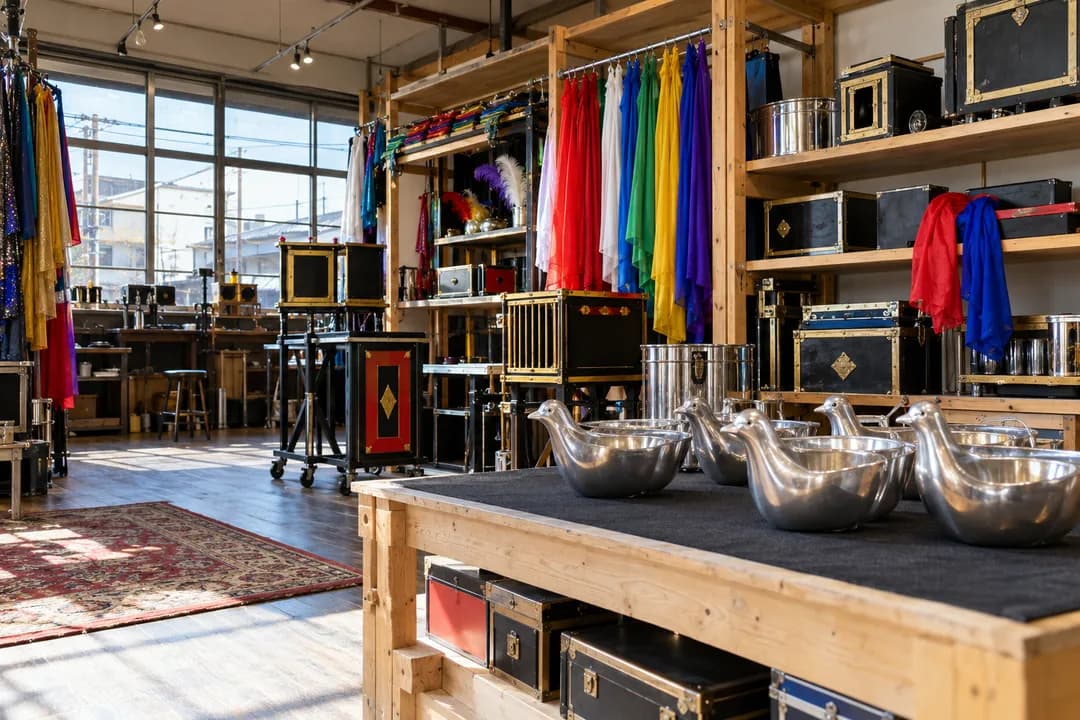
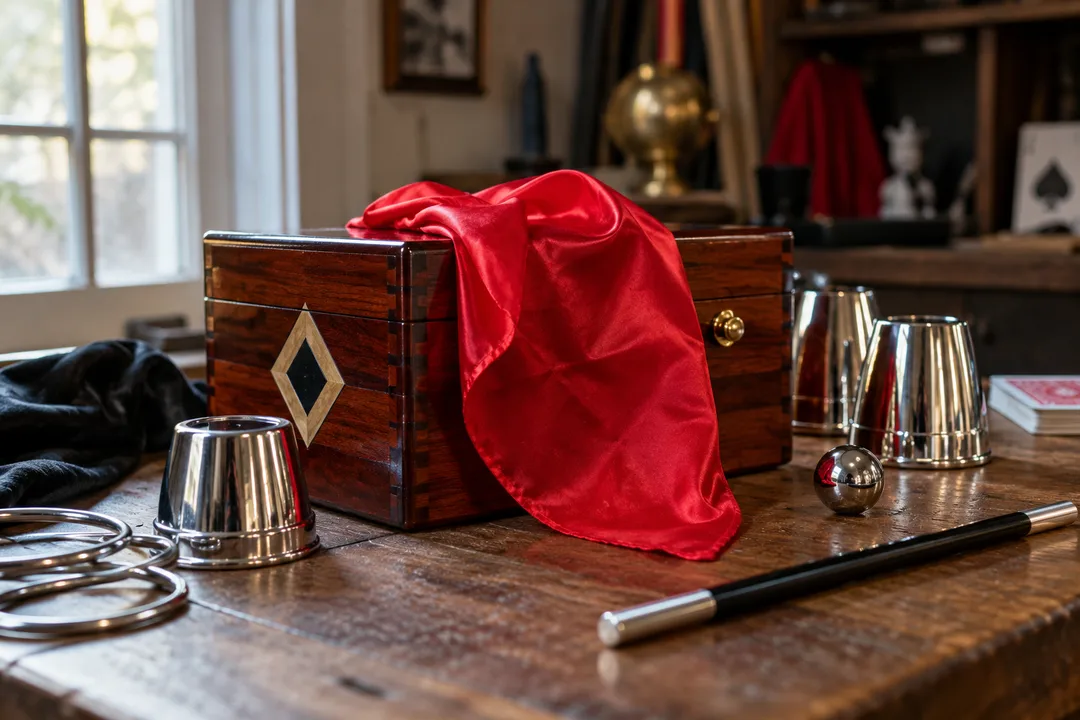
Walking up to the quiet residential street in Nakajujo reveals a distinctive storefront filled with gleaming chrome cylinders, colorful silk banners, and wooden illusion crates. Unlike downtown micro-magic counters that cater primarily to pocket coin tricks, Magic Fantasia is a working creator studio where stage apparatus, parlor illusions, and television props are developed and assembled on site. It has served as a secret supplier to working cabaret artists, cruise ship entertainers, and theatrical illusionists for decades across Japan. The shop's location in a peaceful neighborhood allows illusionists to discuss bespoke prop modifications, paint finishes, and custom travel trunk designs without interruption.
The interior has the charming feel of a traditional craftsman workshop, with shelves stacked with precision-cut aluminum cylinders, vibrant Japanese silk ribbons, and custom mechanical trick boxes. Ken Shibuya's extensive performing background means every prop sold in the shop has been engineered to withstand rigorous stage use, reliable quick-release triggers, and bright lighting conditions that would expose lesser commercial apparatus during live theater performances. In an industry increasingly dominated by cheap mass production, the hand-assembled props here represent a rare commitment to durability and theatrical tradition.
Handcrafted Dove Pans, Silk Fountains, and Visual Stage Props
The shop's physical stock spans both close-up and full stage equipment, beginning with classic spotted silk handkerchief sets at ¥1,980 and Professor's Nightmare rope transformation sets at ¥1,430. Performers building parlor routines frequently select the shop's spun aluminum dove pan props at ¥6,600, which allow visual fire-to-candy transformations inside a sealed metal dish. Multiplying sponge rabbit families retail at ¥1,650, featuring soft, highly compressible foam made in Japan that pops instantly into shape. The spun aluminum dove pans are engineered with precision friction locks, ensuring absolute silence when loading production items during a stage sequence.
Advanced stage acts will find cascading silk fountain productions, self-working production boxes, vanishing bird cages, and precision flower bouquets that bloom instantaneously from empty wands. The shop also stocks specialized stage flash cotton, smoke generator refills, and heavy-duty magician's table top bases. If you perform for school auditoriums, corporate stages, or community centers, this counter offers battle-tested equipment that works cleanly every time without mechanical failure. Traveling illusionists frequently order custom-dyed 36-inch Japanese silk foulards that compress into miniature loads while expanding into brilliant stage spectacles.
Demonstrations at Magic Fantasia are conducted with theatrical flair, showcasing how props look from ten paces away rather than merely two feet across a table. Ken Shibuya and his studio team regularly explain how to properly fold silks to avoid wrinkles, how to load dove pans without audible clicks, and how to maintain spring mechanisms so they perform smoothly under stage tension before an audience. Studio staff take the time to demonstrate the precise rhythm needed to trigger spring-loaded mechanisms cleanly, preventing mid-performance jams.
Studio Etiquette, Equipment Sizing, and Custom Consultations
Because Magic Fantasia is a specialized workshop with delicate mechanical illusions on open display, visitors are asked to observe considerate studio etiquette. Avoid touching assembled stage apparatus, tripods, or suspended silk rigs without an invitation from staff. Children visiting the shop must be accompanied by adults and supervised closely to prevent accidental contact with spring-loaded props or metal edge assemblies on workbenches. Understanding the sightlines of a stage or banquet room is essential, and Ken Shibuya's team provides invaluable guidance on proper stage orientation.
Visiting between 2:00 pm and 4:30 pm on Thursday or Friday offers the most attentive experience, as the workshop is in full creative rhythm and staff have ample time to discuss custom sizing or routine choreography. Saturdays and Sundays see visits from regional magicians traveling into Tokyo specifically to pick up custom orders or audition new parlor routines, creating lively theatrical exchanges. Visitors are encouraged to ask thoughtful questions about routine construction, prop care, and the physical mechanics that make stage illusions work reliably.
When selecting items for your act, focus on props with high visual contrast that project clearly to the back row of an audience, such as multicolored 36-inch silk foulards or gleaming metal production bowls. Skip oversized illusion boxes if you travel via public transit, as carrying bulky wooden apparatus through Tokyo's train stations can prove cumbersome without a private vehicle. Investing in high-quality Japanese stage silks and durable metal props guarantees years of flawless performances across hundreds of live shows.
Exploring Nakajujo: Jujo Ginza Arcade and Local Neighborhood Bites
Nakajujo is a historic residential quarter of Kita City that retains the warm, communal atmosphere of postwar Tokyo. A brief eight-minute stroll southward brings you to the entrance of Jujo Ginza Shotengai, one of Tokyo's most famous traditional covered shopping arcades. The arcade is celebrated for affordable street delicacies, including freshly fried chicken cutlets, savory croquettes, and sweet red bean taiyaki waffles enjoyed by neighborhood regulars. Jujo Ginza's historic pedestrian arcade offers a charming glimpse into Tokyo's traditional community life, making the visit doubly rewarding.
After browsing illusion props, wandering through the covered arcade offers a fascinating contrast to central Tokyo's corporate skyscrapers. Local kissaten coffee houses along the shotengai provide quiet wooden booths where you can enjoy hand-drip dark roast coffee while reading technical instructional manuals or sketching out new stage routine blocking in a tranquil neighborhood setting. A visit to Magic Fantasia combines professional prop acquisition with an authentic cultural exploration of Tokyo's historic northern neighborhoods.
Getting to Magic Fantasia: Hours, Transit Lines, and Walking Directions
Reaching Magic Fantasia is straightforward using Tokyo's JR railway network. Take the JR Keihin-Tohoku Line to Higashi-Jujo Station (JK37), exit via the North Exit, and walk westward along the street for about five minutes. Alternatively, you can take the JR Saikyo Line to Jujo Station (JA14) and walk approximately eight minutes northward through the quiet neighborhood streets to reach the storefront with ease.
The workshop operates regularly Wednesday through Sunday from 1:00 pm to 6:00 pm, observing fixed rest days on Mondays and Tuesdays. If you need to verify whether a particular stage apparatus is in stock or inquire about custom prop fabrication, phone the studio directly at 03-3905-5999. Magic Fantasia remains Tokyo's premier physical destination for the grand traditions of stage prestidigitation, supporting entertainers with professional craftsmanship.
Ask Karpo for more information.
Keep reading
- Witchcraft Store Near Me: West Witch Divination Salon in Ikebukuro
 Witchcraft Store Near Me: elfhame Healing Crystals in Kichijoji Tokyo
 Witchcraft Store Near Me: Shosen Grande Divination Sanctuary in Jimbocho