 Witchcraft Store Near Me: West Witch Divination Salon in Ikebukuro
Hidden Gems & Odd Finds
Flea Market Near Me in Fukagawa: Tomioka Hachimangu Antique Market
A collector guide to Tomioka Hachimangu Shrine Antique Market in Fukagawa for Edo ceramics, vintage kimonos, wooden kokeshi dolls, and canal walks.
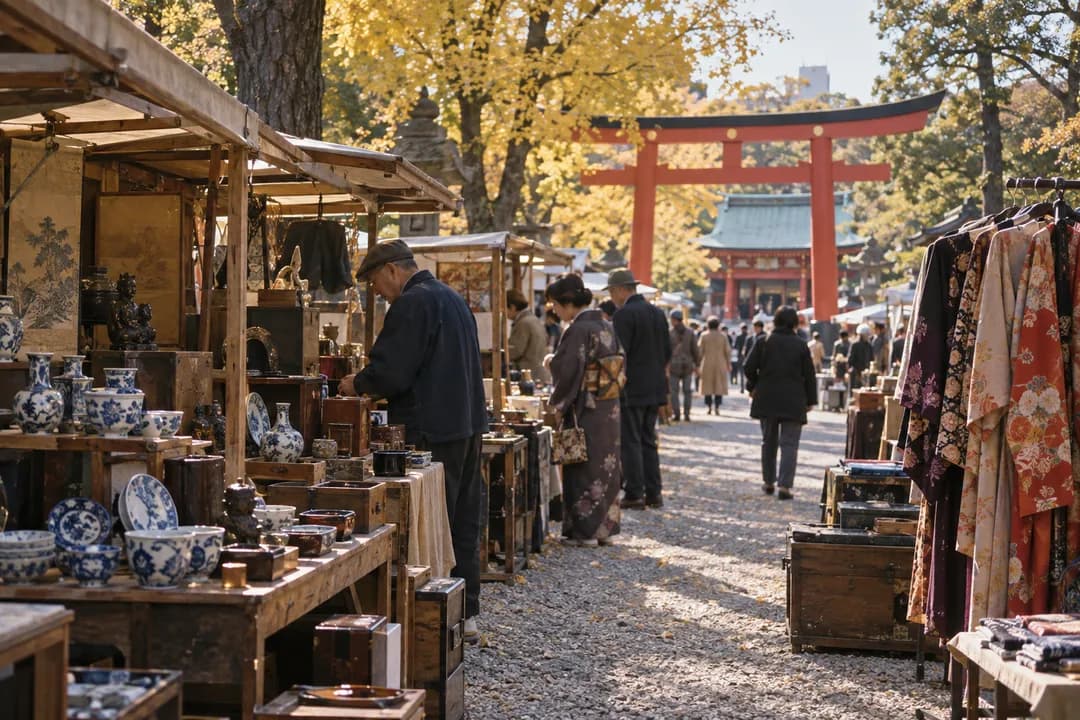
Tomioka Hachimangu Shrine Antique Market convenes on the first, second, fourth, and fifth Sundays of each month along the gravel omotesando approach of Tomioka Hachimangu Shrine at 1-20-3 Tomioka, Koto City, Tokyo 1350047, representing a treasure trove for anyone searching for an authentic flea market near me. Set within the historic shrine grounds that date back to 1627, this lively open-air market brings together more than one hundred antique specialists beneath sweeping camphor and ginkgo trees. Shoppers discover an unforgettable slice of old Edo merchant spirit amidst serene temple architecture.
Edo Porcelain Cups, Vintage Silk Haori, and Traditional Folk Craft
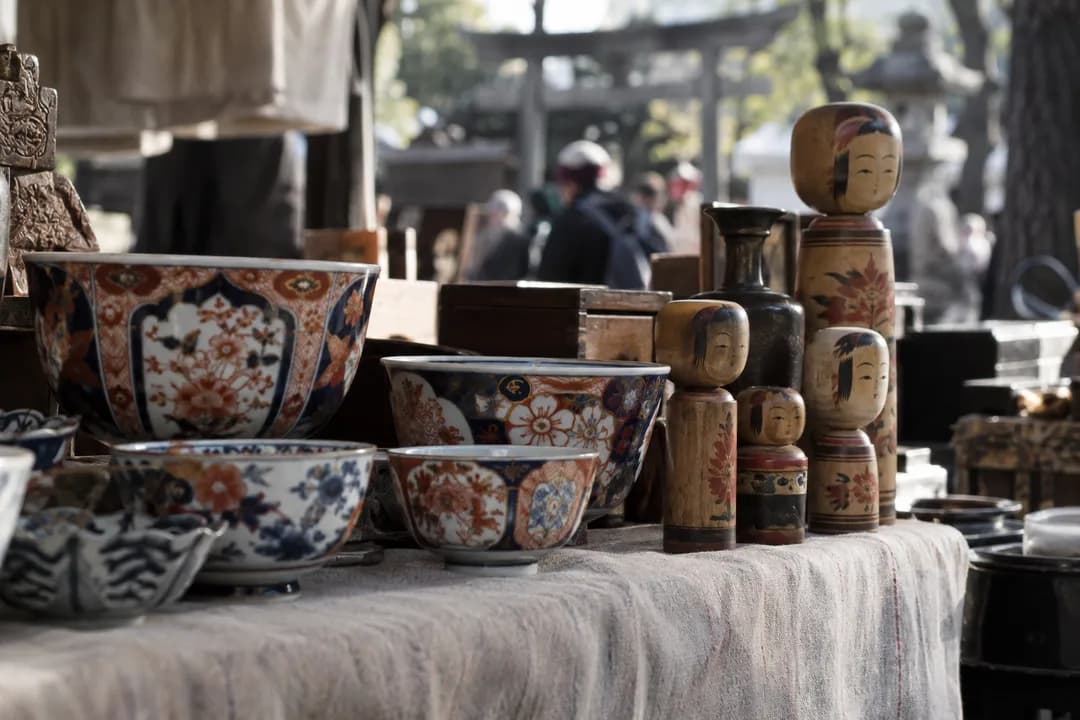
The vendor stalls lining the shrine path specialize in authentic traditional Japanese antiques, folk craft, and retro domestic artifacts. Blue-and-white porcelain from the Edo and Meiji eras takes center stage, displayed in shallow wooden trays resting atop tatami mats. Collectors can inspect genuine hand-painted Imari porcelain dipping cups priced at ¥2,500, alongside antique Kutani ceramic sake carafes and Seto ware tea bowls. Vintage carved wooden kokeshi dolls from northeastern Tohoku and lacquered soup bowls start affordably at ¥1,200, making traditional craftsmanship accessible to every traveler.
Textile enthusiasts will discover an incredible variety of vintage Japanese garments, antique kimono sashes, and historic fabric remnants. Wooden racks display hand-dyed indigo kasuri cotton work coats, vintage boro patchwork textiles priced at ¥2,000, and elegant silk haori jackets featuring intricate hand-painted lining art priced around ¥5,000. Table vendors display heavy vintage cast iron tetsubin tea kettles with textured pinecone patterns, hand-forged kitchen santoku knives with wooden handles, antique bronze Buddhist statues, and Showa-era copper coins organized neatly in velvet compartments.
The atmosphere throughout the shrine grounds feels intimate, welcoming, and rooted in rich merchant community history. Veteran antique dealers from across Tokyo and neighboring Chiba and Saitama prefectures sit comfortably on folding stools, readily sharing captivating background stories regarding the origins, kiln firing marks, and historical uses of their vintage pieces. Polite conversational negotiation is widely accepted in good humor, especially when buyers select multiple ceramic items, small wooden tea ceremony accessories, or several antique textile pieces together from a single stall.
Shrine Market Operating Hours, Cash Customs, and Dawn Hunting
Tomioka Hachimangu Shrine Antique Market operates on the first, second, fourth, and fifth Sundays of each month from sunrise until approximately sunset (running roughly from early morning dawn to 4:00 pm). Crucially, the antique market does not take place whenever a Sunday coincides with the 15th or 28th day of the month, as the grounds are reserved exclusively for the shrine's sacred monthly festivals (tsukinamisai). Trading begins exceptionally early, with dedicated antique hunters arriving around dawn with handheld flashlights to observe vendors unpacking their wooden crates. The market winds down gradually through the mid-afternoon toward 4:00 pm, though arriving before 10:30 am guarantees the richest assortment of pristine Edo porcelain and vintage kimonos.
Financial transactions across the shrine market are almost entirely conducted in physical cash. Very few traditional antique dealers maintain mobile card terminals or digital payment accounts, making it essential for shoppers to carry sufficient paper banknotes in Japanese yen. Having smaller denominations such as ¥1,000 notes and ¥100 coins readily accessible facilitates swift, polite bargaining at crowded ceramic tables where several collectors browse side by side.
Visiting this historic shrine market offers plenty of authentic street food moments alongside antique shopping. Shrine approach food carts serve freshly grilled dango rice dumplings, sweet roasted chestnuts, and traditional hot green tea priced at ¥600. Clean public restrooms are located near the shrine office pavilion, and broad stone-paved pathways accommodate easy walking despite the bustling weekend foot traffic.
Monzen-nakacho Station Navigation and Fukagawa Canal Walking Routes
The market's setting in Fukagawa places visitors directly at the heart of one of Tokyo's most enchanting historic downtown neighborhoods. Tomioka Hachimangu is celebrated as the birthplace of Edo-era professional sumo wrestling, commemorated by massive carved stone monuments dedicated to historic yokozuna champions flanking the shrine promenade. The shrine complex also houses Japan's largest golden festival mikoshi palanquin, adorned with diamonds and rubies on display in an adjacent glass pavilion.
Directly adjacent to Tomioka Hachimangu sits Fukagawa Fudodo, a striking Buddhist temple complex famous for its modern black-and-gold Sanskrit scripture facade and powerful daily Goma fire purification rituals. Visitors can step inside the temple temple halls to admire thousands of miniature crystal Fudo Myoo statues lining the indoor corridors, creating an astonishing spiritual experience just footsteps away from the flea market stalls.
A short ten-minute walk northward leads along scenic canal banks toward Kiyosumi Gardens, a magnificent Meiji-era strolling pond garden renowned for rare landscaping stones gathered from across Japan. Strolling across the garden stepping stones over calm koi ponds offers a serene moment of reflection amidst historic weeping willows. The surrounding Monzen-nakacho alleys are packed with traditional dining spots specializing in Fukagawa meshi, a classic Tokyo merchant dish featuring savory short-neck clams steamed over seasoned rice, with comforting lunch sets typically costing around ¥1,500.
Reaching Tomioka Hachimangu Shrine is exceptionally simple through Tokyo's municipal subway network. Monzen-nakacho Station serves both the Tokyo Metro Tozai Line and the Toei Oedo Line. Exiting through Exit 1 of Monzen-nakacho Station brings travelers onto Eitai-dori avenue, where a pleasant three-minute walk eastward leads directly to the monumental vermilion torii gate marking the shrine entrance.
Numerous municipal bus routes also connect Monzen-nakacho directly with Tokyo Station's Marunouchi exit and the Ginza shopping district, with the Tomioka-Hachimangu-mae bus stop situated right beside the shrine approach. Walking to the market from nearby neighborhoods like Morishita or Kiyosumi-shirakawa takes roughly fifteen minutes, offering a scenic journey through peaceful residential streets.
Practical planning highlights begin with the exact address at 1-20-3 Tomioka, Koto City, Tokyo 1350047, with completely free admission throughout all Sunday market sessions. Bringing bubble wrap or cushioned pouches inside your daypack ensures fragile Imari ceramics and delicate tea bowls survive the trip home without accidental cracks. Wearing comfortable slip-on walking shoes is ideal for transitioning between gravel shrine paths and indoor temple flooring.
With its deep historical roots, authentic Edo craftsmanship, and vibrant downtown atmosphere, Tomioka Hachimangu Shrine Antique Market offers an unforgettable cultural adventure for vintage lovers. It captures the authentic soul of Tokyo's historic merchant heritage, making it an essential weekend destination for collectors and curious travelers alike.
Ask Karpo for more information.
Keep reading
- Witchcraft Store Near Me: West Witch Divination Salon in Ikebukuro
 Witchcraft Store Near Me: elfhame Healing Crystals in Kichijoji Tokyo
 Witchcraft Store Near Me: Shosen Grande Divination Sanctuary in Jimbocho