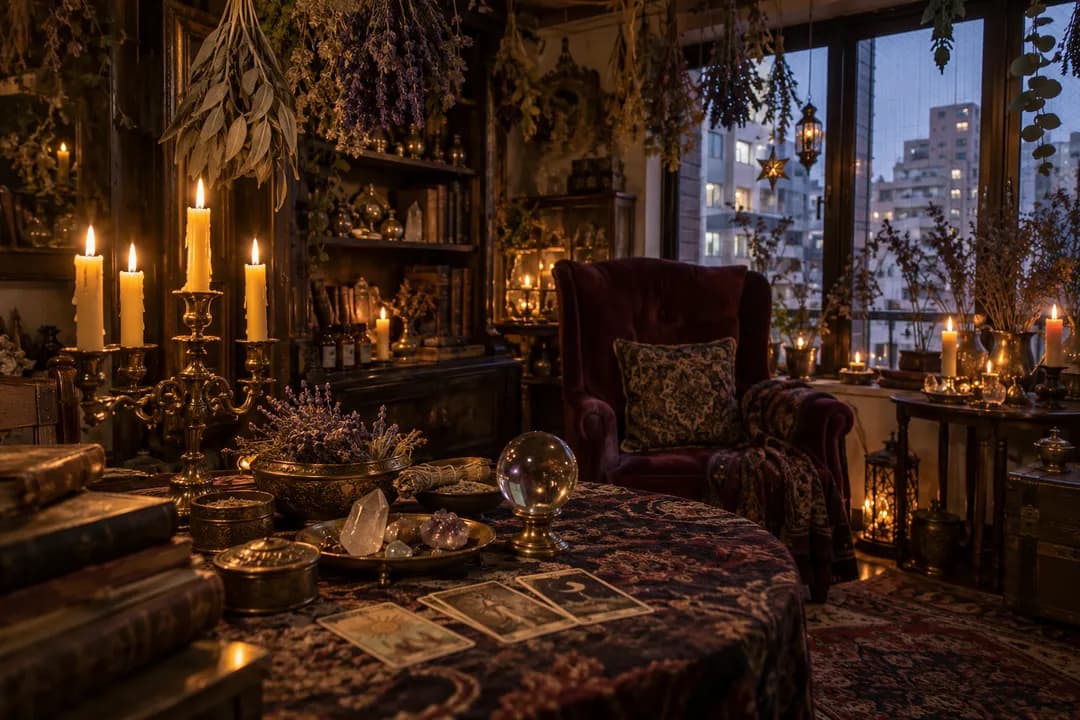
 Witchcraft Store Near Me: West Witch Divination Salon in Ikebukuro
Hidden Gems & Odd Finds
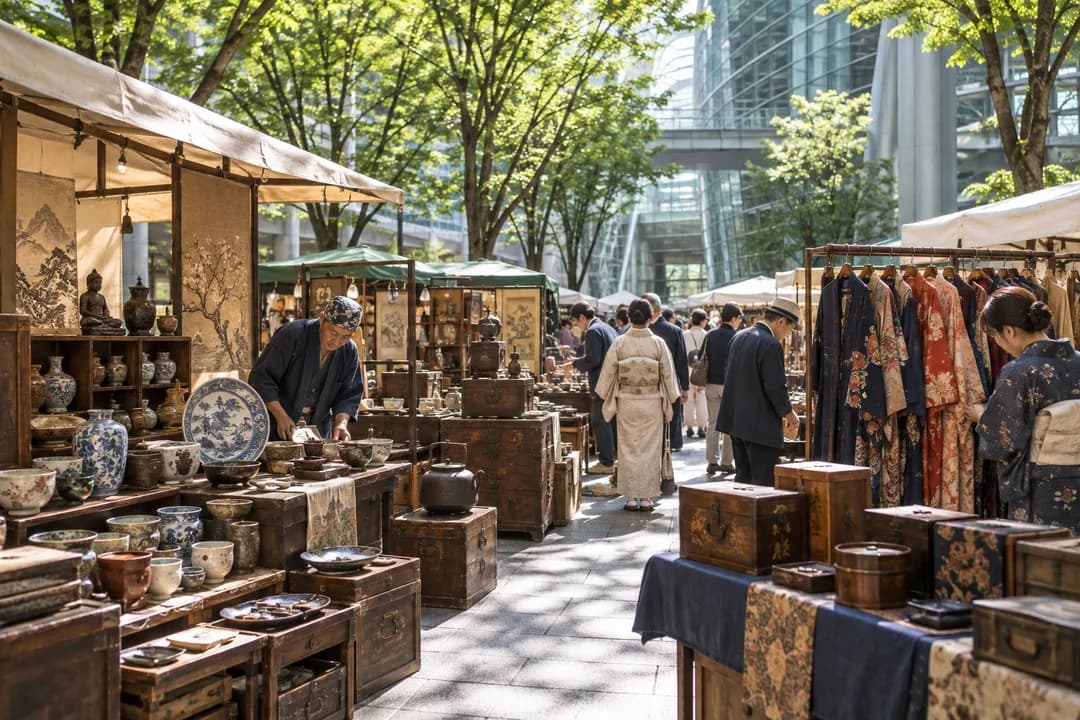
Flea Market Near Me in Yurakucho: Oedo Antique Market Guide
A collector guide to Oedo Antique Market at Tokyo International Forum for Edo ceramics, vintage silk kimonos, retro watches, and Marunouchi walks.
Oedo Antique Market convenes across the sprawling stone-paved outdoor Ground Plaza of the Tokyo International Forum at 3-5-1 Marunouchi, Chiyoda-ku, Tokyo 100-0005, serving as the definitive destination for connoisseurs hunting for an unforgettable flea market near me. Inaugurated in September 2003 to commemorate the 400th anniversary of the founding of the Edo Shogunate by Tokugawa Ieyasu, this prestigious open-air fair has grown into Japan's largest regular outdoor antique gathering. Over two hundred and fifty licensed antique merchants assemble under leafy zelkova trees to display centuries of Japanese art and daily material heritage.
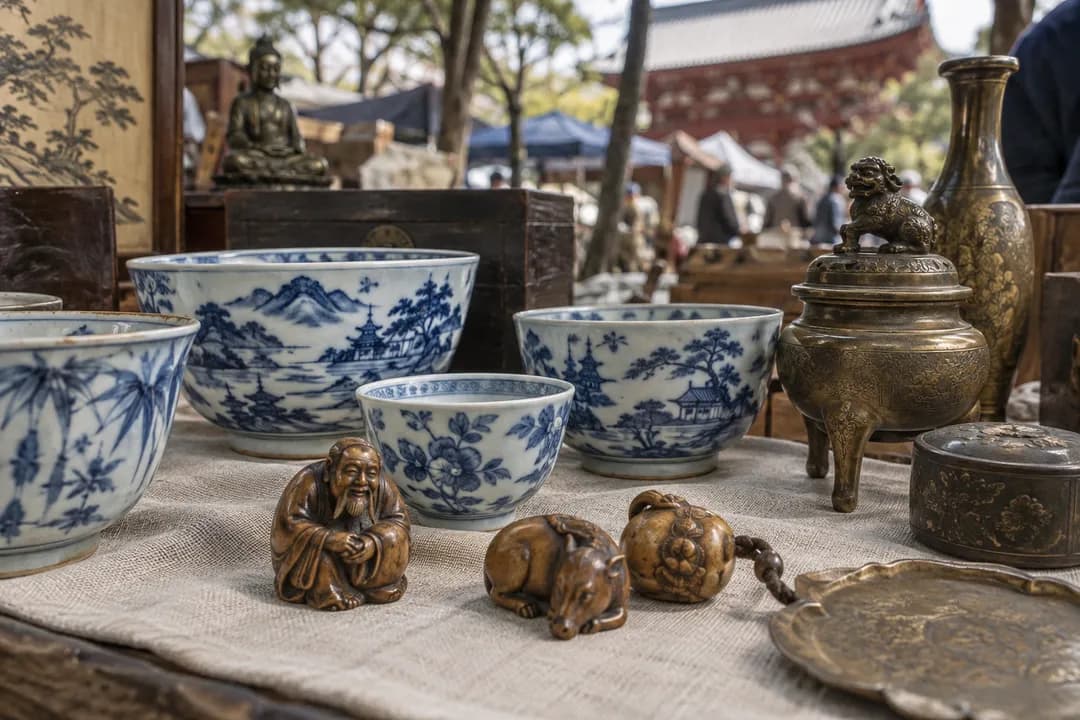
Edo Ceramic Bowls, Vintage Silk Kimonos, and Retro Timepieces
The open-air stalls display an extraordinary breadth of authentic Japanese antiques, folk crafts, and nostalgic vintage wares that trace centuries of skilled domestic craftsmanship. Ceramic enthusiasts can carefully examine stacks of genuine Edo-period Imari ceramic cups and blue-and-white Ko-Sometsuke dishes priced affordably around ¥1,500 each, alongside rustic Bizen stoneware sake flasks and Meiji-era porcelain bowls. Antique textile merchants hang magnificent silk kimonos, intricately embroidered bridal uchikake robes, and vintage silk obis that often sell from ¥3,000 for everyday wearable pieces to higher sums for rare museum-grade woven brocades.
Beyond traditional Japanese folk crafts, the market features a captivating selection of vintage Western curiosities, vintage timepieces, and retro paper collectibles brought in by worldly Tokyo collectors. Watch stalls showcase finely preserved retro Seiko mechanical watches and classic Citizen wristwatches from the 1960s and 1970s, with working automatic models readily available around ¥5,000. Shoppers searching for vintage art prints can sift through protective wooden portfolios filled with authentic ¥800 vintage Japanese woodblock prints, historic postcards, and Showa-era advertising graphics.
Interacting with the seasoned antique dealers at Oedo is a deeply educational and courteous cultural exchange. Many stall operators have spent decades studying historic Japanese kilns, lacquer techniques, and textile traditions, gladly pointing out subtle glaze signatures, age patinas, and period wood joinery. While polite price rounding is sometimes accepted when purchasing multiple items together from a single table, respectful appreciation of the dealer's curated knowledge forms the cornerstone of every transaction.
Sunday Opening Schedule, Payment Methods, and Early Morning Browsing
Oedo Antique Market typically takes place on the first and third Sundays of each month, opening its open-air stalls from 9:00 am until 4:00 pm. General public admission is completely free of charge, with no advance reservation or entry fee required. To secure premier collector pieces such as rare woodblock prints or pristine lacquerware tea sets, arriving between 8:30 am and 9:00 am is highly recommended as professional antique buyers begin browsing as stalls unpack. Sellers begin wrapping delicate ceramics around 3:00 pm, so planning your visit during the morning or early afternoon ensures maximum stall selection.
Payment practices across the market remain predominantly anchored in physical cash transactions, which aligns with traditional Japanese antique trading conventions. While a growing minority of younger vendors now provide mobile payment terminals for major international credit cards or PayPay, carrying sufficient cash in Japanese yen is essential for smooth and immediate purchases. Currency exchange counters and multi-bank ATMs are conveniently located inside adjacent Yurakucho Station and nearby Marunouchi commercial towers.
Because the market occupies an open-air ground plaza shaded by towering architectural glass structures and landscaped trees, the fair is held weather permitting and will be cancelled during heavy rain or typhoon alerts. During bright sunny mornings, browsing beneath the leafy canopy of the Tokyo International Forum provides a tranquil, garden-like setting. The spacious plaza layout permits wide walking avenues between vendor rows, ensuring comfortable passage even when hundreds of antique lovers assemble simultaneously.
Yurakucho Station Access and Imperial Palace Perimeter Walking Loops
The central location of the Tokyo International Forum in the prestigious Marunouchi district makes it remarkably easy to pair your morning antique treasure hunt with cultural walks through Tokyo's historic civic heart. After finishing your market rounds, take a five-minute stroll westward toward the expansive outer gardens of the Imperial Palace. Here, broad gravel pathways, ancient stone moat ramparts, and iconic black pine trees provide an awe-inspiring open panorama framed by the historic Nijubashi Bridge.
Heading in the opposite direction eastward brings you directly into the upscale shopping avenues of Ginza along Chuo-dori, where historic department stores like Wako and Mitsukoshi have served Tokyo shoppers since the late nineteenth and early twentieth centuries. Alternatively, explore the atmospheric railway archways of Yurakucho beneath the elevated JR train tracks along Gado-shita, where traditional yakitori taverns, retro izakayas, and rustic noodle bars have served local office workers comfort food since the postwar Showa era.
Architecture aficionados will also appreciate spending time examining the Tokyo International Forum building itself, designed by celebrated architect Rafael Viñoly and completed in 1996. The breathtaking Glass Building features an enormous 207-meter-long boat-shaped atrium rising sixty meters into the sky, framed by hundreds of tons of curved structural steel and transparent laminated glass that creates dramatic light patterns across the market plaza below.
Reaching Oedo Antique Market is exceptionally effortless due to its direct proximity to major Tokyo transit hubs. The market plaza sits just a 1-minute walk from the Tokyo International Forum exit of JR Yurakucho Station along the JR Yamanote and Keihin-Tohoku lines, as well as the Tokyo Metro Yurakucho Line. The venue is also accessible via a direct underground pedestrian concourse connecting to JR Tokyo Station within an easy five-minute stroll.
Essential practical details begin with the venue address at 3-5-1 Marunouchi, Chiyoda-ku, Tokyo 100-0005 (international inquiries to Japan use country code +81), offering completely free public entry on scheduled market dates. Because outdoor trading depends strictly on fair weather, shoppers should consult official event date announcements online at antique-market.jp when traveling by consulting the official market website at antique-market.jp. Modern clean restroom facilities, elevator access, and coin lockers are conveniently available within the Tokyo International Forum complex.
Budgeting for your visit can adapt to casual curiosity or serious connoisseurship. Casual shoppers can comfortably find memorable historic souvenirs, such as Showa-era glassware, vintage wooden chopsticks rests, and paper ephemera, for ¥1,000 to ¥3,000. Experienced collectors seeking rare Meiji-era copperware, antique iron tetsubin tea kettles, or Edo woodblock prints can expect transparent pricing and exceptional preservation standards across specialist dealers.
Combining profound historical authenticity, museum-quality Japanese antiquities, and a magnificent architectural setting in central Tokyo, Oedo Antique Market stands as an extraordinary cultural experience. It offers a rare tangible window into Japan's storied artistic past, making it an unmissable destination on any weekend itinerary in the capital.
Ask Karpo for more information.
Keep reading
- Witchcraft Store Near Me: West Witch Divination Salon in Ikebukuro
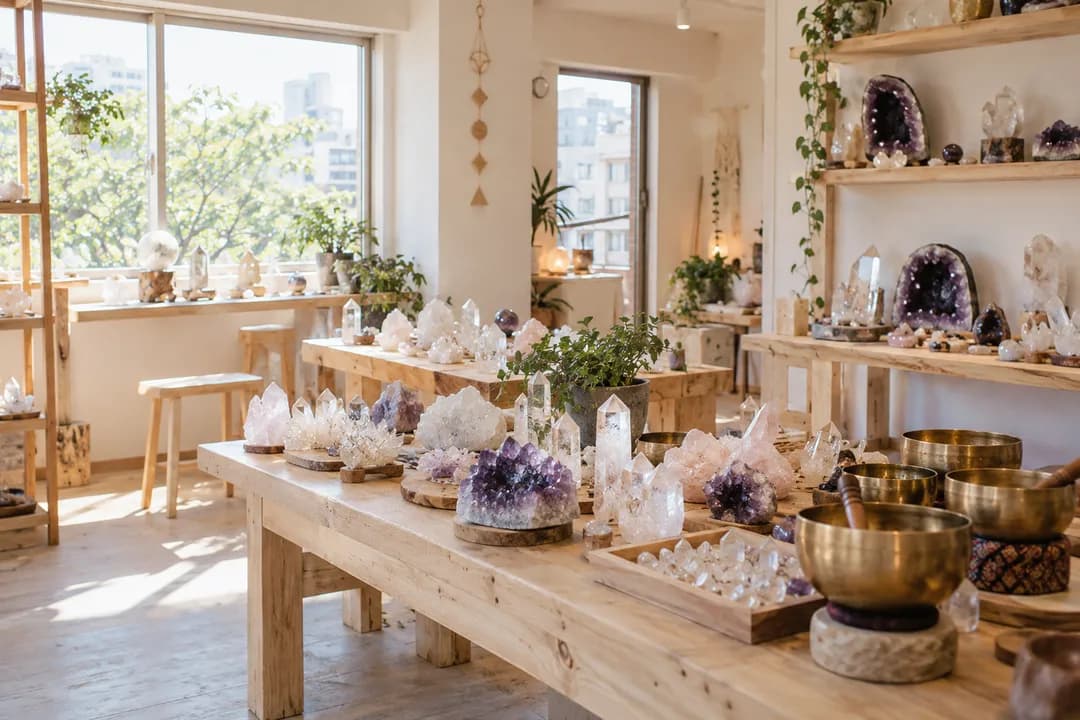 Witchcraft Store Near Me: elfhame Healing Crystals in Kichijoji Tokyo
 Witchcraft Store Near Me: Shosen Grande Divination Sanctuary in Jimbocho