 Florist Shop Near Me in Omotesando: DILIGENCE PARLOUR Flower Kiosk
Hidden Gems & Odd Finds
Flea Market Near Me in Shinjuku: Hanazono Shrine Antique Stalls
A peaceful guide to Hanazono Shrine Antique Market in Shinjuku for Showa glassware, vintage kokeshi dolls, antique kimono textiles, and Golden Gai walks.
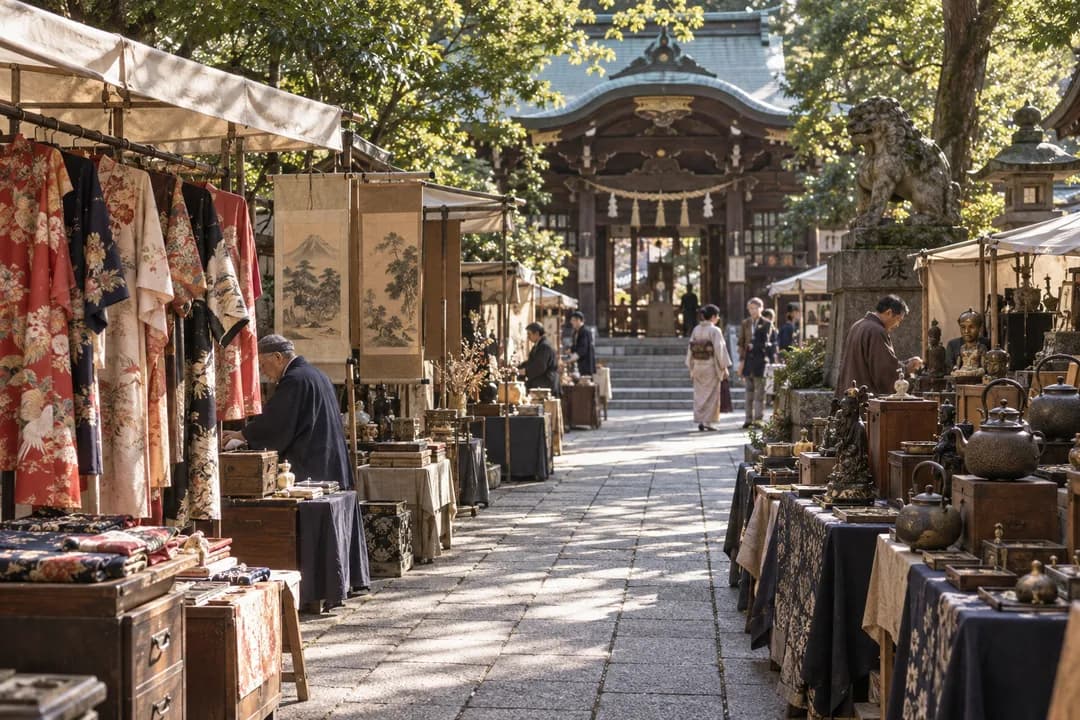
Hanazono Shrine Antique Market gathers along the stone-paved approach and shaded courtyard of historic Hanazono Shrine at 5-17-3 Shinjuku, Shinjuku-ku, Tokyo 160-0022, creating a serene cultural haven for anyone looking for a flea market near me. Founded prior to 1590 before the Edo period and relocated to its present consecrated grounds during the Kan'ei era (1624–1644) as the revered guardian shrine of Shinjuku, Hanazono Shrine provides a striking, spiritually evocative contrast to the neon-lit skyscrapers and bustling entertainment districts that surround it. On Sunday mornings, several dozen expert antique dealers assemble along the temple pathway to display exquisite relics of old Japan.
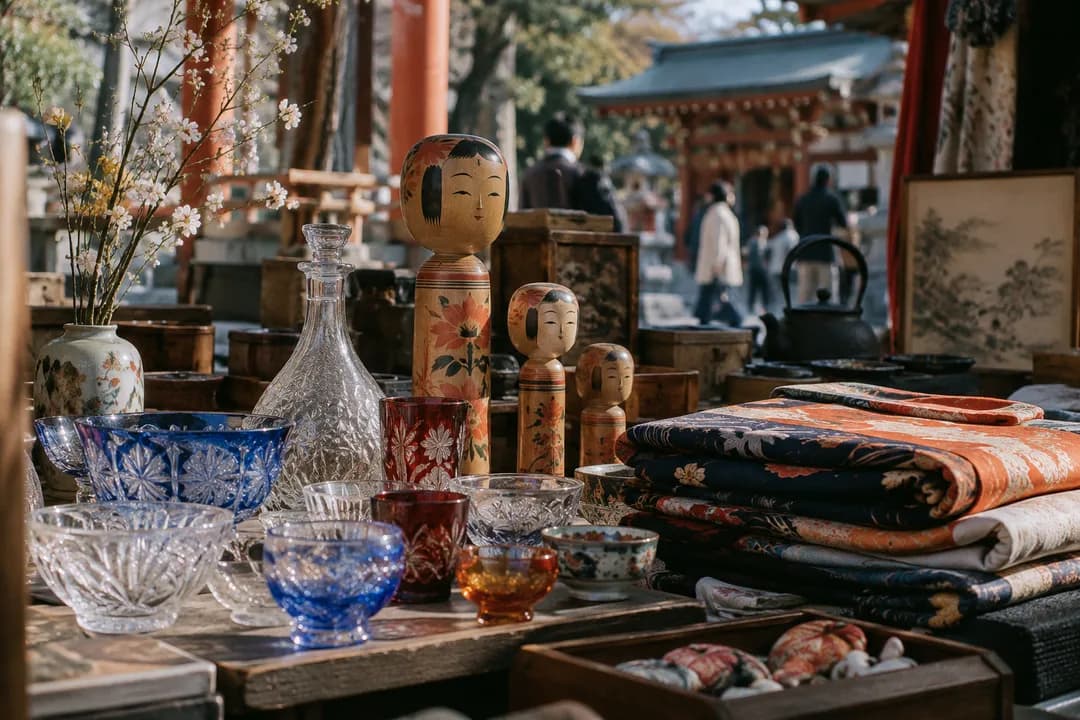
Antique Showa Glassware, Traditional Kokeshi Dolls, and Buddhist Ephemera
The market tables feature an intimate yet richly curated selection of authentic Japanese antiques, religious artifacts, and retro domestic items dating from the Edo, Meiji, Taisho, and Showa eras. Collectors of historic glassware can admire colorful pressed-glass dessert dishes and ¥1,200 antique Showa-era glassware cups showcasing delicate bubbles and nostalgic floral etchings. Folk art lovers frequently discover hand-carved wooden crafts, including charming vintage wooden kokeshi dolls from northern Tohoku kilns and brass netsuke toggle ornaments priced around ¥4,000.
Textile enthusiasts will find tables draped in antique fabrics, where merchants sell folded remnants of vintage Meiji and Taisho kimono fabrics starting around ¥2,500, alongside hand-dyed indigo kasuri textiles and embroidered silk sashiko fragments. Paper ephemera collectors can sift through carefully sorted binders containing ¥800 vintage postcards, historic woodblock prints, Showa-era train timetables, and nostalgic theater handbills, offering lightweight and deeply historic mementos of traditional Tokyo life. Many antique textile merchants have preserved these delicate silk and cotton remnants for decades, ensuring that traditional Japanese weaving patterns such as tsumugi and kasuri continue to be appreciated by new generations of international textile collectors.
Shopping within the consecrated precincts of Hanazono Shrine encourages a peaceful and respectful browsing demeanor. Vendors are warm and patient, willingly sharing the historical background of antique iron kettles, porcelain tableware, and lacquered bento boxes. Haggling is handled gently and politely, with dealers occasionally rounding down prices when shoppers purchase multiple antique items or express genuine appreciation for the craftsmanship of traditional Japanese decorative arts.
Dawn Arrival Etiquette, Cash Traditions, and Shinto Shrine Courtyard Customs
Hanazono Shrine Antique Market operates nearly every Sunday throughout the year, weather permitting, starting around dawn at approximately 6:30 am and continuing until 3:00 pm. General admission to the shrine grounds is completely free of charge. Arriving early in the morning between 7:00 am and 9:00 am allows you to browse in peaceful morning tranquility, as the soft morning sunlight filters through the shrine trees before the wider Shinjuku shopping district wakes up.
Transactions across the market stalls are conducted strictly in physical cash using Japanese yen. Carrying smaller denomination paper notes and coins makes purchasing delicate ceramics and vintage textiles seamless and convenient for the independent antique merchants. Multi-currency ATMs are readily accessible inside nearby Shinjuku-sanchome subway stations and convenience stores situated just outside the shrine torii gates.
Visitors should keep in mind that the market is held in an open-air sacred space, meaning strong rain or severe weather will cause cancellations. Before commencing your browsing, it is customary to pause at the temizuya water pavilion to rinse your hands and offer a brief bow of respect before the main shrine hall, blending spiritual cultural appreciation with the pleasure of finding antique treasures.
Shinjuku-sanchome Transit Access and Golden Gai Historic Walking Routes
The central Shinjuku location of Hanazono Shrine makes it effortless to integrate your morning antique walk into a broader exploration of the neighborhood's unique architectural and culinary landmarks. Just behind the western boundary of the shrine grounds lies Shinjuku Golden Gai, a legendary network of six narrow pedestrian alleys packed with over two hundred tiny two-storey wooden bars. Strolling Golden Gai in the morning sunlight reveals its historic post-war architecture in peaceful stillness before evening revelers arrive.
Heading southward along Meiji-dori leads within five minutes to the verdant expanses of Shinjuku Gyoen National Garden, which originally served as a feudal lord residence during the Edo period before becoming an imperial garden in 1906. Spanning over one hundred and forty acres, Shinjuku Gyoen features impeccably manicured traditional Japanese landscape gardens, tranquil koi ponds, and graceful historic pavilions that offer an idyllic retreat from metropolitan bustle. Shinjuku Gyoen features a striking combination of traditional Japanese garden ponds, formal French rose gardens, and English landscape lawns, creating an expansive natural sanctuary right beside Tokyo's busiest commercial crossroads.
For a taste of retro urban entertainment and nostalgic dining, explore the Omoide Yokocho alleyways on the northwestern side of Shinjuku Station, famous for its rustic Showa-era yakitori stalls and lantern-lit counters. The contrast between ancient Shinto sacred traditions at Hanazono Shrine and dynamic modern street culture encapsulates the rich multifaceted character of Shinjuku.
Reaching Hanazono Shrine is exceptionally convenient via Tokyo's public transit network. The shrine entrance sits just a 3-minute walk from Exit E2 of Shinjuku-sanchome Station along the Tokyo Metro Marunouchi Line, Tokyo Metro Fukutoshin Line, and Toei Shinjuku Line. The shrine is also accessible via an easy 7-minute walk from the East Exit of JR Shinjuku Station, Japan's busiest transit terminus.
Essential logistical notes begin with the exact address at 5-17-3 Shinjuku, Shinjuku-ku, Tokyo 160-0022 (international calls to Tokyo venues use country code +81), offering completely free public entry every Sunday. While the market runs almost weekly, fairs are occasionally paused during major shrine festivals such as the celebrated Tori-no-Ichi festival in November. Visitors can check local event listings or visit the shrine grounds directly to verify weekly trading schedules. Clean public restrooms are maintained within the shrine perimeter.
Budgeting for Hanazono Shrine Antique Market accommodates both modest souvenir seekers and serious art collectors. Authentic vintage ceramics, glassware, and paper ephemera can easily be purchased for ¥1,200 to ¥4,000, while fine antique Buddhist bronzes, lacquerware, and historic kimono textiles provide rewarding investments for discerning collectors. Local noodle shops and bakeries surrounding Shinjuku-sanchome provide satisfying breakfast meals for ¥500 to ¥1,000.
Set amidst the peaceful red torii gates and ancient stone guardians of a beloved historic shrine, Hanazono Shrine Antique Market offers an unforgettable cultural experience in the heart of Shinjuku. It proves that even amidst the dazzling neon and futuristic energy of modern Tokyo, timeless traditions of craftsmanship and antique collecting continue to thrive.
Ask Karpo for more information.
Keep reading
- Florist Shop Near Me in Omotesando: DILIGENCE PARLOUR Flower Kiosk
 Florist Shop Near Me in Gaienmae: FUGA Floral and Plant Design
 Florist Shop Near Me in Minami-Aoyama: Nicolai Bergmann Flagship Guide