 Fine Dining Near Me in Kitashinagawa: Quintessence and Its Blank Black Menu
Restaurants
Fine Dining Near Me in Jingumae: Den's Dentucky Fried Chicken Kaiseki
Den, Zaiyu Hasegawa's two-Michelin-star modern kaiseki restaurant at Architect House JIA, 2-3-18 Jingumae, Shibuya-ku, serves one daily-changing omakase from 6pm, Monday to Saturday. Tables are booked only by phone on 03-6455-5433, from noon to 5pm, up to two months ahead.
Den takes reservations only by telephone, on 03-6455-5433, between noon and 5pm from Monday to Saturday, and refuses every booking that arrives through an online platform or agency. Chef Zaiyu Hasegawa's modern kaiseki restaurant sits in Architect House JIA, 2-3-18 Jingumae, Shibuya-ku, Tokyo 150-0001, with its entrance on Gaien-nishi-dori, and serves a single omakase course that changes daily with the produce. If your search for fine dining near me lands you in Aoyama or Harajuku and you want a kaiseki meal that makes the whole table laugh, this is the call to make.
From Gaienmae Station to the Gaien-nishi-dori Door
The restaurant gives one public transport instruction: a 10-minute walk from Gaienmae Station on the Tokyo Metro Ginza Line. Den is inside Architect House JIA, written Kenchikuka Kaikan JIA-kan in Japanese, and the official site points out in both languages that the restaurant's entrance is on Gaien-nishi-dori. Head for the avenue frontage rather than the building's main lobby, and aim to arrive a few minutes before the 6pm start of dinner service.
Buses are the other option for this corner of Jingumae. The Watari-um museum at 3-7-6 Jingumae, the natural pre-dinner stop, sits two minutes from the Shibuya Hachiko community bus stop Jingumae 3-chome and three minutes from the Toei bus stop Kita-Aoyama 3-chome, and seven minutes on foot from Gaienmae exit 3. Taxi drivers do best with the Japanese address, Shibuya-ku Jingumae 2-3-18, plus the building name, since the entrance is easy to miss after dark.
A Kagurazaka Geisha's Son, Jimbocho in 2007, Jingumae in 2016
Hasegawa learned what fine food tasted like from his mother, a geisha in Kagurazaka who brought home delicacies from banquets. He then trained for five years at the traditional restaurant Kagurazaka Uotoku before opening Den in 2007 in Jimbocho, the secondhand-book district of Kanda. That first address had private rooms on the second floor, and the domain is still jimbochoden.com, which is why many diners still call it Jimbocho Den. The colourful tenugui cloths laid at each seat as napkins come from Yamatoya, a shop near the old Jimbocho address.
In December 2016 Den moved to the larger Jingumae space and added an open kitchen, the biggest change from the Kanda years. The rise that followed was steep. Den won the Art of Hospitality Award at Asia's 50 Best Restaurants in 2017, climbed 28 places to No.17 at The World's 50 Best Restaurants 2018, and was named Asia's Best Restaurant in 2022. It sat at No.32 in the world in 2024 and No.22 in Asia in 2025, and landed at No.51 on the 2026 Asia extended list.
The Michelin Guide's current Tokyo page lists Den with two stars and a Green Star, the sustainability award. Hasegawa explains the green side on that page himself: producers grow his vegetables without pesticides or chemical fertilisers, and he buys fish without naming the species in advance, to reduce pressure on fishing grounds. Front of house belongs to his wife Emi Hasegawa, whose service team the World's 50 Best honoured again with the Art of Hospitality Award in 2019.
Foie Gras Monaka, a Twenty-Vegetable Salad and the DFC Box
There is no à la carte. Den serves only an omakase course, and the website warns that each dish is finished one at a time from that day's ingredients, so the meal can take a while. The Michelin inspectors describe the current opening: a monaka, the crisp wafer of Japanese sweets, filled with miso-seasoned foie gras and fruit or vegetables. Earlier versions paired the foie gras with green apple jam and smoked pickled radish, a sweet, salty and crunchy first bite.
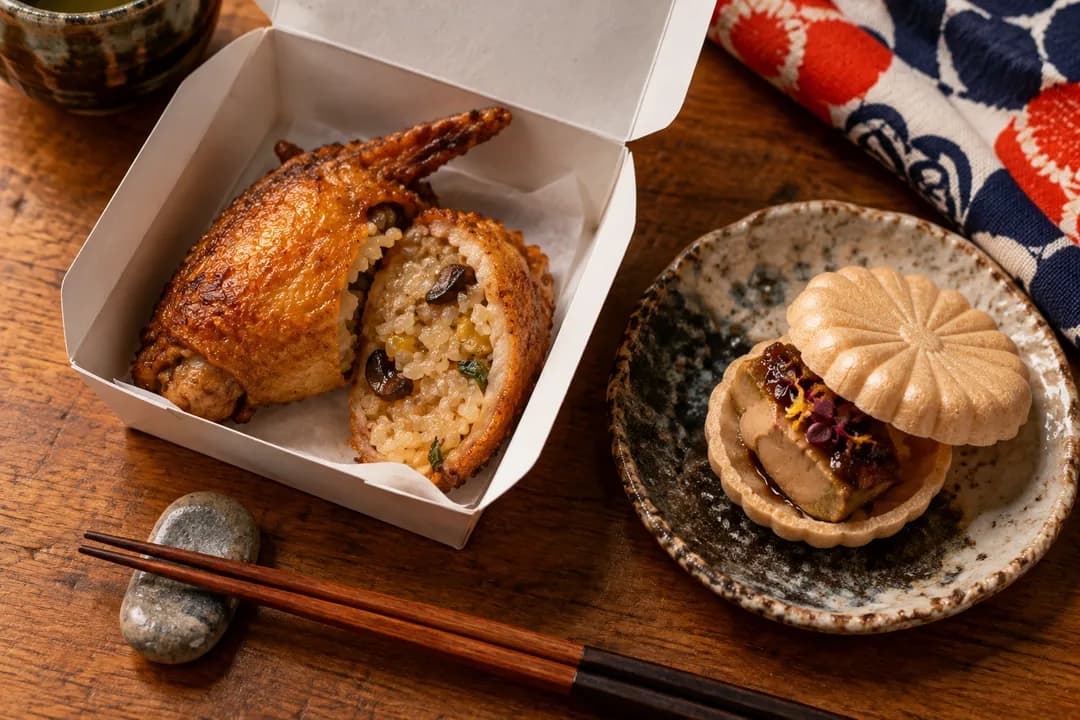
The dish everyone photographs is Dentucky Fried Chicken. Michelin describes fried chicken wing tips stuffed with iimushi, mochi rice steamed with seasonal toppings, and the 50 Best entry notes the takeaway box printed with Hasegawa's face where Colonel Sanders would be. The fillings rotate with the season, and on special occasions the kitchen has been known to print the guest's own face on the box instead of the chef's, a trick one food blogger described after his anniversary dinner there.
The signature salad, a long-running fixture, gathers more than twenty vegetables, each fried, pickled, grilled or left raw to suit it, dressed with unroasted sesame oil and salted kombu and finished with a smiling carrot slice and sometimes an edible ant. Later comes rice cooked in a donabe clay pot, mixed with vegetables, seafood or wagyu depending on the season. Hasegawa has called the rice course his favourite. The drinks pairing leans on Italian wines and Japanese sake.
Phone Lines Open at Noon: Den's Two-Month Booking Rule
Den opens its book two months ahead to the date, so a table for 15 December goes on sale from noon on 15 October. Only parties of up to four people are accepted, and the booking counts only once Den emails you back to secure it. Den publishes no course price on its website. Allergies and intolerances must be declared at booking, and the restaurant says plainly that it cannot guarantee every dietary request.
The cancellation rule is strict. A same-day cancellation, or reducing the number of diners on the day, is charged the full prix-fixe price. Changes must reach the restaurant at least two days before, and for a Monday reservation the call must come by Saturday, because Den is closed on Sundays. The team asks guests not to phone during dinner service, from 6pm to 8pm, except to cancel a booking for that same evening.
Plan around the late-2026 closures posted on the website. Beyond every Sunday, Den is shut on 6 to 9 November, 15 to 18 November, 23, 26 and 30 November, 4 to 8 December, 17 to 19 December, 23 to 25 December and 29 to 31 December 2026. Skip Den if you need a table you can book online in minutes, or a strictly vegetarian menu promised in advance, because neither is offered. A party of five will also have to split up.
Open Kitchen, Communal Table and Emi Hasegawa's Floor
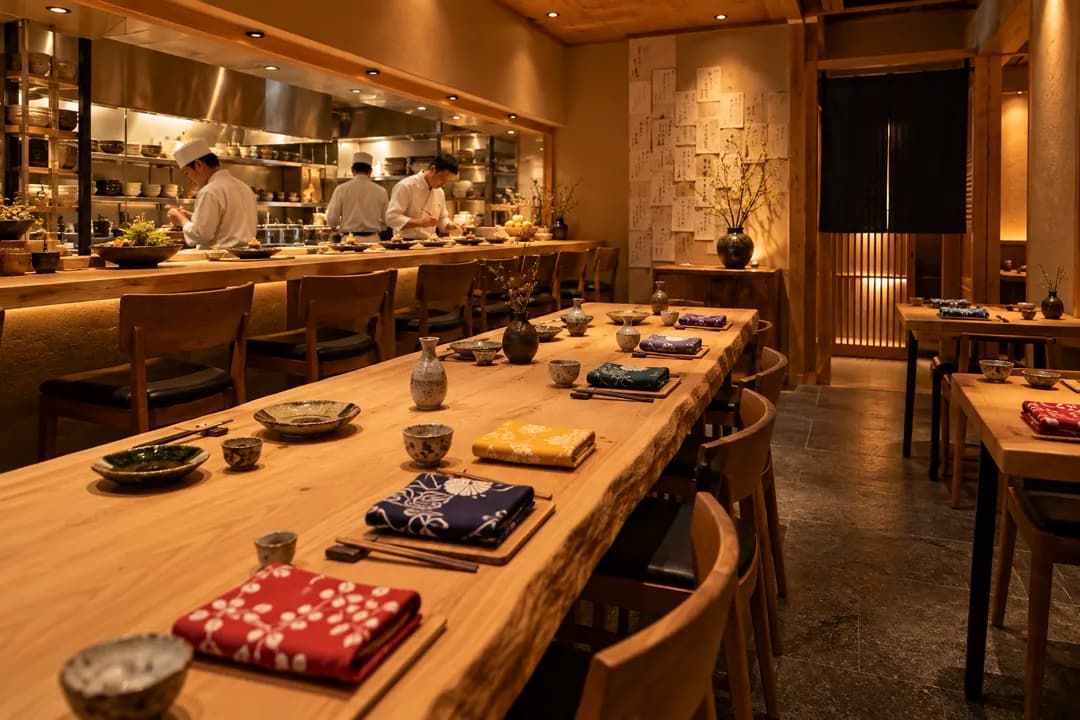
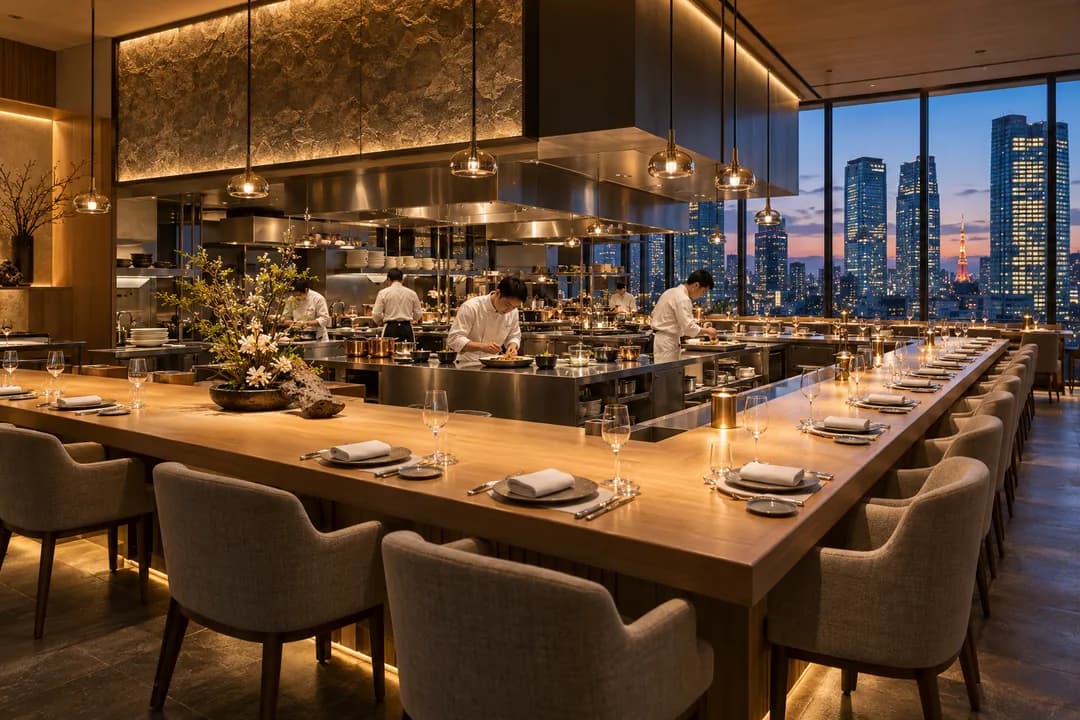
The Jingumae room was built so the cooks could watch their guests. Reviewers describe a large communal table with a few small side tables, plus counter seats facing the open kitchen, and Michelin lists counter dining among the facilities and flags Den as good for solo diners. Hasegawa told Metropolis he wanted a face-to-face connection, so diners can see everything and the team can read reactions. He regularly walks the room between courses, and a wall near the entrance carries handwritten messages from visiting chefs.
Emi Hasegawa, who has greeted guests in kimono, runs the floor, and the team has been known to adjust a course for a diner with a cold. Visiting chefs from abroad are a fixture in the room, and the kitchen has long hosted young international cooks doing stages with Hasegawa. The Michelin page notes bright smiles and easy conversation. Anyone wanting hushed formality should book a traditional ryotei instead, because laughter from the next seat is part of the evening here.
Watari-um, Nam June Paik and a Narisawa Plan B
Arrive early and spend the late afternoon at Watari-um, the Watari Museum of Contemporary Art, a private museum designed by Swiss architect Mario Botta that opened in September 1990. Until 23 November 2026 it shows a Nam June Paik exhibition marking 20 years since the video artist's death. Hours run 11am to 7pm, closed most Mondays, and adult admission is ¥1,500, with a pair ticket at ¥2,600 and students or over-70s at ¥1,300.
For a lighter taste of Hasegawa's cooking, Den Kushi Flori, his skewer-based collaboration with Hiroyasu Kawate of Florilège, sits at GEMS Aoyama CROSS B1A, 5-46-7 Jingumae, five minutes from Omotesando exit B2. Its TableCheck page lists a ¥8,000 lunch and a ¥13,000 dinner course, tax included, with a 10% service charge added. If Den's phone line defeats you, Plan B is Narisawa at 2-6-15 Minami-Aoyama, No.37 in Asia's 50 Best for 2026, which takes bookings online only through OMAKASE.
Practical Notes
Den, Architect House JIA, 2-3-18 Jingumae, Shibuya-ku, Tokyo 150-0001, entrance on Gaien-nishi-dori. Phone 03-6455-5433 for reservations, noon to 5pm, Monday to Saturday. Dinner hours 6pm to 8pm, closed Sundays. Omakase course only, menu changes daily, parties of up to four, bookings open two months ahead to the date. Full course price charged for same-day cancellations. Ten minutes on foot from Gaienmae Station, Tokyo Metro Ginza Line. Credit cards accepted.
Ask Karpo for more information.
Keep reading
- Fine Dining Near Me in Kitashinagawa: Quintessence and Its Blank Black Menu
 Fine Dining Near Me in Marunouchi: Sézanne Under New Chef Stephen Lancaster
 Fine Dining Near Me in Azabudai: Florilège's Vegetable-First 13-Metre Table