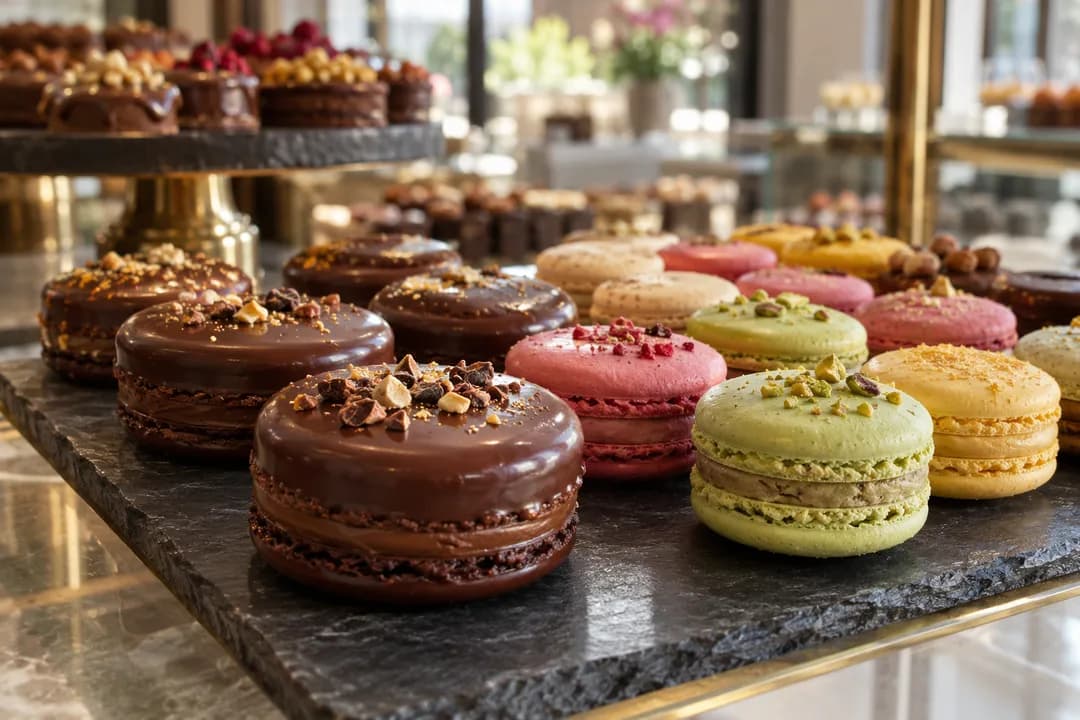
 Artisan Macaron Shop Near Me at Sébastien Bouillet Ikebukuro Tokyo
Coffee & Dessert
Artisan Bakery Near Me in Kichijoji: Dans Dix Ans, a Basement Bread Shop
Dans Dix ans has baked with domestic wheat in a basement at 2-28-2 Kichijoji Honcho since April 2003; a pain au levain is ¥1,200 and the shop opens 11:00 to 18:00, closed Tuesday and Wednesday.
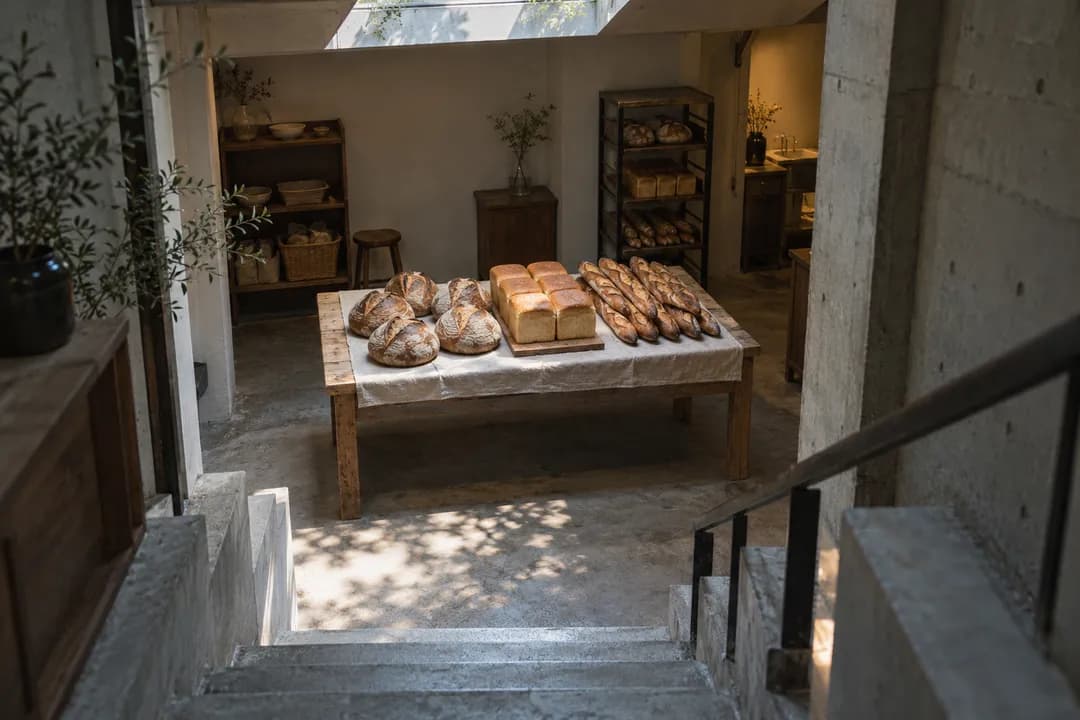
Dans Dix ans is a bakery one floor below the street at 2-28-2 Kichijoji Honcho, Musashino-shi, Tokyo 180-0004, a quiet walk north of Kichijoji Station. It opened on 5 April 2003, bakes with domestic wheat and its own starter, and sells from 11:00 to 18:00 or until the bread runs out, closing every Tuesday and Wednesday. A whole pain au levain costs ¥1,200 on the shop's own bread list, so if you want an artisan bakery near me on the west side of Tokyo, budget for one serious loaf and a couple of small breads.
Down the Stairs on Honcho 2-chome
The shop is easy to walk past. It sits in the B1F of a building in the residential blocks of Kichijoji Honcho 2-chome, away from the arcades by the station, and a travel feature on Nap Camp updated on 1 October 2026 describes it as a bakery tucked into a quiet part of the area where craftspeople bake a wide range of bread with care every day.
The name is French. Dans dix ans means in ten years, a fitting name for a shop that has now been baking in the same basement for more than twenty. Its own news archive marks the date the doors first opened, 5 April 2003, and says the team wants to keep being a place people want to come back to.
A Bakery Built Around the Farmers
An All About report written when the shop opened says Dans Dix ans was produced by baker Asano, who had earlier created the bakery Dune Rarte in Aoyama. From the start the idea was everyday bread with nothing unnecessary in it, and the website still explains the sourcing in plain terms: the shop chooses producers whose faces it knows, keeps close relationships with suppliers, and bakes with Japanese wheat because it wants to support Japanese farming.
The bread list names the farms. The pain paysan uses Kitanokaori wheat from the Shoji farm in Otofuke, Tokachi, the pain au levain uses Yumeasahi whole-wheat flour from Natsumi Farm in Nagano, the rye loaf uses Tokachi rye, and the soy-milk bread uses soy milk from Toyokeya in Kyoto. Milk is Yotsuba milk from Tokachi cows raised on non-GM feed, according to the same page.
Reading the Bread List
The list uses symbols, and they are worth learning before you queue. A white circle marks bread made without eggs, dairy or sugar, a black circle marks bread that uses all three, an asterisk marks bread with no egg but with vegetable fat and sugar, and an unmarked item has no egg but does contain dairy or animal fat and sugar. Many of the hearth loaves, from the baguette to the walnut pave, carry the white circle.
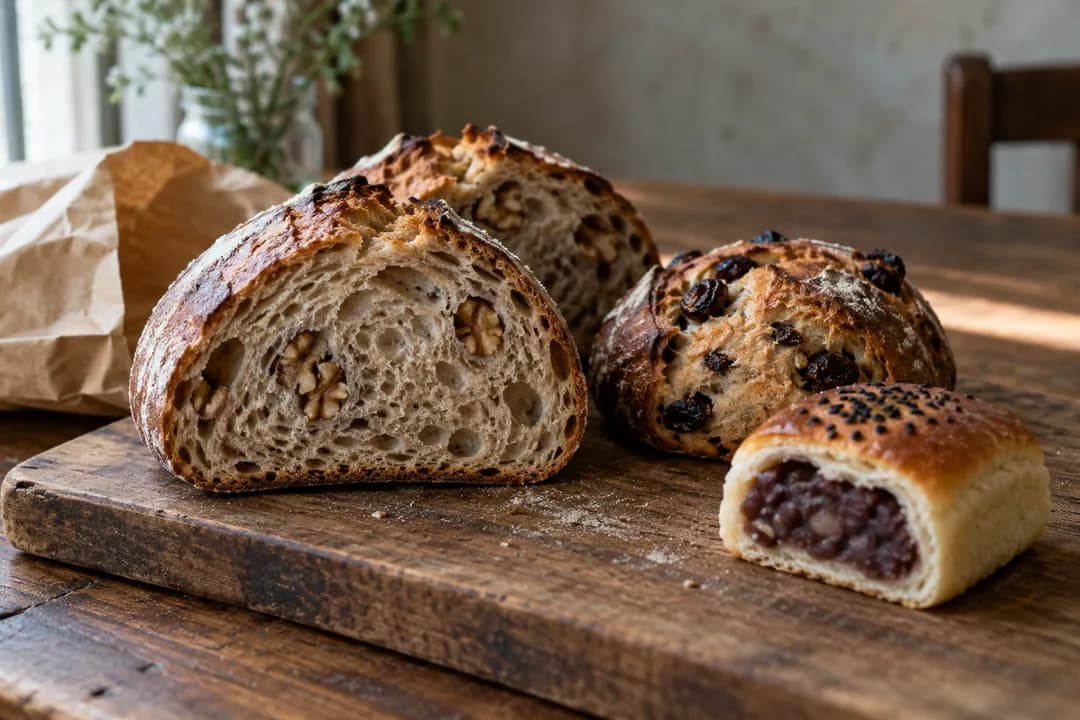
Several items appear only on certain days. The square kakushoku, made only with plant-based ingredients and Haruyutaka wheat, is a Friday bread at ¥650. The adzuki bread with toasted five-grain dough is ¥350 on Mondays and Thursdays, and the Normandy sailor's bread enriched with egg, condensed milk and butter is ¥380 at weekends. Items marked as resting on the list are simply not being baked at the moment.
What to Buy, With 2026 Prices
A notice on the homepage says prices across the range were revised from Thursday 1 October 2026 because of rising ingredient and packaging costs. On the current list the pain au levain is ¥1,200, or ¥600 for the half loaf, the walnut pain aux noix made on the same dough is ¥680, and the 100 percent whole-wheat campagne is ¥1,400. The baguette Dans Dix ans, blending Hokkaido, Nagano and French wheat, is ¥350.
For sandwiches there are three tin loaves named by their fat: BE20 with 20 percent Yotsuba butter at ¥500, the softer BL30 with butter and milk at ¥600, and OE15 with Spanish organic olive oil at ¥500. Smaller things include a croissant at ¥350, pain au chocolat at ¥480, the koshi-an bun Akane at ¥320, a muesli loaf at ¥800, the rum-raisin Grappa at ¥700, and Feta Cashew, with Greek feta, roast cashews and black pepper, at ¥520.
Reserving So the Shelf Is Not Empty
Bread is sold until it is gone, so the shop offers two ways to hold a loaf. Online, you reserve through its STORES shop by choosing a visit date and writing the breads you want in the notes. By phone, reservations close at noon the day before your visit, and because the shop is closed on Tuesday and Wednesday, a Thursday pickup must be booked on Monday.
Plan around the calendar too. The homepage says the shop will open on Tuesday 3 November, a national holiday, and close on Wednesday 4 and Thursday 5 November instead. For a gift, the Umaku Iku sable comes with a card of nine horses drawn by Nachio Nakanishi of Toraneko Bonbon, redesigned in February 2026 along with a new kraft gift box.
From the Basement to Inokashira Park
Kichijoji is built for an afternoon on foot. From the bakery, walk back south through the Honcho shopping streets to Kichijoji Station, then continue through the south exit to Inokashira Park, where the pond and its rowing boats make an easy place to tear into a baguette. The walk from the basement to the park gate takes roughly twenty minutes at a gentle pace.
Because the shop is takeaway only, think about what keeps. The dense levain and rye loaves are made to last several days and slice well at home, while the croissants and filled breads are best eaten the same day. A walnut pave or a stick of the olive bread Vivi at ¥350 is the easy snack to carry into the park.
Practical Notes
Dans Dix ans, 2-28-2 Kichijoji Honcho B1F, Musashino-shi, Tokyo 180-0004. Phone +81 422-23-2595, or 0422-23-2595 from within Japan. Open 11:00 to 18:00 or until sold out, closed Tuesday and Wednesday. November 2026: open on 3 November, closed on 4 and 5 November.
Pain au levain ¥1,200, half ¥600. Baguette ¥350. Croissant ¥350. Prices from the bread list following the 1 October 2026 revision. Reserve online through STORES, or by phone by noon the day before. Nearest station: Kichijoji, on the JR Chuo Line and Keio Inokashira Line.
Ask Karpo for more information.
Keep reading
- Artisan Macaron Shop Near Me at Sébastien Bouillet Ikebukuro Tokyo
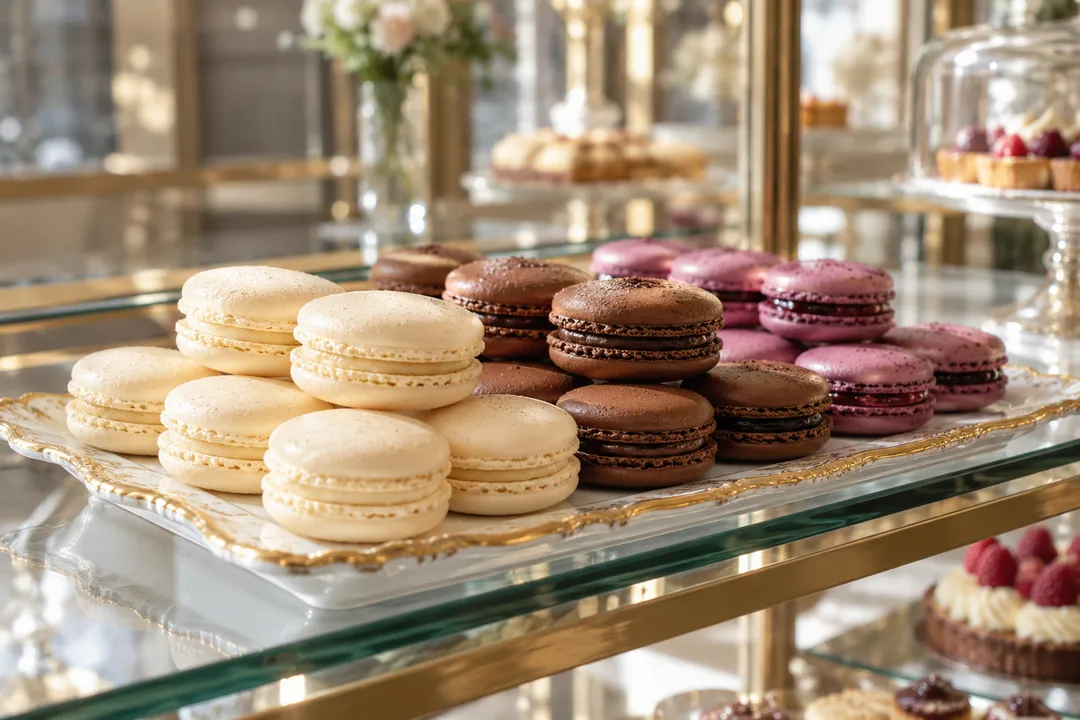 French Macaron Shop Near Me at Frédéric Cassel Ginza Tokyo
 Gourmet Chocolate Macaron Shop Near Me at Jean-Paul Hévin Shinjuku