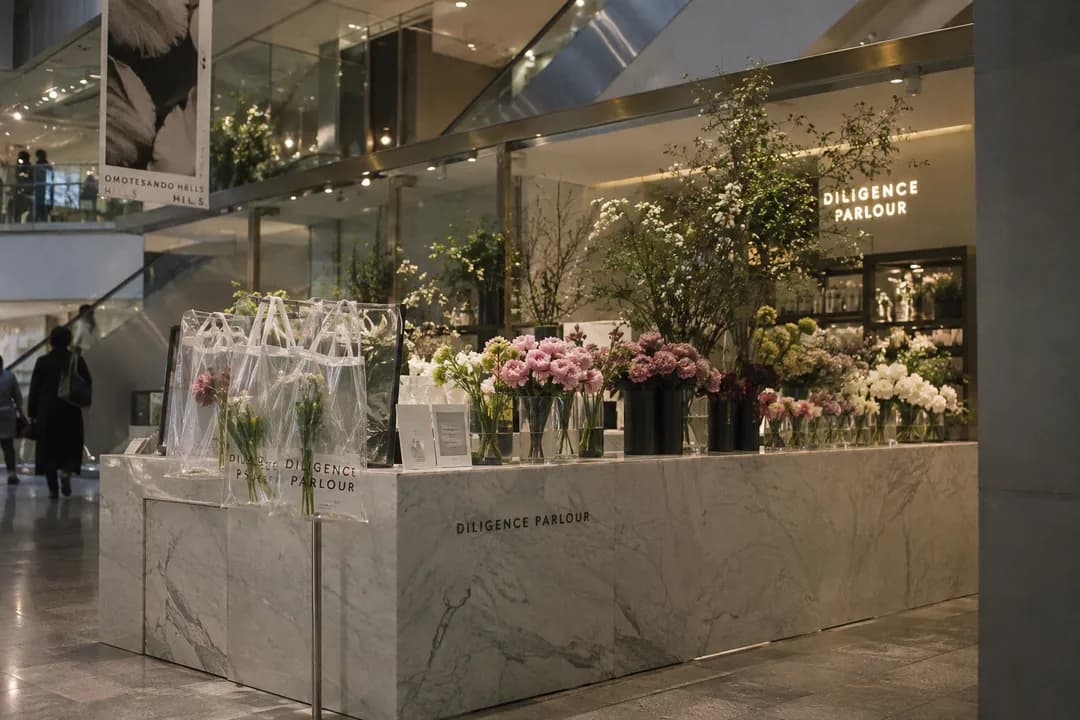
 Florist Shop Near Me in Omotesando: DILIGENCE PARLOUR Flower Kiosk
Hidden Gems & Odd Finds
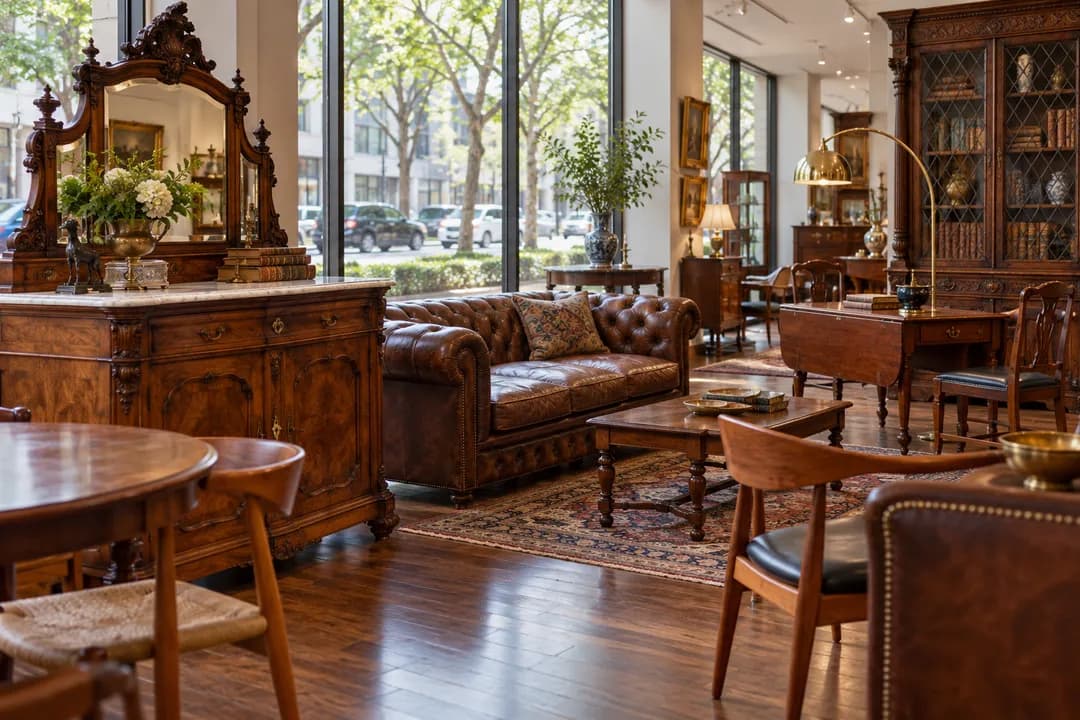
Antique Furniture Store Near Me: Lloyd's Antiques Aoyama in Jingumae, Tokyo
Lloyd's Antiques Aoyama, 3-1-30 Jingumae, Tokyo 150-0001, opens 11 am to 7 pm and sells restored British antiques and European vintage, with PARALLELS running 24 October to 8 November 2026.
Lloyd's Antiques Aoyama trades from 3-1-30 Jingumae, Shibuya-ku, Tokyo 150-0001, on Gaien-nishi-dori, and opens from 11 am to 7 pm, with no weekly closing day listed on its official shop page. For anyone in central Tokyo searching antique furniture store near me, this is the flagship of a dealer importing British and European antiques since 1988, about three minutes on foot from Gaienmae Station on the Ginza Line. The shop phone is +81 3-5413-3666.

From a Hiroo Shop in 1988 to the Jingumae Flagship
Lloyd's Co., Ltd. was established on 8 February 1988, the same month its first shop, Lloyd's Antiques Hiroo, opened. A second shop followed in Himonya in February 1989, a wholesale business started in April 1993, and Kobe opened in 2000. In March 2002 the Hiroo shop moved to Aoyama, becoming the Jingumae address you can walk into today. The online shop launched that July, and a Tamagawa branch arrived in 2003.
The company page lists two representative directors, Takuhei Kubo and Yohei Kubo, and a staff of 40, but it names no founder, so this guide does not either. What it does document is the British link: Lloyd's Antiques UK Limited was set up in 2004, and NAR, a second UK company, followed in May 2019. The network now runs to EGOIST in Himonya, counters at Shinjuku Isetan and Nihonbashi Mitsukoshi, Kobe and a warehouse.
How Pieces Travel From Nottinghamshire to Gaien-nishi-dori
Every piece is bought by in-house buyers working the UK, Scandinavia, Italy and the rest of Europe through a network built over more than 30 years, and the company describes its buying volume as top level globally, not just in Japan. British finds get a full restoration before shipping at the firm's own workshop in Nottinghamshire, run through NAR, and are then finished again by craftsmen in Japan, who carry final responsibility for quality.
On the product-flow page, NAR's James Murdoch and Paul Pedley explain the work. Paul, a second-generation dealer with 30 years in the trade, finds the furniture. James runs the warehouse, packs containers and checks quality, and recalls meeting Kubo-san about 25 years ago and hearing first, "I love antiques." Their restoration removes damage and discoloration but keeps the scratches that tell each piece's story, then finishes antiques in French polish built from hand-applied layers of shellac varnish.
Victorian Walnut, Regency Brass and a 1920s Chesterfield: What Aoyama Sells
The official Aoyama stock filter currently shows 386 items, and the British pieces carry estimated dates. A Victorian chiffonier from around the 1880s pairs a marble top with figured walnut and a carved mirror crest, listed at ¥850,000 plus tax, or ¥935,000 including tax. A Regency dumbwaiter thought to date from about the 1820s stacks walnut tiers on brass supports for ¥308,000 including tax.
For a study, an 1890s mahogany Pembroke writing table with a leather top, drop leaves and a letter box costs ¥385,000 including tax. A 1920s English oak bookcase in the Jacobean style, carved with grape vines and fitted with star-shaped pulls inside, is ¥825,000. The deep-buttoned 1920s British Chesterfield sofa, its leather creased by decades of use, is ¥748,000, the same as a mahogany Victorian chaise longue in smoky pink with charcoal piping.
Scandinavian and Italian vintage share the floor. A single Mogens Koch bookshelf unit, by the Copenhagen-born designer who trained under Kaare Klint, is ¥715,000 including tax. Dining chairs by Peder Hvidt and Orla Mølgaard Nielsen are ¥225,000 plus tax, and a plain dining chair is ¥58,000 plus tax. The shopping guide says its antiques mostly date from the late 1800s to the mid-1900s, with dates and origins given as informed estimates.
PARALLELS Exhibition at Aoyama, 24 October to 8 November 2026
From Saturday 24 October to Sunday 8 November 2026, the Aoyama shop hosts PARALLELS, a show pairing two post-war modernisms: Italian factory design shaped at the Milan Triennale, and Danish work by architects and master cabinetmakers that grew from the Cabinetmakers' Guild exhibitions begun in 1927. It then moves to EGOIST from 14 to 29 November. The exhibition pieces are already marked "HOLD for Exhibition" on the website.
The price list reads like a design-history syllabus. Marco Zanuso's Lady chair, a gold medal winner at the 1951 Triennale, is ¥990,000 plus tax. A three-seat version of Osvaldo Borsani's D70 for Tecno, the design that took gold in 1954, is ¥1,980,000 plus tax. Hans J. Wegner's 1952 Heart Chair for Fritz Hansen is ¥258,000 plus tax, and a Poul Kjaerholm PK22 is ¥1,050,000 plus tax.
House Rules: Holds, Delivery, Warranty and Restoration
Everything is a single real object, so a piece ordered online may already have sold in a shop, and listings switch to "Reserved" once someone commits. Sets of four or six dining chairs can be bought in pairs. Online payment is by credit card or bank transfer, with transfers due within a week of the order being acknowledged. Reproduction pieces, remade at source using traditional methods, can take about six months after ordering.
Delivery fees include unpacking and setup, while crane lifts, carrying up stairs to the third floor or higher, and remote islands are quoted separately. Customers measure entrances, corridors and lifts themselves. Delivery dates can be changed up to two days ahead, excluding weekends and holidays, and damage must be reported within eight days. Purchases carry a free one-year warranty, six months for clocks, covering wobbly legs, hinges and drawers.
Plan around one current rule: because of demand, Lloyd's has paused new requests for woodwork, polishing and upholstery restoration, including on furniture bought elsewhere, and will announce a restart on its restoration page. Lamps made before November 1968 are sold under a special ministry approval after inspection, while later lighting carries the PSE mark. For questions about a specific piece, the shop answers at aoyama@lloyds-antiques.com and through its LINE account.
A Short Walk: Gaienmae, Watari-um and the Jingu Gaien Ginkgo Avenue
Gaienmae Station, opened in 1938 on the Ginza Line, is about three minutes from the door, and Omotesando, served by the Chiyoda, Hanzomon and Ginza lines, is about eight minutes away. Drivers can use the parking meters in front of the shop on Gaien-nishi-dori. Nearby, the Watari Museum of Contemporary Art, designed by Swiss architect Mario Botta and opened in September 1990, gives its entire ground floor to a museum shop.
From Gaienmae it is about five minutes on foot to Meiji Jingu Gaien, the Western-style outer garden of Meiji Shrine, consecrated in 1926. Its ginkgo avenue runs about 300 metres from the Aoyama-dori side toward the Meiji Memorial Picture Gallery, lined with 146 trees. The same grounds hold Meiji Jingu Stadium and an indoor ice rink open all year, so the walk can stretch well past the furniture.
Practical Notes
Address: Lloyd's Antiques Aoyama, 3-1-30 Jingumae, Shibuya-ku, Tokyo 150-0001, on Gaien-nishi-dori. Hours: 11 am to 7 pm. Closing days: the official shop page lists no regular closing day. Phone: +81 3-5413-3666. Email: aoyama@lloyds-antiques.com. Stations: Gaienmae on the Ginza Line, about three minutes' walk, or Omotesando, about eight minutes away. Current exhibition: PARALLELS runs from 24 October to 8 November 2026.
Ask Karpo for more information.
Keep reading
- Florist Shop Near Me in Omotesando: DILIGENCE PARLOUR Flower Kiosk
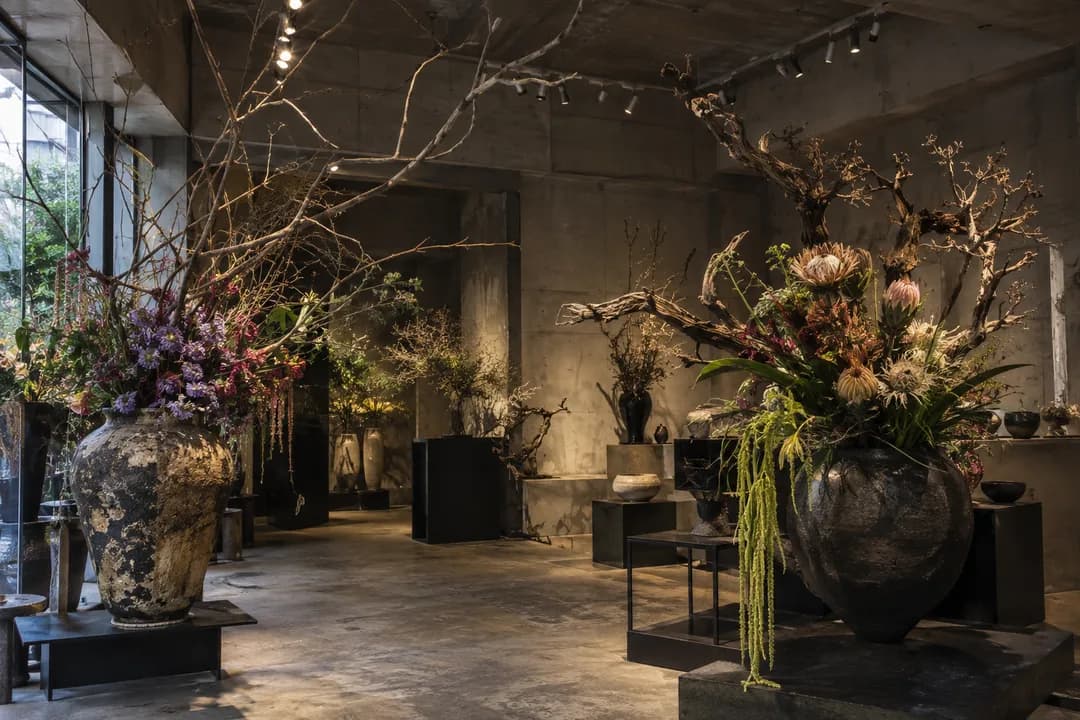 Florist Shop Near Me in Gaienmae: FUGA Floral and Plant Design
 Florist Shop Near Me in Minami-Aoyama: Nicolai Bergmann Flagship Guide