 England vs India Searches Are Up: A Singapore Cricket Food Route
Restaurants
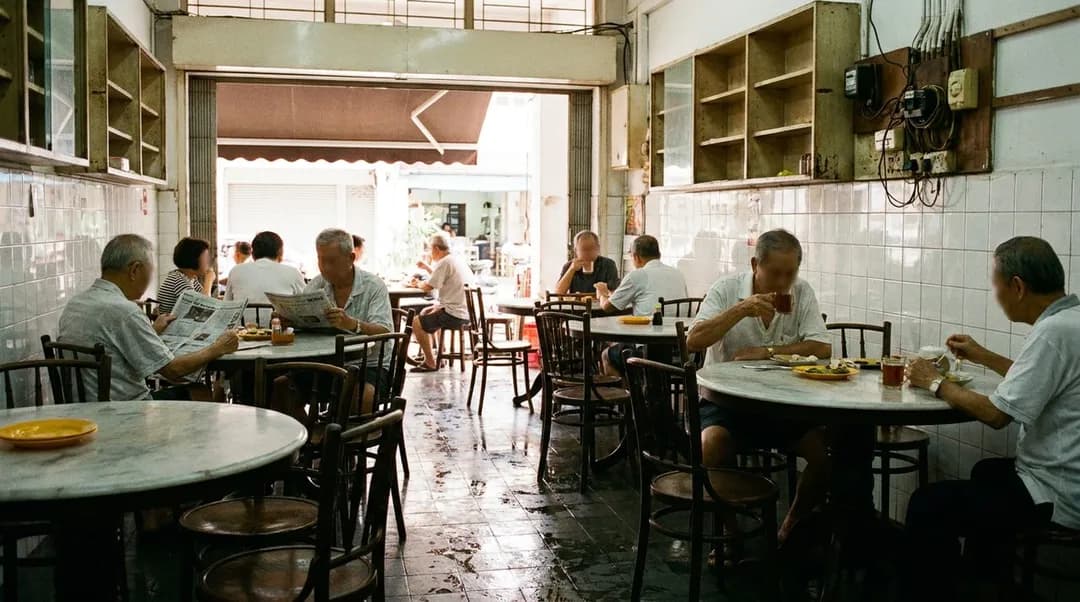
A Tiong Bahru Kopitiam at Breakfast Where Kaya Toast and Soft Eggs Mark Morning Time
The old coffee shop fills with regulars before eight, ordering the same kopi and toast combination while ceiling fans turn slowly above marble-top tables.
The kopitiam on Tiong Bahru's edge opens when most of the neighborhood is still quiet, its metal shutters rolled up by someone who's been doing this for decades. By seven-thirty the marble tables are already claimed by the same faces in the same seats, ordering kopi-C and kaya toast in a rhythm that needs no menu. The smell of charcoal and caramelized coconut jam drifts through the open shopfront while ceiling fans push warm air in lazy circles overhead.
The Counter Where Orders Need No Words
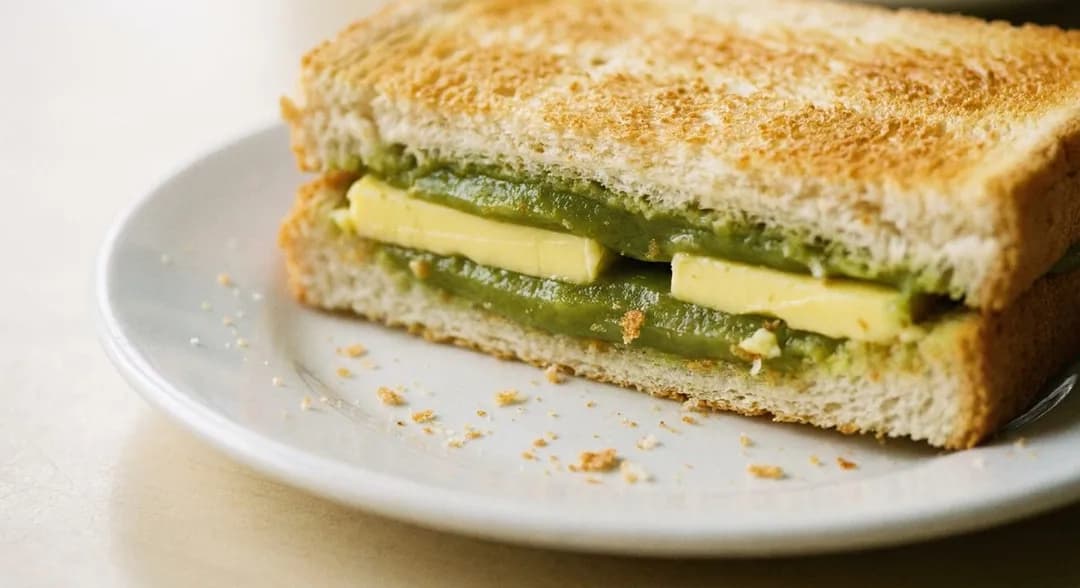
The uncle behind the coffee station knows what's coming before anyone speaks. A nod, a raised finger, sometimes just eye contact—that's enough to set two soft-boiled eggs and a plate of toast in motion. The kopi flows dark and thick into ceramic cups, sweetened condensed milk swirling in without measurement. Regulars collect their orders from the counter's worn Formica edge, balancing cups and plates back to tables where newspapers are already spread open. Newcomers hesitate, unsure whether to sit first or order first, watching the unspoken protocol play out around them. The toast arrives golden-brown with butter melting into the grid marks, kaya spread thick enough to taste the pandan. Crack the eggs into a shallow dish, add dark soy sauce and a few shakes of white pepper, and the ritual is complete.
Marble Tables That Remember Decades
The tables themselves tell the story—heavy marble tops on cast-iron bases, cool to the touch even in Singapore's humidity. Some have hairline cracks running through the stone, veins that have been there longer than most patrons have been alive. The chairs are mismatched, a collection of wooden seats and metal frames that screech slightly when pulled across terrazzo floors. Morning light angles through the shopfront, cutting across tables in shifting patterns as the sun climbs higher. By eight o'clock every seat is taken, and latecomers hover near the edges, waiting for someone to finish and leave. The sound layer is constant—cups meeting saucers, chairs scraping, low Hokkien conversations, the occasional laugh that cuts through the general murmur. No one rushes. The kopitiam operates on a different clock, one measured in how long it takes to finish toast and read the sports section.
The Egg Technique That Separates Locals
There's a specific way the eggs get cracked here, a technique that matters more than it should. The soft-boiled pair arrives in a small bowl, shells intact, still radiating heat from the water bath. Regulars tap them against the dish's rim with precision, peeling back shell fragments to reveal whites that are just barely set and yolks that run golden when pierced. The timing in the kitchen is instinctive—too long and the yolks firm up, too short and the whites stay translucent. The sweet spot is narrow, and whoever's managing the eggs back there hits it consistently. The soy sauce and pepper get added in ratios that vary by personal preference, some going heavy on the pepper until the mixture turns nearly black, others keeping it light. The toast gets dunked, dragged through the egg mixture until it's soaked but not falling apart, then eaten in quick succession before everything cools.
The Crowd That Shifts With the Hour
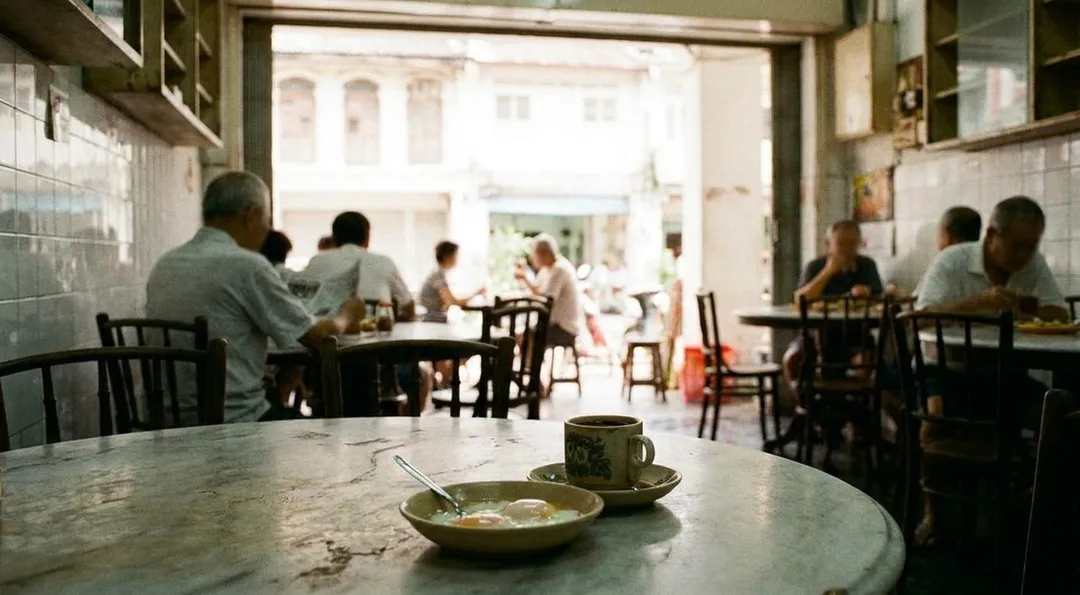
Before eight, the kopitiam belongs to retirees and shift workers coming off night duty, people who move slowly and speak in low tones. The pace is meditative, almost ceremonial. After eight-thirty, the energy changes. Office workers in business casual appear, ordering takeaway in plastic bags, adding extra toast for later. The marble tables turn over faster, conversations get louder, and the whole space accelerates. By mid-morning the breakfast crowd has cleared out, leaving behind a brief lull before the lunch preparations begin. Weekends bring a different mix—families with young children, couples who sleep in and treat this as brunch, the occasional group of friends recovering from the night before. The kopitiam adjusts to each wave without changing its fundamental rhythm, a space that's been absorbing neighborhood life for long enough to accommodate everyone.
The Charcoal Grill That Never Cools
The toast gets its character from the charcoal grill tucked behind the counter, a blackened metal frame that's been in continuous use since before most people remember. White bread goes on in batches, toasting unevenly in a way that's become the signature—darker on the edges, softer in the center, with a faint smokiness that comes from the charcoal itself. The butter goes on while the toast is still hot enough to melt it instantly, followed by kaya spread with a flat knife in thick, generous swipes. The grill never fully cools down during operating hours, maintaining a constant readiness that keeps the breakfast service moving. There's no timer, no temperature gauge—just someone who knows by sight and smell when each batch is ready. The result is toast that tastes different from the electric toasters used in newer establishments, carrying a hint of char and a texture that's simultaneously crisp and yielding.
The Kopi That Defines the Morning
The coffee here is strong enough to reset anyone's morning, brewed in the traditional sock method that produces a concentrate so dark it's almost opaque. The grounds are Robusta-heavy, roasted with sugar and margarine until they're nearly black, then brewed through a cloth filter that hangs from a metal ring. The resulting liquid gets mixed with condensed milk for kopi-C, or evaporated milk for kopi, the ratios adjusted based on decades of muscle memory. The taste is bold, sweet, and faintly bitter all at once, with a thickness that coats the mouth. Regulars have their preferred variations—kopi-O for black coffee, kopi-gao for extra strong, kopi-peng for iced. The ceramic cups are thick-walled and slightly chipped, holding heat longer than the thin porcelain used elsewhere. The coffee is meant to be sipped between bites of toast, the sweetness and bitterness playing against the kaya and eggs in a combination that's been refined over generations.
Practical Notes
The kopitiam opens early, well before most of Tiong Bahru is awake, and runs through late morning before closing for the afternoon. Getting there means walking from Tiong Bahru MRT station through the neighborhood's Art Deco blocks, following the residential streets until the shophouse row appears. Breakfast here is inexpensive, the kind of meal that costs a few dollars and leaves no one hungry. No reservations, no phone orders—just show up and find a seat if one's available. Weekday mornings before eight offer the most authentic experience, when the regulars dominate and the pace is unhurried. Weekends get crowded fast, with lines forming by nine. Cash is standard, though some kopitiams in the area have started accepting electronic payment. The menu is minimal, focused on the essentials—toast, eggs, coffee, and not much else. That limitation is the point.
Tags: #TiongBahruEats #SingaporeKopitiam #KayaToast #TraditionalBreakfast #SingaporeFood #LocalEats #KopiCulture #SoftBoiledEggs #HeritageFood #OldSchoolSingapore #NeighborhoodGems #SingaporeBreakfast #PullUpAChair #TiongBahru #AuthenticSingapore
Sources consulted: eater.com · timeout.com · infatuation.com
All trademarks are the property of their respective owners.
Ask Karpo first
Want to know which Tiong Bahru kopitiams the neighbourhood regulars actually use?
Ask Karpo for the coffee shops with the best morning kaya toast ritual before you head out.
Ask Karpo for more information.
Keep reading
- England vs India Searches Are Up: A Singapore Cricket Food Route
 Singapore Lau Pa Sat Rainy Hawker Route: What to Check Before the Skies Open
 Watch the Monaco Grand Prix From Riverside Point — Brewerkz Singapore's Sunday 9pm F1 Light On the Quay