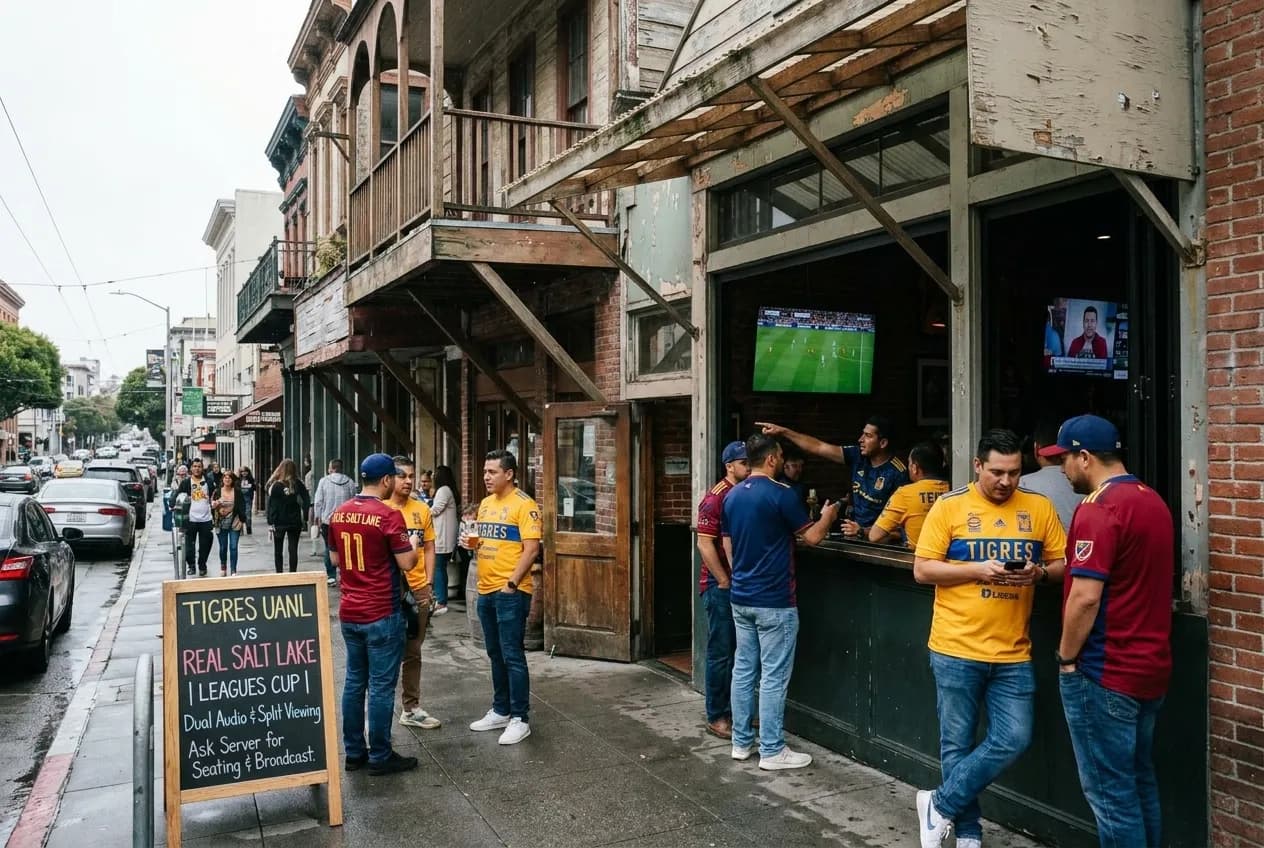
When tigres uanl vs salt lake draws Liga MX and MLS supporters into the same San Francisco venue, the evening becomes an exercise in diplomatic logistics as much as soccer fandom. Bars holding Leagues Cup broadcast rights face a unique challenge: accommodating passionate fanbases with different linguistic preferences, chant traditions, and pre-match rituals under one roof. For a group of four Tigres supporters seeking an away-fan atmosphere on a weekend evening, the task involves more than finding a screen—it requires verifying which audio feed dominates, whether the venue leans toward one club's following, and how seating policies handle rival sections. The Leagues Cup format, pairing clubs from separate domestic competitions, creates split-room scenarios where one corner erupts in Spanish-language commentary while another follows English play-by-play. This guide unpacks the verification steps, tradeoff decisions, and crowd-reading strategies that help beginner cross-league tournament attendees find their vocal, proud space without stumbling into logistical friction.
Text Karpo your team, group size, and whether you want a Tigres-majority or mixed-fan environment. We'll send three SF bars confirming Tigres UANL vs Salt Lake broadcast with fanbase breakdowns, plus one backup outdoor screen if indoor bars are full.

Broadcast Language and Audio Feed Arrangements
Leagues Cup rights holders in San Francisco typically secure both English and Spanish feeds, but individual bars choose which audio track plays over house speakers. A venue in the Mission District might default to Spanish commentary for a Tigres match, while a Marina sports bar could favor English for the Salt Lake perspective. Some establishments offer dual-zone setups: Spanish audio in the main room, English in a side area, or vice versa. Calling ahead to confirm which feed dominates your intended viewing section prevents the disappointment of watching silently or straining to hear commentary drowned out by the opposite language track.
A handful of bars invest in wireless headphone systems, letting patrons toggle between feeds, though this remains rare and often requires a deposit or minimum purchase. For a group of four planning to chant and react vocally, headphone solutions dampen the communal energy that defines away-fan atmosphere. Instead, scout venues that explicitly advertise Liga MX watch parties or have hosted Tigres gatherings in past tournament cycles. Social media event pages and soccer supporter group forums often reveal which bars align with which fanbase, though these informal networks shift as ownership or broadcast contracts change.

Seating Policy and Rival-Section Dynamics
Bars anticipating split crowds for tigres uanl vs salt lake may implement reserved sections, first-come seating with invisible boundary lines, or open seating that trusts fans to self-segregate. Reserved sections require advance booking—sometimes days before kickoff—and may carry minimum spend per seat. First-come arrangements reward early arrival but risk overflow when one fanbase outnumbers projections, forcing latecomers into mixed zones where chants collide. Open seating works when the venue is large enough to absorb natural clustering, but tight quarters can turn friendly banter tense if rival supporters occupy adjacent tables.
Ask whether the bar enforces a no-standing policy during play; some venues allow standing only during goals or halftime, while others tolerate constant standing in designated areas. A group of four Tigres supporters hoping to stand, sing, and wave scarves throughout the match needs a venue that permits sustained verticality without staff intervention. Inquire about table minimums versus bar-top seating—high-tops near screens often escape spending thresholds but fill fastest. If the bar offers a patio with outdoor screens, verify whether audio reaches that space; summer weekend evenings make patios attractive, yet muted sound undermines the atmosphere you seek.
Crowd Composition and Fanbase Lean
No San Francisco bar officially declares allegiance to a single Leagues Cup club, but organic patterns emerge. A venue that regularly screens Liga MX fixtures will attract a core Tigres-friendly crowd even when facing an MLS opponent, while a bar known for Earthquakes watch parties might tilt toward general MLS solidarity, including Salt Lake supporters. Checking the bar's event history—past posts about El Clásico Regiomontano or Liguilla matches—signals whether Tigres fans will find kindred voices or must create their own atmosphere from scratch.
Beginner cross-league attendees sometimes misjudge crowd lean, expecting neutral energy only to encounter a room dominated by the opposing side. This isn't inherently negative—away-fan pride thrives on being the vocal minority—but a group of four may feel outnumbered in a venue where seventy patrons wear Real Salt Lake scarves. Conversely, a Tigres-heavy room offers camaraderie but less dramatic tension. Decide whether your group prioritizes solidarity or the edge that comes from cheering against the grain, then select the venue whose typical crowd composition matches that preference. Online reviews mentioning "mostly Liga MX fans" or "MLS crowd" provide clues, though composition fluctuates match to match.
Transit Timing and Neighborhood Access
Weekend evening kickoffs often coincide with San Francisco's dinner hour, compressing arrival windows. Muni routes connect neighborhoods citywide, but a group of four traveling together from, say, the Sunset to a Mission bar should budget extra time for potential delays; the official SFMTA site notes ongoing T Third signal upgrades that improve reliability yet don't eliminate all variability. Arriving sixty to ninety minutes before kickoff secures preferred seating and allows time to order food before the kitchen slows under match-rush demand.
Bars near BART stations—16th Street Mission, 24th Street Mission—offer straightforward access but also draw larger crowds, raising the stakes for early arrival. Neighborhoods like the Richmond or Outer Sunset host quieter venues with ample seating yet require longer Muni rides or driving; street parking in those areas eases on weekends compared to downtown, though never guaranteed. Weigh the tradeoff: a central, packed bar with electric atmosphere versus a neighborhood spot with elbow room but potentially thinner crowd energy. For a group prioritizing vocal pride, the former often wins despite transit hassle.
Verification Steps Before Committing
Confirming Leagues Cup broadcast rights is step one—not every sports bar secures tournament coverage, and assumptions lead to wasted trips. Call the venue directly, asking whether they will screen the specific tigres uanl vs salt lake fixture, which audio language will play, and whether any seating requires reservation. Social media promises can lag behind contract changes; a phone conversation with a manager yields current facts. Ask if the bar expects a watch party organized by a supporter group, which often brings drums, flags, and structured chanting but may also mean reserved sections unavailable to walk-ins.
Inquire about food and drink minimums, especially if your group plans to nurse a round or two over ninety minutes. Some bars waive minimums for standing-room areas, while table seating might require a per-person spend that adds up quickly for four people. Check whether the venue accepts card-only payments or still handles cash, and confirm kitchen hours—late-arriving groups sometimes find kitchens closed even though the bar remains open. Finally, ask about TV placement: a screen tucked in a corner forces awkward neck angles, while a central projector or multiple monitors distributed throughout the room ensures sightlines from any seat. These granular checks prevent mid-match regrets and let your group focus on the proud, vocal support that defines away-fan atmosphere.
Tags: #TigresUANL #RealSaltLake #LeaguesCup #watchparties #sportsbars #LigaMX #MLS #SanFranciscosoccer #bilingualbroadcasts #awayfans #MissionDistrict #Munitransit #supportergroups #crossleaguetournament
Sources consulted: Source 1: sf.gov · Source 2: sfmta.com · Source 3: sfpl.org · Source 4: sf.gov
All trademarks are the property of their respective owners.
Ask Karpo first
Ask Karpo to turn this San Francisco idea into a current plan for your date, budget, companion, transit preference, and energy level. Karpo can narrow the route and flag what to verify before you go.