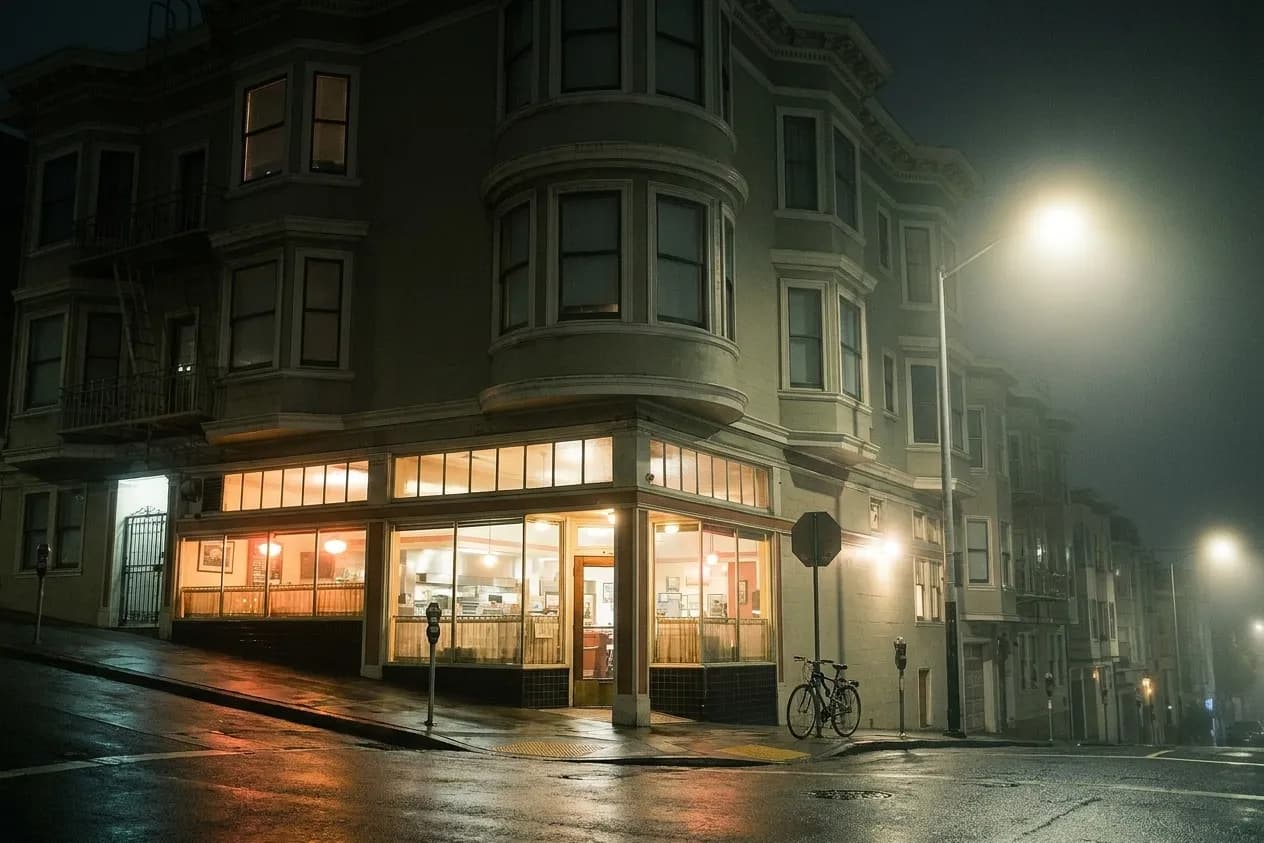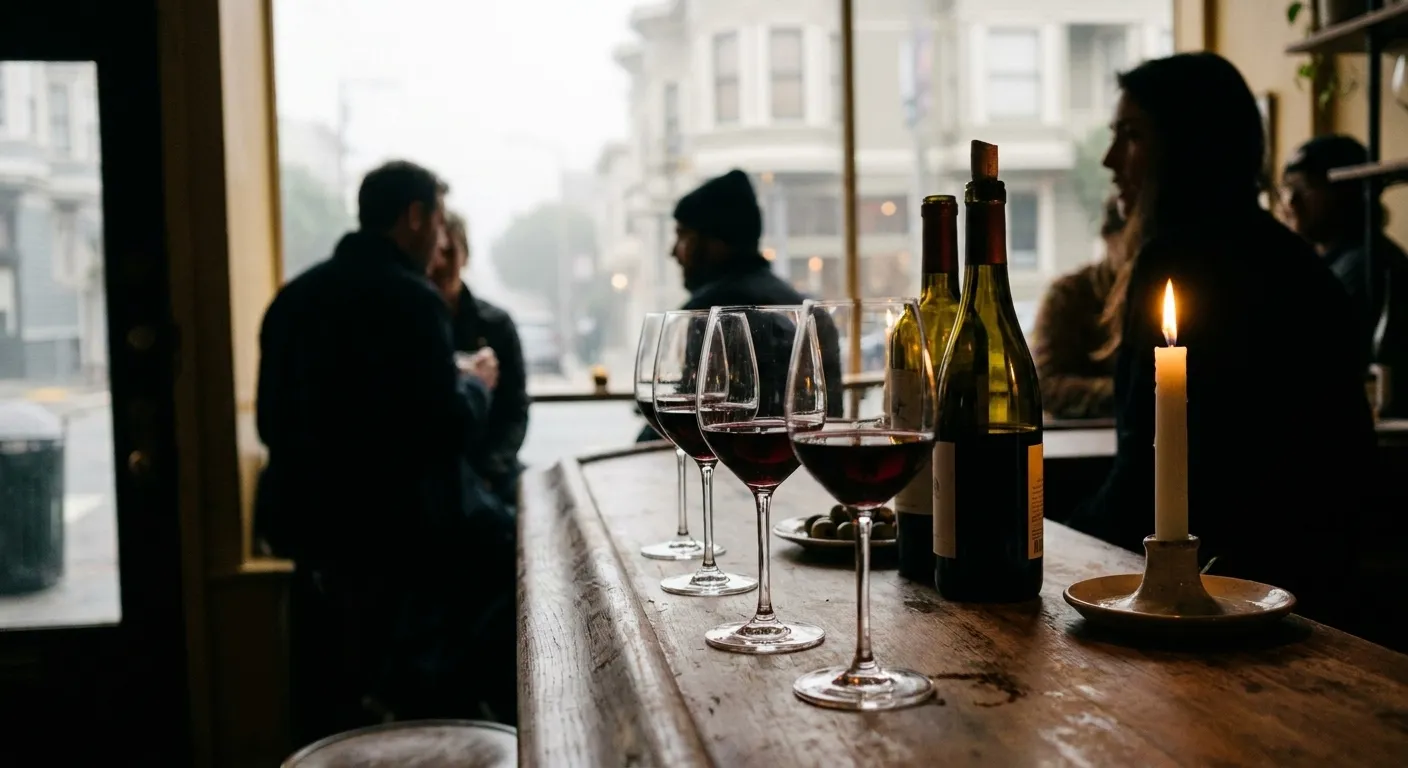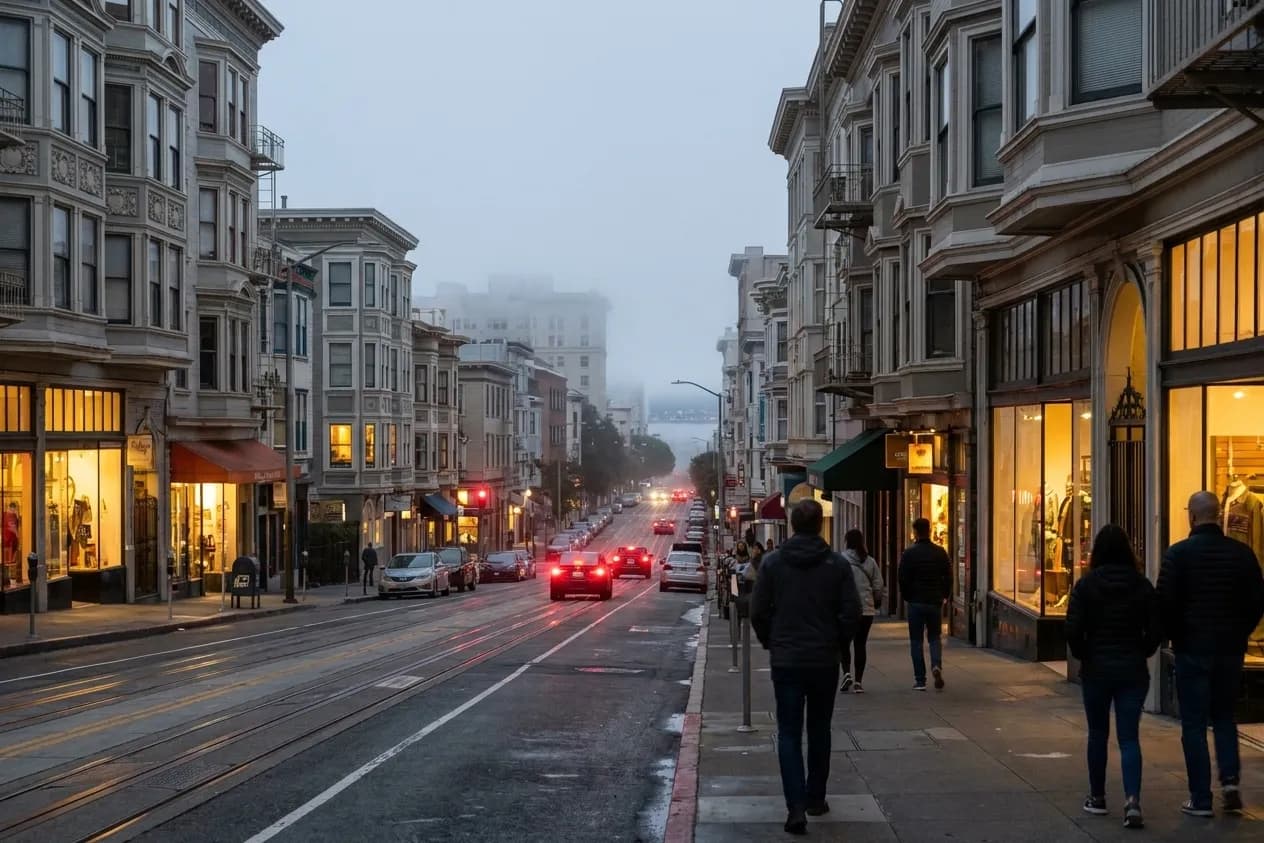
Most disappointing evenings in this city are not the result of picking the wrong thing. They are the result of picking the right thing at the wrong hour. San Francisco runs on a compressed clock — kitchens stop early, venues empty fast, and the last useful transit window is earlier than people expect. Any list of things to do in San Francisco that ignores the timing is giving you half the information, and it is the less important half.
The city's clock changes what is realistic hour by hour. Ask Karpo what is actually still running near you tonight.
The clock, roughly
Between five and seven the city is at its most forgiving: happy hours are live, walk-ins are easy, and museums that stay open late are doing their evening programme. Seven to nine is peak dinner and the hardest window for spontaneity. Nine to eleven is when bars and music rooms fill and restaurants start closing their kitchens — a lot of them stop taking food orders at nine thirty on a weeknight, which catches people out constantly. After eleven the map shrinks to specific neighbourhoods rather than specific venues.
Working backwards from that is the single most useful planning habit. If you want to eat and then see something, eat at six. If you want to drink and then eat, accept that you are eating in the Mission, Chinatown or the Tenderloin, because those are the areas with real kitchens running late.
Build the evening around one anchor
Pick one thing that has a fixed start time — a set, a screening, a game, a tasting — and let everything else float around it. Evenings that consist entirely of flexible components tend to dissolve, because a group with no deadline will spend ninety minutes deciding. An anchor with a door time solves that without anyone having to be the person who makes decisions.
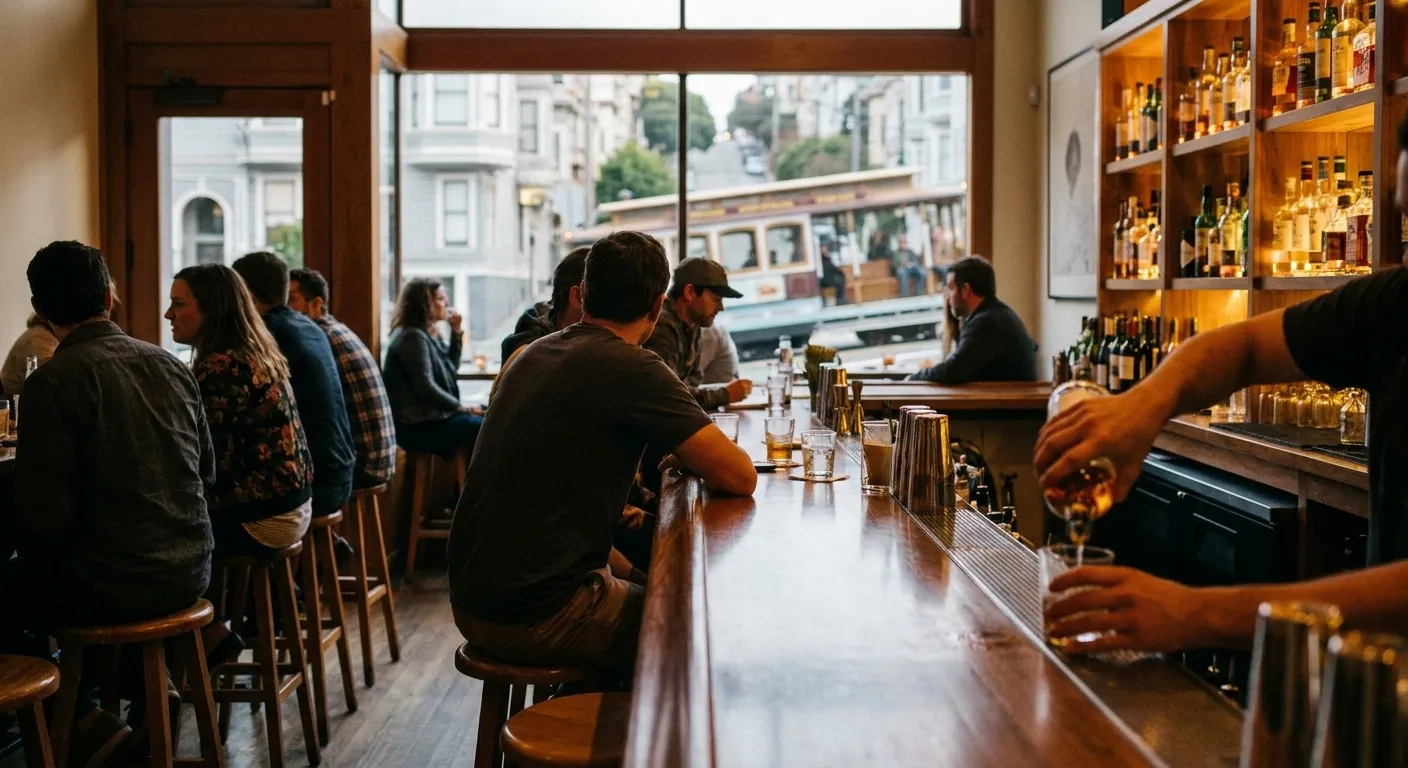
The useful thing about this city is how many low-commitment anchors exist. Free in-store performances at record shops, weekly trivia and jazz nights that run on a fixed schedule, first-Thursday gallery openings, and the several museums with a late night once a week all give you a hard time to build around without requiring a ticket bought in advance.
Neighbourhood by hour
The Mission is the most durable choice because its peak lasts longest — bars, taquerias and music rooms overlap there until well past midnight, and it is the only district where a plan can survive being ninety minutes late. The Tenderloin and lower Nob Hill are similar and denser, though the walk between venues is less pleasant.
Hayes Valley and the Fillmore are early-evening neighbourhoods: excellent between five and nine, noticeably quieter after ten. North Beach is the reverse of what visitors expect — the restaurants empty early and the bars carry on. The Marina peaks hard between eight and eleven at weekends and is essentially closed on a Tuesday.
Weather is a variable, not a footnote
Fog and wind change what is enjoyable here more than temperature does. On a clear evening the west side of the city is worth the trip and the waterfront is genuinely pleasant. On a foggy one, both are cold and grey in a way that makes any outdoor plan a mistake, and the correct move is to head toward the Mission, which sits in the city's warmest microclimate and is regularly ten degrees milder than the Sunset at the same hour.
Checking the fog before committing to an outdoor plan is not fussiness. It is the difference between a rooftop being the best idea of the week and being a forty-minute exercise in shivering politely.
Three shapes that work
The low-effort version: early dinner in one neighbourhood, one drink somewhere within four blocks, home by ten. This sounds unambitious and is the most consistently good evening available in this city, because it removes travel from the equation entirely.
The anchored version: a fixed-time event at seven or eight, dinner beforehand at five thirty, and one place identified in advance for afterwards. The identification matters — deciding where to go after a show, while standing outside the show, is how groups end up somewhere nobody wanted.
The wandering version: pick a corridor rather than a destination. Valencia between 16th and 24th, Clement between 2nd and 10th, Polk north of Sutter, or Divisadero between Fell and Geary all support an evening built entirely on walking into whatever looks good. This works best in twos and threes and badly in groups of six.
The things people forget until it is too late
Transit thins out sharply after midnight and the late-night bus network is a genuinely different map to the daytime one — it goes to different places, on different streets, at intervals long enough that missing one matters. Checking the last useful departure before you commit to a neighbourhood on the far side of the city is a five-second job that saves an expensive ride home.
Parking is the other one. Street cleaning, permit zones and the sheer scarcity of spaces in the Mission and North Beach on a weekend evening mean that driving to a night out here reliably adds twenty minutes at the start and a small argument at the end. In most of the city, the honest calculation favours transit or a ride each way over the combined cost and hassle of parking twice.
And bring a layer. The temperature drop between seven and eleven in San Francisco is larger than almost anywhere else in the country at the same latitude, and an evening that started warm on a patio in the Mission ends cold on a corner in the Marina. Locals carry a jacket in August for reasons that look eccentric until the first time you do not.
Tags: #SanFrancisco #ThingsToDoSF #SFTonight #SFNightlife #MissionDistrict #HayesValley #NorthBeach #Tenderloin #SFBars #LiveMusicSF #EveningPlans #BayArea #SFGuide
All trademarks are the property of their respective owners.
Ask Karpo first
Ask Karpo what is on near you in San Francisco tonight, what time it starts, and what is still serving food afterwards.