The Metropolitan Museum of Art lists adult admission at $30, seniors at $22 and students at $17. For a large number of the people reading a sentence like that, those are suggested amounts rather than prices, and the difference between knowing that and not knowing it is about thirty dollars per person per visit.
The residency rule changes the price of this museum from $30 to whatever you decide, and what you need to prove it is smaller than people think. Ask Karpo whether the galleries you want are open today and how long you realistically need for them.
Who pays what
New York State residents pay what they wish, with a minimum of one cent per ticket. That is the actual rule. The $30 figure is a suggested contribution and the ticket desk will issue a ticket at whatever amount you name.
Students from New York, New Jersey and Connecticut are also covered by pay-what-you-wish pricing. Children under twelve are free regardless of where they live. Everyone else — out-of-state and international visitors — pays the fixed price, which is where the $30 applies as a real number.
The proof required is minimal. A driver's licence, a state ID or something with a New York address on it is sufficient, and the desk is not conducting an investigation. For students, a valid student ID. Bringing it is the entire trick.
How to decide what to pay
Worth saying directly, because pay-what-you-wish creates an awkwardness that costs the museum money and costs visitors more. The museum runs on a very large budget, its admissions income matters, and paying nothing when you can afford something is a choice with consequences for an institution that is genuinely a public good.
The reasonable position is to pay what the visit is worth to you, which for most people who go regularly is something less than $30 and more than a cent. Ten or fifteen dollars for a visit you will make several times a year is a defensible number and nobody at the desk will react to it in any way.
The point of the policy is that price should not be the reason a New Yorker does not go to the Met. It is not an invitation to extract a free museum from an institution you can afford to support.
The building is the difficulty
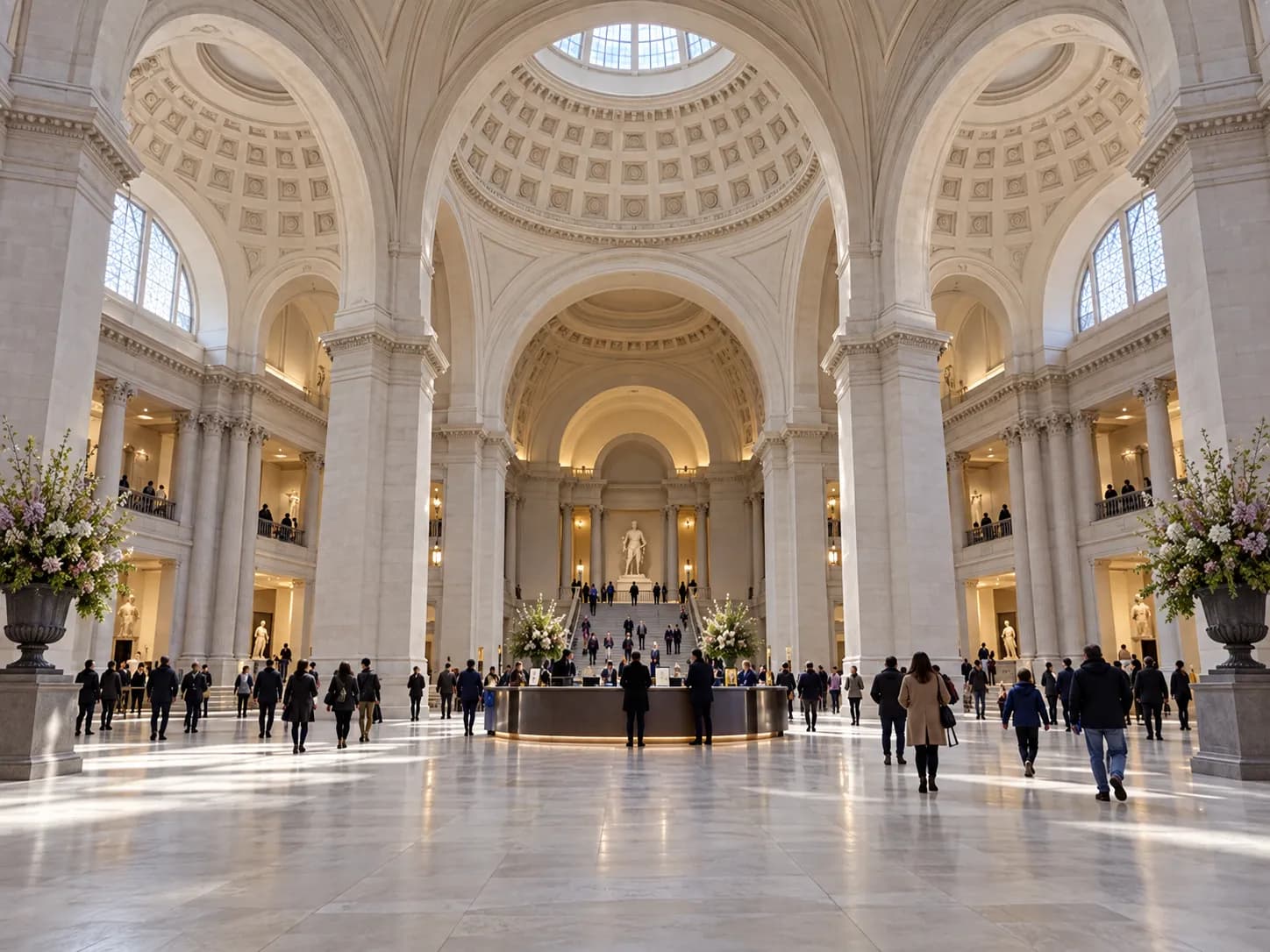
The Met is around two million square feet with roughly two million objects, and the most common mistake is treating it as one visit. You cannot see it. Attempting to produces four hours of increasingly meaningless walking and a headache.
The correct approach, and the one the pay-what-you-wish policy is designed to enable, is short repeat visits. Two hours in two or three galleries is a better experience than six hours across all of them, and if the price is effectively yours to set then coming back next month costs nothing.
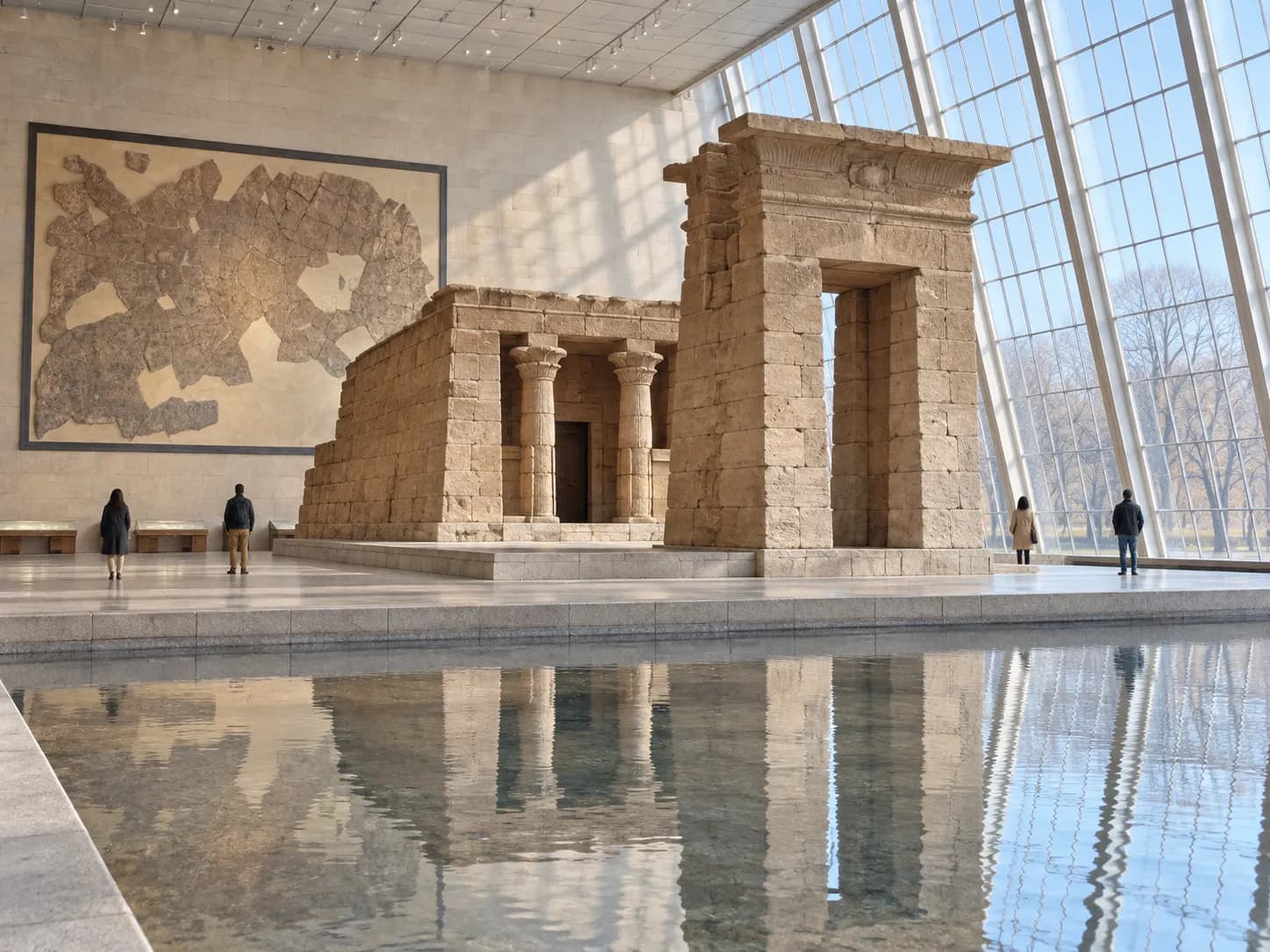
Pick a wing before you arrive. Egyptian art and the Temple of Dendur; the European paintings on the second floor; the American Wing; arms and armour; the Costume Institute when a show is on. Any one of those is a complete afternoon.
The parts people miss
The roof garden, open seasonally from around April to late October, has a view across Central Park to the Midtown skyline and a bar. It is one of the better free views in the city once you are inside, and a significant share of visitors never go up.
The Charles Engelhard Court in the American Wing is a glass-roofed sculpture court with daylight and seating, and it is the best place in the building to sit down for twenty minutes when you have hit the wall. The Astor Chinese Garden Court is the quietest room in the museum by a distance.
The Cloisters in Washington Heights is included in the same admission on the same day, which is a genuinely underused fact — one payment covers both buildings if you can get uptown, though doing both in a day is ambitious.
Timing
Weekday mornings shortly after opening are the calmest hours. Weekend afternoons are the busiest and the special-exhibition galleries in particular become difficult. Late openings on Friday and Saturday evenings are among the best times in the building — the light through the Dendur glass at that hour is worth arriving for.
Check the day's gallery closures before you go. A museum this size always has rooms shut for reinstallation, and arriving specifically to see something that is closed is the most avoidable disappointment available here.
Bag policy means large bags and backpacks have to be checked, and the queue for the coat check at peak can be longer than the queue for tickets. Travel light if you can.
Why the policy exists at all
The Met operated on a genuinely voluntary pay-as-you-wish basis for everybody until 2018, when it introduced fixed pricing for out-of-state and international visitors while preserving the old arrangement for New York State residents and regional students. That history explains why the current rules feel inconsistent — they are the residue of a compromise rather than a designed pricing structure.
The argument for keeping residents on pay-what-you-wish is that the museum sits on city land, receives public support, and was founded on the principle that it should be open to the people of the city regardless of means. The argument for charging visitors is that a very large share of attendance comes from tourism and the building costs a great deal to run.
Both positions are reasonable and the outcome is workable, but it does mean the price of a ticket depends on a piece of paper in your pocket rather than on anything about the visit. Knowing that in advance is worth more here than at almost any other institution in the city.
Practical notes
1000 Fifth Avenue at 82nd Street. Suggested admission $30 adults, $22 seniors, $17 students. New York State residents and students from New York, New Jersey and Connecticut pay what they wish with a one-cent minimum — bring a state ID or student ID. Under-12s are always free. Out-of-state and international visitors pay the fixed price. Admission includes The Cloisters on the same day. Check gallery closures before travelling. Weekday mornings are quietest; Friday and Saturday evening openings are the best light. Pick one or two wings rather than attempting the building.
Tags: #metmuseum #thingstodonyc #freethingstodonyc #museumnyc #upperseastside #centralpark #paywhatyouwish #nycguide #thecloisters #nycmuseums #artnyc #freenyc #fifthavenue #newyorkculture
All trademarks are the property of their respective owners.
Ask Karpo first
The Met is too big to do in one visit and always has something closed, so the useful question is what is actually open and worth two hours today. Ask Karpo which galleries and exhibitions are running right now, whether the roof garden is open this season, and how busy the building is at this hour.