The Wynwood Counter Where Cuban-Japanese Cooking Changes Direction Nightly
Twelve Seats, One Seating, and a Chef Who Pours His Own Wine
In a city where splashy openings and celebrity chef outposts dominate the conversation, the most compelling dining experience in Miami right now operates from a converted warehouse unit with no signage, no OpenTable listing, and exactly twelve seats. The counter at Kaseki — a portmanteau the chef uses to describe his Cuban kaiseki approach — has been quietly redefining what Miami's culinary identity could look like since it opened eighteen months ago. Chef Daniel Reyes-Tanaka, whose grandmother ran a fonda in Havana and whose father trained in Kyoto's kappo tradition, has created something that feels both inevitable and entirely unprecedented: a tasting menu where Japanese technique meets Cuban soul, and where the boundaries between kitchen, sommelier, and host collapse into a single person standing across the counter from you.
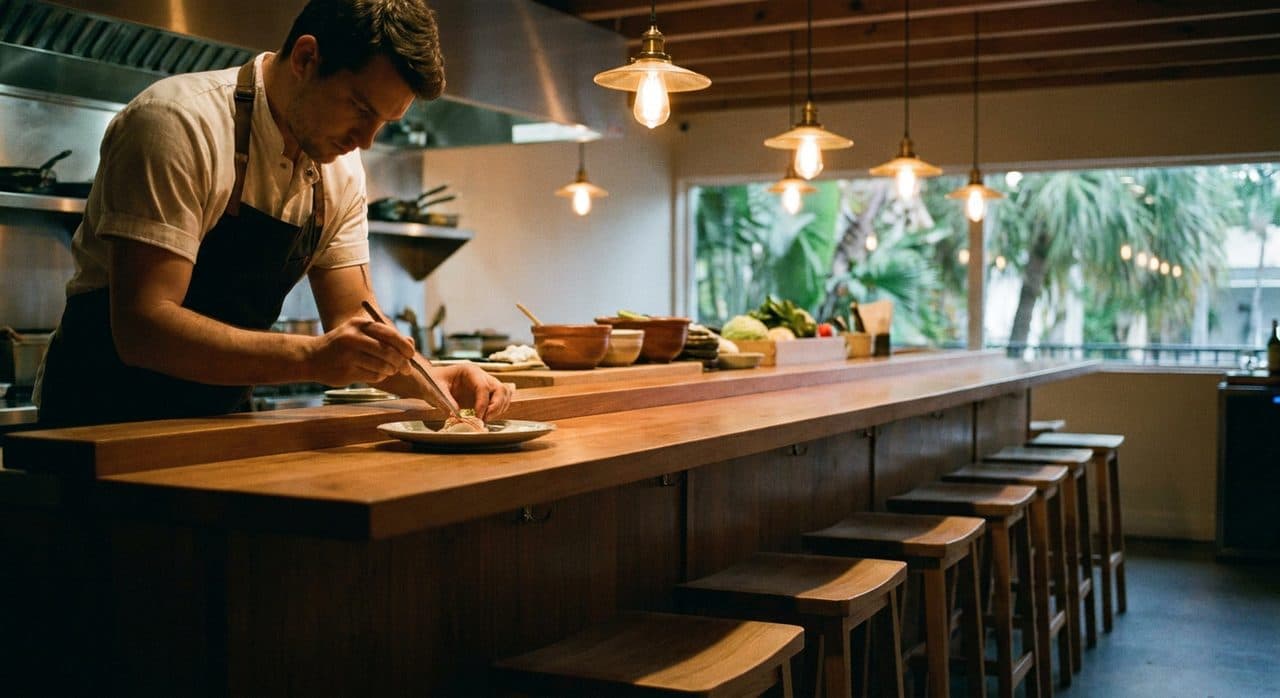
The space itself sets the tone. Wynwood's industrial bones remain visible — exposed ductwork, polished concrete floors, a loading dock door that Reyes-Tanaka keeps raised on warm evenings to let the neighborhood's energy drift in. But the counter itself is a twelve-foot slab of oolitic limestone sourced from a quarry in the Florida Keys, its fossilized coral surface catching the warm light from handmade ceramic pendants. Behind it, the chef works with the focused economy of movement you'd expect from someone who spent four years in Tokyo before returning to his hometown.
The Reservation Game That Rewards the Punctual
Getting a seat here requires strategy, not luck. The counter operates Thursday through Saturday only, with a single seating at 7:30pm sharp — no early birds, no late additions. Reservations open at noon exactly four weeks in advance, but here's where it gets interesting: you won't find Kaseki on Resy, Tock, or any booking platform. Instead, you text a number listed in the restaurant's Instagram bio. The chef handles confirmations personally between prep tasks, and spots typically fill within two hours of opening. Set a calendar reminder for 11:58am on the appropriate day, compose your text in advance, and hit send the moment the clock strikes twelve. Regulars treat it like a minor sport.
The confirmation text you receive includes more than just the date and time. Reyes-Tanaka notes which proteins will anchor that evening's menu based on what's arriving from his suppliers. This transparency extends to a detail that matters for serious food obsessives: the kitchen sources its ropa vieja-inspired braised beef from a single family ranch in Homestead, FL, with deliveries on Tuesday and Friday mornings. Because of this schedule, dishes using the beef appear only in Thursday and Saturday seatings, not Friday. If the slow-cooked, sherry-glazed beef course — served over rice seasoned with sofrito and finished with bonito flakes — is the dish you've heard about, plan accordingly.
A Tasting Menu That Speaks Two Languages Fluently
The format is omakase in structure but Cuban in spirit. Reyes-Tanaka presents eight to ten courses over roughly two hours, each one a conversation between his dual heritage. The tasting menu runs $95 per person without alcohol — remarkably restrained for this level of craft in a city where comparable experiences routinely cross $200. But what arrives at your section of the counter justifies twice the price.
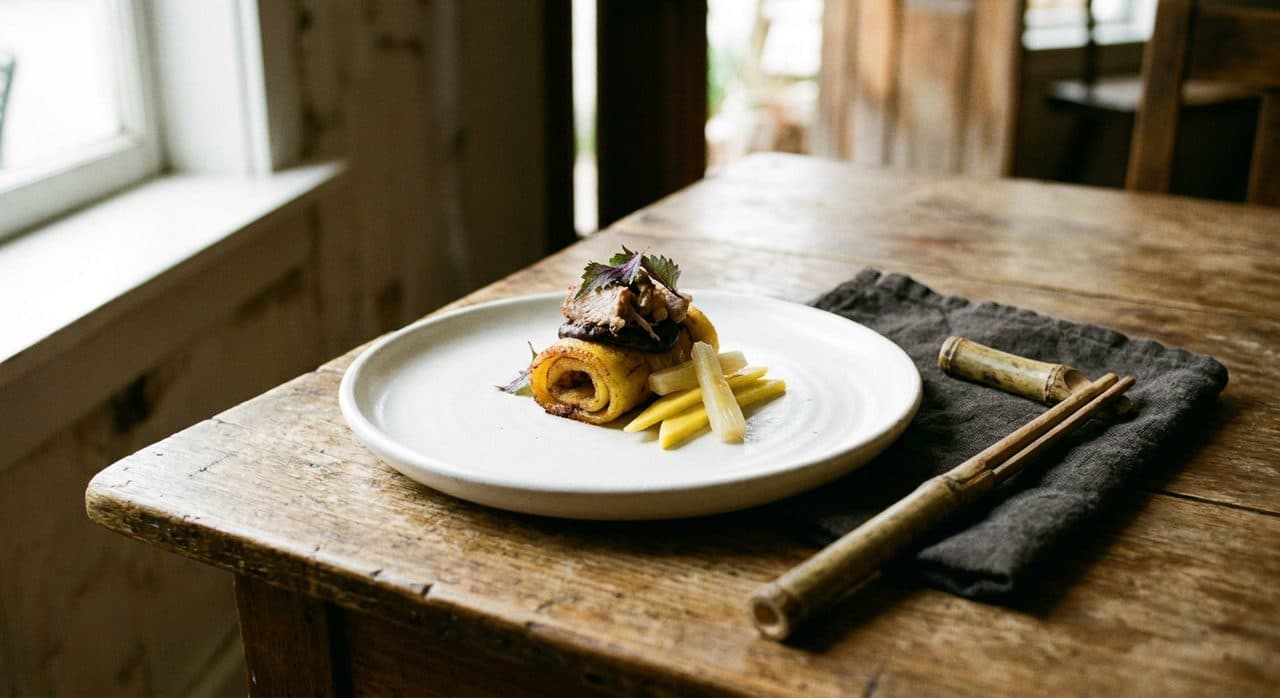
A recent Thursday seating opened with a single croqueta, its béchamel enriched with dashi and filled with blue crab from the Keys, served on a ceramic dish the chef made himself during the pandemic. Next came hamachi crudo with sour orange mojo, the citrus's bitterness cutting through the fish's richness in a way that lime never quite achieves. The courses built from there: a chawan mushi (Japanese egg custard) perfumed with cumin and topped with crispy chicharrones; a whole grilled hogfish with black beans that had been cooked for three days in the style of frijoles negros but finished with a soy-mirin glaze.
The ropa vieja course, when it appears, is the menu's emotional center. Reyes-Tanaka braises the Homestead beef for fourteen hours with tomatoes, peppers, and a splash of dry sherry, then shreds it tableside and places it over rice that's been cooked in a blend of chicken stock and kombu dashi. The result tastes like Sunday dinner at your abuela's house and a Kyoto kaiseki meal simultaneously — comfort and precision in perfect tension.
The Chef Pours, the Chef Explains, the Chef Connects
Most omakase counters of this caliber employ a dedicated sommelier or at least a server handling beverage service. Reyes-Tanaka does it himself. The supplemental pairing — $45 for a thoughtfully curated progression of Florida craft beer and natural wine — is poured by the chef rather than a separate sommelier. He considers this unusual arrangement part of the hospitality format, not an economic necessity. "When someone else pours your wine, there's a wall between the food and the drink," he explained to a guest on a recent Saturday. "I want you to understand why this particular beer works with this particular bite."
The pairings lean local and esoteric. A saison from Miami's own J. Wakefield Brewing might accompany the croqueta course, its effervescence and slight funk echoing the dish's richness. A pét-nat from a small Georgia producer could arrive alongside the hamachi. By the time the beef course lands, you might find a glass of aged Canary Islands listán negro — a nod to the Spanish colonial roots of Cuban cuisine — poured with a brief explanation of why this volcanic-soil wine belongs next to slow-cooked beef and black beans.
Wynwood's Warehouse District After Dark
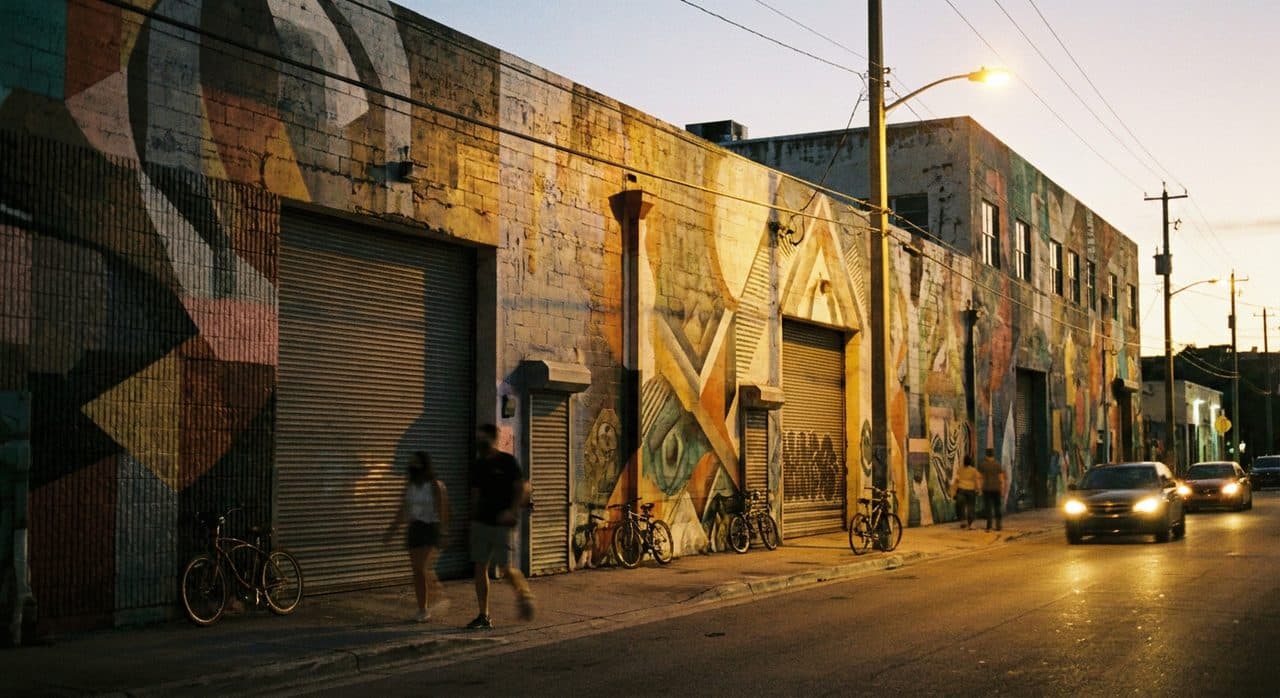
The location matters. Kaseki occupies unit 7B in a warehouse complex on Northwest 24th Street, a block removed from Wynwood's most trafficked corridors but still within the neighborhood's gravitational pull. Street parking is easier here than near the Walls, and the walk from the nearest public lot takes under five minutes. The lack of signage is intentional — Reyes-Tanaka wants guests to feel like they're discovering something, not arriving at a destination.
The neighborhood context shapes the experience in subtle ways. Through the raised loading door, you'll catch fragments of bass from a nearby gallery opening, the occasional burst of laughter from the brewery two units down. The chef doesn't fight the ambient noise; he incorporates it. "Wynwood isn't quiet," he's said. "Why pretend it is?" The result is an omakase experience that feels distinctly Miami — rigorous in technique but relaxed in atmosphere, serious about food without taking itself too seriously.
What the Morning Market Dictates
The menu's nightly shifts aren't a gimmick. Reyes-Tanaka arrives at the 79th Street Farmers Market every Thursday and Saturday morning by 6am, building relationships with the same vendors his grandmother might have known at Havana's Mercado de Cuatro Caminos. What he finds determines what he serves. A bumper crop of mamey sapote might inspire a dessert course that wasn't on his mental menu when he woke up. An unexpected delivery of live stone crabs could displace a planned shrimp preparation entirely.
This market-driven approach means no two seatings are identical, even within the same week. Regulars — and Kaseki has developed a devoted following in its short existence — return specifically to experience the variations. The structure remains consistent (cold courses, warm courses, rice course, sweet finish), but the contents shift like weather patterns. It's Cuban kaiseki in the truest sense: a format borrowed from Kyoto, filled with the flavors and rhythms of the Caribbean.
Practical Notes
Kaseki is located at 2437 NW 24th Street, Unit 7B, Miami, FL 33142 — look for the unmarked metal door between a screen-printing shop and a ceramics studio. Street parking on 24th is free after 6pm; the nearest paid lot is at NW 2nd Avenue and 24th Street ($10 flat rate evenings). The 2 bus stops three blocks east on NW 2nd Avenue. The counter operates Thursday through Saturday with a single 7:30pm seating; doors open at 7:15pm. The tasting menu is $95 per person; the optional beverage pairing adds $45. Reservations open at noon exactly four weeks in advance via text only — the number is in the restaurant's Instagram bio (@kaseki.mia). No walk-ins, no exceptions. Allow two hours for the full experience. The space is not wheelchair accessible due to a small step at the entrance.
Tags: #MiamiRestaurants #Wynwood #Omakase #CubanFood #TastingMenu #MiamiDining #FusionCuisine #HiddenGems #MiamiFoodie #JapaneseFood #FarmToTable #CraftBeer #NaturalWine #WynwoodFood #MiamiNightlife
Sources consulted: timeout.com · miami.eater.com · miaminewtimes.com · thrillist.com
All trademarks are the property of their respective owners.
Ask Karpo first
Want to know whether any Thursday seats are still available this week, what the current tasting menu theme is, and how to get to Wynwood from South Beach or the airport without renting a car? Ask Karpo for real-time reservation availability, a menu preview, and a Wynwood dining plan before you head out.