The Woodside, Queens Thai Restaurant Where the Kitchen Doesn't Simplify for the Crowd
A Block in Woodside That Functions as an Informal Thai Food District
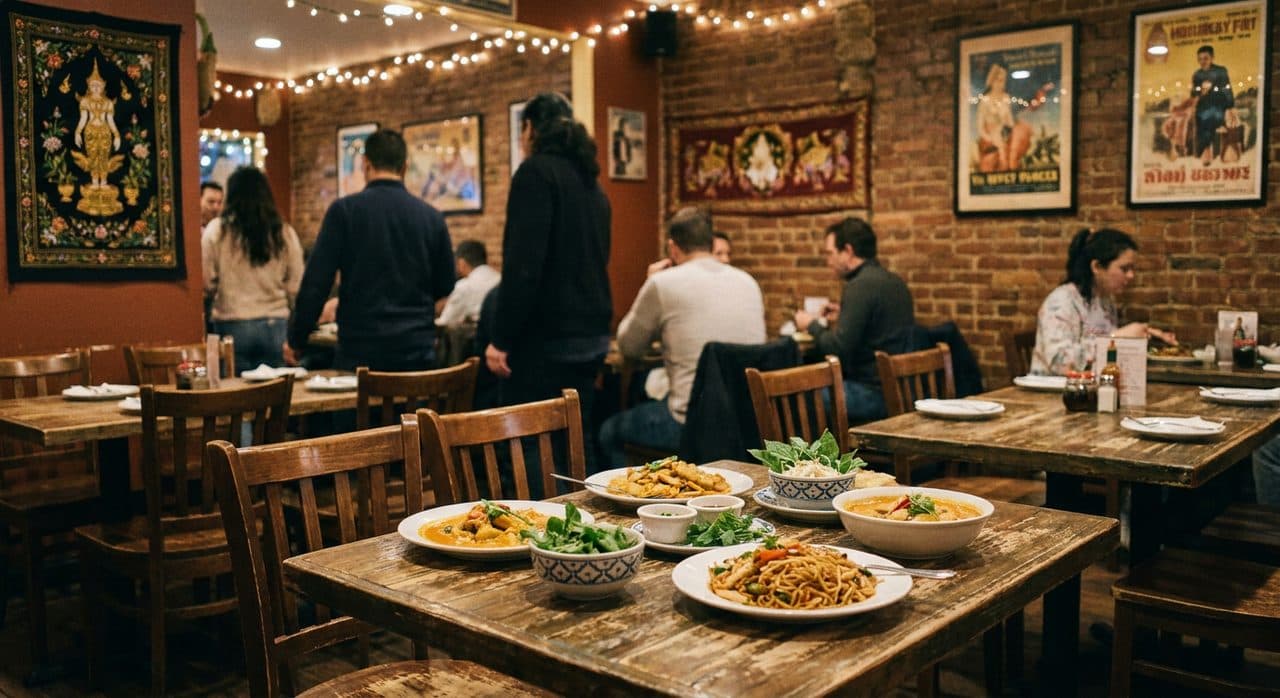
Woodside's Roosevelt Avenue corridor between 64th and 67th Streets has quietly become one of the most concentrated stretches of regional Thai cooking in the five boroughs. Within three blocks, kitchens represent Isaan, Northern, and Central Thai traditions — each operating with its own sourcing networks, its own regulars, and its own definition of what constitutes a complete meal. The neighborhood's Thai population, which grew substantially through the 1990s and early 2000s, established these restaurants not as destinations for outsiders but as functional neighborhood kitchens. That origin still shapes how they operate.
One restaurant on this stretch has maintained an almost stubborn consistency since opening in 2009. The menu hasn't changed. The recipes haven't been adjusted for perceived American palates. The kitchen still makes its own nam prik — the foundational chile relish that many Thai restaurants now purchase pre-made from distributors — and sources ingredients through relationships that predate the restaurant itself. In an era when even respected kitchens streamline for efficiency, this one treats shortcuts as a kind of betrayal.
The Som Tam That Starts in a Maspeth Greenhouse
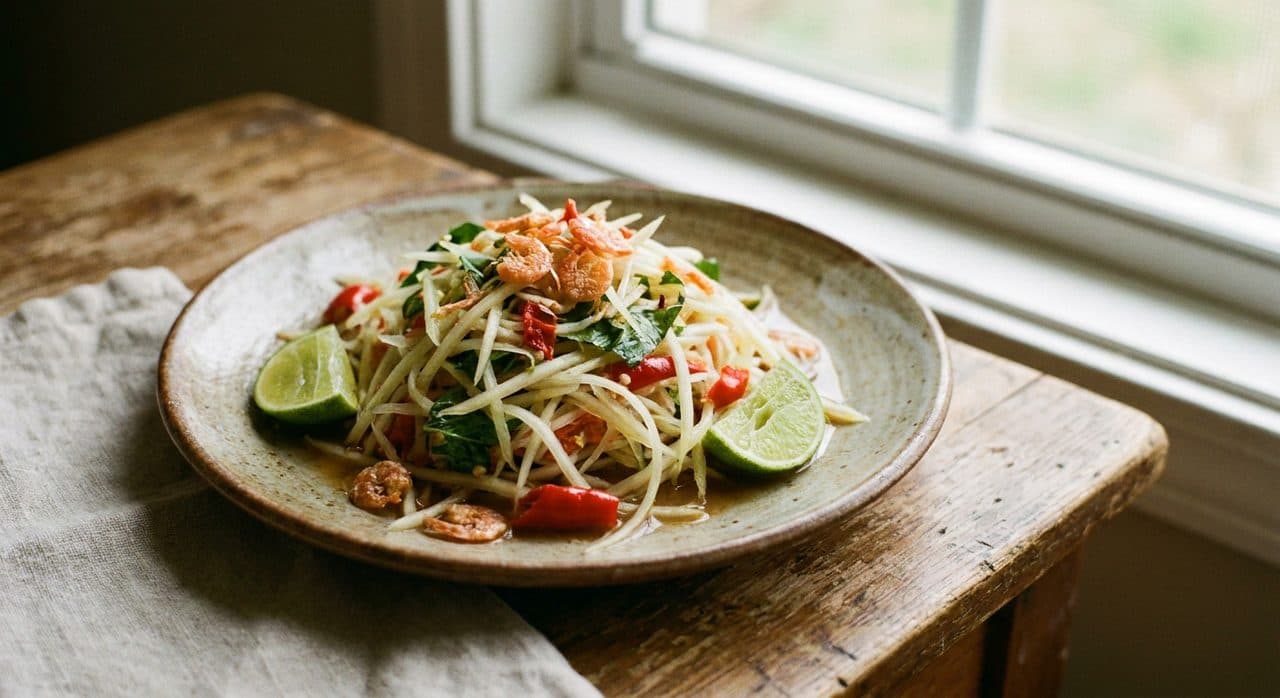
The green papaya salad here isn't remarkable because of technique alone. It's remarkable because of texture — a snap and resistance in the shredded fruit that distinguishes it immediately from versions made with imported papaya that has spent days in transit. The kitchen sources its green papaya from a small greenhouse operation in Maspeth, roughly four miles from the restaurant. The difference is perceptible in the first bite: firmer, juicier, with none of the slight softness that comes from produce picked too early and shipped too far.
Ask about the papaya, and the kitchen will confirm the source without hesitation. This isn't a secret they protect; it's simply not information they volunteer to every table. The Maspeth greenhouse supplies a handful of Queens restaurants, operating at a scale too small for wholesale distribution but large enough to maintain consistent supply through most of the year. When the greenhouse can't deliver, the som tam comes off the menu rather than being made with inferior fruit. This happens perhaps two or three times annually, usually in late winter.
The salad itself follows Isaan tradition: pounded in a clay mortar, dressed with fish sauce and palm sugar and lime, scattered with dried shrimp and long beans and tomatoes. The heat level, unless specified otherwise, assumes you've eaten this dish before and understand what you're requesting.
The Handwritten Menu That Isn't Meant to Exclude
Above the counter, a handwritten menu in Thai script lists twelve dishes that don't appear on the laminated English menu. The paper has yellowed slightly over the years, and the handwriting belongs to the original owner's mother, who wrote it in 2009 and hasn't seen a reason to replace it. These aren't secret dishes in any theatrical sense — they're dishes the kitchen assumed wouldn't translate easily to English-speaking customers, either because of unfamiliar ingredients or because explaining them required more context than a menu line allows.
A server will translate the wall menu on request, walking through each item with varying levels of detail depending on how busy the room is. The off-menu section includes a fermented pork sausage called naem, made in-house through a two-day preparation process that involves curing ground pork with garlic and sticky rice until it develops a sour, tangy funk. The naem is only available when the kitchen has stock — typically two or three times per week, though there's no fixed schedule. Calling ahead to ask about availability is acceptable and even appreciated; the kitchen would rather confirm than disappoint.
Other items on the Thai-language menu include a bitter melon stir-fry with egg, a pork blood soup that the kitchen describes as "not for everyone but correct," and a version of laab made with offal rather than the standard ground meat. None of these dishes are priced higher than their English-menu equivalents. The distinction isn't about exclusivity; it's about assumed audience.
Wednesday Lunch as the Neighborhood's Best-Kept Window
Friday through Sunday, the dining room fills by 6:30pm and stays full. The restaurant doesn't take reservations, and weekend waits can stretch past forty-five minutes during peak hours. But Wednesday and Thursday lunch service, running from 11:30am to 2pm, offers consistent walk-in availability that the rest of the week does not. The room is quieter, the kitchen less pressured, and the staff more inclined toward conversation.
During this lunch window, the kitchen produces a rotating rice plate priced at ten dollars — a substantial discount from the à la carte menu and a format that doesn't exist at any other time. The plate includes rice, a vegetable, and two proteins that don't appear on the regular menu. Recent iterations have featured a dry-fried catfish with turmeric and a pork collar preparation with holy basil. The proteins rotate based on what the kitchen has on hand and what the cook feels like making, which means repeat visits yield different combinations.
This lunch service draws a mix of neighborhood regulars, healthcare workers from nearby Elmhurst Hospital on break, and the occasional food-curious visitor who has done enough research to know about the window. It's the closest the restaurant comes to feeling like a canteen — functional, unpretentious, and designed for people who need to eat well within a limited timeframe.
A Kitchen That Treats Nam Prik as Non-Negotiable
Nam prik — the category of chile-based relishes and pastes that anchor much of Thai cooking — is made in-house here, a practice that has become increasingly rare even among restaurants that pride themselves on authenticity. The kitchen produces several varieties, including a roasted green chile version served with vegetables and sticky rice and a fermented fish paste preparation that carries the pungent depth associated with Isaan home cooking.
Making nam prik in-house requires daily attention: charring chiles, pounding aromatics, balancing fish sauce and lime and sugar until the relish achieves proper harmony. Most restaurants purchase these pastes from suppliers, and the results are serviceable but flat. Here, the nam prik has dimension — a brightness and funk and heat that shifts depending on the day's batch. It's the kind of detail that casual diners might not consciously register but that accumulates into an overall impression of food that tastes deliberate.
The sticky rice, served in small woven baskets, is steamed in-house as well. It arrives at the correct texture for pulling apart and using as a utensil, which is how it's meant to be eaten alongside the nam prik and grilled meats. Forks are available. The kitchen doesn't judge. But the food is designed for hands.
What Hasn't Changed Since 2009
The menu's stability is unusual in a city where restaurants constantly revise, rebrand, and chase trends. Here, the dishes available today are the same dishes available when the restaurant opened fifteen years ago. The prices have increased modestly — inflation makes stasis impossible — but the format remains fixed. No seasonal specials. No chef's tasting menu. No Instagram-friendly presentations designed to photograph well.
This consistency reflects a philosophy that treats the menu as finished rather than evolving. The kitchen arrived at these recipes through years of refinement before the restaurant opened, and the owner sees no reason to change what already works. Regulars appreciate the reliability; they return knowing exactly what they want and confident it will taste exactly as they remember. New visitors benefit from a menu that has been stress-tested over thousands of services, where weak dishes have long since been identified and removed.
The room itself matches this ethos: simple tables, fluorescent lighting, a service counter displaying the day's prepared items. Decoration is minimal. The focus is entirely on the food, which is either a feature or a limitation depending on what you're seeking from a restaurant experience.
Practical Notes
The restaurant is located on Roosevelt Avenue in Woodside, accessible via the 7 train to 65th Street station, a two-minute walk. Street parking is available but competitive; the municipal lot on 64th Street offers a more reliable option. Lunch service runs Wednesday through Sunday from 11:30am to 2:30pm, with the rotating rice plate available only Wednesday and Thursday. Dinner service runs daily from 5pm to 10pm, with Friday and Saturday extending to 10:30pm. Expect to spend eighteen to twenty-five dollars per person for a full meal without alcohol; the lunch rice plate at ten dollars represents the best value. Cash is preferred, though cards are accepted with a fifteen-dollar minimum. The dining room seats approximately thirty-five, with no reservations accepted. For the naem sausage or specific off-menu items, calling ahead around 3pm allows the kitchen to confirm availability before you travel.
Tags: #WoodsideThai #QueensEats #ThaiFood #IsaanCuisine #SomTam #NamPrik #QueensRestaurants #NYCFoodScene #AuthenticThai #OffMenuNYC #WoodsideQueens #LocalEats #HiddenGems #RooseveltAvenue #QueensFoodie
Sources consulted: timeout.com · nymag.com · thrillist.com · eater.com
All trademarks are the property of their respective owners.
Ask Karpo first
Want to know whether the off-menu Thai dishes require advance notice, how to ask for the handwritten Thai menu, and the best transit route from Midtown during a weekday lunch hour? Ask Karpo for a menu guide, a timing recommendation, and live transit directions before you head out.