The West Village Jazz Room Hidden Below Street Level That Mostly Locals Have Found
A Chalk Sign, A Steep Staircase, and the Last of Old New York's Improvised Sessions
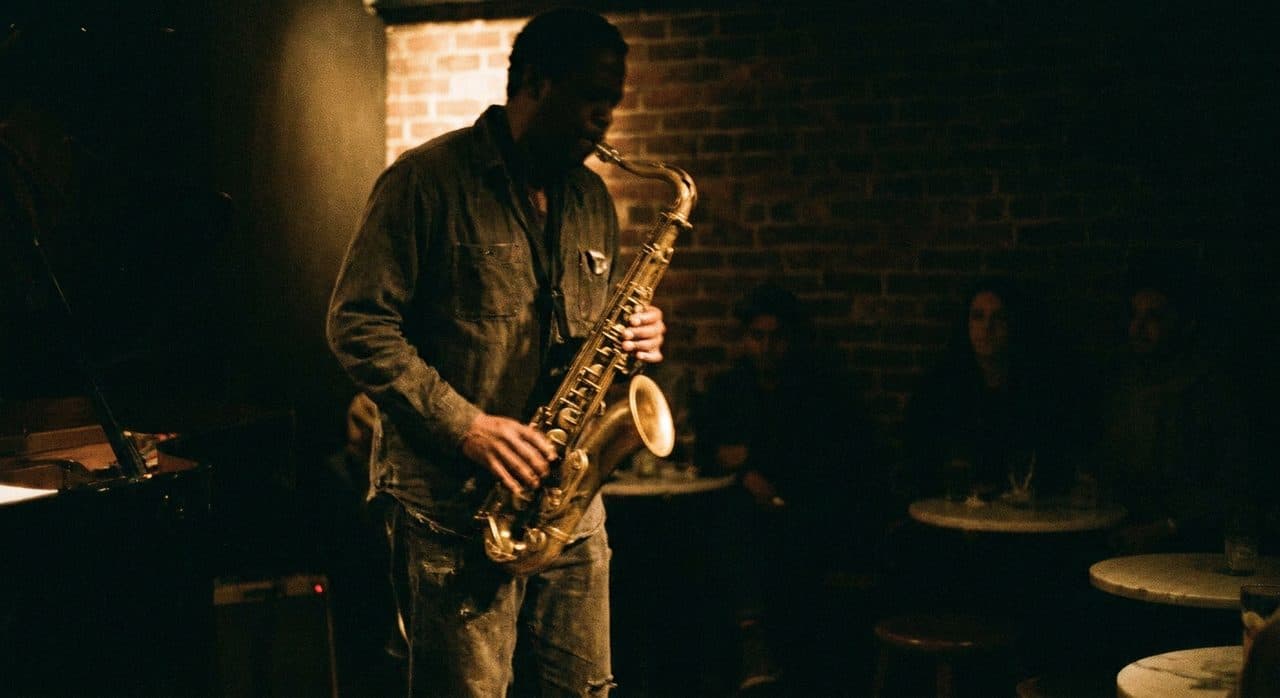
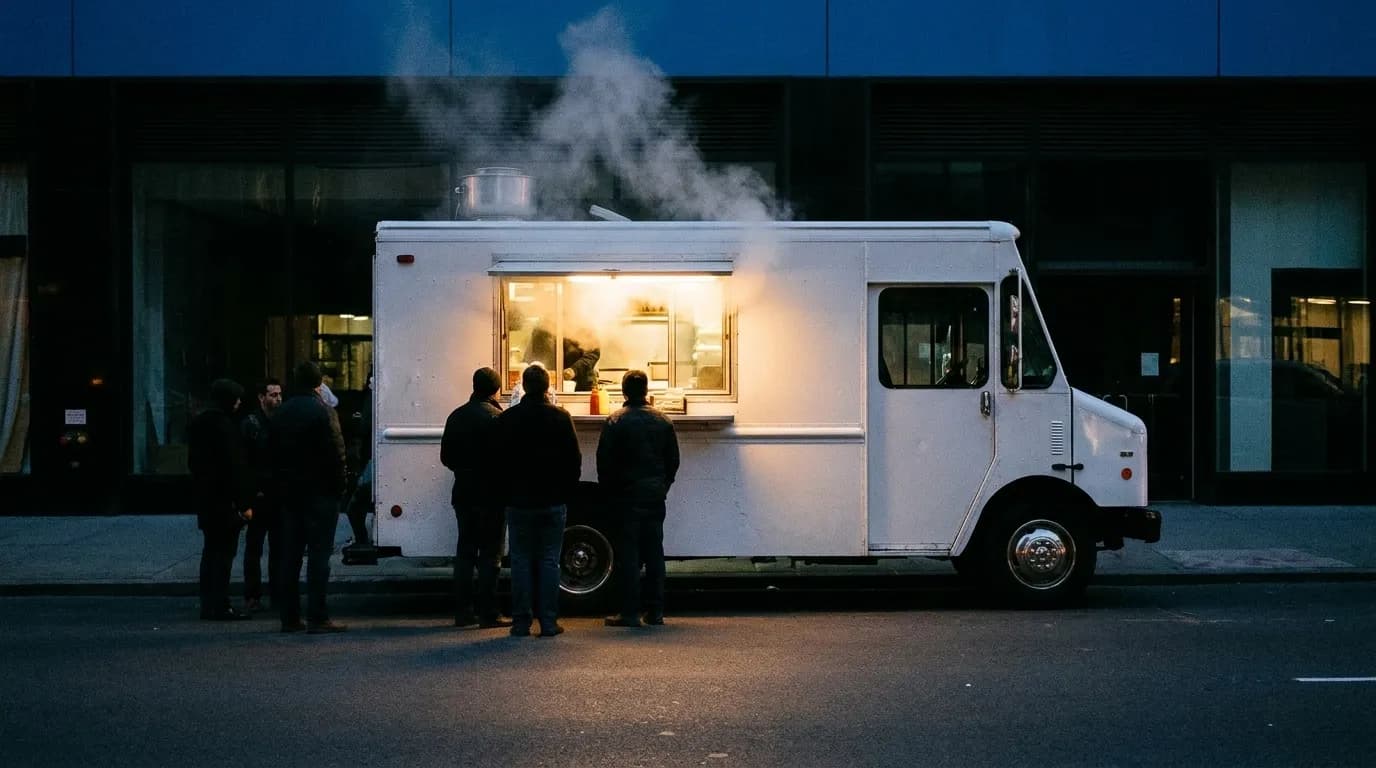
There's a particular kind of magic that happens when you descend a narrow staircase into a room where nobody knows what song comes next—not the audience, not the bartender, and certainly not the musicians themselves. On a quiet West Village side street, past the brownstones and the tourists photographing fire escapes, a chalk sign appears on the sidewalk around dusk. No Instagram handle. No QR code. Just a name, a time, and an arrow pointing down.
This is how you find one of Manhattan's last genuine improvised jazz sessions, a basement room that operates on pencil lists, well drinks, and the understanding that what happens here stays deliberately off the algorithmic grid. The space holds exactly 28 people, which means that on any given Tuesday or Thursday, roughly two dozen strangers will share something increasingly rare in this city: live music created in real time, with no setlist, no rehearsal, and no guarantee of what the next hour holds.
The Room Faces the Wrong Way, and That's the Point
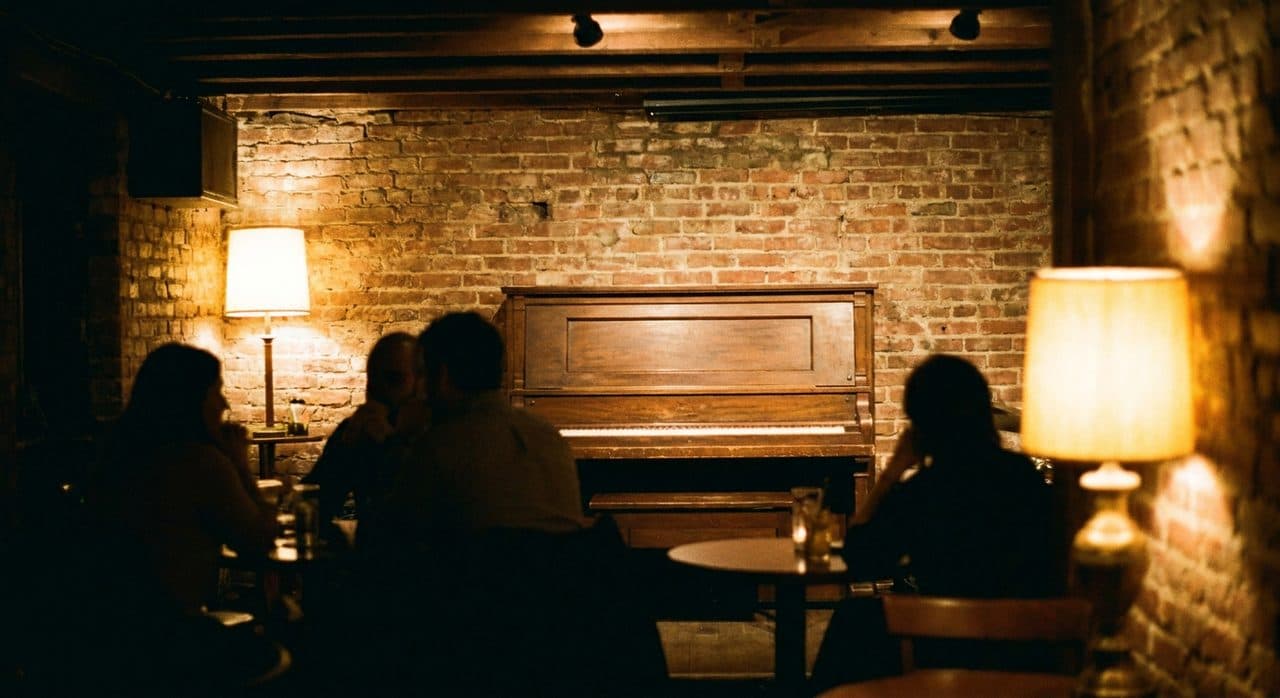
Walk into most jazz clubs and you'll find the piano angled toward the audience, the performer's face visible, the experience oriented around watching as much as listening. Here, the arrangement inverts that expectation entirely. The audience faces the back wall, toward the piano, which means you're looking at the musician's hands and shoulders rather than their expressions. The setup feels almost confrontational at first—why would anyone design a room this way?
The answer becomes clear about fifteen minutes into the first set. Without the performer's face to read, without the visual cues of a smile or a furrowed brow, your attention shifts entirely to the sound. You start hearing the hesitation before a chord change, the conversation between the bass player's left hand and the drummer's brush work, the moment when someone takes a risk and the others decide whether to follow. It's listening in a way that most modern venues don't demand or reward.
The walls are exposed brick, painted over so many times they've developed a texture like tree bark. The ceiling hangs low enough that the taller musicians duck reflexively when they move toward the small raised platform that passes for a stage. Sound doesn't escape this room—it accumulates, layering into the corners until the space itself seems to vibrate with decades of accumulated notes.
The Paper List Economy and the Art of Showing Up Early
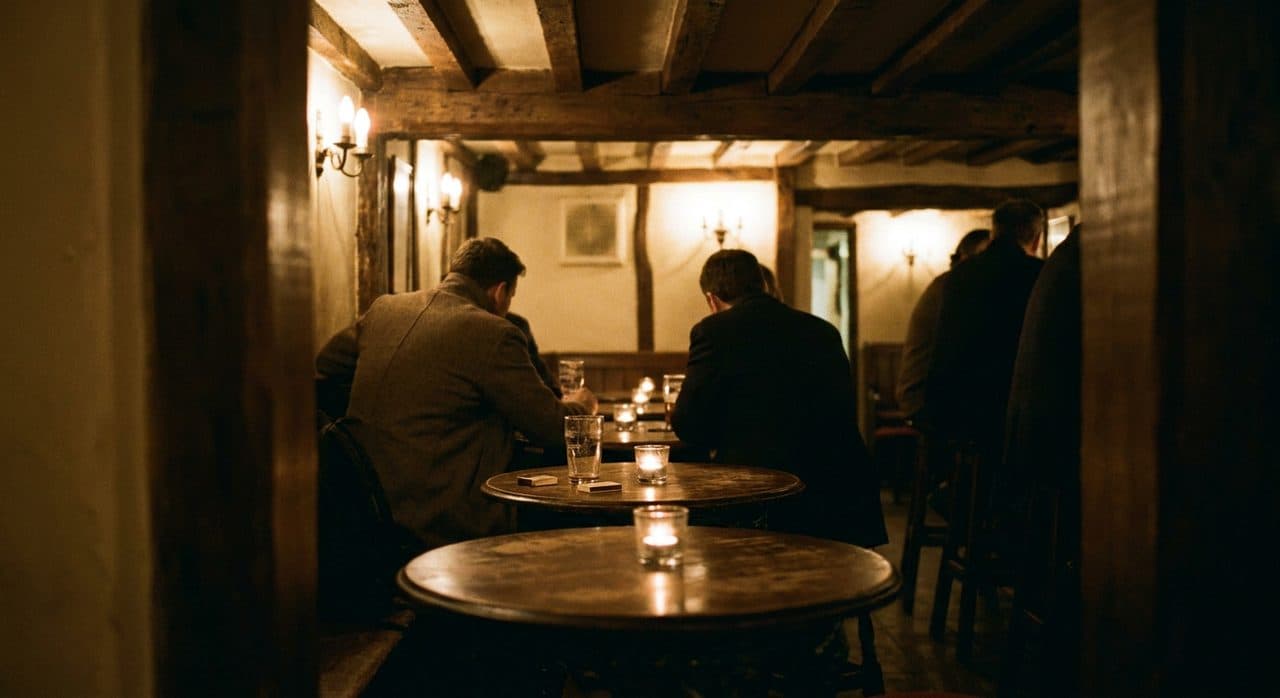
Six seats in the rear alcove sit closest to the piano, close enough to see the condensation on a glass of bourbon, close enough to hear the creak of the bench when the pianist shifts weight. These seats cannot be reserved by phone, email, or knowing someone who knows someone. They're claimed the old-fashioned way: by showing up at 7pm and writing your name in pencil on a paper list pinned to the bar.
On Thursday nights, that list is typically full by 8pm. The system rewards neither wealth nor connections—only commitment. Regulars know to arrive during the gap between the dinner rush and the session itself, ordering a drink at the bar while the staff sets up chairs and the musicians warm up in the back corner. By the time the chalk sign goes up on the sidewalk, the alcove names are already locked in, and latecomers learn to appreciate the middle rows instead.
The remaining twenty-two seats operate on a first-come basis once the door opens at 9:30pm, but the staircase queue forms by 8:45pm on both Tuesday and Thursday sessions. Standing on those worn concrete steps, you'll overhear fragments of conversation about Coltrane's later work, about a bassist who sat in last month, about whether the rain will keep the crowd thin enough to guarantee entry. The queue itself has become a social space, a decompression chamber between the city above and the room below.
A Fifteen-Dollar Philosophy Disguised as a Drink
The cover charge is fifteen dollars, but you won't find that language anywhere in the room. The menu board describes it as a "supporter's contribution," and the ambiguity is entirely intentional. This framing preserves a legal status that exempts the room from requiring a full cabaret license—a bureaucratic artifact of New York's complicated relationship with dancing, live music, and spaces that blur the line between private gathering and public performance.
Your contribution includes one well drink, poured without ceremony into a rocks glass that's seen better decades. The whiskey is acceptable, the gin is forgettable, and the vodka tastes like exactly what it costs. Nobody comes here for craft cocktails. The drink is a ritual, a way of participating in the economics of a room that survives on thin margins and thick loyalty.
Cash is preferred, though a single card reader sits behind the bar for those who forgot to stop at the ATM. There's no tipping jar for the musicians—whatever arrangement exists between them and the room happens outside the audience's view. The transaction feels almost ceremonial: you give fifteen dollars, you receive a drink and a seat, and for the next two hours, you become part of whatever emerges from the instruments.
What Improvisation Actually Sounds Like When Nobody's Performing
The musicians who play here aren't showcasing material or working through arrangements for an upcoming album. They're genuinely improvising, which means the Tuesday session might be transcendent and the Thursday session might meander for twenty minutes before finding its footing. This is the bargain you make with unscripted music: some nights crystallize into something you'll remember for years, and other nights simply pass pleasantly without revelation.
The core trio rotates, though certain combinations appear frequently enough that regulars recognize them by silhouette. A pianist with close-cropped gray hair who favors long, searching introductions. A bassist who plays with his eyes closed and seems to anticipate chord changes before they happen. A drummer who uses brushes almost exclusively, creating textures rather than rhythms. Guest musicians sit in occasionally, and the negotiation of space—who leads, who follows, who lays out entirely—happens through sound rather than words.
Between sets, the room exhales. Conversations resume at normal volume. The bartender refills drinks and wipes down the zinc counter that's older than most of the audience. Someone steps outside to smoke on the sidewalk, and the chalk sign catches the streetlight, still pointing down toward a room that most passersby will never notice.
The Crowd That Keeps This Place Alive
The audience skews older than you might expect—fewer NYU students seeking content, more middle-aged professionals who discovered the room years ago and return with the regularity of a subscription. You'll spot a retired music teacher from the Upper West Side who takes the same alcove seat every Thursday. A couple in their sixties who met here during a snowstorm in 2019 and now treat it as their standing date night. A jazz critic who writes for a publication you've heard of, scribbling notes in a Moleskoi notebook that's almost full.
Younger faces appear too, usually brought by someone who knows the room's rhythms. First-timers are easy to identify: they're the ones checking their phones during the first set, unsure of the etiquette, gradually realizing that the room operates on different rules. By the second set, most of them have put their screens away. Some will never return. Others will become regulars themselves, learning the paper list system, memorizing the staircase queue timing, eventually bringing their own friends to a place that resists discovery by design.
Practical Notes
The room is located on a side street in the West Village, identifiable only by the chalk sign that appears at sidewalk level before sessions. Nearest subway access is the 1 train at Christopher Street-Sheridan Square or the A/C/E at 14th Street, both within a ten-minute walk. Sessions run Tuesday and Thursday only. Doors open at 9:30pm; arrive by 8:45pm for queue positioning. The $15 supporter's contribution includes one well drink. For alcove seating near the piano, add your name to the paper list at the bar starting at 7pm—Thursday lists fill by 8pm. Cash preferred. No reservations, no digital listings, no exceptions. The room holds 28 people maximum; once capacity is reached, the staircase closes. Dress comfortably—the basement runs warm, and the chairs are wooden.
Tags: #WestVillageJazz #NYCHiddenGems #LiveJazzNYC #UndergroundMusic #WestVillageNightlife #JazzSession #NYCNightlife #LocalsOnly #ImprovisedJazz #IntimateVenues #NYCMusic #HiddenBars #JazzLovers #OffTheGridNYC #NewYorkSecrets
Sources consulted: timeout.com · nymag.com · thrillist.com · eater.com
Please drink responsibly. Must be of legal drinking age.
All trademarks are the property of their respective owners.
Ask Karpo first
Want to know whether Tuesday or Thursday sessions tend to be less crowded, what's on the chalk board this week, and which neighboring West Village bars make the best pre-show stop? Ask Karpo for the session schedule, door-time advice, and a walking route before you head out.