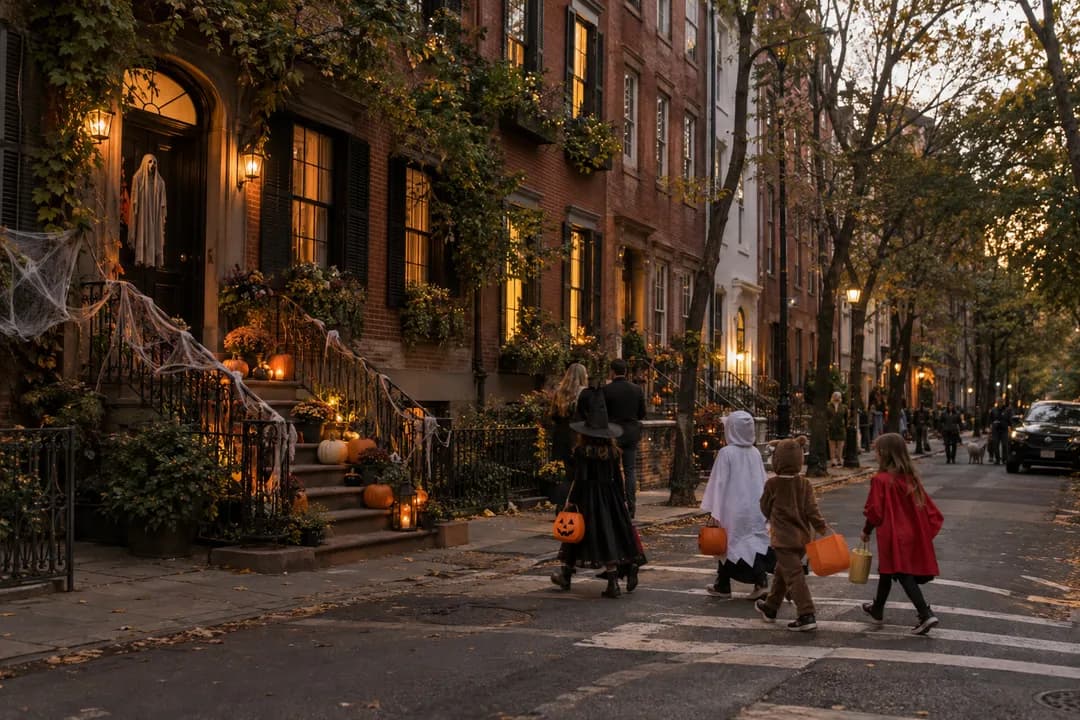
 Best Trick or Treating Neighborhoods Near Me: Park Slope
Neighborhood Guides
The Walk from Prospect Park to Green-Wood Cemetery Takes 45 Minutes and 200 Years
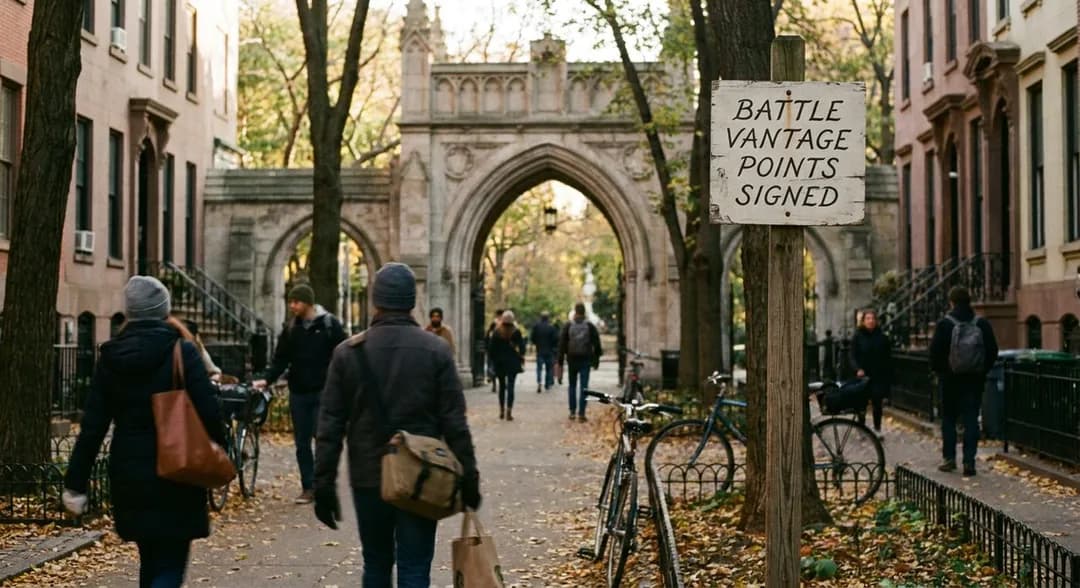
From Bartel-Pritchard Square into the Gothic arches; the battle vantage points are signed
You start at Bartel-Pritchard Square where Prospect Park West meets 15th Street, and you finish at Green-Wood's Gothic Revival entrance on 25th Street. Between those ten blocks you walk through 200 years of Brooklyn's memory — from Frederick Law Olmsted's meadows to the marble angels watching over half a million graves. The route takes 45 minutes if you don't stop, two hours if you let yourself drift.
The Square Where Three Streets Collide
Bartel-Pritchard sits at the park's southwest corner, named for two World War I soldiers who never came home. Most people pass through without noticing the small bronze plaques set into the stone wall, but you should stop and read them — the dates are 1918, the names are neighborhood boys, and the square's been here since 1923. Cross Prospect Park West heading south and you're on 15th Street, a residential stretch where brownstone stoops still have the original iron railings from the 1890s. The street slopes gently downward and the light changes depending on the season — in October the ginkgo trees turn electric yellow and drop their fruit, which smells like vomit but looks like gold coins on the sidewalk.
The Blocks Where Brooklyn Forgets It's a City

Between 15th and 20th Streets you walk through what Park Slope looked like before the boutiques arrived. There's a bodega at 17th Street where the cat sleeps in the produce section and the owner still uses a cash register with physical keys. Two blocks down, the Church of St. Thomas Aquinas has a side door that's always unlocked during daylight hours — slip inside and you'll find a small chapel with afternoon light coming through stained glass windows installed in 1932. The temperature drops ten degrees when you step in. Nobody bothers you. On 19th Street there's a community garden hidden behind a green wooden fence; the gate's open on weekends between 10 AM and 4 PM from April through October, and inside there are raised beds tended by the same families who've lived here since the 1970s.
The Sight Line Where You First See the Gates
At 20th Street the view opens up. You're still six blocks away but you can see Green-Wood's main entrance rising above the roofline — those twin Gothic spires designed by Richard Upjohn in 1861. The gates are 106 feet tall and they were built to announce that you're entering somewhere important, somewhere permanent. Keep walking south and the spires grow larger with each block. At 22nd Street there's a small playground where neighborhood kids have been playing since the 1950s, and if you look at the fence you'll notice it's made from repurposed ironwork that matches the cemetery's original gates. Someone made that decision deliberately. The sidewalk here is original bluestone, uneven and cracked, and tree roots have pushed up the slabs at odd angles.
The Intersection Where History Gets Marked
At 23rd Street and Prospect Park West there's a small historical marker most people miss — it's set into the sidewalk itself, a bronze medallion about six inches across. It marks the approximate location of a Revolutionary War skirmish from August 1776, part of the Battle of Brooklyn. American troops retreated through these hills while British forces pushed south from Greenwood Heights. Stand here at dusk in November and you can almost feel the panic of that retreat — the light fails fast, the wind comes cold off the harbor, and you're standing on the same slope those soldiers ran down. Green-Wood's hills were strategic high ground during that battle, which is why the cemetery now has signed vantage points where you can read about troop movements and sight lines.
The Approach Where the Living Meet the Dead
The last three blocks feel different. You're walking toward those Gothic gates and the street gets quieter even though you're still in the middle of Brooklyn. The buildings thin out. At 24th Street there's a small stone wall on the west side that's actually the cemetery's outer boundary — if you run your hand along it you'll feel where the original 1838 stones meet the 1920s additions. The mortar's different colors. By 25th Street you're standing at the main entrance, and the gates are even more elaborate up close than they looked from six blocks away. The arch is covered in trefoils and quatrefoils, Gothic Revival details that Upjohn copied from medieval European cathedrals. Walk through and you're inside 478 acres of hills, ponds, and monuments.
Inside Where the Battle Markers Wait
Green-Wood's main paths are paved but you want the smaller dirt trails that wind up Battle Hill, the cemetery's highest point at 216 feet above sea level. The signed vantage points are marked with small green posts — there are four of them scattered across the hills, each with a metal plaque explaining what happened here in August 1776. The clearest one is near the Altar to Liberty monument at the summit. Stand there and you can see the Verrazano Bridge, the harbor, all of lower Manhattan. British troops held this hill and could see everything the Americans were doing. The plaques were installed in 2001 and they're maintained by the cemetery's historian, who leads free walking tours every third Saturday at 1 PM from April through October. You don't need to book ahead, just show up at the main gate.
Practical Notes
Green-Wood Cemetery is open daily from 7:45 AM until dusk (5 PM in winter, 7 PM in summer). Entry is free but they suggest a $5 donation. The main entrance is at 500 25th Street at the intersection with Prospect Park West. Take the R train to 25th Street station and walk two blocks west, or take the F/G to 15th Street-Prospect Park and start the walk from Bartel-Pritchard Square. Bring water — there are no facilities once you're inside the cemetery grounds. The best time to walk this route is late afternoon in autumn when the light goes gold and the crowds thin out. Wear good shoes because the cemetery paths are steep and some trails are unpaved. The office at the main gate has free maps showing all the battle markers and notable graves. If you want the full historical context, pick up a copy of "Green-Wood Cemetery: New York's Buried Treasure" at the gift shop for $18.
Tags: #TheLongWayHome #ParkSlope #GreenWoodCemetery #ProspectPark #BrooklynHistory #BattleOfBrooklyn #RevolutionaryWar #GothicRevival #HiddenNewYork #NYCWalks #BrooklynWalking #UrbanHiking #CemeteryTourism #HistoricBrooklyn #NYCHistory
Sources consulted: timeout.com · atlasobscura.com · nycgo.com
All trademarks are the property of their respective owners.
Ask Karpo for more information.
Keep reading
- Best Trick or Treating Neighborhoods Near Me: Park Slope
 Best Trick or Treating Neighborhoods Near Me: Carroll Gardens
 Best Trick or Treating Neighborhoods Near Me: West Village