 Dinner Near Me in the Flatiron: Rezdôra's Emilia-Romagna Pastas
Restaurants
The Tapas Bar Turning Red for Every Spanish Kickoff
A Queens restaurant becomes a Madrid annex during World Cup fixtures, the paella pans working overtime and the bar chanting in Catalan and Castilian alike.
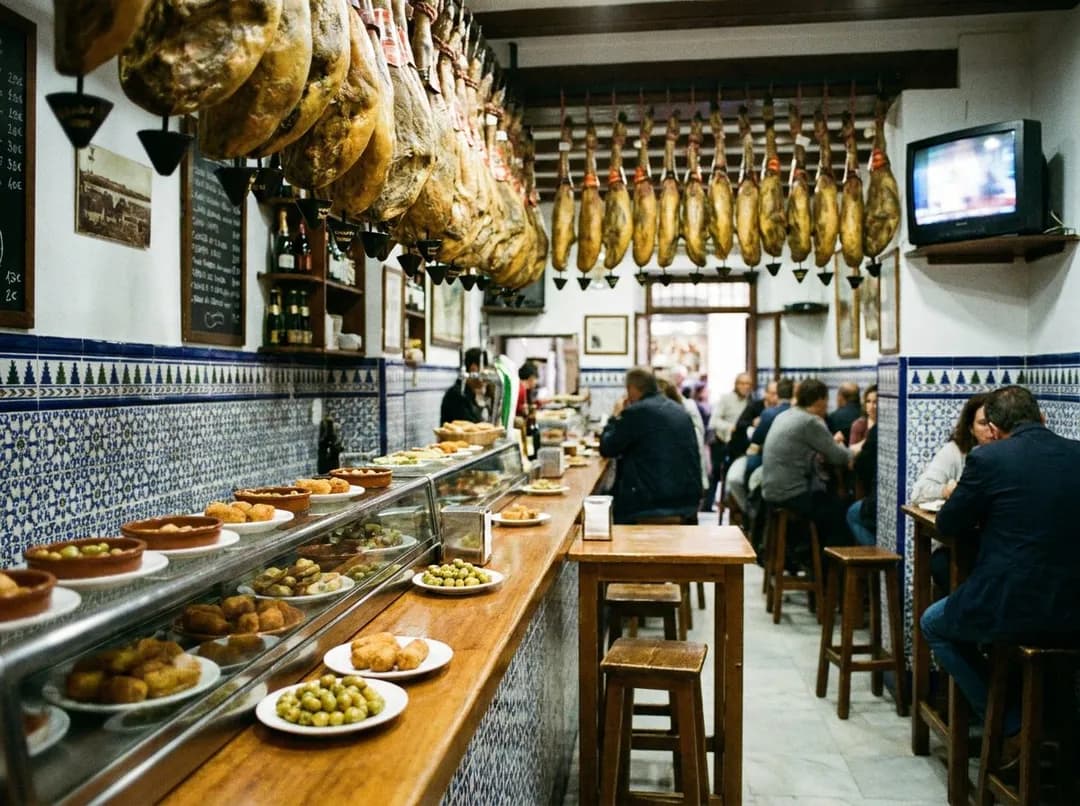
You walk into this Astoria tapas bar on a weekday morning and the air already smells like saffron and chorizo fat hitting a hot pan. The place is quiet except for kitchen clatter and a bartender arranging vermouth bottles, but come back three hours before Spain kicks off and you'll find every seat claimed, scarves draped over chair backs, and a crowd that's already two cañas deep and arguing about defensive formations in three different regional accents.
The Kitchen Runs on Match Day Logic
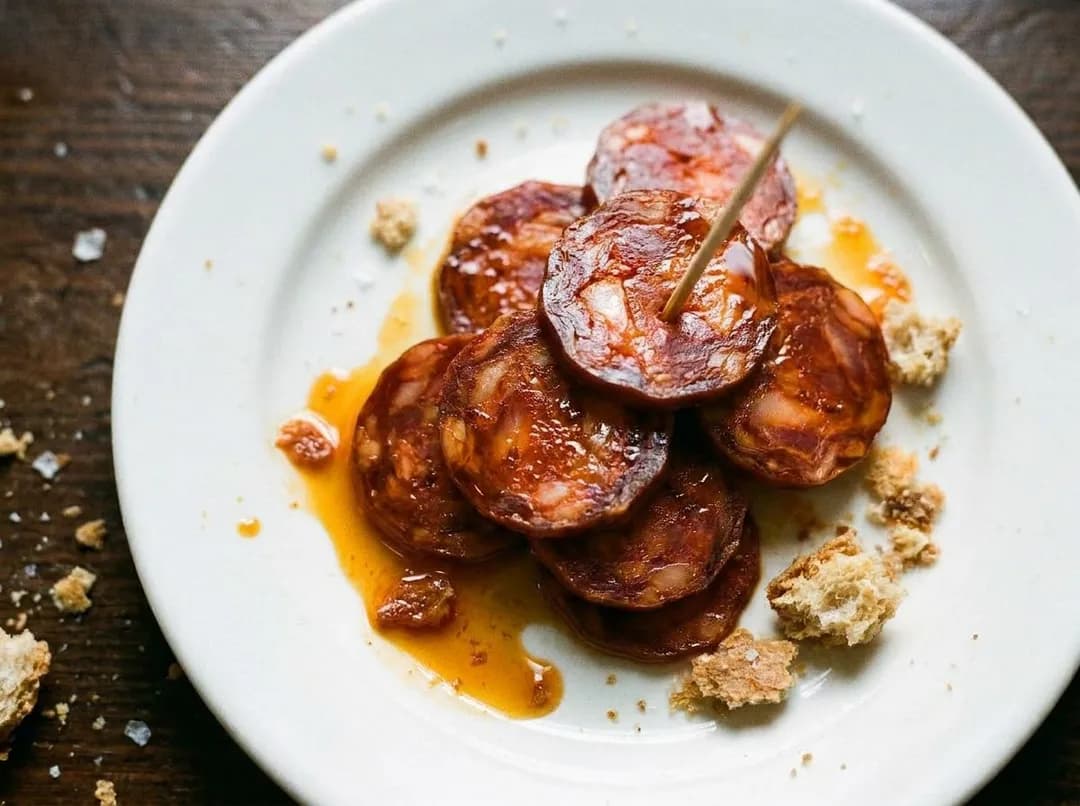
The paella pans come out around noon on game days, wide enough that you wonder how they fit through the doorway. You'll see the chef building the socarrat—that crispy rice layer at the bottom—while keeping one eye on the flat-screen mounted above the pass. The timing matters here. Everything has to be plated and served before kickoff because once the whistle blows, the kitchen goes quiet except for the sound of olives being pitted for the next round of montaditos. The gambas al ajillo keep coming out in clay dishes that sear your fingertips if you're not careful, the oil still bubbling when it hits the table. On slower days you can order off the full menu, but during tournament fixtures the kitchen runs a tighter rotation—tortilla española, patatas bravas, jamón sliced thin enough to see through, and whatever fish came in that morning from the wholesaler on Steinway Street.
The Crowd Arrives in Waves, Then Floods
An hour before match time, the regulars start claiming their territory. The corner table near the window always goes to the same group of guys who show up in vintage Raúl jerseys and order Rioja by the bottle. The bar fills next—standing room only, shoulders pressed together, everyone angling for a sightline to the main screen. You'll hear Catalan mixing with Castilian Spanish, plus the occasional English translation for someone's American partner who's still learning when to shout at the referee. The real shift happens about twenty minutes before kickoff when the door opens every thirty seconds and the noise level doubles. Suddenly there's no space at the bar, no empty tables, and the bathroom line stretches past the kitchen entrance. Someone always brings a drum. You'll know when you hear it—a deep booming rhythm that matches the chants, the kind of sound that makes the glasses rattle on their shelves.
Red Floods Every Surface When the Anthems Play
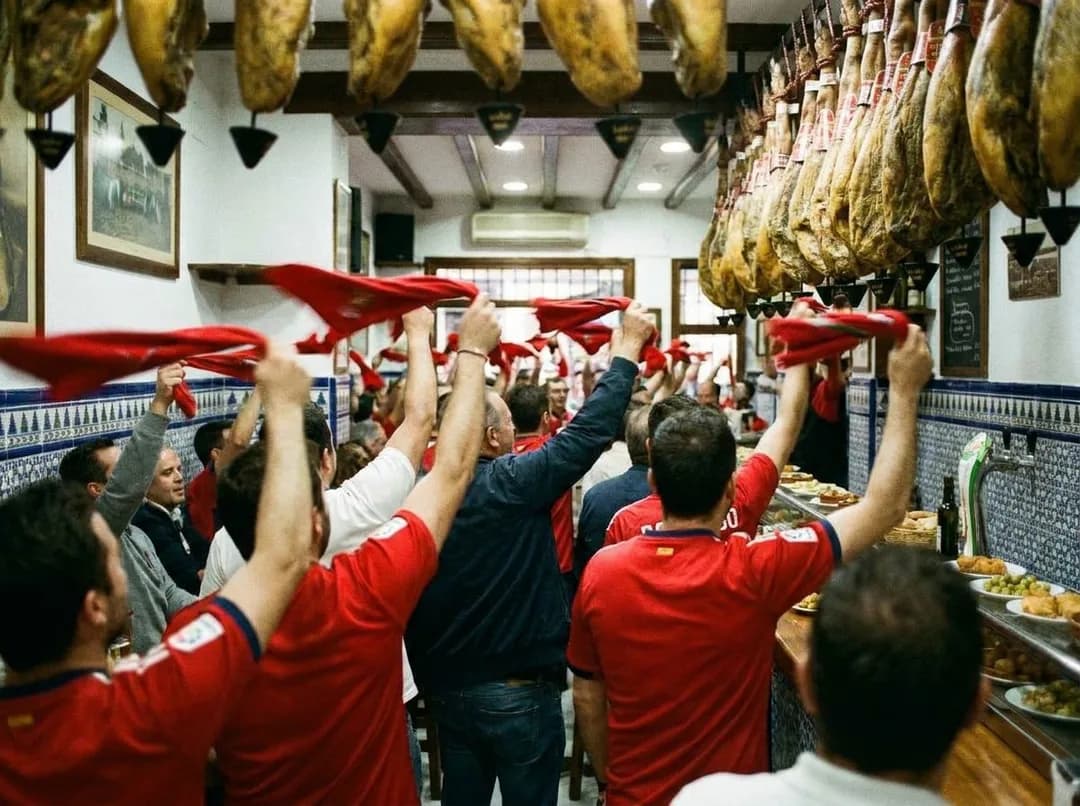
The scarves come out during the national anthem. They're draped over shoulders, tied around wrists, held overhead and waved in unison until the whole room looks like it's been dipped in crimson. The bartenders wear Spain kits—different eras, different sponsors, but always red. Even the cocktail napkins switch to red and gold on match days, a detail you'd miss if you weren't looking. The walls are covered with framed photos of past tournaments, some faded enough that you can barely make out the faces, but everyone in here knows the year and the scoreline without reading the captions. When the whistle blows to start the match, the entire room goes silent for about five seconds, then erupts the moment someone touches the ball. It's the kind of collective focus you don't see outside of religious services or playoff games—every person breathing in sync, leaning forward in their chairs, hands gripping the table edge.
The Bartender Knows Your Drink Before You Order
If you've been here more than twice during a tournament, the bartender will have your drink ready before you finish saying hello. Estrella Galicia on tap for most people, though the vermouth drinkers get their own glassware and a proper orange twist. The wine list leans heavily toward Tempranillo and Albariño, poured generously enough that you lose count after the second glass. Between halves, the bar becomes a scrum—everyone trying to order at once, cash and cards waving in the air, the bartender moving with the efficiency of someone who's worked stadium concessions. There's a rhythm to it, a practiced choreography of bottle-opening and glass-filling that never stops even when someone scores and the entire room jumps to its feet. The regulars know to order two drinks at once, one for now and one for the second half, because getting back to the bar after play resumes is nearly impossible.
Halftime Means Refueling and Rearguing Every Call
The break between halves turns the dining room into a town hall meeting. Everyone has an opinion about the substitution, the yellow card, the offside call that wasn't. You'll see people sketching formations on napkins, using salt shakers and olive pits to demonstrate what the midfield should have done differently. The kitchen uses this window to push out another round of plates—croquetas that crack open to reveal molten béchamel, pimientos de padrón blistered and salted, bread rubbed with tomato and drizzled with olive oil. The tables that ordered paella earlier are now scraping the bottom of the pan for those last bits of crispy rice, the kind of quiet satisfaction that comes from good timing and better cooking. Someone always steps outside to smoke and call relatives back in Spain, their voice carrying through the propped-open door, animated recaps in rapid-fire Spanish that need no translation.
The Final Whistle Decides Whether You Stay or Scatter
When the match ends, the room splits into two reactions. A win means staying for another round, maybe two, the music turned up and the atmosphere shifting from tense to celebratory. You'll hear "Viva España" chanted until voices go hoarse, see strangers hugging at the bar, watch the staff break into grins they've been holding back for ninety minutes. A loss or a draw means a quieter exit—people settling tabs quickly, filing out into the Astoria afternoon with hands shoved in pockets and scarves pulled tight. But even in defeat, there's a sense of shared experience, the kind of communal disappointment that only sports can generate. The staff starts clearing tables while the post-match analysis plays on the screens, and if you linger long enough, you'll catch them debating the game in the same heated tones the customers used an hour earlier.
Practical Notes
The bar sits in the heart of Astoria, easy walking distance from the N and W trains. On match days, arrive at least an hour early if you want a seat—earlier if it's a knockout round or a rivalry fixture. No reservations during tournament play, just first-come claiming of territory. The kitchen starts prepping game-day specials mid-morning, and the full menu returns once the final whistle blows. Cash moves faster at the bar during peak moments, though cards work fine if you're patient. The atmosphere skews louder and more packed for Spain matches, but you'll find crowds here for other fixtures too, especially if there's a strong Latin American contingent in the tournament. Expect to stand if you arrive late, and don't be surprised if someone asks you to move slightly so they can see the screen—it's part of the choreography.
Tags: #AstoriaEats #QueensFoodScene #TapasBar #SpanishCuisine #SoccerCulture #MatchDayVibes #NYCHiddenGems #FoodAndFootball #AstoriaQueens #SpanishDiaspora #PaellaLovers #WorldCupWatch #NewYorkEats #NeighborhoodSpots #SportsBarCulture
Sources consulted: timeout.com · secretnyc.co · thrillist.com
Please drink responsibly. Must be of legal drinking age.
All trademarks are the property of their respective owners.
Ask Karpo for more information.
Keep reading
- Dinner Near Me in the Flatiron: Rezdôra's Emilia-Romagna Pastas
 Lunch Near Me on the Lower East Side: Katz's Hand-Carved Pastrami
 Pizza Near Me in Carroll Gardens: Lucali Is Cash-Only and BYOB