The Staten Island Ferry Art Walk That Rotates Every Six Weeks
A Terminal Transformed Into a Canvas
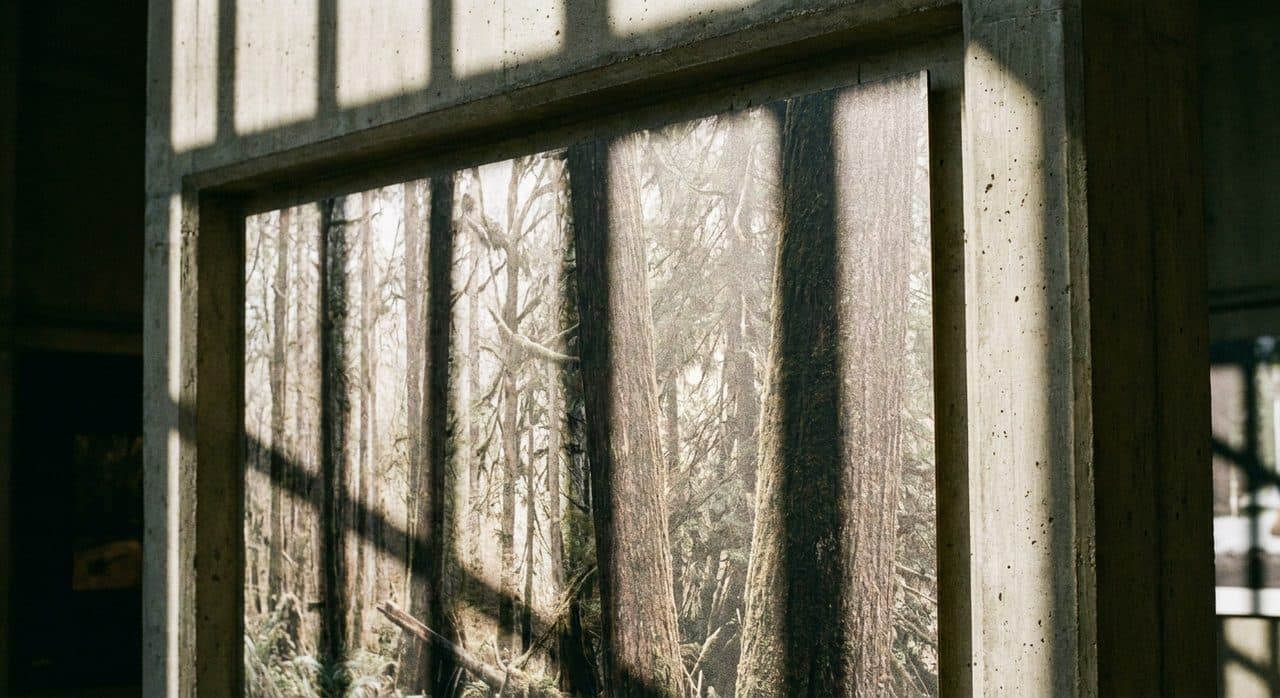
The Whitehall Ferry Terminal has always been a place of transit, of hurried footsteps and departing vessels, of commuters clutching coffee cups and tourists craning for their first glimpse of Lady Liberty. But since 2023, something quieter has been happening within these walls—a visual art programme that treats the entire terminal as an evolving gallery, one that changes its skin every six weeks like the harbour changes its light.
Most visitors to the Staten Island Ferry know the basics: it's free, it runs around the clock, and it offers one of the most spectacular views of New York Harbor without spending a dime. What they don't know is that before they even board, they're walking through a curated exhibition space. The programme, organized by a Brooklyn-based nonprofit dedicated to public art accessibility, has transformed this utilitarian transit hub into something that rewards the attentive eye.
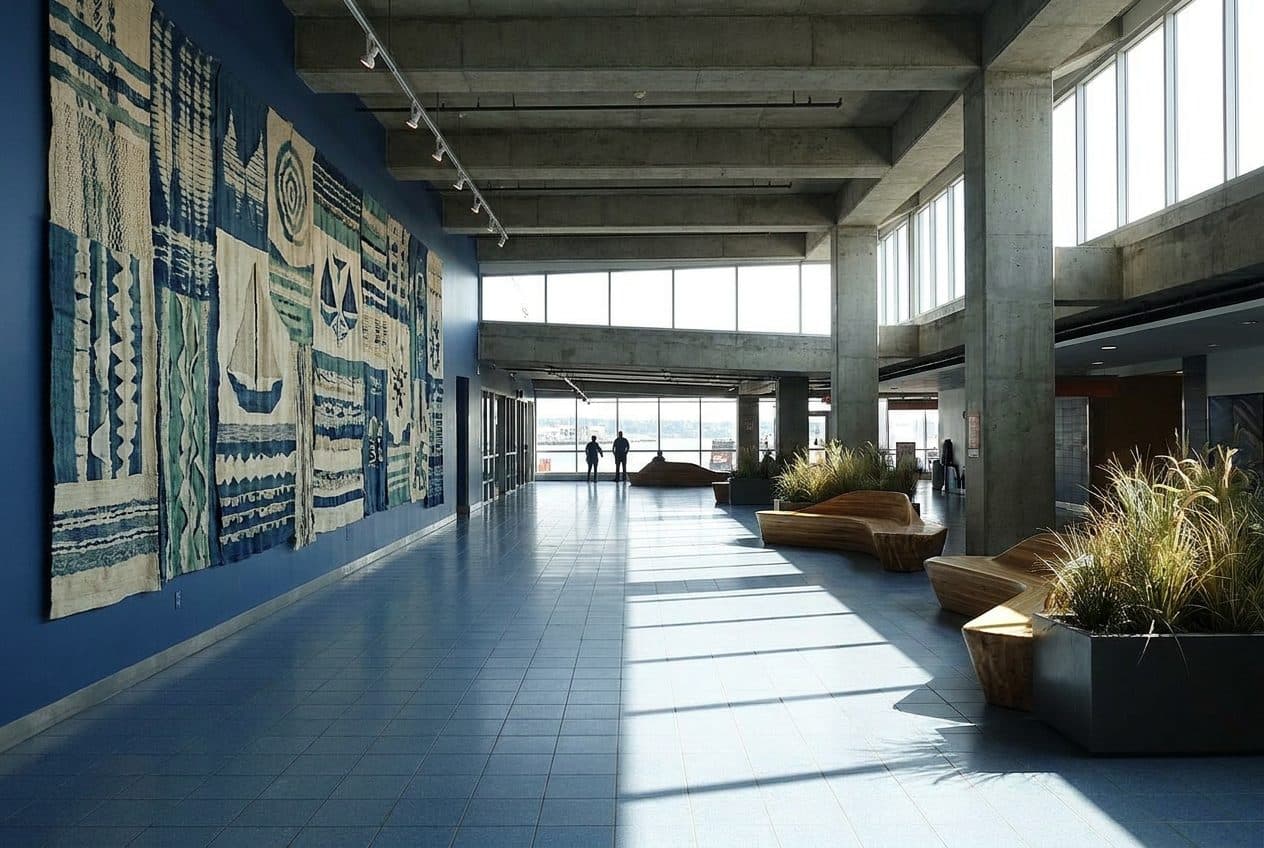
The works aren't hung in the conventional sense. There are no pristine white walls here, no velvet ropes or museum hush. Instead, the commissioned artists respond directly to the terminal's architecture—its brutalist concrete surfaces, its industrial columns thick as tree trunks, its cavernous ferry loading bays that echo with the mechanical poetry of arrival and departure. The current installation takes this site-specificity to its logical conclusion: it uses the floor itself as its primary canvas, spreading across the terminal's expanse like a tide that came in and left colour behind.
The Architecture of Attention
Walking into Whitehall Terminal during an active installation is an exercise in recalibration. The eye, trained by years of gallery visits to scan walls at a certain height, must learn to look elsewhere—down at the terrazzo beneath your feet, up at columns wrapped in vinyl murals, across to the massive windows where harbour light filters through and interacts with whatever the current artist has dreamed up.
The building itself is a 2005 reconstruction, built after a devastating fire claimed the original Beaux-Arts structure. Its replacement is unabashedly modern: soaring ceilings, exposed structural elements, walls of glass that frame the water like living paintings. The art programme treats these features not as obstacles to work around but as collaborators. One recent installation turned the loading bay doors into a sequential narrative, each gate revealing a different chapter as ferries came and went. Another used the columns as vertical timelines, charting the harbour's ecological history from floor to ceiling.
This approach means that no two installations feel alike, even when they occupy the same square footage. The terminal's bones remain constant, but its flesh changes—sometimes bold and demanding, sometimes subtle enough that regular commuters do double-takes at surfaces they've passed a hundred times before.
Dawn at the Water's Edge
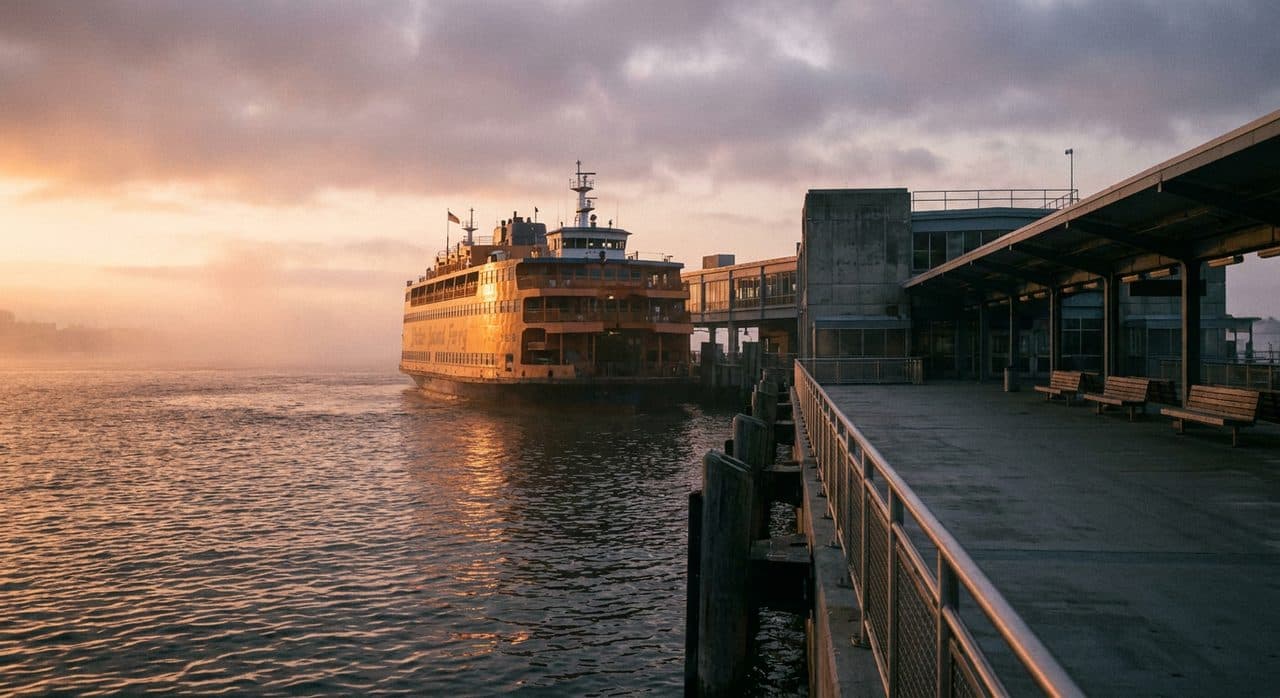
There's a window of time, brief and luminous, when the terminal reveals itself most fully. Between 6:30 and 8am on weekdays, the space achieves a particular balance: enough movement to feel alive, enough emptiness to actually see. Early commuters flow through with the purposeful rhythm of people who know exactly where they're going, leaving clear sightlines and moments of stillness between the human currents.
The light at this hour is different too. It comes in low and golden off the harbour, catching the floor installations at angles that make colours bloom and shadows stretch. If the current work has any reflective elements—and many do, playing with the industrial surfaces—this is when they ignite. The concrete walls, usually a flat grey, take on warmth. Even the coffee from the terminal vendors tastes better when you're standing in that particular glow, watching art and architecture and the business of the city's oldest ferry route converge.
After 8am, the calculus shifts. Commuter density peaks, bodies obscuring floor work, the collective pace too urgent for contemplation. By 9am, a different crowd arrives—tourists who've read about the free harbour ride, families with cameras ready for the Statue of Liberty. They're not wrong to come, but they're rarely looking at the walls. The art becomes background, which is perhaps its own kind of success, but not the full experience the programme intends.
What Lives Beneath Your Feet
Near Gate 4, there's something permanent amid all this rotation. A 40-foot mosaic spreads across the floor, depicting the harbour in thousands of tessellated pieces—water and sky and the silhouettes of vessels rendered in stone and glass. It was created by a Staten Island artist as a fixed anchor for the programme, a work that will outlast any six-week cycle.
Most people cross it without looking down. They're checking departure boards, adjusting bags, texting that they're almost there. The mosaic absorbs their footsteps without complaint, its surface designed to withstand the daily passage of thousands. But pause above it, and the detail emerges: the way the artist captured the harbour's moody greys, the suggestion of the Verrazzano in the distance, the tiny boats that seem to move if you let your eyes relax.
This permanence serves a purpose beyond aesthetics. It reminds visitors that the art programme isn't a temporary gimmick but a sustained commitment to transforming public space. The rotating works get the attention, the social media moments, the fresh excitement every six weeks. The mosaic gets the quiet devotion of those who know to look.
The Nonprofit Behind the Walls
The Brooklyn-based organization running the programme operates on a philosophy that public art should be genuinely public—not sequestered in museums that charge admission or galleries that intimidate the uninitiated. Ferry terminals, they argue, are democratic spaces. Everyone rides, regardless of income or background or artistic education. Why shouldn't everyone encounter art?
Their curatorial approach emphasizes emerging and mid-career artists, many from the five boroughs, who might not otherwise receive commissions at this scale. The six-week rotation means more opportunities, more voices, more experiments. Some installations succeed brilliantly; others are interesting failures. Both outcomes serve the programme's mission of treating public art as a living practice rather than a monument.
The organization also runs educational programming around each installation—artist talks, walking tours, workshops for local schools. These happen mostly on weekends, when the tourist crowd provides a ready audience for guerrilla education about what they're seeing. But the art itself requires no docent, no explanation. It simply exists, available to anyone passing through.
Catching the Current Installation
The present exhibition, with its floor-focused approach, represents one of the programme's most ambitious experiments yet. The artist, whose previous work explored urban surfaces in Chicago and Philadelphia, spent weeks studying how people move through the terminal—the desire paths worn into behaviour, the spots where crowds naturally thin, the zones of pause and rush.
The resulting work maps these invisible patterns in pigment, creating a kind of choreographic notation across the terminal floor. Walking through it, you become briefly aware of your own trajectory, your place in the daily dance of transit. It's the sort of piece that rewards multiple visits, revealing different aspects depending on crowd density, light conditions, and your own state of attention.
With the strawberry moon rising over the harbour this month, evening visitors have reported a particular magic: the warm lunar light through the terminal's glass walls casting the floor work in amber tones, the whole space feeling suspended between day and night, between art and infrastructure.
Practical Notes
Getting there: The Whitehall Ferry Terminal sits at the southern tip of Manhattan, accessible via the 1 train to South Ferry or the R/W to Whitehall Street. The terminal is fully accessible, with elevators and ramps throughout.
Timing: For the best viewing experience, arrive between 6:30 and 8am on weekdays. Weekend mornings offer more space but less of the kinetic energy that makes the terminal feel alive. Check the programme's website for current installation dates and any scheduled artist events.
The mosaic: Look for the permanent floor installation near Gate 4. It's easy to miss if you're rushing, so approach with intention.
Cost: Both the art programme and the ferry itself are completely free. The round-trip ride takes approximately 50 minutes and offers views of the Statue of Liberty, Ellis Island, and the Manhattan skyline.
Current rotation: Installations change every six weeks; the programme's social media accounts announce new openings and closing dates.
Tags: #StatenIslandFerry #NYCFreeThings #PublicArtNYC #WhitehallTerminal #FreeNYC #NYCArt #HiddenNYC #NewYorkHarbor #BrooklynArtists #TerminalArt #NYCSecrets #FreeActivitiesNYC #ArtWalk #MosaicArt #NYCWeekend
Sources consulted: timeout.com · nymag.com · thrillist.com · eater.com
All trademarks are the property of their respective owners.
Ask Karpo first
Want to know what's currently installed at the Whitehall Terminal and whether there's a special programme this week? Ask Karpo for the latest Staten Island Ferry art update.