 Dinner Near Me in the Flatiron: Rezdôra's Emilia-Romagna Pastas
Restaurants
The Solo Counter Seat at a Chinatown Noodle Shop When the Steam Clears at Two
A late lunch alone at the counter, watching hands pull dough under fluorescent light, the room emptying into its quietest hour.
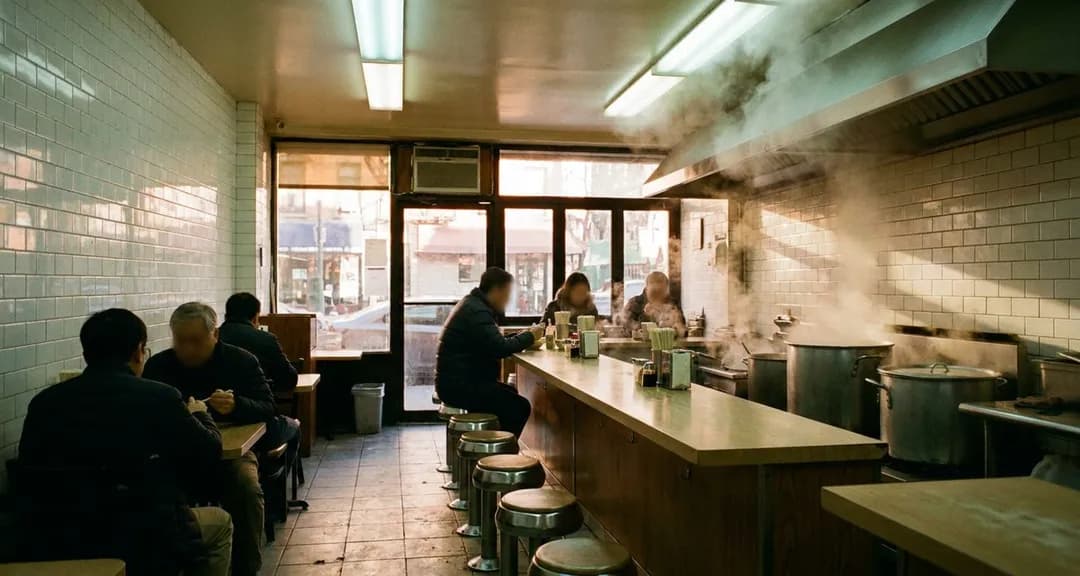
You slip into the last empty stool at the counter right as the lunch crush dissolves into cigarette breaks and the clatter of dishes being scraped clean. It's two in the afternoon at a narrow noodle shop on Bayard Street, and the steam from the kitchen finally settles enough that you can see the cook's hands working dough into long, elastic ribbons. This is the hour when Chinatown exhales, when the tourists have wandered back toward Canal and the office workers have returned to their desks, leaving just you and the rhythm of flour meeting water.
The Geography of an Empty Room
The counter runs the length of the shop, maybe ten stools total, and by mid-afternoon only three are occupied. You take the seat closest to the kitchen window, where the heat still radiates through the opening and you can watch everything. The fluorescent tubes overhead buzz at a frequency you stop noticing after the first five minutes. To your left, an older man in paint-spattered jeans eats dan dan noodles without looking up from his phone. To your right, two stools down, a woman in hospital scrubs methodically works through a bowl of something dark and aromatic that you make a mental note to order next time. The linoleum floor is slick with the day's spills, and your shoes stick slightly when you shift your weight. This isn't atmosphere engineered for Instagram. This is a working kitchen that happens to have seats.
What Happens When Hands Know Dough
Through the kitchen window, you watch the noodle-maker pull and fold, pull and fold. His movements have the efficiency of someone who stopped thinking about technique years ago. The dough stretches to arm's length, doubles back on itself, stretches again. There's no performance here, no eye contact with diners, just the repetitive geometry of gluten being coaxed into submission. The sound is specific: a soft slap when the dough hits the steel counter, a whisper when it's folded. You can smell the wheat, slightly sweet, mixing with the sharper notes of scallion oil and white pepper that hang in the air. When he finally cuts the strands and drops them into boiling water, the whole process has taken maybe ninety seconds. You've been watching for twenty minutes.
The Order You Should Actually Place
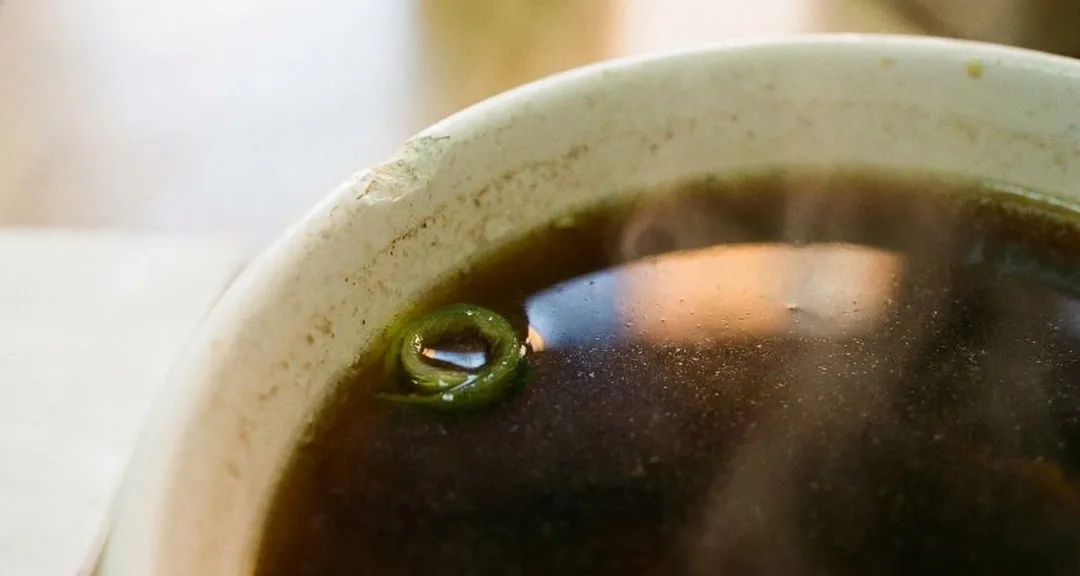
The menu is laminated and stuck to the wall behind the register, faded from years of steam and grease. You order the hand-pulled noodles in pork broth, which arrives in a bowl large enough that you briefly question your judgment. The broth is cloudy and tastes like bones that have given up everything they had. The noodles have that perfect chew, the kind that only happens when they've been pulled minutes before they hit the water. There's a small dish of chili oil on the counter, the kind where the sediment has settled at the bottom and the oil on top glows orange. You spoon in more than you planned. The woman in scrubs glances over, nods slightly—you've made the right choice. A bottle of Chinese black vinegar sits within reach. Use it. The acidity cuts through the richness in a way that makes the second half of the bowl better than the first.
The Regulars Who Mark Time
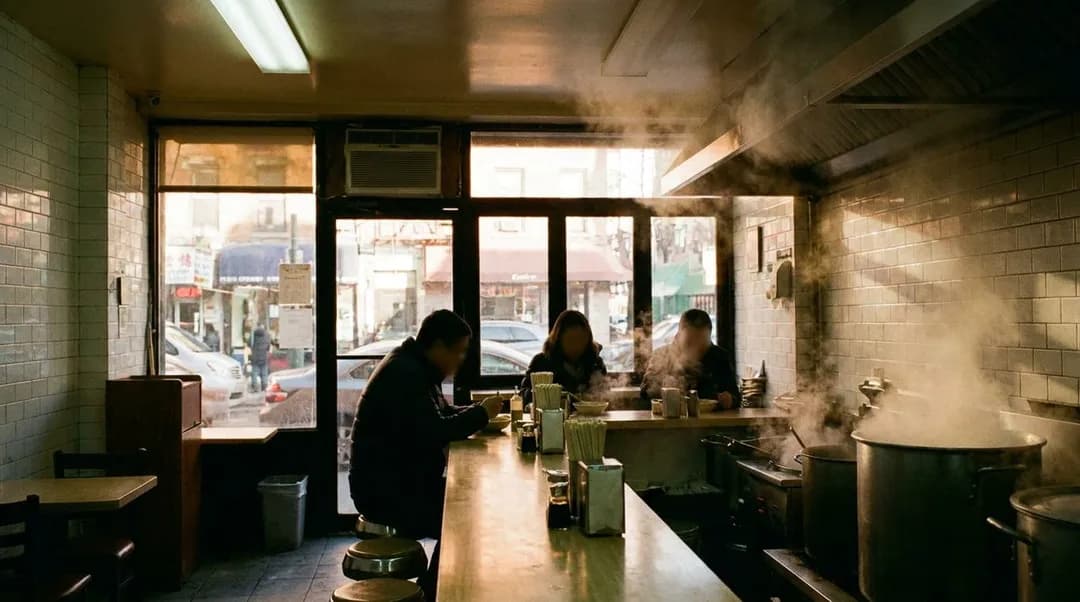
By two-thirty, a different population filters in. These aren't lunch-breakers with thirty minutes to spare. These are people whose schedules bend around different rhythms. A line cook from another restaurant, still in his whites, orders in Cantonese and gets a bowl that isn't on the English menu. An elderly woman with a rolling cart takes the corner seat and receives her order before she asks for it. The owner—or maybe just someone who's worked here long enough to move with ownership confidence—brings her tea without prompting. You realize this is the shift change, the moment when the shop transitions from serving the neighborhood's workers to serving the neighborhood itself. The conversations switch languages. The pace slows. Someone's phone plays a Cantopop ballad at low volume and nobody asks them to turn it off.
The Light Through Grease-Filmed Windows
The afternoon sun finally finds its angle through the front windows, and the whole shop glows amber. The windows haven't been properly cleaned in what might be months, and the film of cooking oil catches the light in a way that softens everything. Dust motes hang in the beams. You can see every fingerprint on the glass door, every smudge a small record of people pushing their way in. This light lasts maybe forty minutes before the buildings across the street block it again, and in that window the shop feels suspended, caught between the lunch rush and the early dinner prep. The cook takes his break now, stepping out front to smoke and check his phone. His replacement moves into position with the same economical motions. The dough doesn't stop.
Why Two O'Clock Matters
You could come here at noon and fight for a seat, shoulder to shoulder with everyone else trying to eat fast and cheap. You could come at seven and wait in a line that snakes onto the sidewalk. But two in the afternoon is when the place reveals itself. The urgency drains away. You can hear the kitchen—really hear it—without the buffer of conversation. You can take your time with the bowl, let the noodles cool slightly, add more vinegar halfway through, watch the cook work through three or four orders without feeling rushed to give up your stool. The staff stops performing customer service and returns to their actual work. You're not a guest here at two. You're just someone else in the room, and that invisibility is its own kind of welcome. This is when you understand that the shop doesn't exist for you, and somehow that makes the noodles taste better.
Practical Notes
Most noodle shops in this stretch of Chinatown open late morning and run until evening, sometimes later. This is cash-friendly territory, and a full meal will run you less than the cost of a mediocre sandwich in Midtown. The counter fills fast during peak hours, so mid-afternoon offers your best shot at choice seating. The J and Z trains drop you close enough that you'll walk off your appetite before you arrive. No reservations, no phone orders for dine-in. Just show up when the lunch crowd clears and claim your stool. Bring small bills. The kitchen moves fast, but the meal is yours to pace. Stay as long as the bowl lasts and nobody will rush you out.
Tags: #PullUpAChair #ChinatownEats #NewYorkNoodles #SoloLunch #CounterCulture #HandPulledNoodles #LowerManhattan #NYCFoodScene #AfternoonRituals #NeighborhoodSpots #SteamAndFlour #QuietHours #NoodleShopLife #ChinatownNYC #CityRhythms
Sources consulted: eater.com · timeout.com · infatuation.com
All trademarks are the property of their respective owners.
Ask Karpo first
Want to know when the counter clears out for solo seating, which noodle dish comes out fastest during the lull, and whether the dough-pulling station gives you the best view?
Ask Karpo for ideal arrival time for counter space, what regulars order at the quiet hour, which seat faces the kitchen action, and a live route around Chinatown before you head out.
Ask Karpo for more information.
Keep reading
- Dinner Near Me in the Flatiron: Rezdôra's Emilia-Romagna Pastas
 Lunch Near Me on the Lower East Side: Katz's Hand-Carved Pastrami
 Pizza Near Me in Carroll Gardens: Lucali Is Cash-Only and BYOB