The Sheepshead Bay Uzbek Plov House Running a Friday Pot Since 2004
Where the Kazan Remembers Everything
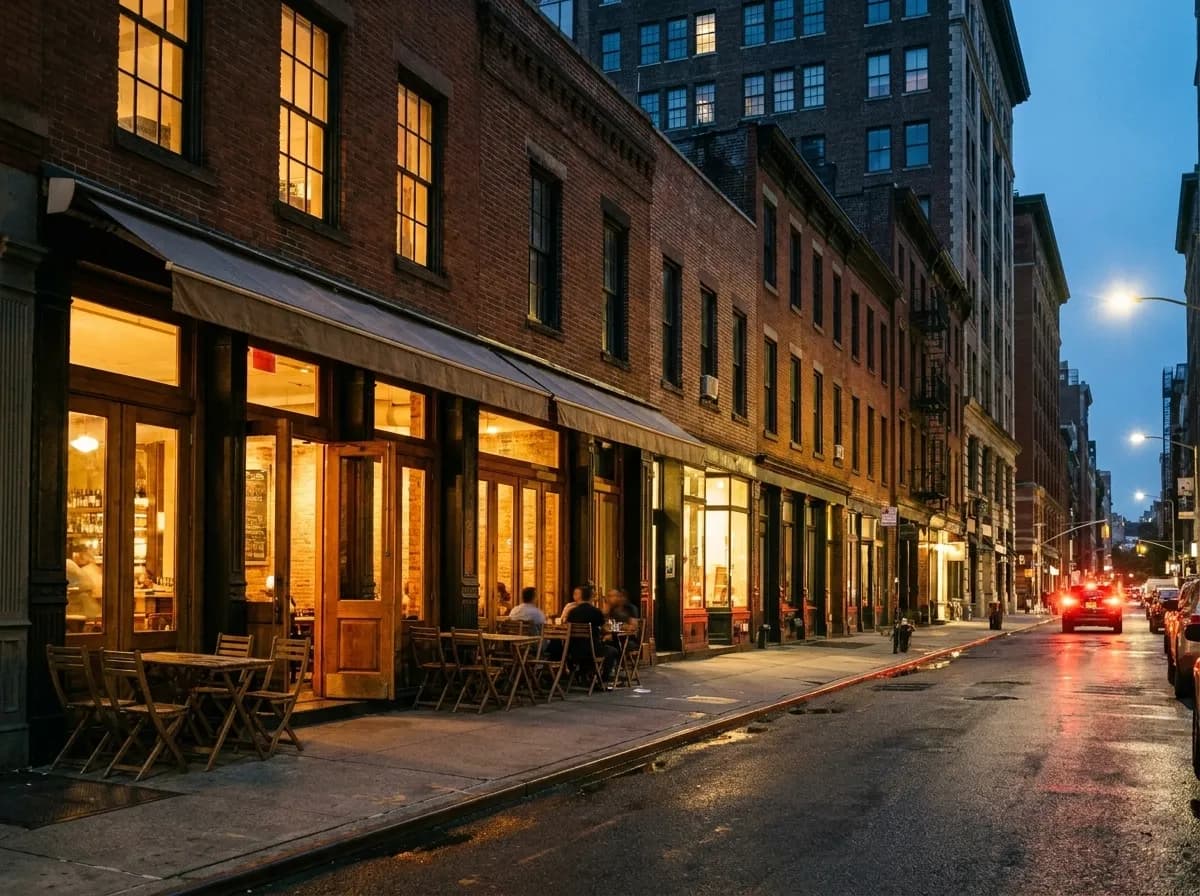
The building sits on a stretch of Emmons Avenue where the signage shifts from Cyrillic to Latin and back again, past the wholesale fish market where workers in rubber boots hose down concrete at dawn, past the Russian delis with their pyramids of smoked fish and jars of pickled everything. From the outside, it reads as a banquet hall — the kind of place where you'd expect to find a wedding reception or a retirement party, all white tablecloths and rented centerpieces. But on Friday mornings, something different happens here. By 7am, the kitchen is already working, and the air carries a particular sweetness that only comes from lamb fat rendering slowly over high heat.
This is Nargis Cafe, and for two decades, it has maintained a ritual that connects a corner of Brooklyn to the ancient cities of the Silk Road. The Friday plov has been running without interruption since 2004 — through recessions, through hurricanes, through a pandemic that shuttered restaurants across the city. The kazan goes on at seven. By noon, if you haven't arrived, you've missed it.
The Fat That Makes the Difference
Understanding what makes this plov exceptional requires understanding what most people never see: the fat. While many Uzbek restaurants in the city have quietly shifted to vegetable oil — it's cheaper, easier to source, and doesn't require explaining to customers unfamiliar with Central Asian cuisine — the kitchen here has never wavered from using kurdyuk, lamb tail fat, as the primary cooking medium. This is the traditional Samarkand approach, the method that plov masters in Uzbekistan's ancient city have used for centuries.
Kurdyuk is increasingly rare even in restaurants that claim authenticity. The fat must be sourced specially, rendered carefully, and used by cooks who understand its particular behavior. It doesn't forgive the way vegetable oil does. But when handled correctly, it transforms rice into something that transcends the sum of its ingredients — each grain coated in a richness that carries notes of gamey sweetness, a depth that oil simply cannot replicate. The first bite tells you immediately that you're eating something different, something that connects to a tradition older than the restaurant, older than the neighborhood, older than the city itself.
Three Kazans and Twenty Years of Seasoning
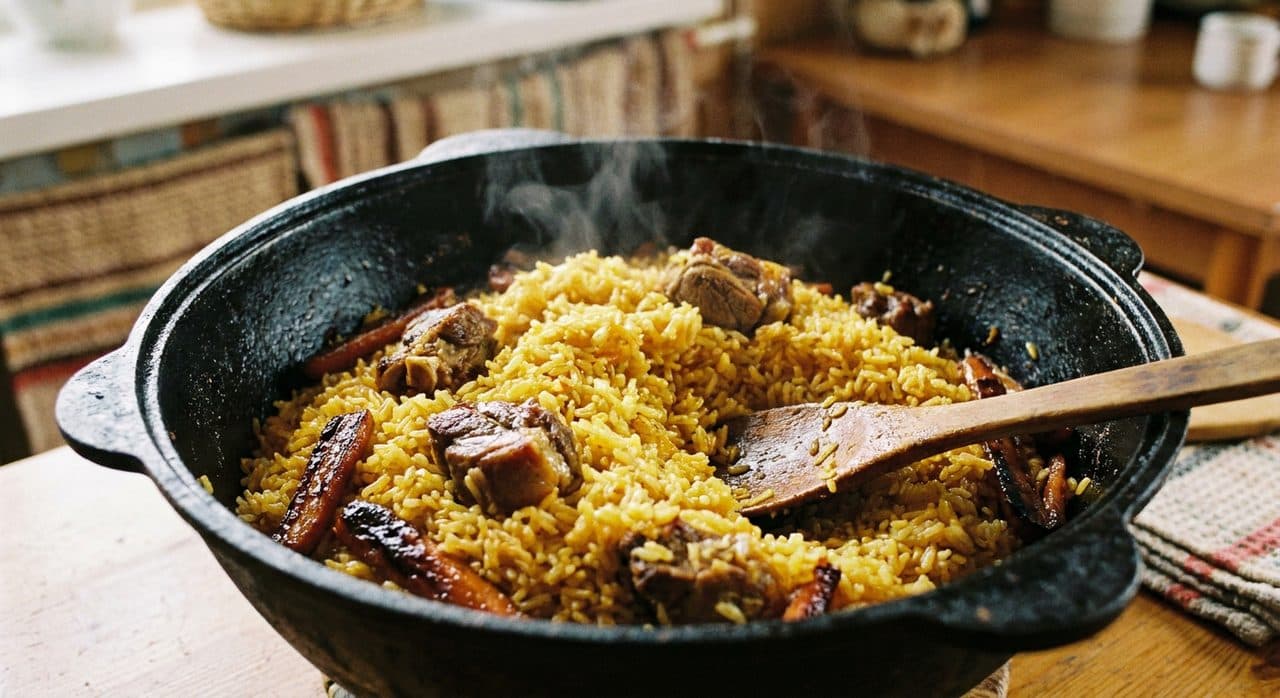
In the kitchen, three cast-iron kazans hang on the wall like family portraits. They're different sizes, each designated for different scales of cooking — the smallest for intimate gatherings, the largest for weddings and celebrations that fill the banquet hall. The Friday plov uses the medium one, a vessel that holds approximately thirty servings and carries the accumulated memory of two decades of continuous use.
This kazan has never been washed with soap. The cast iron has developed a patina that no amount of money could purchase, a seasoning built layer by layer through thousands of Friday mornings. The interior surface is almost black, smooth as polished stone, and it holds heat with a patience that newer cookware cannot match. When the chef adds the lamb, the carrots, the rice, each ingredient meets a surface that has been preparing for this moment since George W. Bush was in his first term.
The regulars know this kazan by sight. They understand that the Friday plov tastes the way it does not just because of technique or ingredients, but because of time itself — the accumulated years of fat and heat and care that have transformed a piece of cookware into something closer to an heirloom.
The Turning of the Rice
There's a moment, usually around 11:30am, when the kitchen goes quiet. The chef approaches the kazan with a wide wooden spoon, its handle worn smooth from use. This is the turning — the traditional final step before service, when the plov is flipped twice to release the steam trapped within the rice. It's a gesture that looks simple but requires judgment developed over years. Turn too early, and the rice hasn't finished absorbing the fat. Turn too late, and the bottom layer burns.
Regulars know not to ask for service until this ritual is complete. They've learned to read the kitchen's rhythm, to understand that some things cannot be rushed. The turning is not performance; it's necessity. The steam release allows each grain to separate properly, prevents the dish from becoming heavy or sodden. When the chef finally nods, when the servers begin moving toward the tables, everyone in the room understands that the waiting has been worth it.
The plov arrives at the table in a specific arrangement: rice mounded high, lamb pieces arranged on top, carrots visible in orange ribbons throughout. The aroma rises in a wave — lamb fat, cumin, the particular sweetness of slow-cooked onions. This is the moment the Friday ritual has been building toward since 7am.
The Congregation of Regulars
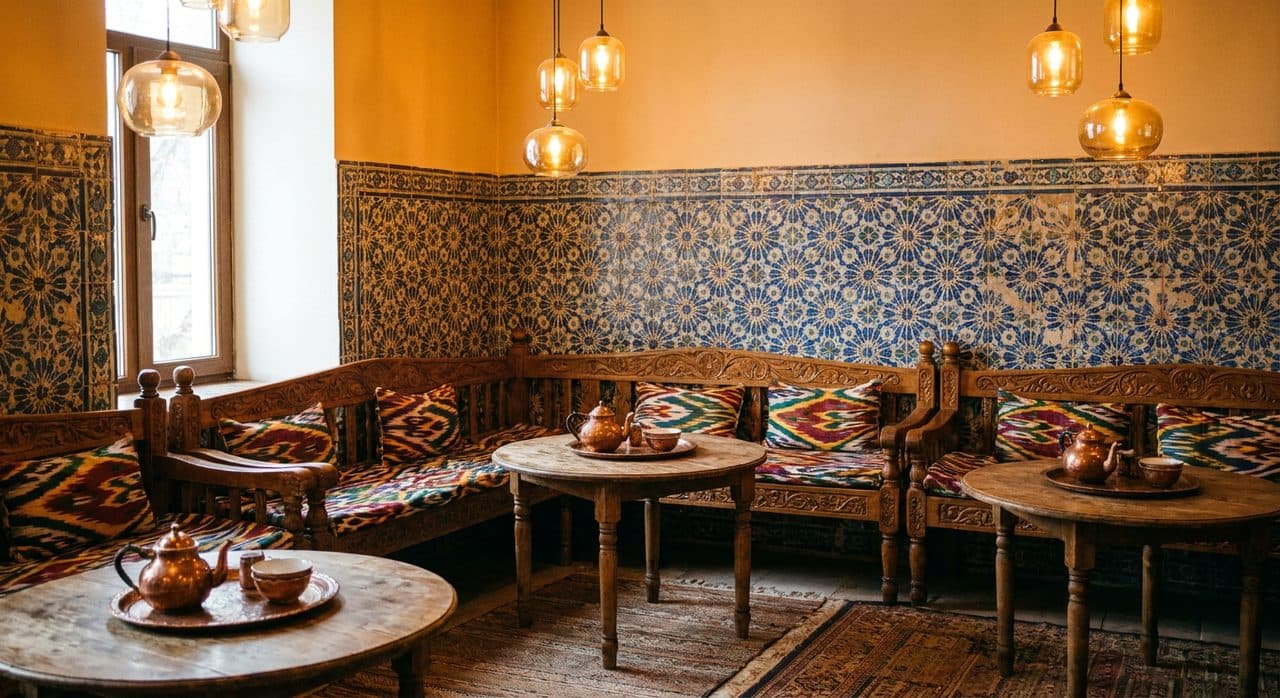
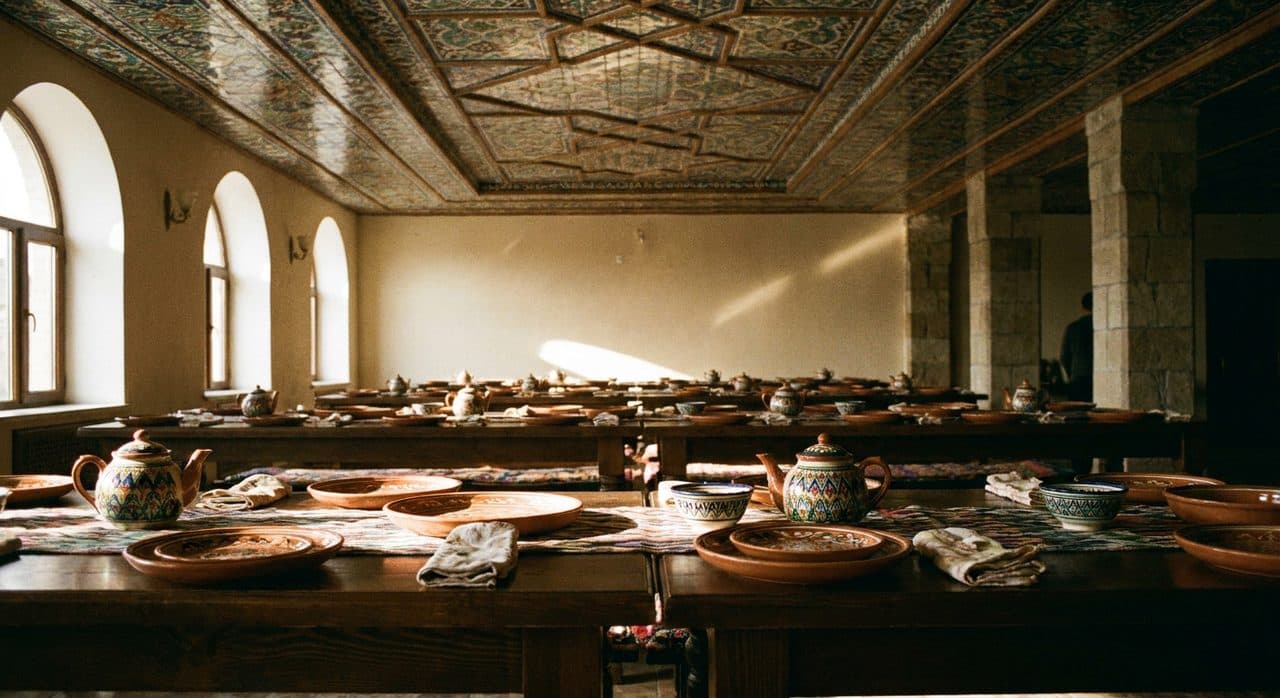
By 11am, the dining room has filled with a particular kind of customer. These are not tourists seeking an exotic experience, not food writers on assignment, not Instagram influencers looking for content. They are Uzbek and Tajik families who have been coming here for years, sometimes decades. Grandmothers sit next to grandchildren. Men in work clothes share tables with men in suits. The language shifts between Russian, Uzbek, Tajik, and English, sometimes within a single sentence.
There's an understanding among these regulars, an unspoken protocol. You arrive early because the plov will run out. You order tea while you wait. You don't rush the kitchen. When the food comes, you eat with attention, with appreciation, with the understanding that this dish represents not just a meal but a connection to somewhere else, to family recipes and childhood memories and a culinary tradition that stretches back centuries.
New customers are welcomed but also gently educated. The staff will explain what makes the Friday plov different, will describe the lamb tail fat and the seasoned kazan, will suggest that you arrive earlier next time. There's no condescension in this — only the quiet pride of people who know they're maintaining something worth maintaining.
Beyond Friday
The restaurant operates seven days a week, serving a full menu of Uzbek and Central Asian dishes. The manti are hand-pleated, the lagman noodles are pulled fresh, the shashlik arrives still sizzling from the grill. On any given evening, the banquet hall might host a wedding or a birthday party, the largest kazan pressed into service for a crowd of two hundred.
But Friday remains special. It's the day when the restaurant becomes something more than a restaurant — a gathering place, a cultural institution, a weekly reminder that some traditions survive not through museums or documentaries but through the simple act of repetition. The kazan goes on at seven. The lamb tail fat renders slowly. The regulars arrive and wait and eat. And then, the following Friday, it happens again.
Twenty years is a long time for any restaurant to survive in New York City. It's an even longer time to maintain a single ritual without interruption, without compromise, without the gradual erosions that turn tradition into approximation. But here in Sheepshead Bay, past the fish market and the Russian delis, the Friday plov continues exactly as it began — a connection to Samarkand, renewed weekly, in a building that looks from the outside like nothing special at all.
Practical Notes
Nargis Cafe is located on Emmons Avenue in Sheepshead Bay, accessible via the B and Q trains to Sheepshead Bay station, followed by a short walk or bus ride toward the water. For the Friday plov, arrival by 11am is strongly recommended — the single batch typically sells out by noon, and there are no exceptions or reservations for this dish. The restaurant accepts cash and cards. Beyond Friday, the full menu is available throughout the week, with particularly strong showings of manti, lagman, and various grilled meats. The dining room is large and can accommodate groups, making it suitable for family gatherings. Dress is casual. Parking is available on surrounding streets, though weekend mornings can be competitive. The staff speaks English, Russian, and Uzbek, and is generally happy to guide newcomers through the menu.
Tags: #SheepsheadBay #UzbekFood #Plov #BrooklynEats #CentralAsianCuisine #NYCRestaurants #FridayPlov #TraditionalCooking #Kazan #LambTailFat #SilkRoadCuisine #HiddenGems #BrooklynFood
Sources consulted: timeout.com · nymag.com · thrillist.com · eater.com
All trademarks are the property of their respective owners.
Ask Karpo first
Want to know what time the Friday plov is ready, whether the full manty menu is running, and if walk-ins are accepted? Ask Karpo before making the trip to Sheepshead Bay.