A Replacement That Became Permanent
Fact-checked update
Fact-checked update (August 10, 2026): this article was rechecked against RIOC, NYC DOT, The New York Times. The refresh keeps the body grounded in official venue, agency, transit, or city sources and flags time-sensitive planning details that readers should confirm before leaving.
Direct answer: Use this Roosevelt Island Tram guide to plan timing, transit, costs, crowd tradeoffs, and nearby stops before you go.
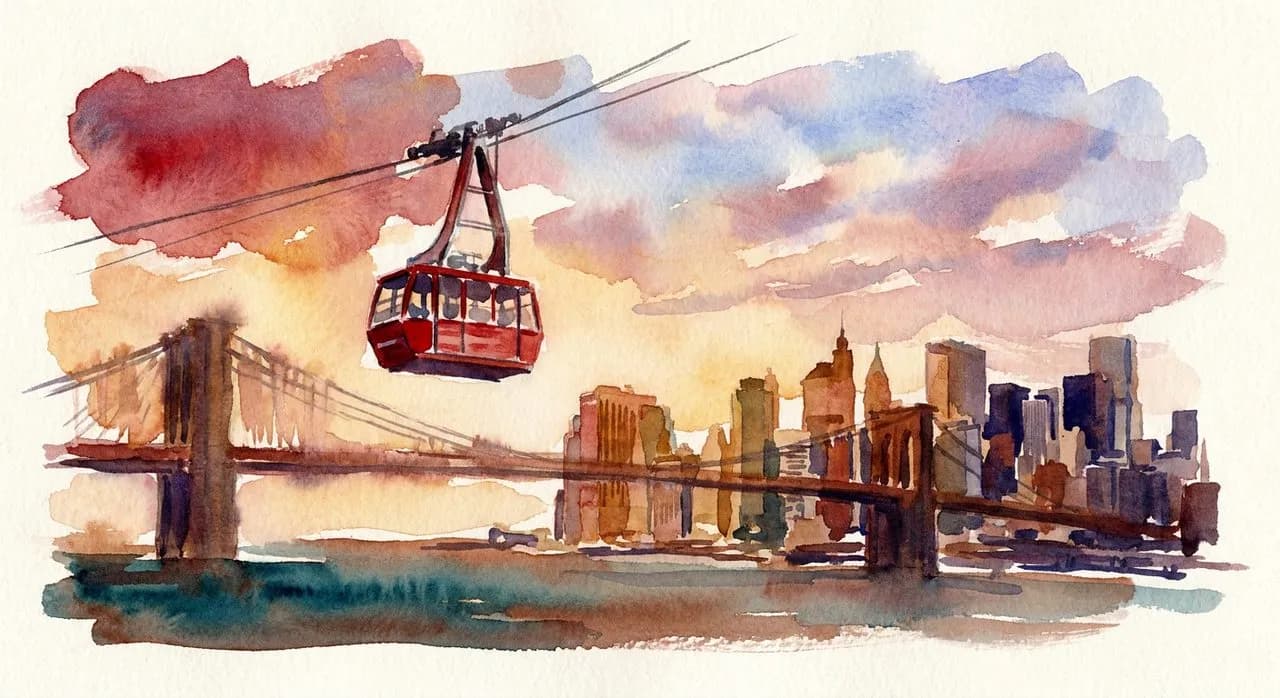
The Roosevelt Island Tram opened in May 1976 as a temporary solution. The Manhattan-to-Roosevelt-Island subway extension under the East River — the F train's 63rd Street tunnel — was years behind schedule, and the small population of new Roosevelt Island residents needed a way off the island. The Roosevelt Island Operating Corporation (RIOC) commissioned a Swiss aerial tram from a manufacturer called Garaventa, with two cabins on a counter-weighted cable system, modeled on European mountain trams.
The F train subway extension finally opened in 1989. The tram, originally scheduled for decommissioning that year, was kept because Roosevelt Island residents loved it and because tourists discovered it. In 2010 the tram was completely rebuilt with new cabins, new motors, and an upgraded cable system — a $25 million renovation that extended the service life by at least 30 more years.
The new tram is faster and quieter than the original. The cabins are larger (capacity 110 passengers each, up from 80) and have heating and air-conditioning. The two cabins counter-balance each other along the same cable, so one is always ascending while the other descends. The system runs from 6 a.m. to 2 a.m. weekdays, slightly extended hours on weekends.
The Three Minutes That Tourists Pay $60 For
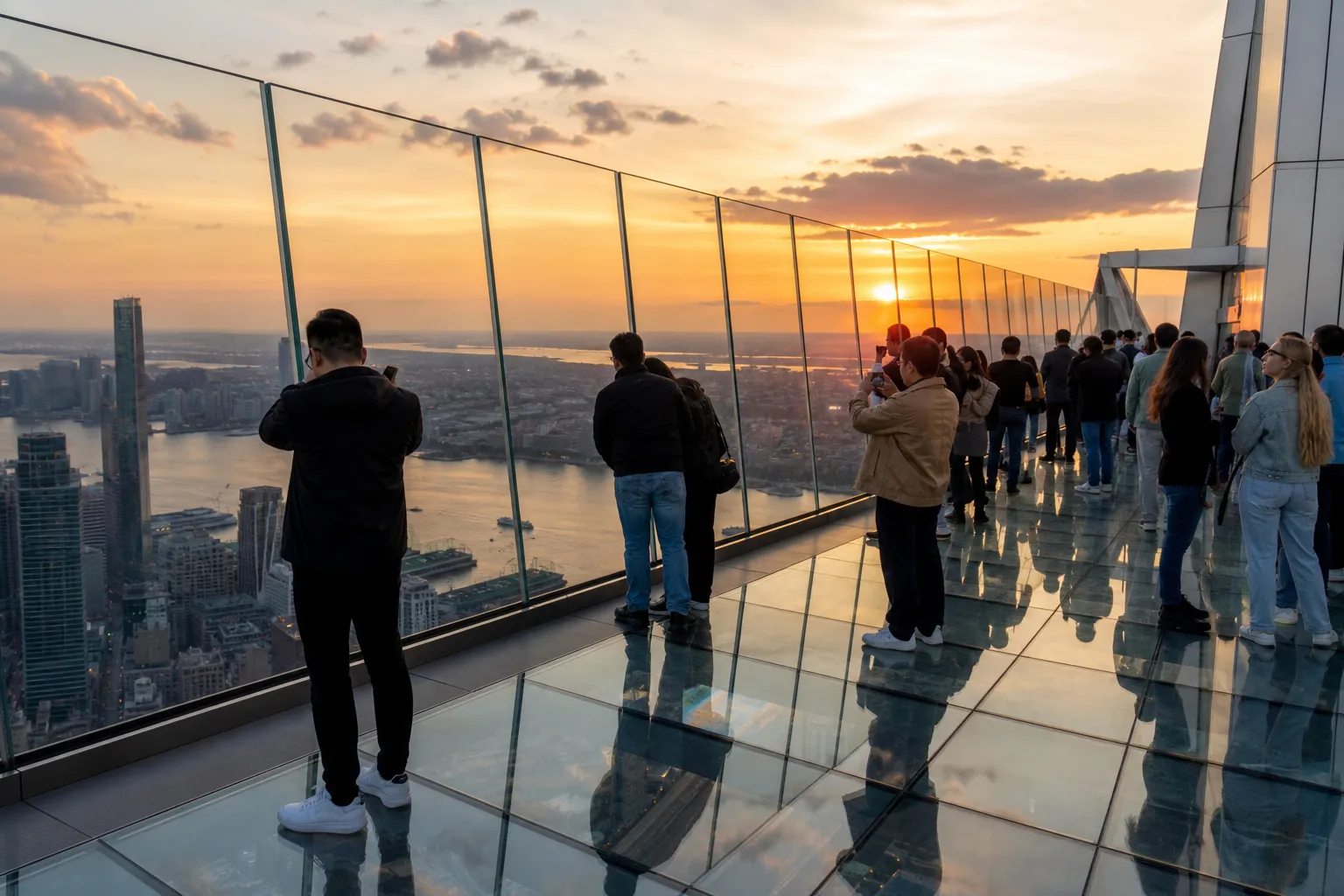
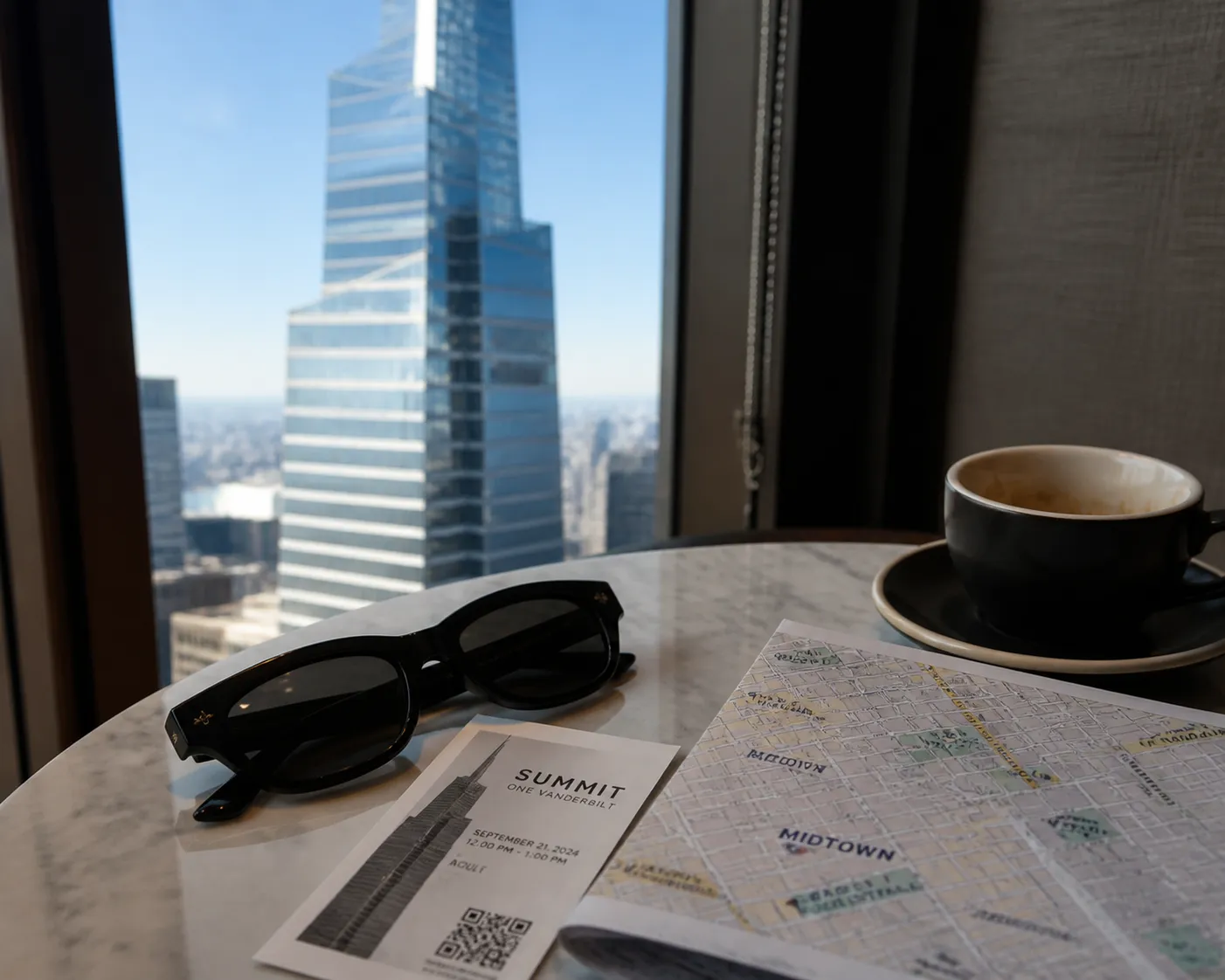
The competing aerial views of New York are the Helicopter ride from the Downtown Heliport ($200 to $300 per person), the Edge observation deck at Hudson Yards ($40), and the One World Observatory ($45). The Roosevelt Island Tram, with the same view-from-the-air category, costs $2.90.
The route runs from the Tramway Plaza at East 60th Street and Second Avenue, climbs steeply to its 250-foot apex above the East River, and descends to Roosevelt Island's western shore. The whole trip is exactly 3 minutes and 6 seconds at the operating speed of 17.9 mph (30 km/h).
At the apex you can see the Queensboro Bridge directly to the south, the United Nations Headquarters to the north, the United States and Canada border (Roosevelt Island is technically in NYC, but the Hudson River's western shore is New Jersey — both visible from the tram's full panoramic view).
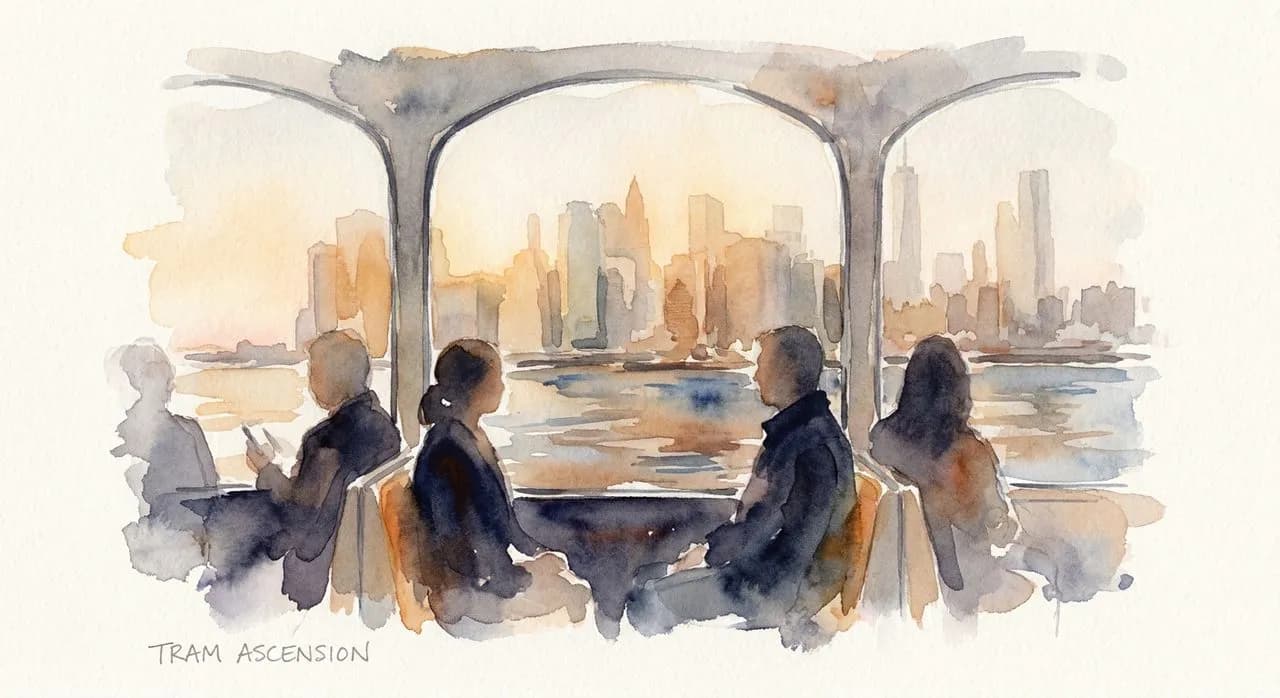
The MetroCard and OMNY contactless payment system both work at the boarding turnstiles. A single ride is $2.90, the same as a subway fare. Transfers from subway lines within two hours are free — meaning if you took the F or 4/5/6 to Lexington-59th and walk to the tram, the tram ride is fully transferred.
Why It Stays a Commuter Tram
Roosevelt Island has about 12,000 residents, and the tram still functions primarily as their transit option to Manhattan's Upper East Side. The cabins run continuously through the weekday rush hours with capacity at about 80 percent of peak. The 7:45 a.m. westbound run is full. The 5:45 p.m. eastbound run is full. These aren't tourist runs — they're commuters going home.
Off-peak hours are when tourists outnumber commuters. The 10:30 a.m. to 4 p.m. window on weekdays, and most of Saturday and Sunday daylight hours, are the best times for unhurried photography and a clear seat at the cabin windows.
What to Do on Roosevelt Island Once You're There
The island is two miles long and 800 feet wide at its widest. The tram lands at the western shore; from there, you can walk in three directions.
North: Roosevelt Island Lighthouse Park, with the 1872 Vernon Boulevard lighthouse at the island's northern tip. About 1.2 miles up the eastern promenade. Sunset views of Manhattan from the lighthouse base are one of the city's most underrated photographic windows.
South: Franklin D. Roosevelt Four Freedoms Park, the Louis Kahn-designed memorial at the island's southern tip. Free entry. The park's marble plaza is one of the strongest pieces of mid-20th-century landscape architecture in New York. About 0.7 miles south of the tram station via the new walkway through Southpoint Park.
East: Cornell Tech's campus, the 12-acre university extension that opened in 2017 with buildings by Snøhetta and Morphosis. Public-accessible grounds include the Bloomberg Center plaza and the Tata Innovation Center's ground-floor cafe.
A two-hour visit to Roosevelt Island that takes the tram both directions and walks to Four Freedoms Park is the canonical itinerary. The combined cost (two tram rides at $2.90 each) is $5.80 total.
The Best Tram Window Seat
The cabins have windows on all four sides, but the western and eastern windows have the best views — west is Manhattan, east is Queens. The seats nearest the windows are unassigned. Standing along the wall at the front of the cabin (in the direction of travel) gives you the broadest panoramic view through both sides at once.
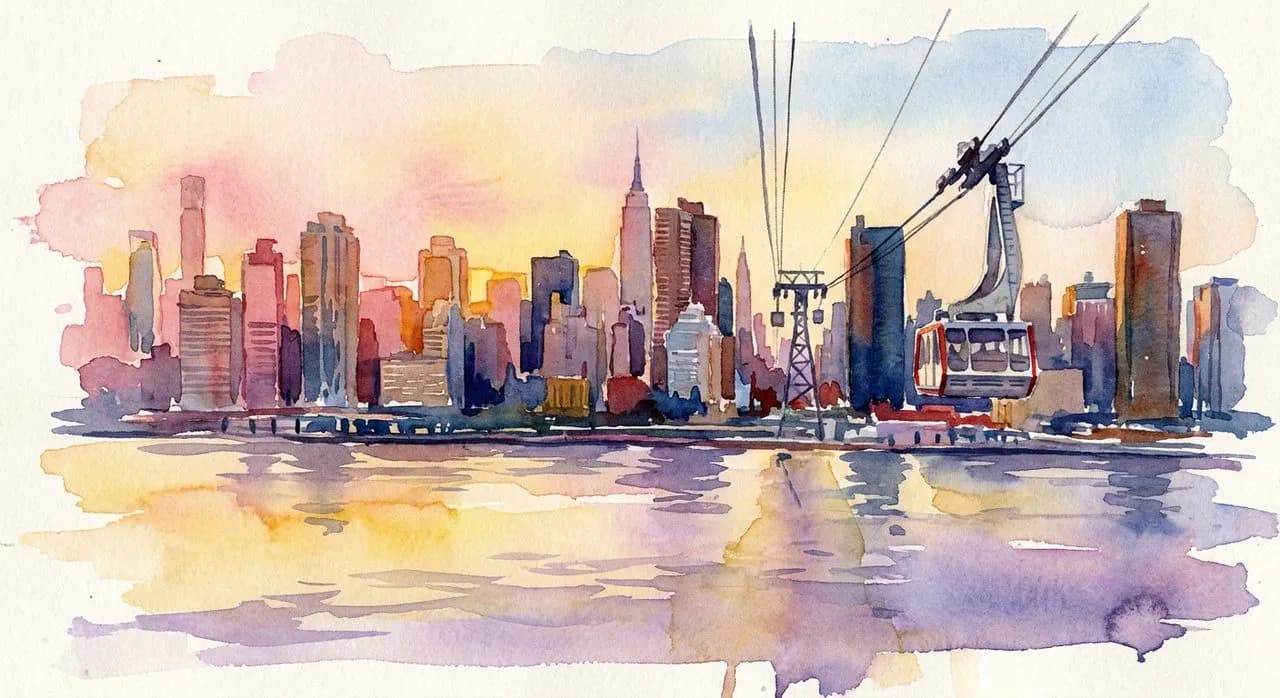
The 5 to 6 p.m. westbound run in summer puts you on the western shore of Roosevelt Island at sunset, with the Manhattan skyline directly in front of you. The 6 to 7 p.m. eastbound run reverses the view: the tram lifts off from the Manhattan side, faces back toward the city, and gives you the most dramatic skyline-from-elevation shot of any New York public transit.
Practical notes
- Address: Tramway Plaza, 60th Street and Second Avenue, Upper East Side (Manhattan side)
- Getting there: 4/5/6 to 59th Street–Lexington Avenue; N/R/W to Lexington Avenue/59th Street; F to Lexington Avenue–63rd Street
- Go for: The 250-foot aerial view at $2.90, the Four Freedoms Park walking distance, the lighthouse at the northern tip
- Size / timing: Three-minute ride, every 7–15 minutes depending on time of day. Best 4–6 p.m. for sunset views. Operates 6 a.m.–2 a.m. weekdays, 6 a.m.–3 a.m. weekends.
- Photograph it, but know this: The windows are slightly tinted and double-paned, which can add a faint blur. Best results are with a phone camera pressed flat against the glass to eliminate reflections.
The Roosevelt Island Tram is the most underrated piece of public infrastructure in New York. It functions as a working commuter line, an architectural landmark, a tourist attraction, and the cheapest aerial view of Manhattan all at once. The cabins are clean, the schedule is reliable, the view is genuinely cinematic. Pay $2.90. Stand at the front window. Three minutes of one of the city's most distinctive views, for the price of a candy bar.
#rooseveltislandtram #rooseveltisland #nycaerialtram #queensboroBridge #manhattanviews #freeornearlyfree #localKnowledge #insidernyc #nyctransit #garaventa #publicspace #upperEastSide #fourfreedomspark #nycculture #aerialnyc
Sources consulted: RIOC · NYC DOT · The New York Times · Curbed · Atlas Obscura
All trademarks are the property of their respective owners.
Drink responsibly. Must be of legal drinking age.