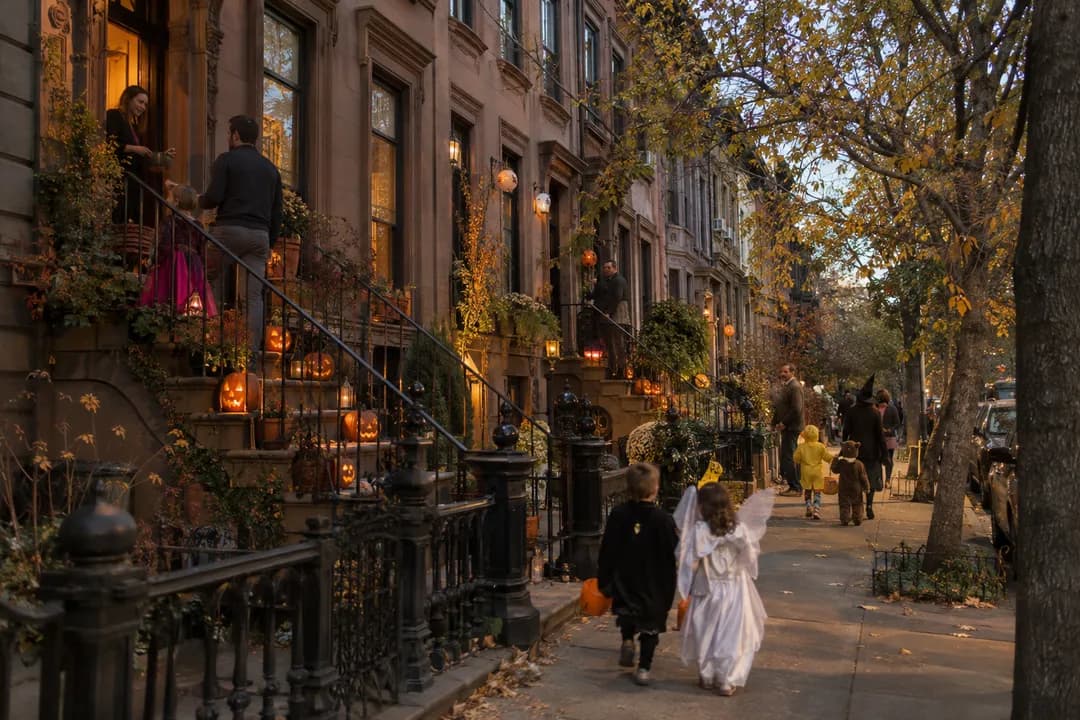
 Best Trick or Treating Neighborhoods Near Me: Park Slope
Neighborhood Guides
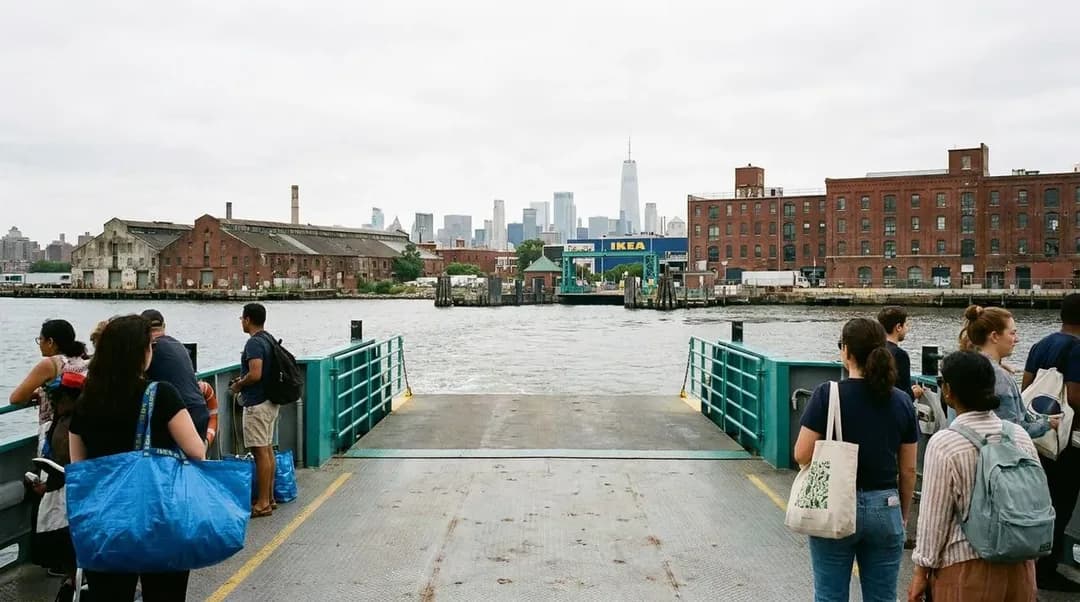
the red hook ikea ferry when commuters mix with furniture shoppers
The NYC Ferry's South Brooklyn route offers a scenic 35-minute water commute from Wall Street to Red Hook, where morning regulars share deck space with IKEA-bound day-trippers and the view past Governors Island becomes worth the longer journey.
The 8:15 departure from Pier 11 pulls away from the Financial District with an improbable passenger manifest: expense-account blazers nursing second coffees, parents clutching IKEA shopping lists, and a handful of Red Hook locals who've sworn off the F train for good. This is the NYC Ferry's South Brooklyn route at its most revealing hour—before the big-box store opens at 10, when the ratio tilts heavily toward actual commuters rather than furniture shoppers. The mix won't last. By mid-morning the balance will shift, but right now the ferry is a floating study in contrasts, briefcases wedged beside empty tote bags that will return full of flat-pack boxes.
The liminal quality of the crossing
There's something deliberately anachronistic about choosing water over rail in a city built on velocity. The subway would be faster—everyone aboard knows this—but the South Brooklyn route offers something the underground can't: thirty-five to forty minutes of forced deceleration, the exact length of a podcast episode, which explains why AirPods outnumber conversations ten to one. Depending on river traffic, the crossing stretches or compresses slightly, but the rhythm remains. Commuters have calibrated their audio queues accordingly. You finish the episode as Red Hook's warehouses come into focus.
The demographic split creates an accidental sociology lesson. On one side, the regulars in their practiced nonchalance, already queued with the practiced spacing of people who know exactly where they're going. On the other, the recreational riders consulting Google Maps, planning weekend plans that involve meatballs and Billy bookcases. Nobody's rude about it. The ferry's broad enough that the two tribes coexist without friction, united only by the shared hum of the engine and the slap of wake against the hull.
Where to sit and what you'll see
Regulars have already figured out the sightline calculus. They claim the port-side rear benches early, a quiet conspiracy of placement that yields the best unobstructed Statue of Liberty view without fighting the tourists who cluster instinctively at the starboard rail. It's the kind of insider knowledge that only reveals itself through repetition—the understanding that Liberty wants to be seen from the left and behind, where the morning light catches her torch just so and the composition includes the full sweep of the harbor.
The route threads past Governors Island with the kind of intimacy you don't get from the Staten Island Ferry's industrial trudge. You're close enough to see the detail of the old Coast Guard buildings, the rise of the hills that were added for the park, the flash of bicycles on summer weekends when the island hums with day-trippers. Then the perspective shifts: Brooklyn's working waterfront comes into frame, cranes and warehouses giving way to the low-slung sprawl of Red Hook, a neighborhood that still looks vaguely surprised to find itself on a ferry route at all.
The Red Hook that commuters know
The locals disembarking at the IKEA stop scatter quickly, headed inland to a Red Hook that exists beyond the retail magnet. They're walking to studios, tech offices carved out of former manufacturing spaces, the small empire of creative businesses that have colonized the neighborhood over the past decade. This is the Red Hook that wakes up early, that has a coffee order at the corner bodega, that knows which streets flood in heavy rain. It's invisible to the shoppers, who see only the big blue box and maybe, if they're ambitious, the weekend plans that include a walk to the waterfront parks or a lobster roll at Red Hook Lobster Pound.
The ferry makes both Red Hooks possible. It's public infrastructure doing double duty as economic engine and scenic amenity, a transportation link that accidentally created a tourist draw. The commuters accept this with weary grace. They were here first, or at least they've been riding longer, but they don't begrudge the IKEA crowd. The store, after all, is what justified the route's existence, the anchor tenant that made the city's investment pencil out. Everything else—the commuters, the summer travel uptick, the regulars who now structure their lives around the water—is gravy.

Why the slow way wins
Ask a regular why they choose the ferry and the answers cluster around the same themes: light, space, the radical act of sitting still. The subway is faster by maybe fifteen minutes if the trains cooperate, but those fifteen minutes are spent underground in fluorescent compression. The ferry offers sky, the rotation of weather, the seasonal theater of the harbor—ice floes in January, sailboats in August, fog that erases the skyline and makes the crossing feel like a voyage to somewhere genuinely elsewhere.
It's also, quietly, a better way to arrive at work. You step off the boat clear-headed rather than jangled, already eased into the day rather than bracing against it. The math is softer than the MTA's calculus of turnstiles and transfers. You're trading efficiency for sanity, and if you can afford the time—or more precisely, if you can afford to live somewhere the ferry reaches and work somewhere it goes—the trade makes a certain aspirational sense. This is transportation as lifestyle signal, the commute as curated experience.
The stern at departure
The best moment comes as the boat pulls away from Pier 11, when the Financial District recedes and the scale of the southern tip reveals itself. From water level, Manhattan stops being a street grid and becomes pure verticality, the stacked ambition of glass and steel that looks, from this angle, both magnificent and faintly ridiculous. The wake spreads white behind the stern. Gulls work the turbulence for whatever the propellers churn up. If you've positioned yourself correctly on the port side rear bench, you've got all of this plus Liberty in the middle distance, the whole iconic sweep of New York harbor arranged like a postcard that happens to be your Tuesday morning.
This is when the AirPods make sense. You're not tuning out—you're scoring the view, matching your podcast or playlist to the rhythm of departure. The city cooperates by being beautiful in that particular late-morning light that makes even industrial waterfront architecture look painterly. The contradictions resolve themselves: the IKEA shoppers and the commuters, the practical and the scenic, the infrastructure and the amenity. For thirty-five minutes, it's all the same crossing.
Practical notes
The NYC Ferry South Brooklyn route serves Pier 11/Wall Street (near the intersection of South and Whitehall Streets; nearest subway 1 to South Ferry or R to Whitehall). The Red Hook/“IKEA” ferry stop is at Valentino Pier, a short walk from IKEA at 1 Beard Street. Service runs weekdays and weekends; confirm current schedules and fares at ferry.nyc as routes and times adjust seasonally. The boats are accessible and climate-controlled inside, with open-air deck space. Bring layers—the water is always ten degrees cooler—and download your podcast before boarding, as Wi-Fi can be spotty. Weekend service attracts heavier leisure traffic; weekday mornings before 9 offer the most authentic commuter experience.
Tags: #TheLongWayHome #NYCFerry #RedHook #SouthBrooklyn #WaterCommute #GovernorsIsland #NYCHarbor #SlowTravel #AlternativeCommute #SummerInNYC #FerryLife #WallStreet #HiddenNewYork #CommuterCulture #HarborViews
Sources consulted: NYC Ferry · Red Hook, Brooklyn · NYC Ferry Official Site · IKEA Brooklyn · Governors Island
All trademarks are the property of their respective owners.
Ask Karpo for more information.
Keep reading
- Best Trick or Treating Neighborhoods Near Me: Park Slope
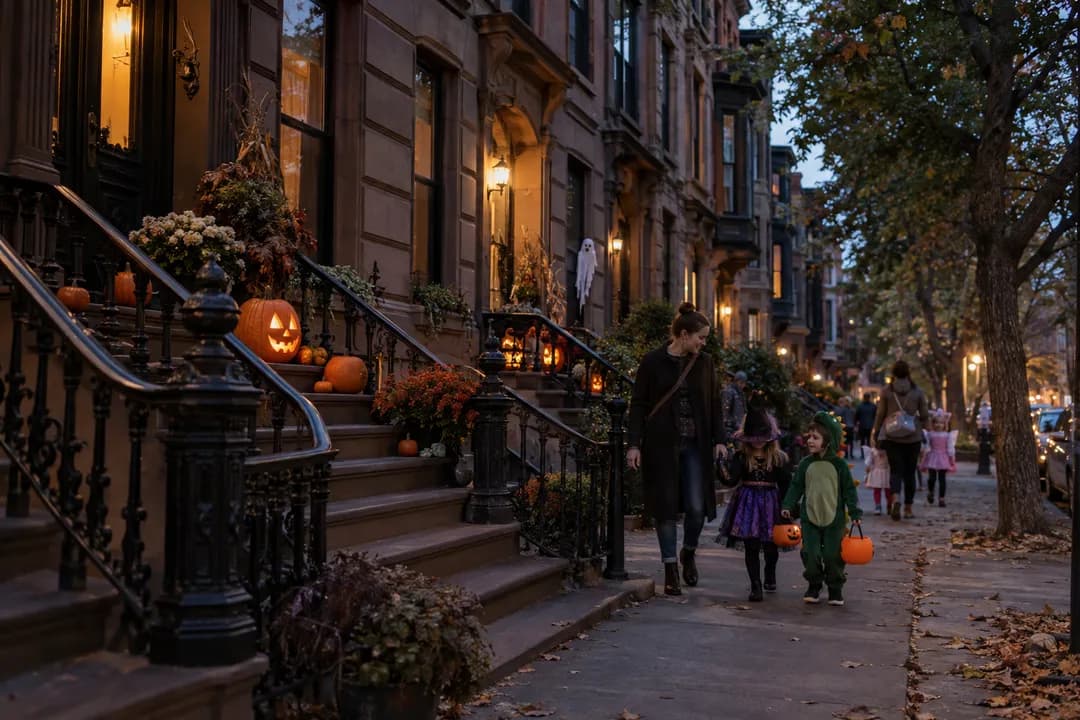 Best Trick or Treating Neighborhoods Near Me: Carroll Gardens
 Best Trick or Treating Neighborhoods Near Me: West Village