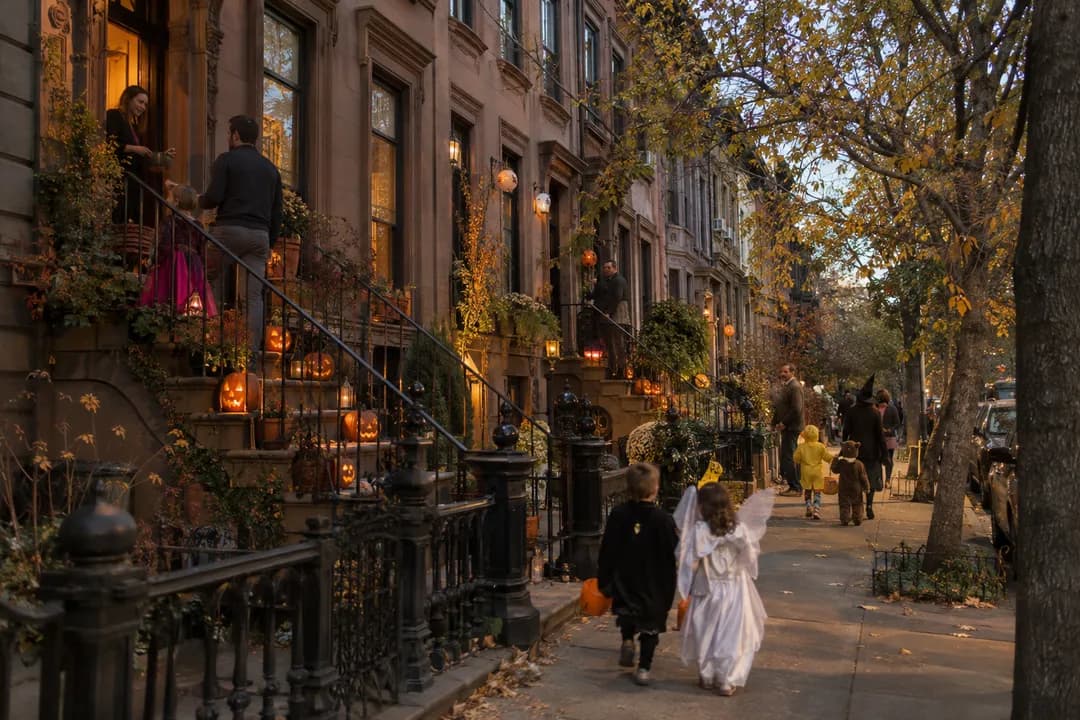
 Best Trick or Treating Neighborhoods Near Me: Park Slope
Neighborhood Guides
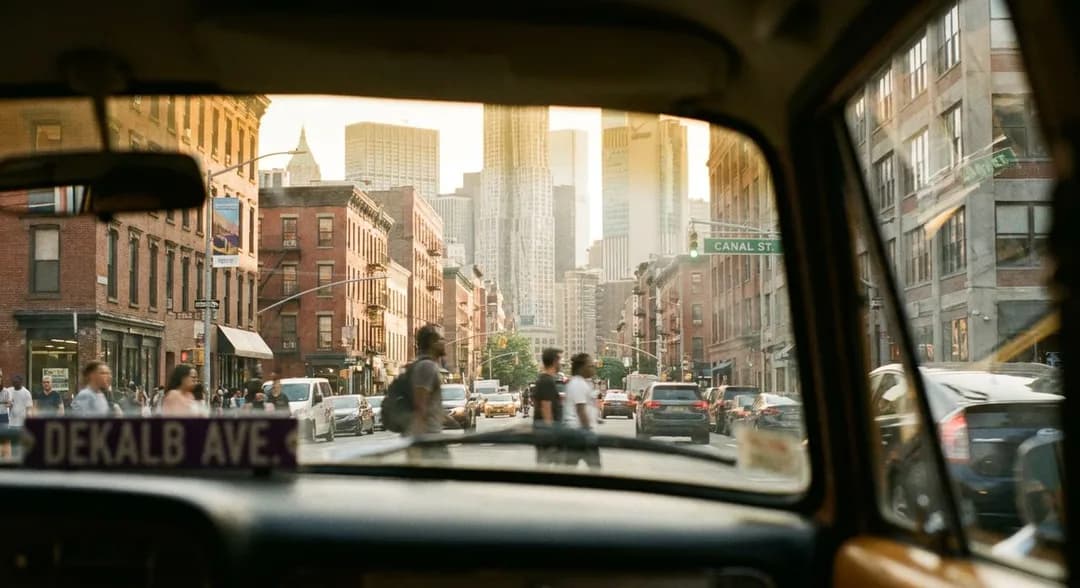
The Q Train Over the Manhattan Bridge at Sunset Is Worth Missing Your Stop
Northbound between DeKalb and Canal; the skyline fills both sides of the car
You board at DeKalb Avenue headed north, and if you're smart, you stay on past Canal Street even though that's where you meant to get off. The Q train's Manhattan Bridge crossing transforms your commute into something worth documenting, but not on your phone — the moment you lift it to take a photo, you've already lost what made this worth experiencing. Between 6:15 and 7:00 PM from late October through February, when sunset aligns with the bridge's northeast trajectory, both sides of the train car become floor-to-ceiling cinema screens showing two different cuts of the same film.
The Geometry of Accidental Beauty
The Manhattan Bridge sits lower than its northern neighbor, the Brooklyn Bridge, and the Q train tracks run along the bridge's south side. This positioning creates a viewing angle you can't replicate from street level or observation decks. As the train pulls away from DeKalb, you're still underground, surrounded by tile and fluorescent light. The transition happens fast — darkness, then a brief glimpse of Brooklyn rooftops, then suddenly you're suspended 135 feet above the East River with nothing between you and the skyline except scratched plexiglass windows that somehow make everything look more honest. The bridge's steel lattice work creates a strobing effect as you move, framing the view in rapid-fire intervals. Stand near the middle doors of the fourth or fifth car from the front. The curve of the bridge means these cars get the longest unobstructed view before the train straightens out approaching Canal.
What Your Left Side Sees
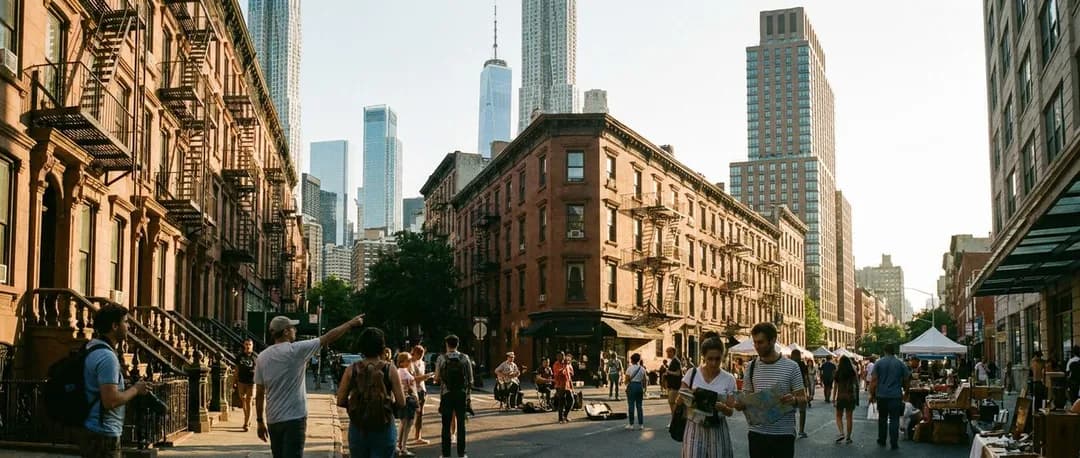
The western windows face Lower Manhattan head-on. One World Trade Center dominates, but watch the buildings in front of it — 8 Spruce Street's rippling facade catches late sun and appears to move independently of the train. The Municipal Building's crown glows amber. On clear evenings, you can track individual windows lighting up in the Woolworth Building as office workers pack up. The color temperature shifts every thirty seconds: gold to pink to violet to slate blue. The Statue of Liberty appears small and oddly vulnerable from this angle, a green dash on the horizon that reminds you how much water surrounds this city. If you're riding in winter, steam rises from buildings in visible columns, backlit by the setting sun. The whole scene tilts slightly as the bridge sways — imperceptibly to drivers in cars below, but noticeable when you're in a train car.
What Your Right Side Sees
The eastern windows show you Brooklyn and Queens sprawling toward the horizon. The Williamsburg Bank Building tower turns bronze. Rowhouses in Brooklyn Heights stack up the slope like amphitheater seating. You can see into apartment windows for three or four seconds each — a kitchen, someone at a desk, a cat on a windowsill. The Domino Sugar Factory's refurbished shell reflects sunset colors across its glass facades. Further out, the Kosciuszko Bridge's cable stays form a harp against the sky. This side gets less attention from other passengers, but it's the view that tells you where you actually are, not where you're headed. The light hits different here — softer, more diffused, because you're looking slightly into the sun rather than at the skyline it illuminates. On the clearest days, you can spot planes descending toward JFK, their fuselages catching light like slow-moving stars.
The Sound Changes Everything
Take out your earbuds. The bridge crossing has its own acoustic signature. The wheels hit expansion joints in a rhythm that's almost musical — a repeated four-beat pattern that speeds up slightly as the train accelerates past the midpoint. The steel lattice creates a resonance chamber, amplifying and distorting the usual subway sounds into something closer to industrial percussion. Wind hits the train car in gusts strong enough to feel, especially in the rear cars. You hear it whistle through the door seals. Other passengers go quiet during the crossing, even the ones who ride this route daily. It's not a reverential silence, more like everyone's internal monologue gets louder than their need to talk. The Manhattan-bound platform at Canal sits at the bridge's end, and you hear it approaching — that hollow echo of enclosed space after four minutes of open air.
Who Else Knows
Photographers know, but they're stuck with the wrong tools — the train moves too fast for tripods, and phone cameras can't handle the dynamic range between bright sky and dark interiors. You'll see them anyway, usually in the fifth car, pressing lenses against windows. Couples on early dates sometimes ride the Q back and forth, DeKalb to Canal to DeKalb, turning the crossing into an event. They're easy to spot because they're the only ones smiling at strangers. Local high school students use the bridge as a landmark for timing — "meet you three Q trains after school" means about forty-five minutes, accounting for the round trip and the inevitable decision to ride it one more time. Construction workers heading home to south Brooklyn stay standing near the doors, but they look up during the crossing. Everyone looks up.
The Variables That Make or Break It
Cloudy days flatten everything into gray shapes — skip it. Rain on the windows turns the skyline into impressionist smears that some people love but mostly just obstruct. Snow creates a inverse effect: the city disappears into white, but the bridge's black steel becomes the main subject. Summer sunsets happen too late, after 8 PM, when the train's packed with people who aren't thinking about views. Spring and fall are ideal, but winter's the secret season — fewer passengers, colder light, and the 5 PM sunset means you can catch it during evening rush without staying out late. The train schedule runs every 8-12 minutes during peak hours. If you miss one crossing, the next one won't have the same light. Sunset moves fifty seconds earlier each day in November, forty seconds earlier in January. Check exact times, add fifteen minutes for the DeKalb departure that aligns with bridge-crossing sunset, and build your evening around that.
Practical Notes
The Q train runs 24/7 between DeKalb Avenue and Canal Street. Northbound trains cross the Manhattan Bridge; southbound trains use the tunnel (completely different experience, mostly darkness). MetroCard or OMNY required, standard fare $2.90. The crossing itself takes four minutes, but factor in platform waiting time. DeKalb Avenue station has elevator access. Canal Street offers transfers to N/R/W, J/Z, and 6 trains. No reservations needed, no tickets to buy, no optimal viewing times posted anywhere official. The MTA doesn't market this because it's not trying to be beautiful — it just is. Best months: November through February. Avoid the first car (conductor's cab blocks views) and the last car (usually emptier but worse angles). Stand, don't sit. Windows are cleaner on newer trains, but you can't predict which you'll get.
Tags: #TheLongWayHome #NYCTransit #QTrain #ManhattanBridge #DowntownBrooklyn #SubwaySunset #SecretNewYork #CommutingDifferently #UrbanBeauty #BridgeCrossing #NewYorkMoments #CityAtDusk #FindingMagic #RideTheTrain #EastRiver
Sources consulted: timeout.com · atlasobscura.com · nycgo.com
All trademarks are the property of their respective owners.
Ask Karpo for more information.
Keep reading
- Best Trick or Treating Neighborhoods Near Me: Park Slope
 Best Trick or Treating Neighborhoods Near Me: Carroll Gardens
 Best Trick or Treating Neighborhoods Near Me: West Village