Most subway riders treat the train as pure utility: a metal tube shuttling bodies from point A to point B, the view a blur of tunnel wall or their own reflection in dark glass. But for nine stops between Brighton Beach and Prospect Park, the Q line shrugs off its underground identity and becomes something else entirely—a slow-motion film reel of southern Brooklyn life, projected at eye level with backyards, boat masts, and century-old cornices. It's a stretch of elevated track that transforms the morning commute into something worth the long way home. What begins as simple necessity—getting from the beach neighborhoods to the city—becomes an unexpected meditation on light, architecture, and the particular beauty of a borough that reveals itself only from certain angles.
Where the ocean opens up
The transformation begins at Sheepshead Bay, where the train climbs into daylight and the cityscape suddenly includes horizon. If you want the full effect, claim the right-hand seats heading north from Brighton Beach—the ocean side, where the best window views unfold between Sheepshead Bay and Avenue M stations. Here the Emmons Avenue marina spreads below, a tangle of fishing charters and sailboat masts rocking gently against wooden piers that smell of brine and diesel even from the train. The fishing vessels return in the early morning hours, their hulls heavy with the night's catch, while restaurant owners inspect the day's offerings at dockside.
The light changes everything up here. Late-2026 summer mornings wash the water in gold, and the glass towers of Coney Island shrink to toy scale behind you. You're high enough to see into third-floor apartments, low enough to catch the flutter of laundry on a line. It's the kind of Brooklyn scenic commute that feels accidental, unplanned—as if the MTA stumbled into beauty by necessity rather than design. The salt air carries differently at this elevation, mixing with the scent of grilled corn from street vendors setting up below and the exhaust from idling cars waiting at the intersection.
The architecture of elevation
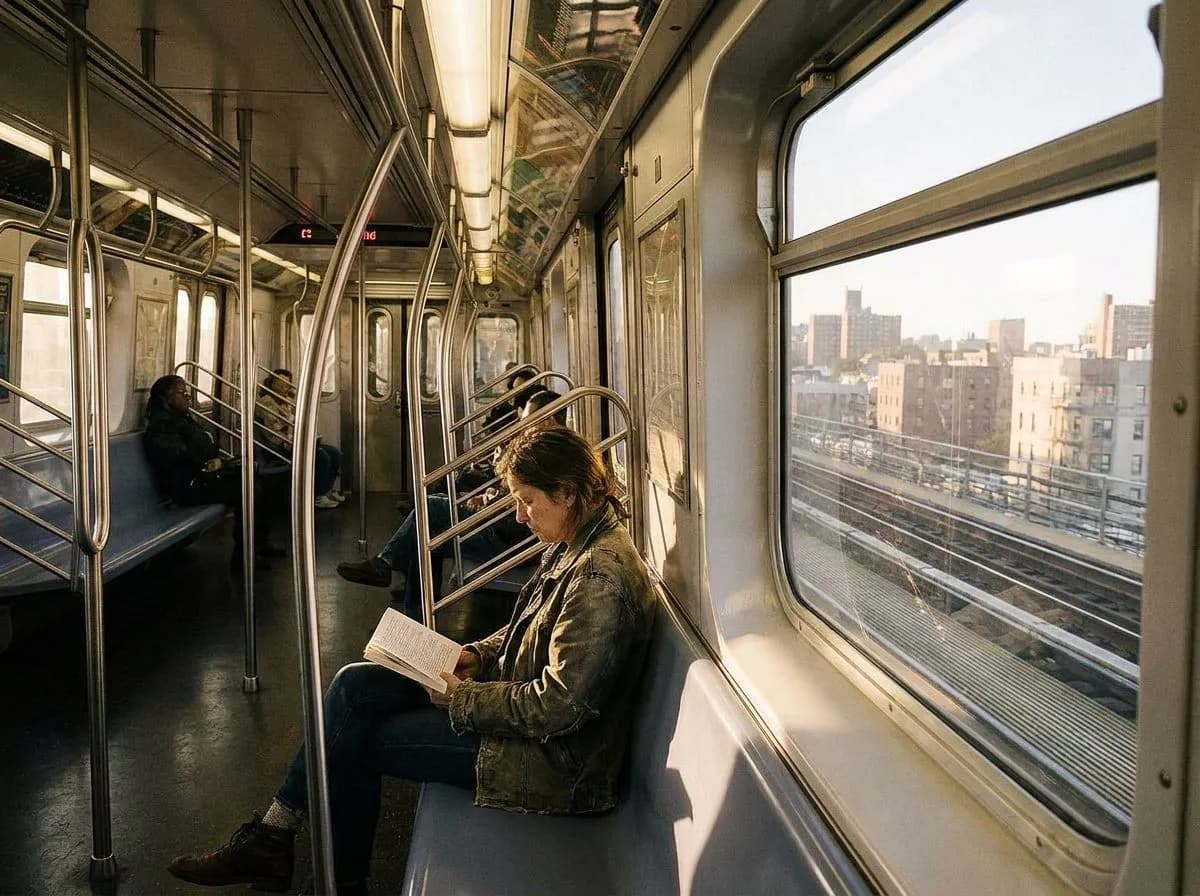
Past Avenue M, the train tracks cut through neighborhoods that predate the subway itself. Brick row houses from the 1920s press close to the rails, their fire escapes hung with bicycles and potted herbs, their facades showing a century of repointing and repair. This is where you understand why elevated train routes inspire such fierce neighborhood loyalty and equally fierce opposition: they're invasive and intimate, a rattling presence that also happens to frame the roofline in cast iron and rivet. The homes weren't built with the subway in mind—the subway was threaded through them later, an insertion that forced the neighborhood to adapt, to live with the rumble and screech as part of the ambient soundscape of daily life.
The Q runs on a structure built for the BMT Brighton Line, and the engineering shows its age gracefully. Ornamental ironwork brackets the support columns. The curve of the trackbed follows the geometry of streets laid out when this was still farmland becoming suburb. From your seat, you're reading the city's growth rings—the old Loew's Kings Theatre marquee in one direction, a new glass condo development catching sun in another.
The neighborhood rhythm of Newkirk Avenue
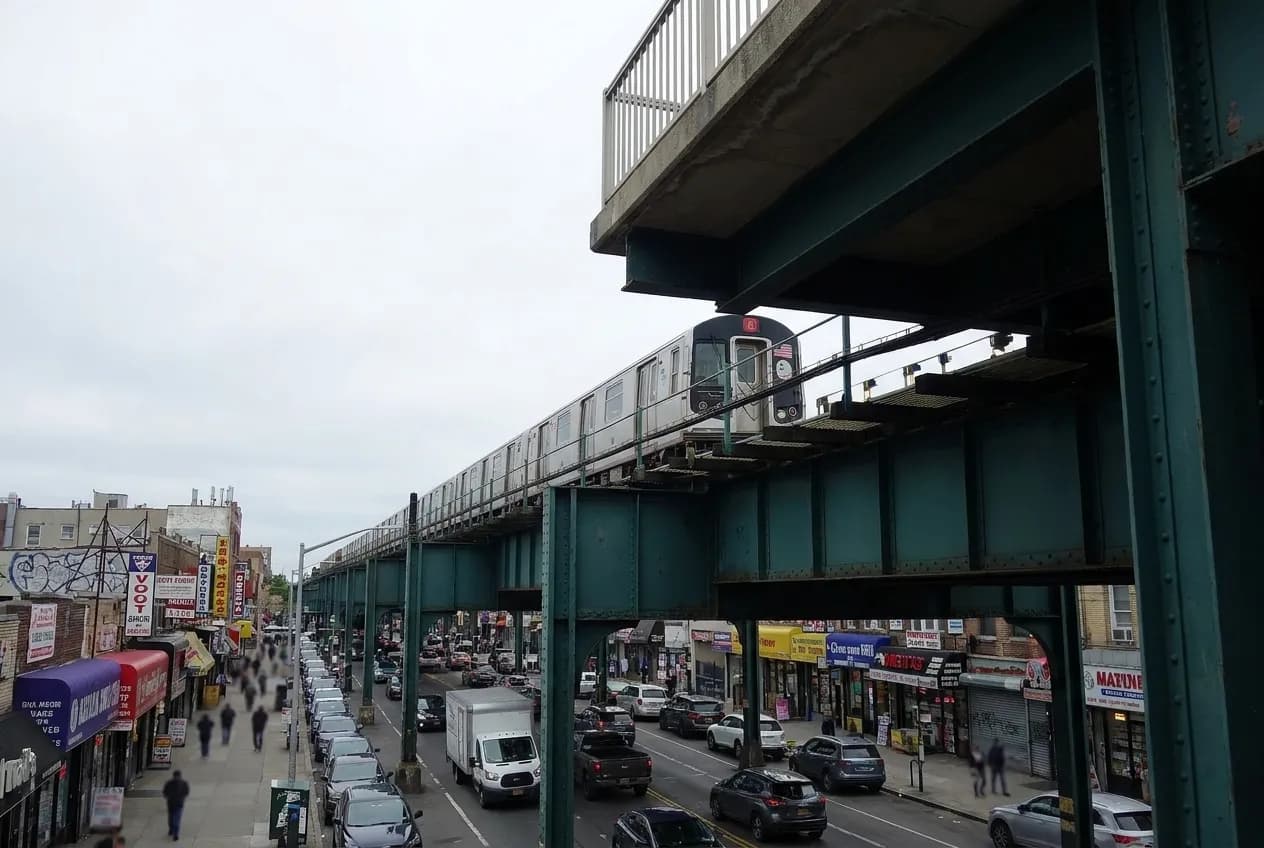
Between the Kings Highway and Church Avenue stops, the elevated tracks run parallel to Newkirk Avenue, a commercial corridor that shows you what a Brooklyn main street looks like when it hasn't been colonized by chains. The Newkirk Plaza station sits at the heart of it, and from the platform you can see the full sweep of the street life below: halal carts sending up smoke signals, produce stands with pyramids of mangoes and plantains, elderly Russian women pulling shopping trolleys, Haitian teenagers in Catholic school uniforms clustered at the bus stop. This is the unglamorous Brooklyn that rarely makes it into travel features, the everyday working neighborhood where three languages might be spoken in a single block.
The storefronts at track level reveal their second-floor secrets: dental offices with venetian blinds, immigration lawyers with hand-painted signs, apartment windows where someone has arranged a collection of ceramic cats to face the passing trains. There's a barbershop at the corner of Newkirk and East 16th where the owner waves at the Q train every single day—ask any regular commuter and they'll confirm this small gesture, this tiny moment of human connection in a city famous for anonymity. From above, you're granted a perspective the street-level pedestrian never gets: the geometry of how people move, cluster, disperse; the way the neighborhood breathes through its hours.
The slowest curve in Brooklyn
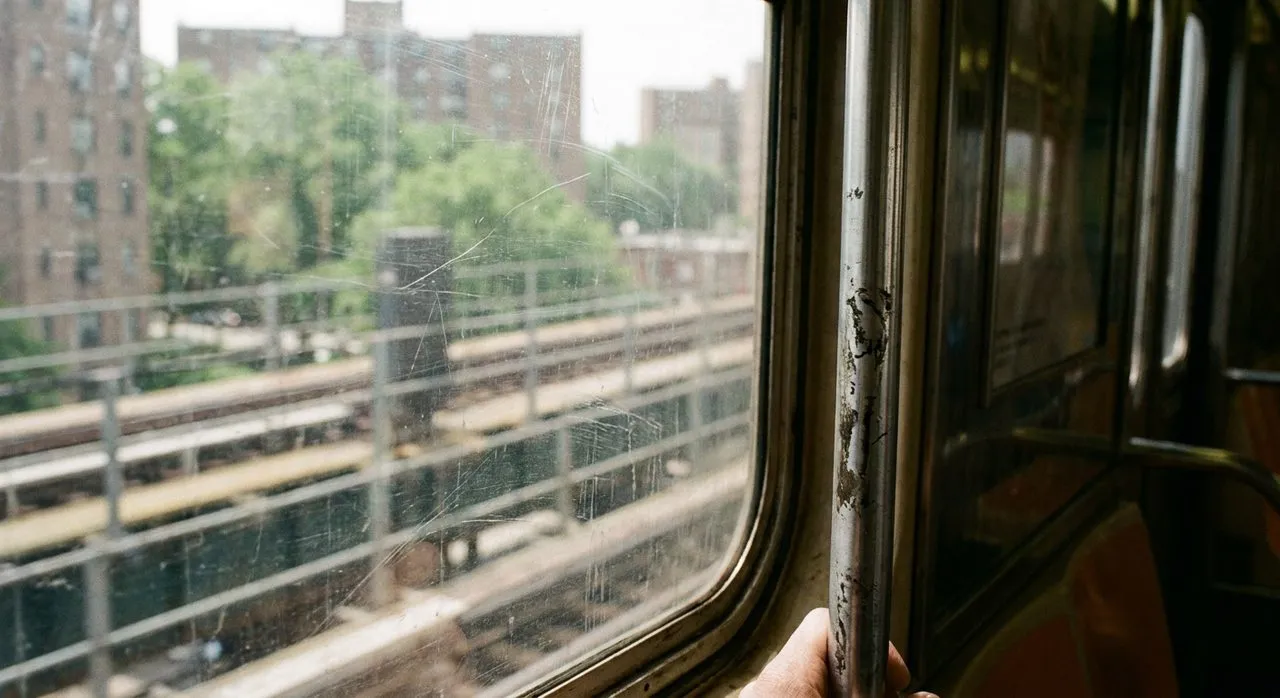
Weekday mid-morning trains, the ones running between nine-thirty and eleven, move through this stretch with a different rhythm. Fewer passengers mean fewer station stops, but more importantly, they take the Newkirk Plaza curve at a slower crawl, extending the above-ground window by three minutes. It's a small gift of time, enough to finish a chapter or watch a crew of men unloading pallets behind a wholesale bakery, their voices rising faintly over the rail squeal.
This is when the elevated ride feels least like transportation and most like observation deck. The summer sun hasn't yet climbed to brutal. The train car breathes with open windows. You're suspended between departure and arrival, and for once the delay is welcome.
The turn that shows you yourself
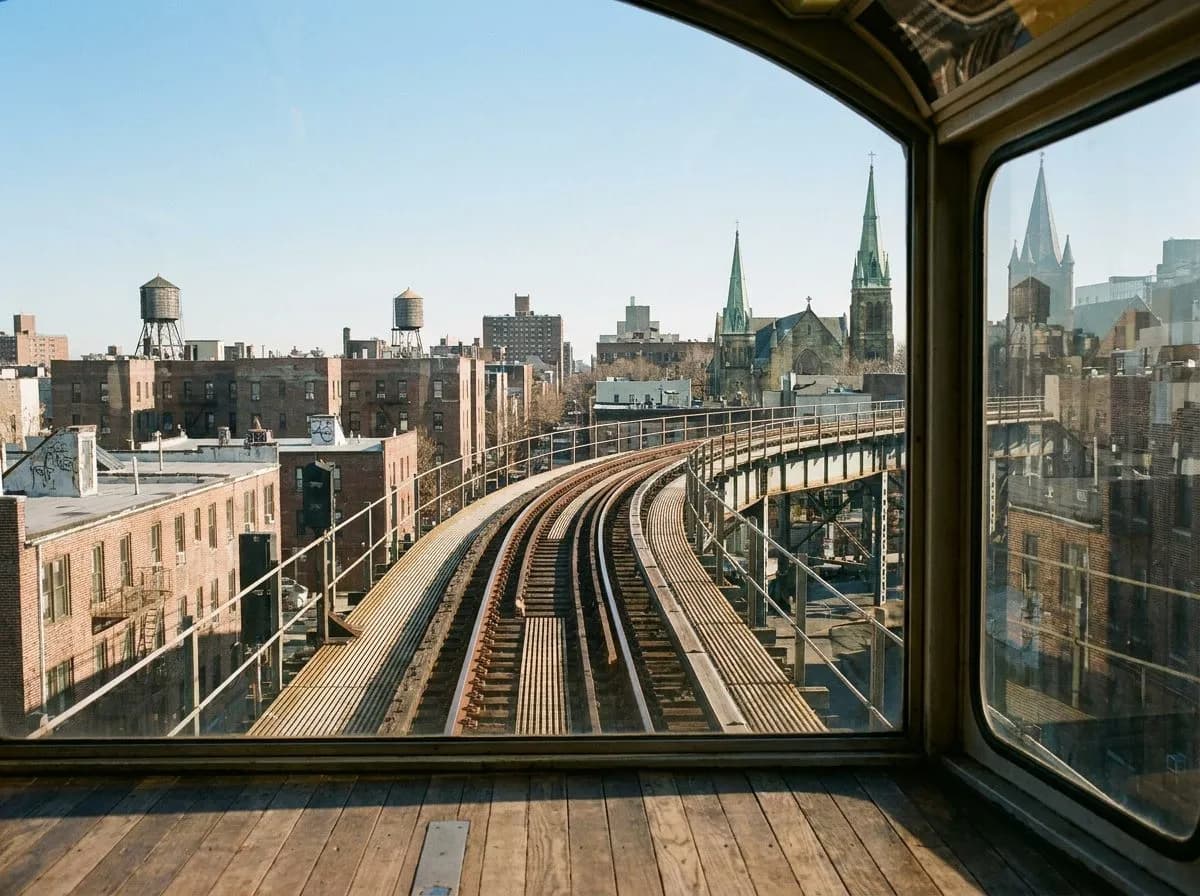
At Kings Highway, the track performs its most dramatic gesture: a near-180-degree elevated turn that bends the train into a steel horseshoe. If you're seated in the middle cars, you can see both ends of your own train—the front cars disappearing around the curve ahead, the rear cars still catching up behind. It's disorienting and delightful, a moment when the infrastructure becomes spectacle and you're reminded that this whole system is held aloft by columns and faith.
The turn also offers a split-second panorama: the avenue below with its produce markets and check-cashing shops, the side streets lined with trees just reaching full summer canopy, the distant smudge of Manhattan's skyline if the haze cooperates. Then the train straightens and you're headed north again, the geometry resolved, the city scrolling past in orderly fashion.
Into the green
The final elevated stretch runs along the eastern edge of Prospect Park, where the treetops rise to meet the tracks and the view trades brick for green. Oaks and maples planted generations ago form a canopy thick enough to dapple the train windows with shadow and light. You can glimpse joggers on the park paths below, the Prospect Park Tennis Center's red clay courts, the meadow where weekend soccer games sprawl across the grass. In autumn, the foliage turns the ride into a tunnel of gold and crimson; in winter, the bare branches reveal the bones of the park's Olmsted and Vaux design, the careful curves and sight lines that make the landscape feel both wild and composed.
Then, just past the 15th Street-Prospect Park station, the train dives. The walls close in, the light cuts out, and you're underground again, hurtling toward Manhattan as if the previous thirty-five minutes were a dream. But your eyes still hold the afterimage: water, brick, leaves, sky. The long way home, proven worth taking.
Practical notes
The Q train runs between Coney Island–Stillwell Avenue and 96th Street–Second Avenue, with the elevated portion stretching from Brighton Beach through 15th Street–Prospect Park. All stations are accessible via subway; limited street parking exists in surrounding neighborhoods, though southern Brooklyn residential blocks require permits during weekday hours. Trains run year-round; check MTA.info for service changes, especially summer weekends when maintenance may alter routes. Bring sunglasses for westward afternoon rides and a window seat state of mind.
Tags: #TheLongWayHome #QTrain #BrooklynScenicCommutes #ElevatedTrainRoutes #BrightonBeach #ProspectPark #SheepsheadBay #SouthernBrooklyn #MTAMoments #SubwaySummer #NYC #BrooklynCommute #AboveGroundNYC #TrainWindowViews #UrbanObservation
Sources consulted: Q Train - Wikipedia · NYC Subway - MTA · Brighton Beach - Wikipedia · Prospect Park - NYC Parks · New York Travel - Time Out
All trademarks are the property of their respective owners.