 Soccer Bar Near Me in Brickell: Batch Gastropub's Screen-Lined Room
Watch Parties
The Pierogi Joint That Screens Matches on a Projector Against the Brick Wall
A lunch counter that stays open late for unlikely fixtures, serving two countries' dumplings under a bedsheet screen and a borrowed projector.
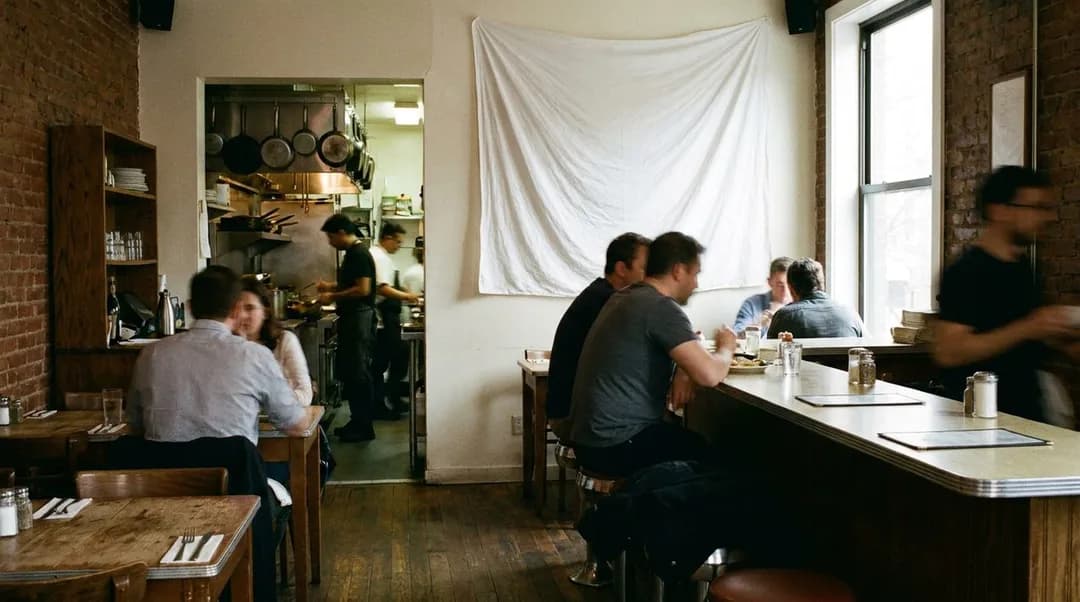
You walk into what looks like a Polish lunch counter on a residential stretch of Port Richmond, and by evening the dining room has transformed into something between a screening room and a supporters' club. The projector sits on a milk crate. The bedsheet hangs from hooks somebody drilled into exposed brick decades ago. And the kitchen keeps cranking out pierogi while twenty people lean forward in their folding chairs, watching a match that kicked off seven time zones away.
The Setup That Shouldn't Work But Does
The dining room holds maybe fifteen tables, most of them two-tops pushed together into longer arrangements by the time the evening fixtures start. The projector belongs to someone's cousin—it lives in a canvas bag under the counter between uses. The screen is actually two bedsheets safety-pinned together, and you can see the seam if you sit on the left side of the room, but nobody cares because the alternative is crowding around someone's phone. The brick wall they project onto has this texture that makes the image shimmer slightly when players sprint across grass, like you're watching through heat waves. It shouldn't create atmosphere, but it does.
The owner keeps the overhead lights off during matches, so the only illumination comes from the projection itself and the pass-through window to the kitchen. Your face goes blue-white when the camera pans across an empty stadium, then warm and golden during close-ups of the pitch. The folding chairs scrape against linoleum that's been there since this place was something else entirely.
Two Dumpling Traditions Under One Roof

The menu lists pierogi in the Polish style—potato and cheese, sauerkraut and mushroom, the sweet cheese ones that work for dessert if you're raised on them. But there's a second section that runs Nepali momos: chicken, vegetable, the buff ones filled with water buffalo that have a different weight and chew than beef. Both get made in the same kitchen by a rotating cast of cooks who've figured out where their techniques overlap and where they don't.
The pierogi come out with caramelized onions that have been cooking low and slow since late morning, so they're almost jammy. The momos arrive with two chutneys—tomato-based and cilantro-based—that have enough heat to make you reach for water but not so much you stop eating. On match nights, you order both. The kitchen doesn't slow down when the game starts. You hear the rhythmic thwack of dough being worked, the hiss of dumplings hitting oil, conversations in two languages that aren't English.
The Unlikely Fixture List
You'd expect Premier League matches, maybe some Champions League. And those happen. But the projector comes out for fixtures that surprise you—World Cup qualifiers for nations that didn't make the tournament, women's league matches from Europe, a Copa América group stage game on a Wednesday afternoon that somehow draws a crowd. The schedule operates on a logic that has more to do with who's in the neighborhood than what's considered marquee viewing.
The crowd composition shifts with the fixture. You get Polish families for certain matches, Nepali students for others, a mixed group of people who just heard there was a game on and wandered over. During one qualifier, a regular brought his transistor radio because he didn't trust the English commentary, so you had two audio tracks competing—the projected broadcast and his radio providing Polish play-by-play from his jacket pocket. Nobody asked him to turn it off.
The Rhythm of a Screening
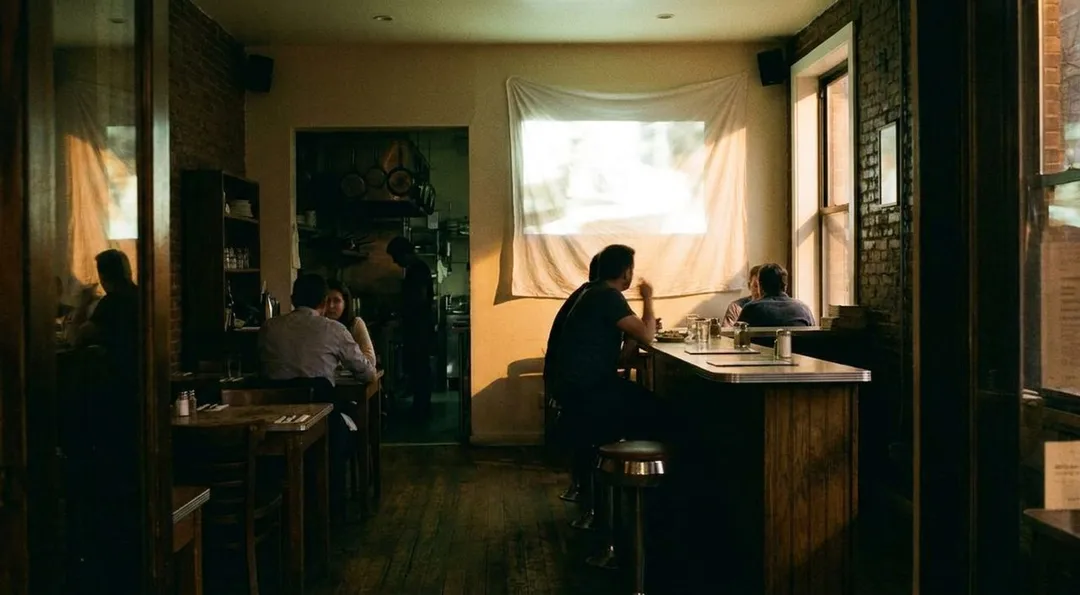
People start arriving about forty minutes before kickoff. The early ones help set up—unfolding chairs, adjusting the projector angle, sometimes rehanging the bedsheet if it's slipped overnight. There's no formal system. You just do what needs doing. The kitchen starts pushing out food faster as the room fills. You order before the match starts, because trying to get someone's attention during a crucial passage of play feels like a miscalculation.
The room goes quiet during tense moments, then erupts for goals regardless of who scored. There's something about watching on a bedsheet projection that makes everyone's reactions bigger, less self-conscious. People shout at referees in three languages. Someone's grandmother provides running commentary in Polish that makes her whole table laugh during a stoppage. When halftime hits, the overhead lights come back on, and the spell breaks just enough for people to order second rounds and use the bathroom.
What to Order When You're Here for the Long Haul
The potato and cheese pierogi work as foundational eating—substantial enough to carry you through ninety minutes plus stoppage time, neutral enough that you can eat six without flavor fatigue. Get them with extra caramelized onions. The chicken momos have more flavor variation bite to bite, depending on how much chutney you deploy. If you're here for a doubleheader—sometimes they'll screen two matches back to back—the sweet cheese pierogi make sense as a reset between games.
The kitchen also does a simple cucumber salad that's more refreshing than it has any right to be, especially during summer matches when the room heats up from body warmth and the kitchen's output. They'll bring you water in plastic cups without asking. Coffee appears in the second half if the match started early. Everything's priced like a lunch counter, not like entertainment, which is probably why the same people keep coming back.
The Practical Magic of Impermanence
Nothing about this setup is permanent. The projector goes back in its bag. The bedsheet comes down and gets folded into a square that lives on a shelf. The chairs get stacked. By the next morning, it's a lunch counter again, serving breakfast pierogi to construction workers and early shift nurses. The transformation happens in reverse about an hour before the next match, whenever that is.
There's no printed schedule, no social media presence worth mentioning. You find out about screenings through word of mouth, or you stop by and ask, or you just know the rhythms of the competitions that matter to you. The unpredictability is part of the appeal. You can't plan your whole week around this place, so when you do make it, when the timing works and you walk in to find the projector already running and the room half-full, it feels like you've stumbled into something that exists just slightly outside normal commerce.
When to Show Up and What to Know
The lunch counter opens late morning and stays open as long as there's a match worth screening or people worth feeding, whichever runs later. Getting here involves the bus route that runs up Richmond, or you park on the residential blocks nearby where spots open up after the workday ends. Arriving thirty to forty minutes before kickoff gets you a decent seat. Bringing cash makes everything simpler, though they've added a card reader that works most of the time.
The bathroom situation is what it is—single occupancy, down a hallway, vintage fixtures. Don't expect craft beer; they keep it simple with cans and bottles. The acoustics mean you hear everything—the kitchen, the crowd, the commentary, someone's phone ringing. It all becomes part of the texture. And if you're wondering whether a specific match will be screened, your best bet is stopping by a day or two before and asking whoever's working. They'll know, or they'll know who to ask.
Tags: #PortRichmond #PhillyEats #PierogiLife #MomoLove #UnlikelyVenues #NeighborhoodGems #DumplingCulture #FootballScreening #PhiladelphiaFood #TheBeautifulGame #DIYCinema #LocalGathering #PhillyHiddenSpots #KarposFinds #TheOddEdit
All trademarks are the property of their respective owners.
Ask Karpo for more information.
Keep reading
- Soccer Bar Near Me in Brickell: Batch Gastropub's Screen-Lined Room
 Soccer Bar Near Me: Midtown's Basement Room For Early Kickoffs
 Soccer Bar Near Me: Brickell's Riverfront Room Opens Early