 Kings Theatre in Flatbush: A Restored 1929 Movie Palace
Hidden Gems & Odd Finds
The Lower East Side Bar Where the Drinks Are Built Like Algorithms
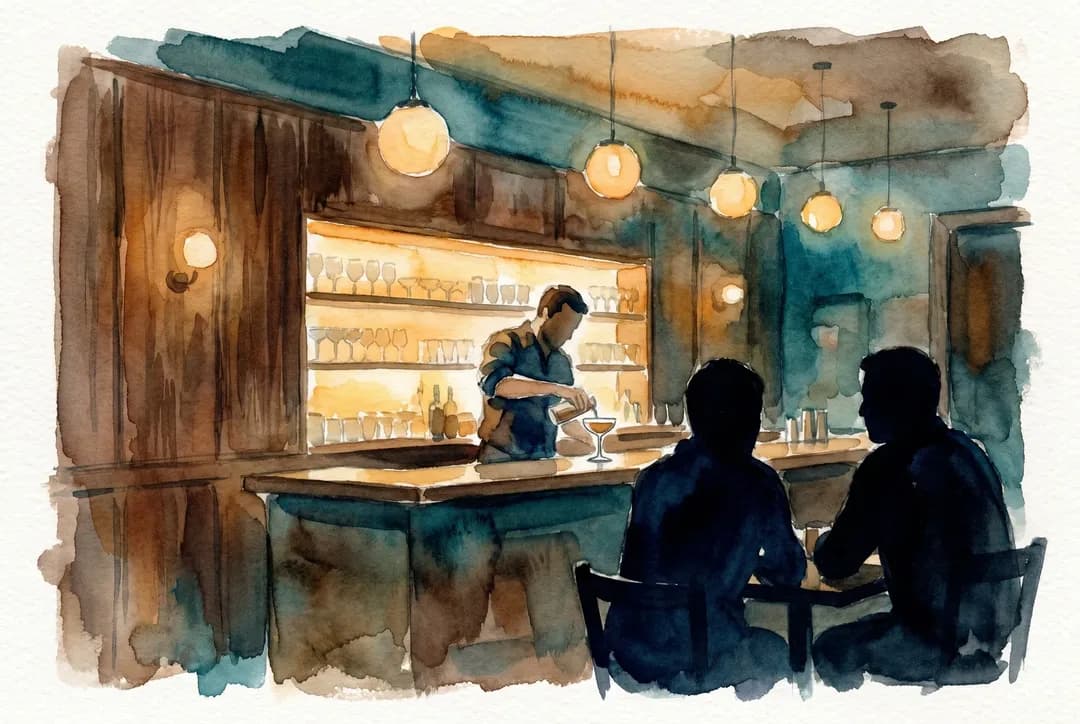
Double Chicken Please opened on Allen Street in November 2020 and was named the best bar in North America by 2023, ranked #2 on the World's 50 Best Bars list the same year. The back room runs a menu of named cocktails — Cold Pizza, Waldorf Salad, Thai Curry — each one a deconstructed dish reassembled as a drink. The week "ai" climbed back into Google's U.S. top-ten search trend, the most-talked-about cocktail menu in New York was already built on the same compositional logic — and had got there four years earlier.
Five Years Behind the Search Trend
The thing a generative model does when it answers a prompt is fold many references into one composite output. You give it "a bar inside a former bank vault, sketched in watercolor, low light." It returns a single image that resolves a layered request into a single artifact.
The cocktail named Cold Pizza, served at Double Chicken Please on Allen Street, is the same trick performed in liquid. Don Fulano Blanco tequila is the base. The drink is built around clarified tomato water, a lime-basil cordial, oolong-tea honey, infused with burnt toast and Parmigiano-Reggiano, shaken with egg white. Seven references, one drink, recognizable as a margherita pizza on the first sip and recognizable as a margarita on the second. The bar opened in November 2020. Google Trends shows "ai" climbing back into the U.S. top-ten search bracket the week of May 2026. The compositional logic showed up at this address first.
A Yellow Minibus, a Pandemic, and 115 Allen Street
GN Chan and Faye Chen are Taiwanese bartenders who met inside Asia's competitive cocktail circuit. Faye managed Speak Low in Shanghai when that bar entered the World's 50 Best top-twenty. GN spent five-plus years behind the bar at Angel's Share, the East Village hidden cocktail room that defined the New York omakase-bar generation.
In 2017 they bought a vintage yellow Volkswagen minibus and ran a series of cocktail pop-ups out of it — back-of-the-bar to back-of-the-van logistics, no permanent address. The plan was a permanent location in 2020. The pandemic compressed that plan. They opened anyway, in November of that year, at 115 Allen Street on the Lower East Side, three blocks south of Houston. The neighborhood — already saturated with bars at the time — got one more.
By the next year the back room of that one more was being booked weeks in advance.
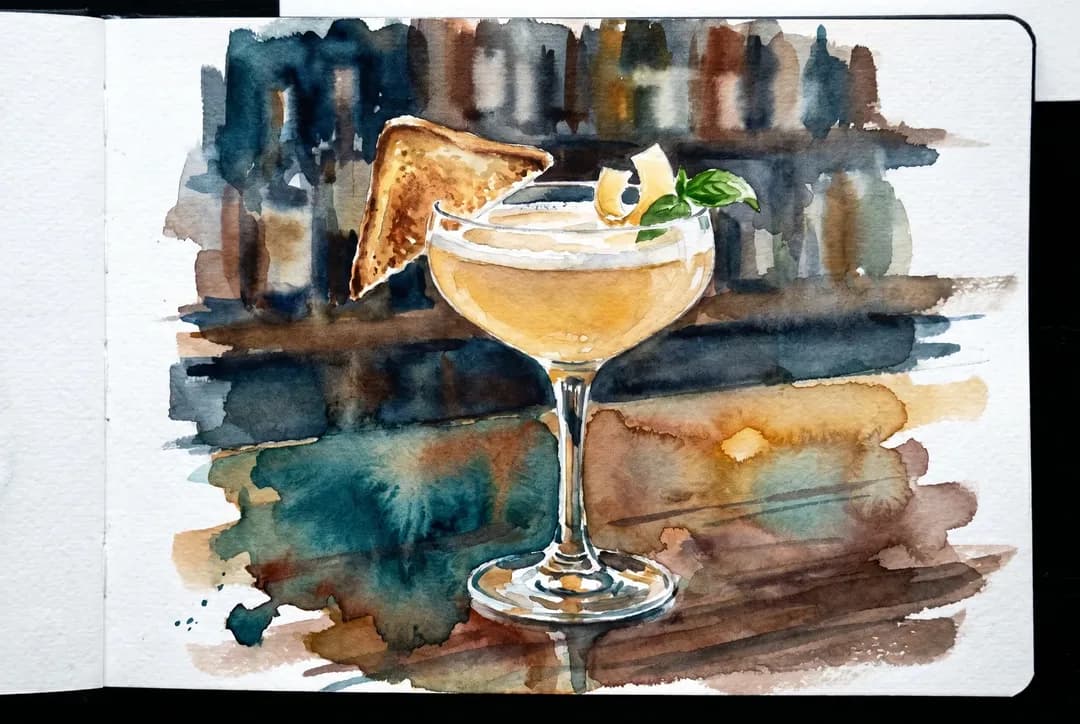
How "Cold Pizza" Becomes a Cocktail
The Coop, the back room, runs a menu organized like a tasting dinner — appetizer, main, dessert. Waldorf Salad uses Dewar's 12 and Laphroaig 10 with celery, kale, apple, and walnut bitters. Thai Curry is built on Sonbi gin, Ilegal Joven mezcal, green curry, and lime. The Forbidden D'ohnut clarifies a Homer-Simpson reference — Duff beer plus donut — into a drink. Twisted Apple stages an appletini through a Snow White lens.
What ties them together is the technique stack: clarification (tomato becomes a clear liquid that still tastes like tomato), fat-washing (cheese into spirit), reduction (curry into bitters), and infusion (toast into base). Each cocktail is the inverse of a recipe — a savory dish broken down into its taste primitives and translated into the rules of a drink.
The result is uncannily faithful and uncannily portable. Cold Pizza on a coupe glass tastes like late-night leftover pizza in a clarified, twenty-second-long sip. The whole back-room menu sits inside that same uncanny zone.
The Coop and the Free Range
The two rooms are separated by a hallway. The Coop in the back is mid-century walnut paneling, low warm light, a bar with seated counter spots and small banquettes — a room that does not flinch when you ask for a drink that takes seven minutes to prepare. Reservations open via Resy at the start of each month, and they close in the first hour.
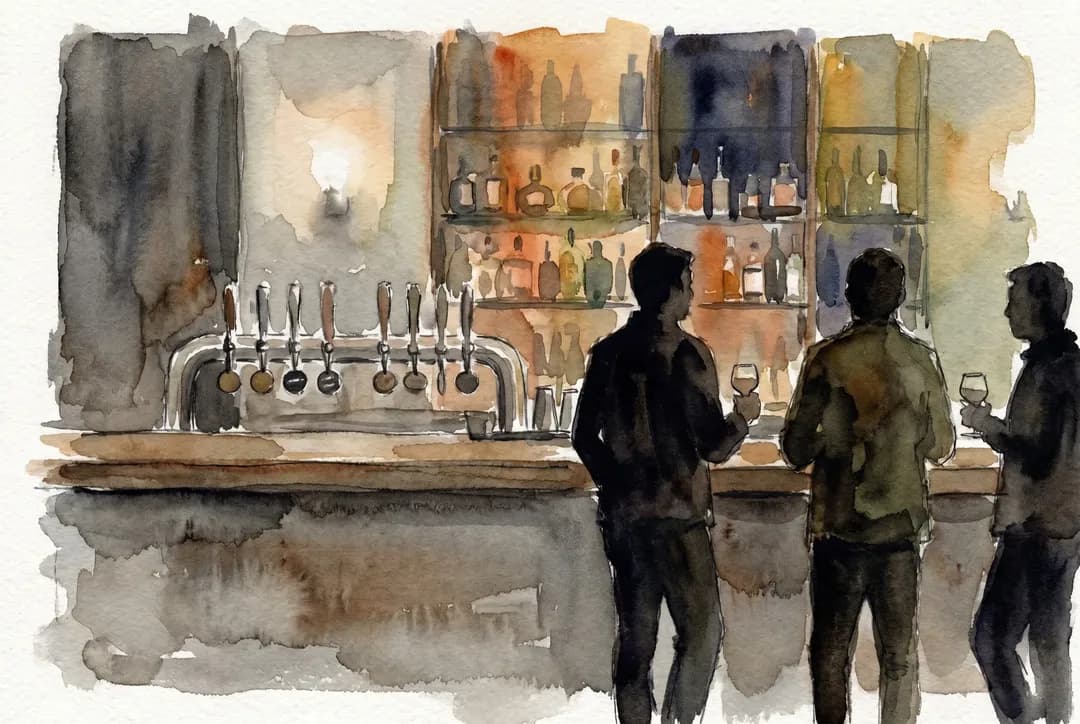
Free Range, the front room, is a different argument. Wood-and-concrete bar, rows of cocktails-on-tap with numbered tags drawn from cartoons, walk-in policy, a standing crowd. The drinks are simpler — most are draft-pulled — but the vocabulary is the same: one menu, layered references, an editor's hand. You can drink your way through Free Range without a reservation on a Tuesday at 5:45.
The two rooms are the same idea served at two different room temperatures.
What "Design Hacking" Means at a Bar
GN Chan's professional background is in product design — the discipline that asks how a single object resolves a contradictory brief. Bars, in his framing, have the same brief: deliver a sense of place + a precise drink + a remembered name + a defensible price + a thirty-second order, all at once. The standard answer is to optimize one variable and let the others float.
The Double Chicken Please answer is to design the menu as the resolution surface. Each cocktail is one shipped product, with its own composite of references, a formal name, and a recognizable shape. The menu is not a list of options. It is a portfolio of resolved briefs. Read out loud, the names sound like a search result page — Cold Pizza, Waldorf Salad, Custard Bun. Sip them and the search collapses into a single sip.
This is the part of the bar that the machine-learning vocabulary keeps catching up to.
Why It Took the World #2 Slot
In 2023 — two and a half years after opening — the bar was named #1 on North America's 50 Best Bars and #2 on the World's 50 Best Bars. Its 2025 World ranking is #41, which the team has publicly framed as a deliberate recalibration of the menu rather than a slip. New menus drop two to three times a year. Cold Pizza, the most-requested drink, has stayed.
The trajectory most New York bars take is the opposite direction: a strong opening menu, a slow narrowing to crowd-pleasers, an exit into nostalgia. Double Chicken Please has gone the other way — broader range, harder formal constraints, fewer obvious crowd-pleasers, more named composites. The compositional ambition has gone up, not down.
Practical notes
- Address: 115 Allen Street, New York, NY 10002 (Lower East Side, three blocks south of Houston; closest cross street is Delancey)
- Hours: Daily, late afternoon into the night — check the official site for the current week
- Getting there: F train to Delancey-Essex, two-block walk west; J/M/Z to Essex Street works the same; B/D to Grand Street for the Allen Street walk-in
- Go for: The Coop's named cocktails (Cold Pizza is the canonical one; Waldorf Salad the dark-horse second). Free Range's draft program if walking in
- Best window: Tuesday or Wednesday, 5:30–7 p.m. for a Free Range walk-in. The Coop requires a Resy reservation booked the month prior
- Walking solo: Allen Street between Houston and Delancey is well-lit and stays foot-trafficked until late on weeknights. The F at Delancey-Essex is a four-minute walk from the door and runs through the night; pick that for a quiet exit
- What to do after: Forsyth Garden three blocks east for a late-night reset; the LES walk back to the F train at midnight stays foot-trafficked on Allen
The Point
The argument that the cocktail menu is the canonical New York fine-dining medium has been gathering momentum for a decade. Double Chicken Please is what that argument looks like with the design discipline showing on the surface. A menu of seven-reference composites that read like prompts and resolve like drinks. Five years before "ai" became the search trend it is again this week, the same compositional logic was already pulling people off Allen Street into a wood-paneled back room. The drink and the model both compress references into a single object. The bar got there first.
Tags: #doublechickenplease #thecoop #freerange #cocktailbar #nyccocktails #lowereastside #les #manhattanbars #nycnightlife #allenstreet #cocktailculture #designhacking #karpofinds #oddedit #compositionaldrinks
Sources consulted: doublechickenplease.com · theworlds50best.com · vinepair.com · drinksint.com · drinkmagazine.asia
All trademarks are the property of their respective owners.
Please drink responsibly. Must be of legal drinking age.
Ask Karpo for more information.
Keep reading
- Kings Theatre in Flatbush: A Restored 1929 Movie Palace
 Chambers Street Wines: Manhattan's Natural Wine Pioneer
 Mediterranean Food Near Me in NoMad: Ilili's Crispy Brussels Sprouts